Bollinger Bands and RSI indicators strategy

Overview
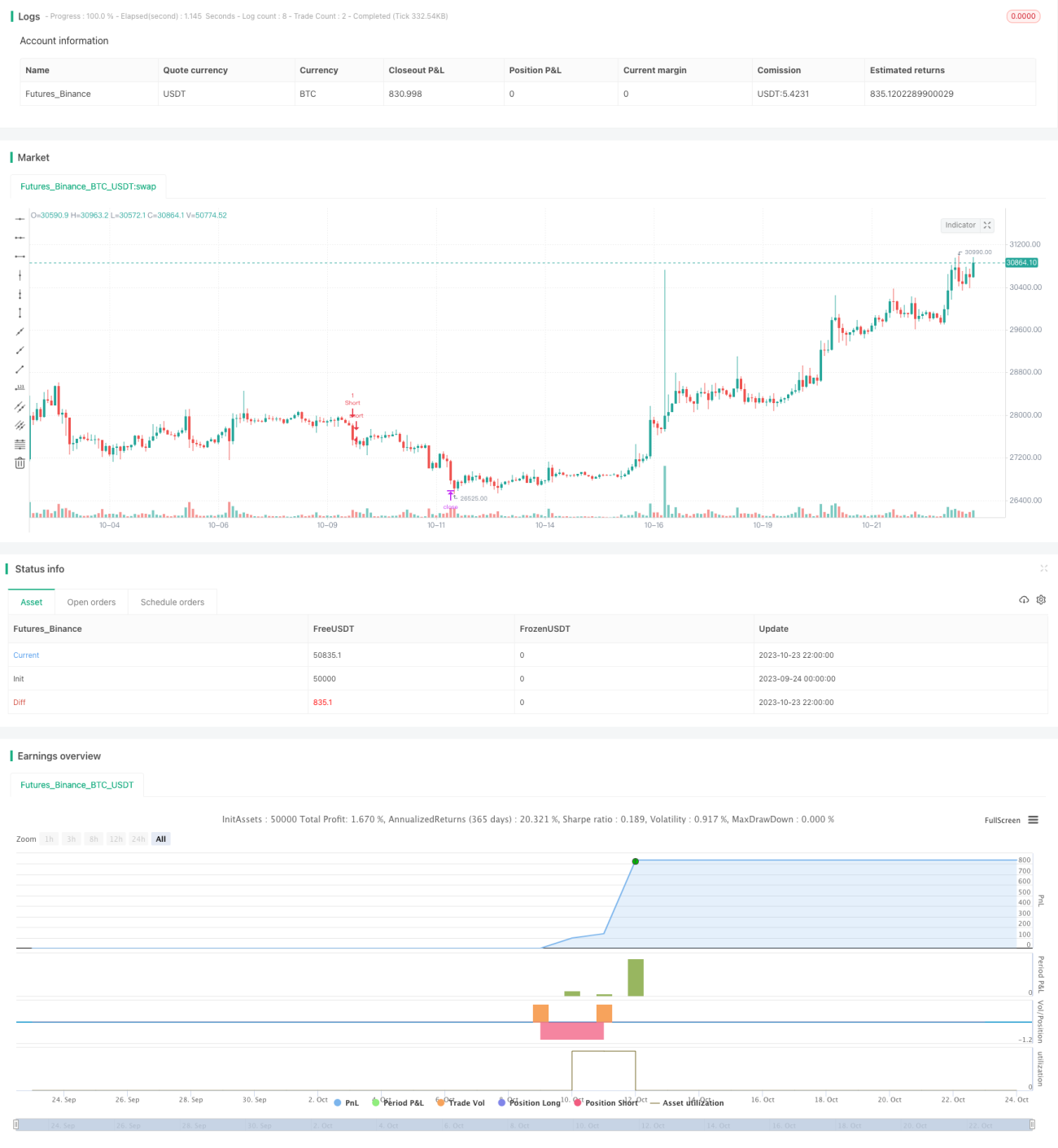
This strategy mainly combines Bollinger Bands and RSI indicators to judge trading signals, which is a typical frankenstein strategy. It integrates the advantages of different indicators by judging the trend direction through Bollinger Bands and detecting overbought and oversold situations through RSI to make entries and stop-loss exits.
Strategy Principle
-
Use the middle band, upper band and lower band of Bollinger Bands to judge the current price trend. When the price breaks through the upper band, it is considered a bullish trend. When it breaks through the lower band, it is considered a bearish trend.
-
The width of Bollinger Bands (difference between upper and lower bands) can reflect the current market volatility. When the width increases, it means volatility increases and RSI can better detect overbought and oversold situations.
-
The RSI indicator judges overbought and oversold situations. Above 70 is the overbought zone and below 30 is the oversold zone. Avoid entering in overbought and oversold zones to obtain better risk-reward ratios.
-
Specific trading signals:
(1) Bullish signal: Price breaks through the upper band and RSI is not overbought (RSI less than 70)
(2) Bearish signal: Price breaks through the lower band and RSI is not oversold (RSI greater than 30) -
Stop loss: For long trades, stop loss when RSI breaks below 70. For short trades, stop loss when RSI breaks above 30.
Advantage Analysis
The advantages of this strategy are:
-
Integrating multiple indicators provides more comprehensive information and reliable signals.
-
Using Bollinger Bands to determine the overall trend catches the big moves.
-
The RSI indicator further avoids unnecessary risks by detecting local overbought and oversold levels.
-
The stop loss mechanism is quite strict, which helps reduce losses.
Risk Analysis
This strategy also has the following risks:
-
Both Bollinger Bands and RSI may fail, resulting in wrong trading signals.
-
Although having a stop loss, improper stop loss points can still lead to major losses.
-
Too frequent trading increases transaction costs and slippage.
-
Improper optimization of parameters may lead to overfitting.
Optimization Directions
This strategy can be optimized in the following aspects:
-
Test different parameter combinations to find the optimal parameters.
-
Increase flexibility of stop loss methods, such as ADDR/ATR stop loss, trailing stop loss etc.
-
Add position sizing strategies, such as fixed fraction, Martingale etc.
-
Incorporate more indicators to filter signals, such as volume etc.
-
Use machine learning for adaptive parameter optimization.
-
Optimize entry timing, wait for confirmation signals before entering.
Conclusion
In summary, this is a typical frankenstein strategy combining multiple indicators. It integrates the advantages of Bollinger Bands and RSI to catch trends while avoiding overbought and oversold risks. With proper parameter optimization and stop loss management, good results can be achieved. But it also has some risks and needs further optimization to improve stability. Overall, the strategy idea is reasonable and has great room for improvement.
- 1