Two-stage Stop Loss Strategy

Overview
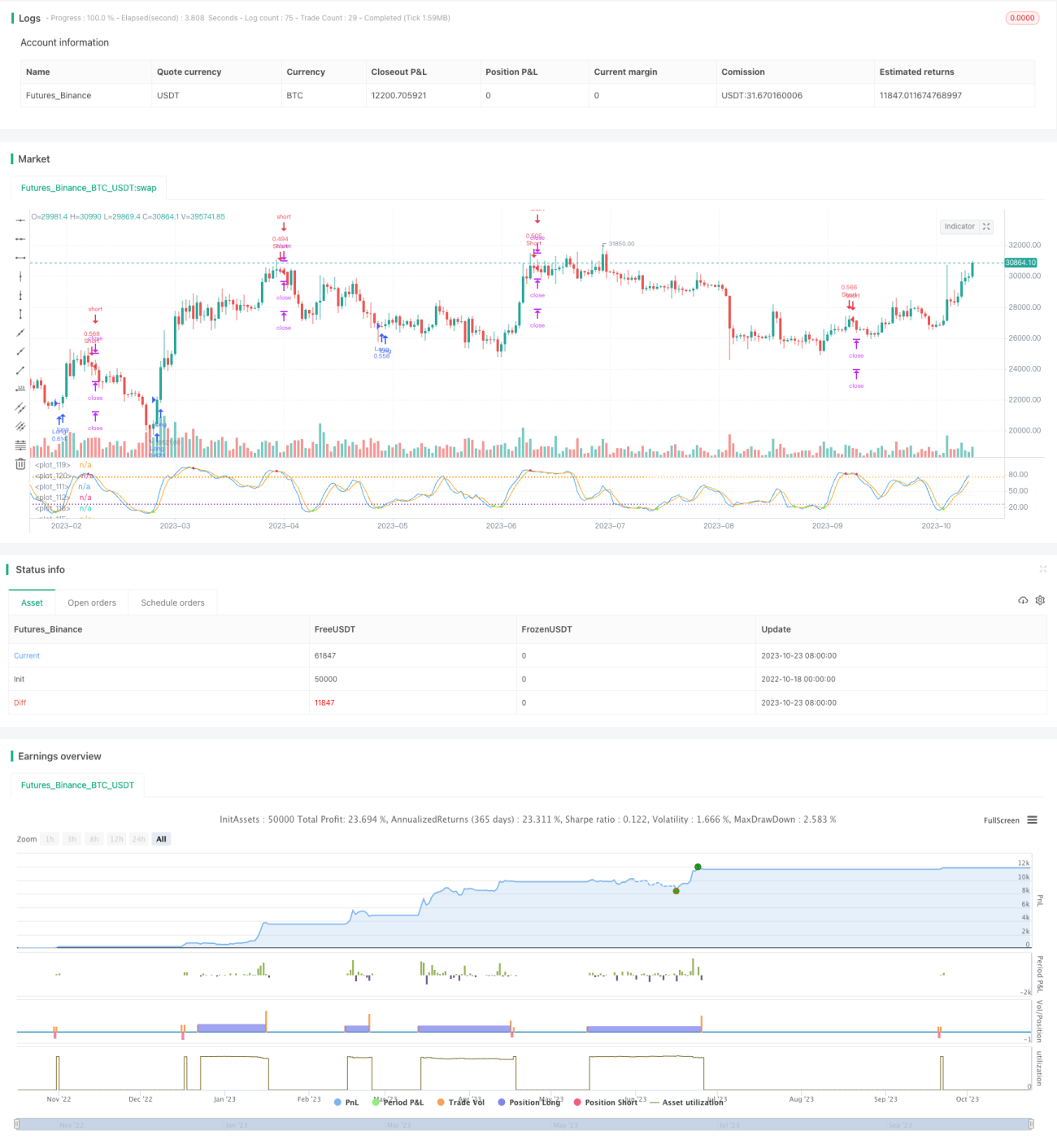
The main idea of this strategy is to set two take profit targets and move the stop loss to entry price after the first target is reached to avoid stop loss hunting.
Strategy Logic
This strategy enters trades based on Bollinger Bands and Stochastic indicators. It goes short when price exceeds the Bollinger upper band and goes long when Stochastic shows oversold.
Specifically, the entry logic is:
-
Enter long when close is below Bollinger lower band and Stochastic K crosses below D.
-
Enter short when close is above Bollinger upper band and Stochastic K crosses above D.
The strategy sets two take profit targets, TP1 fixed at 200 points and TP2 fixed at 500 points.
When price moves and TP1 is triggered, the strategy will move stop loss to entry price. This locks in profit from first stage and prevents stop loss hunting.
The strategy closes all positions when TP2 or stop loss is triggered.
Advantage Analysis
The biggest advantage of this two-stage stop loss approach is it allows locking in profits while preventing stop loss hunting. By moving stop loss to entry price, it reduces the chance of stop loss hunting and protects profits.
Another advantage is the combination of Bollinger Bands to gauge volatility range and Stochastic for overbought/oversold makes for more accurate entries.
Risk Analysis
Main risks stem from potential false signals from Bollinger Bands and Stochastic indicators. Incorrect Bollinger range can lead to missing entries or bad signals. Stochastic false breakouts also cause wrong entries.
There is also risk of stop loss being hunted again after moving to entry price. V-shaped reversals can trigger stop loss a second time.
These risks can be reduced by optimizing parameters for both indicators and increasing distance between stop losses.
Optimization Directions
Further optimizations for this strategy:
-
Test different parameter combinations to find optimal Bollinger and Stochastic parameters.
-
Test different profit/loss targets to find ideal configurations.
-
Add other indicators like moving averages to create multi-indicator systems for higher accuracy.
-
Research alternate stop loss positioning logic, like fixed distance from entry instead of entry price itself.
-
Increase stop loss movement occurrences to 3 or more stages.
Conclusion
This strategy uses Bollinger Bands and Stochastic for entries, sets two take profit targets, and moves stop loss to entry after first target reached to form a two-stage stop loss. This effectively locks in profits and prevents stop loss hunting. Strategy has clear advantages but also room for improvements via parameter optimization, multi-indicator systems, and stop loss logic adjustments.
- 1