Slow Heiken Ashi Exponential Moving Average Trading Strategy

Overview
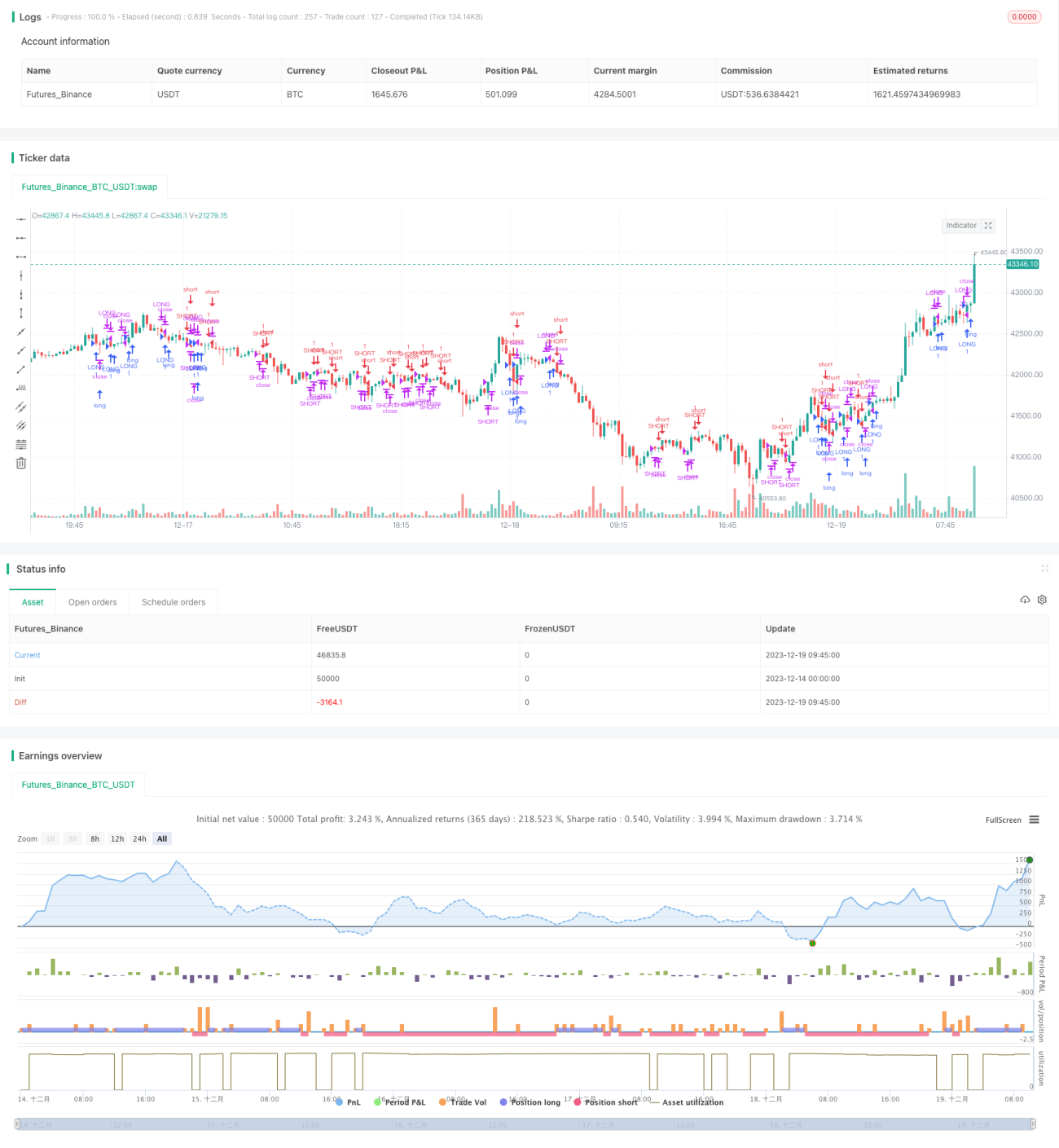
This strategy combines slow Heiken Ashi and exponential moving averages to identify trends and make long/short trades during trending markets. It goes long when price is above 100-day EMA and goes short when price is below 100-day EMA, closing positions on specific reversal signals.
Strategy Logic
The strategy employs the following indicators:
-
Slow Heiken Ashi: A special type of candlestick calculated using the previous bar's average price, filtering out market noise and identifying trends. Implemented here using adaptive KAMA filter.
-
Exponential Moving Average: Smoothed price averages with exponential weighting applied. Contains EMAs from 5-day to 100-day periods.
The specific trading logic is:
-
Go long when price crosses above 100-day EMA, go short when price crosses below 100-day EMA.
-
Exit positions when Heiken Ashi's open price crosses its close price (potential reversal signal). Long positions are closed on reverse crossovers and short positions likewise.
Advantage Analysis
The strategy combines trend-following and reversal signals, capturing large price swings during trending markets while avoiding excessive losses when trends reverse.
-
EMA determines overall market trend direction, preventing distraction from localized fluctuations.
-
Heiken Ashi crossovers provide early detection of potential reversals.
-
Adaptive KAMA filter reduces false signals.
Risk Analysis
-
Sudden, large EMA breaks can lead to amplified losses. Consider tighter holding periods or stop losses.
-
Reversal signals may lag. Lower position sizes to control risk.
-
Inadequate EMA parameterization negatively impacts performance. Parameters should adapt to different products and market environments.
Optimization Directions
-
Incorporate additional indicators like MACD and Bollinger Bands to avoid simultaneous EMA/Heiken Ashi errors.
-
Dynamically optimize EMA parameters based on market volatility, tightening stops/increasing slippage tolerance accordingly.
-
Utilize machine learning to automatically tune parameters, filter rules and improve robustness.
Conclusion
The strategy is relatively simple and practical overall, combining both trend and reversal elements. With well-tuned parameters and risk controls, it retains decent profit potential. Further improvements can build on the optimization directions to make the strategy more adaptive.
- 1