Adaptive Multi Timeframe Fibonacci Retracement Trading Strategy

Overview
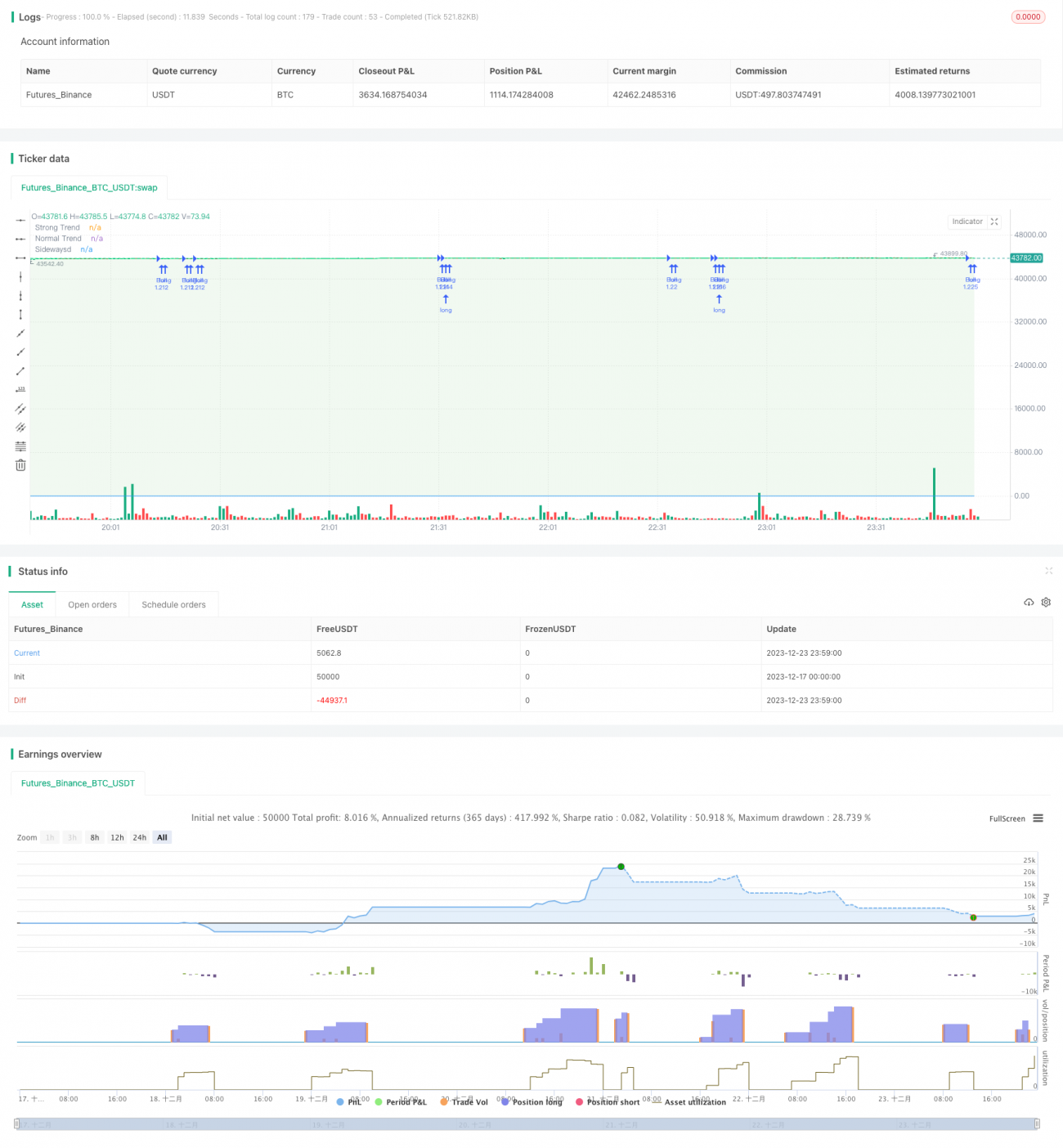
The Adaptive Multi Timeframe Fibonacci Retracement Trading Strategy is a trend-following strategy that incorporates adaptive moving averages, Stochastic RSI and Fibonacci retracement zones. It analyzes the market movement across different timeframes with various indicators to dynamically adjust position sizing. The strategy can accurately locate potential pullback zones to establish positions when a trend is forming. It also sets stop loss to control risks.
Strategy Logic
The Adaptive Multi Timeframe Fibonacci Retracement Trading Strategy utilizes the following technical tools and mechanisms:
-
Adaptive Moving Average (SMA and WMA): Calculate adaptive moving averages of prices over different periods (minute, hour, day etc.). Determine trend direction based on the slope of the adaptive moving averages.
-
Stochastic RSI: Calculate the stochastic value of RSI to determine whether RSI is overbought or oversold. Analyze momentum and trend using the shape of the RSI curve.
-
Fibonacci Retracement Zones: Plot Fibonacci retracement zones using recent Swing High and Swing Low. Set entry and exit points within these zones, which tend to mark potential trend reversals or pullbacks.
-
Position Sizing: Dynamically adjust position size based on strength of signals from Stoch RSI and adaptive moving averages.
The strategy first determines the trend direction. When price enters a Fibonacci zone, potential entry points are marked near the zone. Trades are executed when adaptive moving average and Stoch RSI issue entry signals around the potential points. Stop loss is set outside the Fib zone to control risk.
Advantage Analysis
The Adaptive Multi Timeframe Fibonacci Retracement Trading Strategy has the following strengths:
-
Multi Timeframe Analysis: Concurrently evaluates multiple timeframe levels (minute, hour, day etc.) for more comprehensive trend judgment.
-
Dynamic Position Sizing: Adjusts position size dynamically according to market conditions to better control risks.
-
Accurate Pullback Targeting: Fibonacci zones can be used to catch short-term reversals during trends.
-
Strict Stop Loss: Stop loss based on retracement zones effectively prevents huge losses.
-
Signal Filtering: Only enters trades around marked entry points, avoiding false breakouts.
-
High Optimizability: Multiple tunable input parameters that can be adjusted to optimize strategy performance per market.
Risk Analysis
The main risks associated with this strategy are:
-
Invalid Zone Risk: Failure to reach zones or invalid zones result in missed entries. Can be mitigated by expanding zone range or adding more zones.
-
Stop Loss Tracking Risk: Static stop loss may be prematurely hit. Can look into trailing stop loss, zone stop loss etc.
-
False Signal Risk: Adaptive moving average and Stoch RSI may occasionally give false signals, causing unnecessary trades. Signals can be filtered to reduce false signal rate.
-
High Complexity Risks: The combination of multiple parameters and indicators increases strategy complexity, making optimization and testing harder.
Enhancement Opportunities
This strategy can be further optimized in the following ways:
-
Test on more equities and forex products to evaluate robustness. Fine tune parameters per market.
-
Add signal filtering mechanisms to lower false signal rate and increase signal-to-noise ratio.
-
Test and compare parameters of different types of moving averages.
-
Evaluate improvements from replacing fixed stop loss with trailing stop loss or zone stop loss.
-
Experiment with breakout signals or trend tracking mechanisms to design long-term profit-taking approaches.
Conclusion
The Adaptive Multi Timeframe Fibonacci Retracement Trading Strategy utilizes various analytical tools to identify trend conditions and deploys positions during retracements. Strict risk control mechanisms and stop loss helps optimize profits within major trends. With ample tunable parameters and optimization opportunities, further refinements to this strategy will shape it into a stable and reliable trading system.
- 1