Scalping Strategy Based on Market Liquidity and Trend

Overview
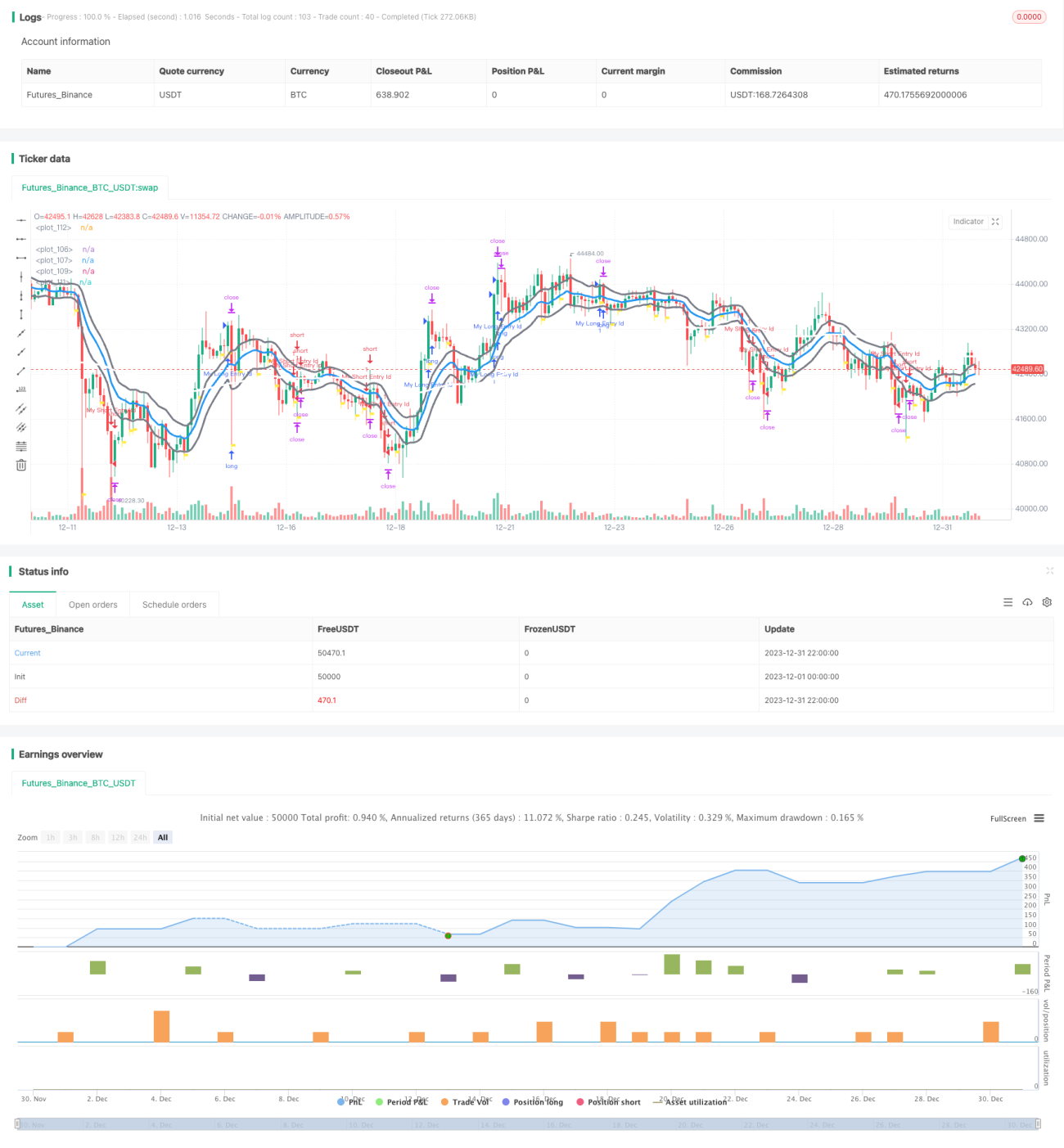
This strategy comprehensively considers market liquidity, trend and technical indicators to implement short-term trading strategies. The strategy can follow the trend and open positions when market liquidity is relatively good, thereby obtaining short-term profits.
Strategy Principle
-
Basic Principle: This strategy mainly considers market liquidity and trend. Carry out short-term operations when market liquidity is good and a trend appears.
-
Market Liquidity Indicators: This strategy mainly uses MFI and changes in trading volume as market liquidity indicators. When MFI goes up and trading volume goes up, we believe that market liquidity is better and it is suitable to open positions.
-
Trend Judgment: This strategy combines ADX, EMA and other indicators to determine the trend. When ADX is above 30 and its EMA, it means that the trend is relatively strong. At the same time, if the golden cross of fast and slow EMA occurs, the trend can also be verified.
-
Opening Conditions: When market liquidity is good and a trend appears at the same time, if other auxiliary conditions (such as SAR position judgment, etc.) are also met, opening signals are generated.
-
Take Profit and Stop Loss Settings: This strategy sets fixed take profit (10 points) and stop loss (7.5 points) for each trade.
Advantage Analysis
This strategy has the following advantages:
-
Use market liquidity to determine timing: Based on MFI and trading volume to determine market liquidity, avoid opening positions when market liquidity is poor.
-
Follow trends for profits: Combine EMA and other indicators to determine trend direction, help obtain trend profits.
-
Good risk control: Set fixed take profit and stop loss to effectively control the maximum loss per trade.
-
Relatively high trading frequency: As a short-term strategy, trading frequency will be relatively high, suitable for accumulating profits step by step.
-
Large space for parameter optimization: For example, MA parameters, stop loss and take profit settings can be optimized to improve strategy performance.
Risk Analysis
This strategy also has some risks:
-
Real trading slippage control risk: Theoretical stop loss and take profit cannot fully reflect real trading conditions. Slippage in real trading may be relatively large.
-
Trend misjudgment risk: This strategy relies heavily on multiple indicators to determine the trend, but there is still a possibility of failure.
-
Over trading risk: As a short-term strategy, improper parameter settings may lead to over trading.
-
Market anomaly risk: In extreme cases of extremely poor market liquidity or policy changes, this strategy may not work properly.
Correspondingly, we can reduce risks from the following aspects:
-
Appropriately relax the stop loss range to consider real slippage factors.
-
Optimize trend judgment logic and introduce more indicators to reduce failure probability.
-
Add open position frequency limits to avoid over trading.
-
Flexibly adjust parameters based on market conditions to deal with abnormal situations.
Optimization Direction
The optimization directions of this strategy include:
-
Introduce more indicators to optimize trend judgment and make judgments more accurate. For example, introduce MACD indicators, etc.
-
Optimize the cycle parameters of MA to find the best parameter combination.
-
Improve stop loss and take profit strategies, such as using moving stop loss, interval stop loss and so on.
-
Add restrictions on number of trades to avoid excessively high frequency trading. For example, open positions up to 3 times per day at most.
-
Find better market liquidity indicators to further determine timing of opening positions. For example, introduce net inflow indicators.
-
Add parameter optimization functions to automatically optimize parameters to find optimal parameter combinations.
Summary
This strategy comprehensively considers factors such as market liquidity and trend. It captures profits in the short term. Compared with traditional trend strategies, the biggest innovation of this strategy is the introduction of market liquidity indicators to avoid opening positions when market liquidity is poor. Correspondingly, this strategy also has certain real-world control risks and trend misjudgment risks. We can continuously improve this strategy through introducing more indicators, optimizing parameters, and risk management.
- 1