Multi Timeframe Strategy

Overview
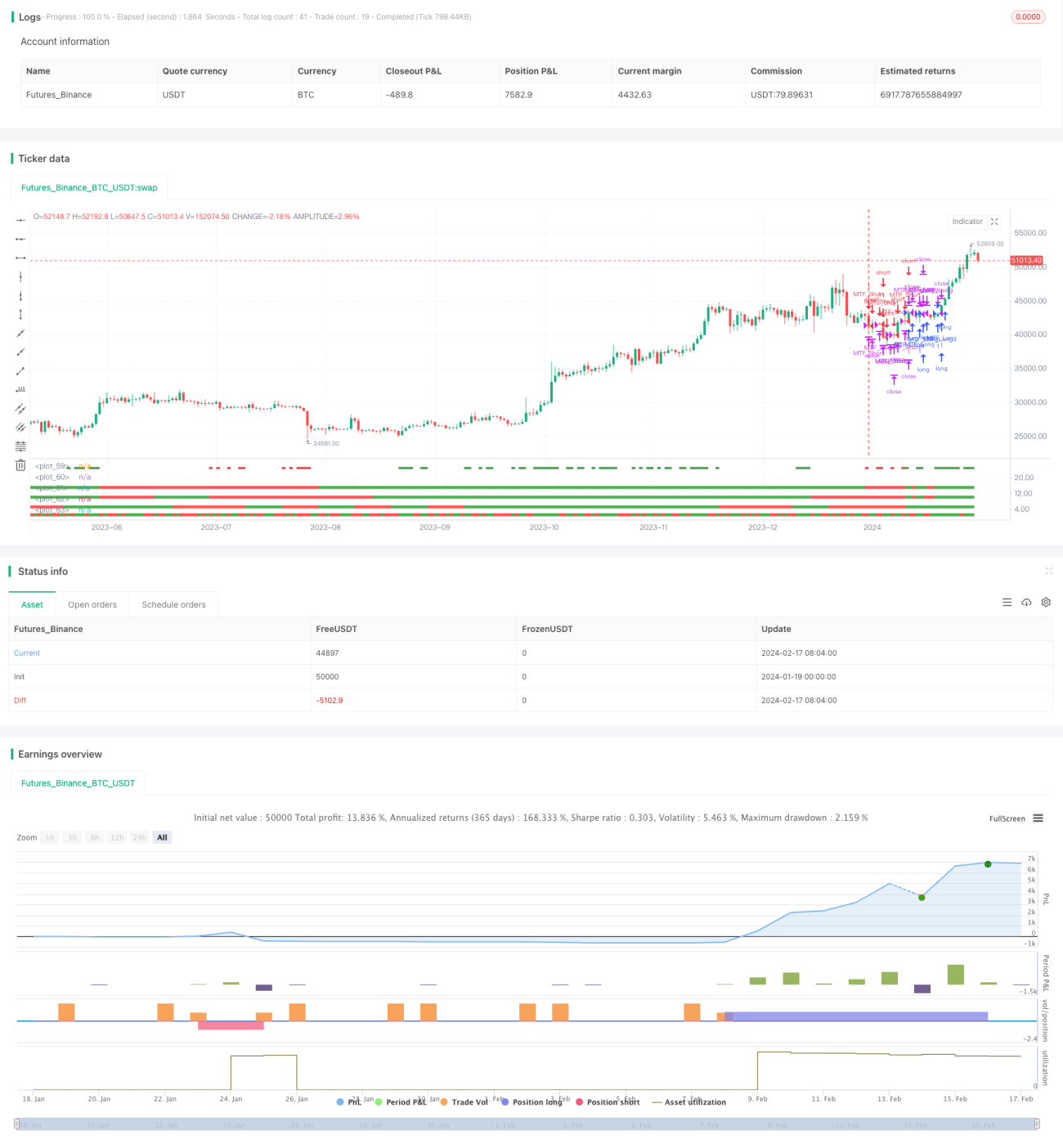
This strategy utilizes the agreement of indicators across multiple timeframes to track trends. It goes long or short when the daily, 10-day, 15-day and 30-day timeframes simultaneously give bullish or bearish signals, with dynamic stop loss.
Strategy Logic
The strategy judges trend direction using four timeframes - daily, 10-day, 15-day and 30-day. When the closing prices are higher than the opening prices across all four timeframes, it indicates a bullish signal. When the closing prices are lower than the opening prices across all four timeframes, it indicates a bearish signal.
When the signal is bullish, it goes long. When the signal is bearish, it goes short. After entering, KC channel is used for dynamic stop loss.
Specifically, the strategy compares the opening prices and closing prices across different timeframes to determine the trend direction. If closing price is higher than opening price, the timeframe is considered bullish and plotted in green. If closing price is lower than opening price, the timeframe is considered bearish and plotted in red.
When all four timeframes agree on a bullish signal, the strategy will open a long position. When all four timeframes agree on a bearish signal, the strategy will open a short position. It will exit when hit the stop loss or the trend reverses.
Advantages
-
Using multiple timeframes to confirm trends can effectively filter false breakouts and determine trend direction.
-
Dynamic stop loss can maximize capital protection.
-
Strict entry criteria reduces unnecessary trades and slippage costs.
-
Combining multiple timeframes balances profit speed and stability.
Risks
-
Entry criteria may be too strict, missing some opportunities.
-
Improper stop loss setting may be too aggressive or conservative.
-
Inappropriate timeframe selections may not align with longer or shorter term trends.
-
Sudden reversals from events may not trigger stop loss.
Enhancement Areas
-
Optimize timeframe selections to balance profit speed and stability.
-
Test different parameter settings to optimize stop loss levels.
-
Add machine learning algorithms to assist in judging reversal points.
-
Monitor significant events to avoid losses from sudden reversals.
Summary
This strategy integrates judgments across multiple timeframes, with strict entry criteria and dynamic stops, aiming for steady returns. It has the risk of missing opportunities and improper risk control. Next step is to continue optimizing parameters for higher stability.
- 1