Dual MACD Price Action Breakout Trailing Strategy

Overview
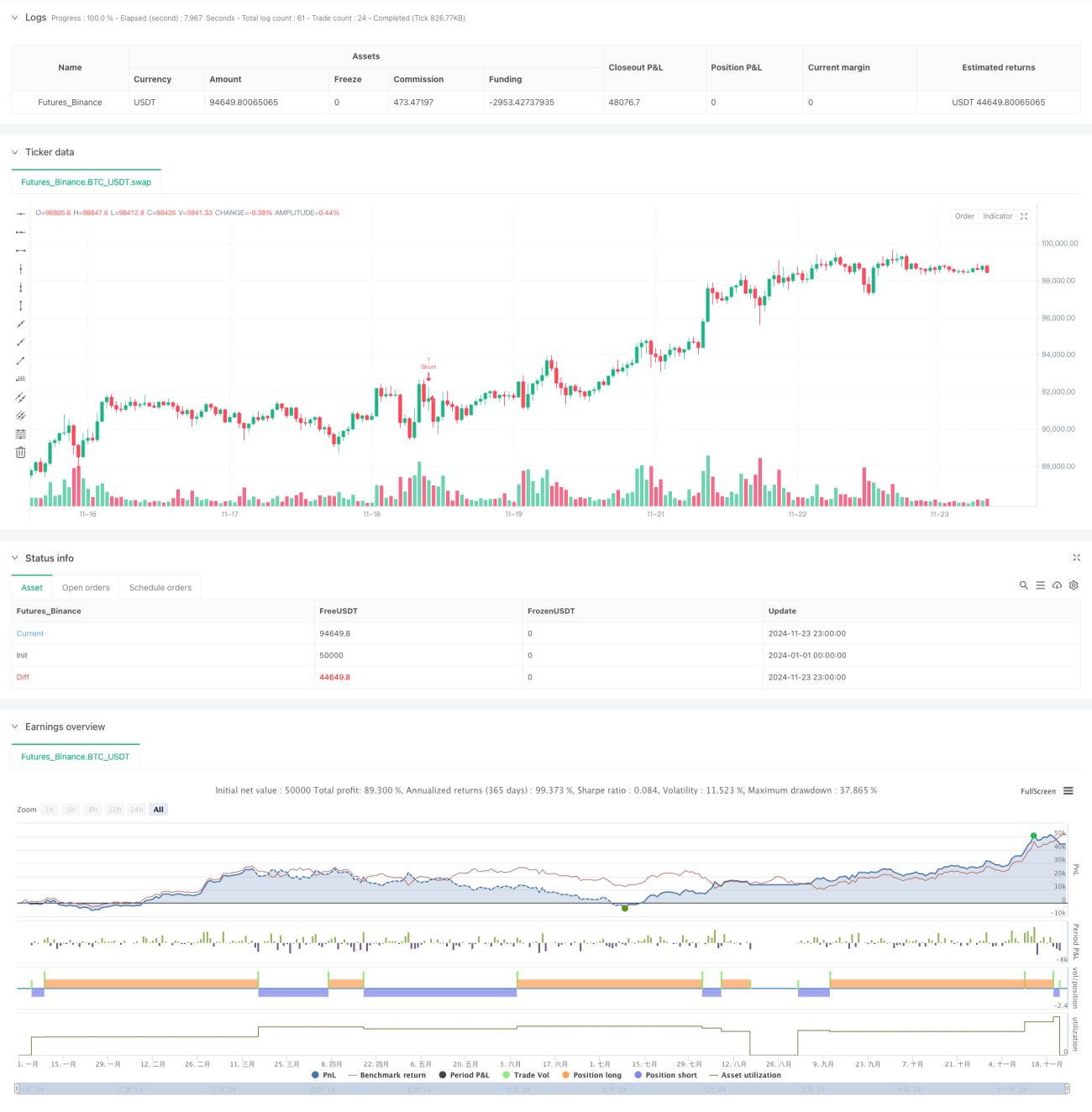
This is a trading strategy that combines dual MACD indicators with price action analysis. The strategy identifies market trends through color changes in the MACD histograms on the 15-minute timeframe, looks for strong candle patterns on the 5-minute timeframe, and confirms breakout signals on the 1-minute timeframe. It employs ATR-based dynamic stop-loss and trailing take-profit mechanisms to effectively manage risk while maximizing profit potential.
Strategy Principles
The strategy utilizes two MACD indicators with different parameters (34/144/9 and 100/200/50) to confirm market trends. When both MACD histograms show the same color trend, the system looks for strong candle patterns on the 5-minute chart, characterized by bodies 1.5 times larger than their shadows. Once a strong candle is identified, the system monitors for breakouts on the 1-minute chart. Positions are opened when price breaks above highs in uptrends or below lows in downtrends. Stops are set based on ATR, while a 1.5x ATR multiple is used for dynamic trailing take-profits.
Strategy Advantages
- Multi-timeframe analysis: Combines 15-minute, 5-minute, and 1-minute timeframes for improved signal reliability
- Trend confirmation: Uses dual MACD cross-validation to reduce false signals
- Price action analysis: Identifies key price levels through strong candle patterns
- Dynamic risk management: Adaptive stop-loss and trailing take-profit mechanisms based on ATR
- Signal filtering: Strict entry conditions reduce false trades
- High automation: Fully automated trading reduces human intervention
Strategy Risks
- Trend reversal risk: False breakouts possible in highly volatile markets
- Slippage risk: High-frequency trading on 1-minute timeframe may face slippage
- Overtrading risk: Frequent signals may lead to excessive trading
- Market environment dependence: May underperform in ranging markets
Mitigation measures:
- Add trend filters
- Set minimum volatility thresholds
- Implement trade frequency limits
- Introduce market environment recognition
Optimization Directions
- MACD parameter optimization: Adjust MACD parameters based on market characteristics
- Stop-loss optimization: Consider adding volatility-based dynamic stops
- Trading time filters: Add trading window restrictions
- Position management: Implement scaled entry and exit mechanisms
- Market environment filtering: Add trend strength indicators
- Drawdown control: Introduce equity curve-based risk control
Summary
This is a comprehensive strategy system combining technical analysis and risk management. It ensures trade quality through multi-timeframe analysis and strict signal filtering while effectively managing risk through dynamic stops and trailing profits. The strategy shows strong adaptability but requires continuous optimization based on market conditions. For live trading, thorough backtesting and parameter optimization are recommended, along with adjustments based on specific market characteristics.
- 1