Advanced Volatility Mean Reversion Trading Strategy: Multi-Dimensional Quantitative Trading System Based on VIX and Moving Average

Overview
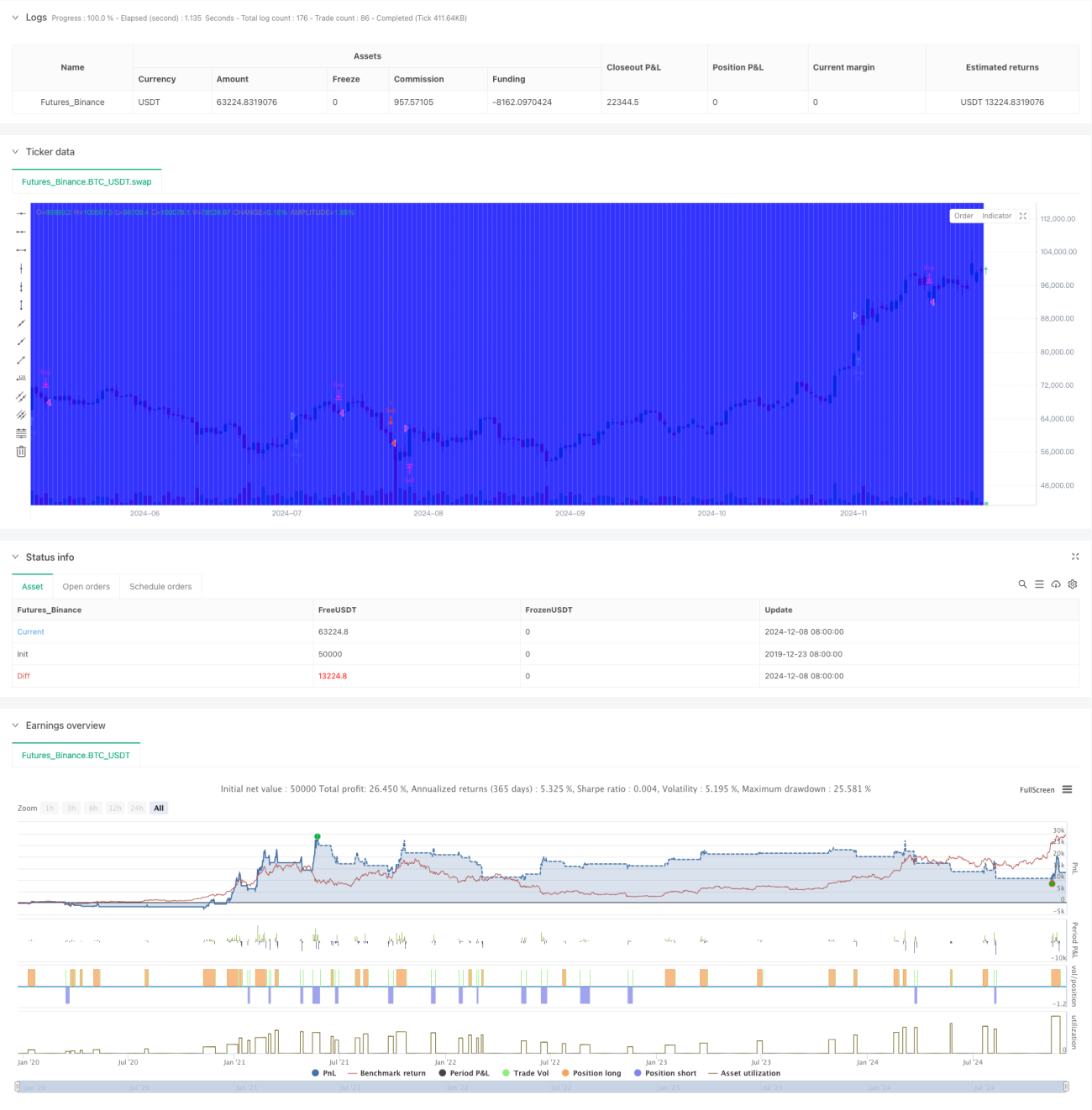
This strategy is a quantitative trading system based on the behavior of the Volatility Index (VIX) relative to its 10-day moving average. The strategy utilizes the deviation between VIX and its moving average as trading signals, combining technical analysis and statistical arbitrage concepts. The core idea is to capture extreme changes in market sentiment by trading when VIX shows significant deviations and waiting for mean reversion.
Strategy Principles
The strategy employs a bi-directional trading mechanism with both long and short dimensions:
Long conditions require VIX's low to be above its 10-day moving average, and the closing price must be at least 10% above the moving average. When both conditions are met, the system generates a buy signal at market close.
Short conditions require VIX's high to be below its 10-day moving average, and the closing price must be at least 10% below the moving average. When both conditions are met, the system generates a sell signal at market close.
Exit rules are also based on VIX's relationship with the moving average: long positions are closed when VIX trades below the previous day's 10-day moving average intraday; short positions are closed when VIX trades above the previous day's 10-day moving average intraday.
Strategy Advantages
- Clear quantitative indicators: The strategy uses specific numerical indicators and clear trading rules, avoiding subjective judgment.
- Bi-directional trading mechanism: Profits can be made in different market volatility phases, increasing profit opportunities.
- Comprehensive risk control: Clear entry and exit conditions help control risk.
- Reliable technical indicators: Based on VIX, a market-recognized volatility indicator, with good market adaptability.
Strategy Risks
- Market volatility risk: VIX itself measures market volatility, and the strategy may face sudden market swings.
- Overfitting risk: Strategies based on specific conditions may suffer from overfitting issues.
- Mean reversion assumption risk: The mean reversion assumption may fail in trending markets.
- Liquidity risk: May face liquidity shortages and slippage during extreme market volatility.
Strategy Optimization Directions
- Parameter optimization: Optimize moving average periods and deviation thresholds.
- Additional filters: Incorporate other technical indicators to improve signal reliability.
- Dynamic thresholds: Adjust deviation thresholds based on market conditions.
- Risk management optimization: Add stop-loss and money management mechanisms.
Conclusion
This strategy is a mean reversion strategy based on market volatility, using quantitative methods to capture extreme changes in market sentiment. The strategy has clear trading rules and risk control mechanisms but requires attention to how changing market environments affect strategy performance. Through continuous optimization and improvement, this strategy has the potential to maintain stable performance across different market conditions.
- 1