Volatility Engine Protocol

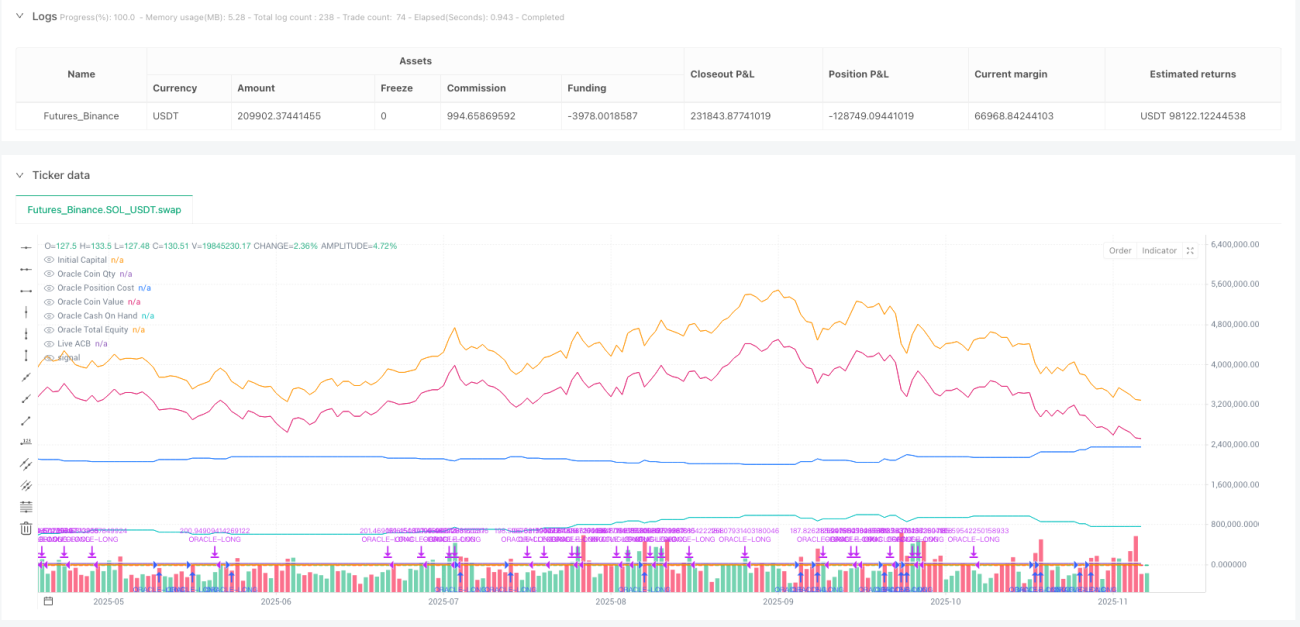
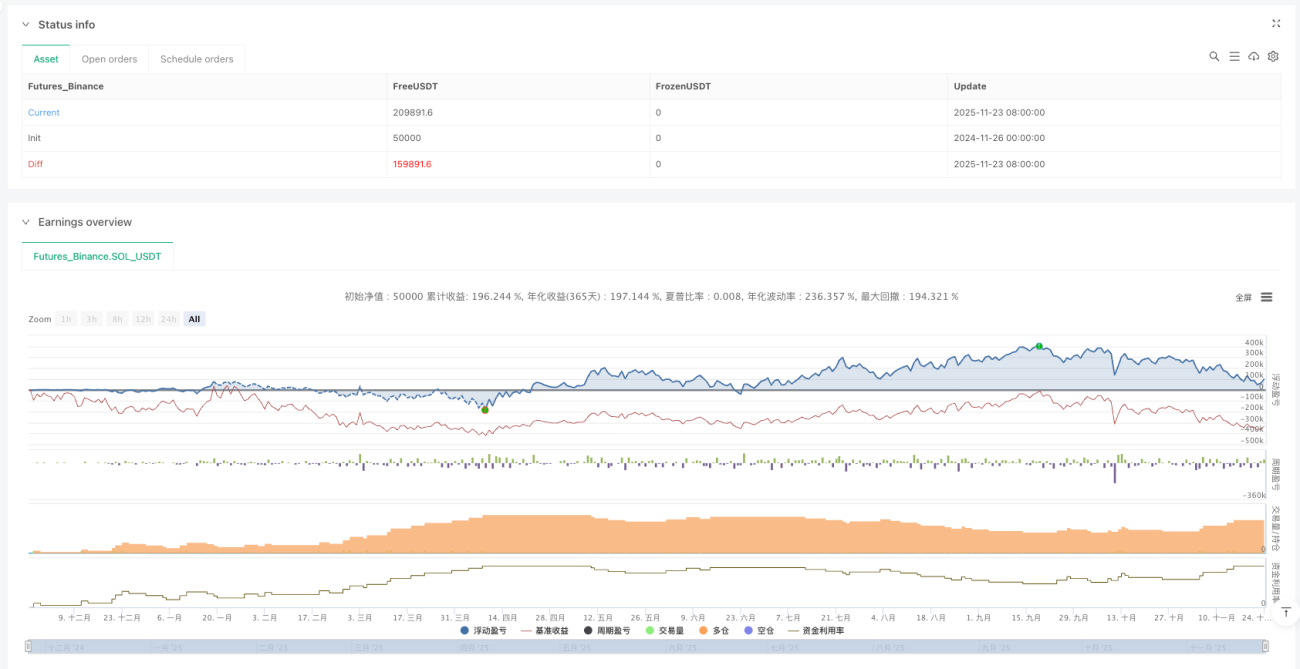
This Isn't Regular DCA, This Is DCA With a Brain
Backtest data directly challenges traditional dollar-cost averaging: 5% drop triggers buy, 3.9% rise triggers sell, but the key is volatility engine dynamically adjusts buy threshold based on ATR. Higher market volatility means higher buy threshold, up to 40% adjustment. This means during high volatility periods, strategy waits for larger drops before entering.
Traditional DCA's problem is mindless buying, while this protocol's core logic is only firing during real opportunity windows. Uses ATR(14) to calculate current volatility, then dynamically adjusts longThreshPct parameter. For example, normal 5% drop buy-in, but if current volatility reaches 20%, actual buy threshold rises to 6%.
8 Preset Configurations, Each With Clear Return Expectations
BTC Cycle Accumulation: 5% drop buy-in, 6% position size, $500 fixed amount, suitable for long-term holders.
BTC Short Target Arbitrage: 3.1% drop buy-in, 10% position size, $6000 fixed amount, 75% profit gate sell.
ETH Volatility Harvesting: 4.5% drop buy-in, 15% position size, allows buying below cost basis, 30% profit gate.
Each configuration is backtest-verified, not random parameter guessing. SOL configuration 35% profit gate, XRP configuration 10% profit gate - these differences reflect different assets' volatility characteristics and liquidity differences.
Cluster Seal Mechanism: Solving DCA Strategy's Biggest Pain Point
Traditional DCA's biggest problem is not knowing when to stop buying. This protocol uses "cluster seal" to solve: either price rises 3.9% from average cost, or 10 consecutive periods without qualifying buy opportunities seals current accumulation cluster.
Sealed average cost line becomes sell reference baseline. Only when price breaks sealed cost line + profit gate (30%-75% range) will trigger sell. This avoids endless buying and premature profit-taking.
Quiet bars mechanism is genius: if 10 consecutive periods don't trigger buy conditions, market has stabilized and should prepare to harvest rather than continue accumulating.
Flywheel Effect: Making Profits Serve Next Purchase
With flywheel mode enabled, each sell's profit reinvests into cash pool, increasing ammunition for next buy. This isn't simple compounding, but giving strategy stronger firepower during bull markets.
Example: Initial $100K, first accumulation round gains 20%, after selling cash pool becomes $120K. Next buy at 6% position becomes $7200 instead of $6000. Over time, this snowball effect significantly amplifies returns.
But flywheel has costs: late bull market may buy too much due to oversized cash pool, requiring strict single-buy limits.
Risk Control: Triple Insurance Mechanism
First layer: Above-cost-line buy control. Can set to only buy below average cost, avoiding chasing highs.
Second layer: Minimum amount limits. Each buy/sell has minimum dollar requirements, avoiding meaningless small trades.
Third layer: Volatility engine adjustment. Automatically raises buy threshold during high volatility, lowers during low volatility.
But this strategy performs poorly in ranging markets. If market ranges long-term, can't trigger large drop buys or reach profit gate sells, capital gets locked long-term.
Practical Advice: Choosing Right Market Is Key
This protocol works best in trending markets, especially crypto's cyclical movements. Start accumulating in late bear market, start harvesting in mid bull market for optimal results.
Don't use in: 1) High-frequency oscillating stock markets 2) Forex markets lacking clear trends 3) Extremely illiquid altcoins.
Historical backtests show risk-adjusted returns superior to simple DCA, but this doesn't guarantee future profits. Any quantitative strategy has failure risk, requiring continuous monitoring and adjustment.
//@version=6
// ============================================================================
//  ORACLE PROTOCOL — ARCH PUBLIC clone (Standalone) — CLEAN-PUB STYLE (derived)
//  Variant: v1.9v-standalone (publish-ready)  25/11/2025
//  Notes:
//   - Keeps your v1.9v canonical script intact (this is a separate modified copy).
//   - Single exit mode: ProfitGate + Candle (per-candle) — no selector.
//   - Live ACB plot toggle only (sealed ACB still operates internally but is not shown).
//   - No freeze-point markers plotted.
//   - Sizing: flywheel dynamic sizing remains the primary source but fixed-dollar entry
//     and min-$ overrides remain available (as in Arch public PDFs/screenshots).
// - Volatility Engine (VE) applies ONLY to entries; exit-side VE removed.- 1