Multi-Level Balanced Quantitative Trading Strategy

Overview
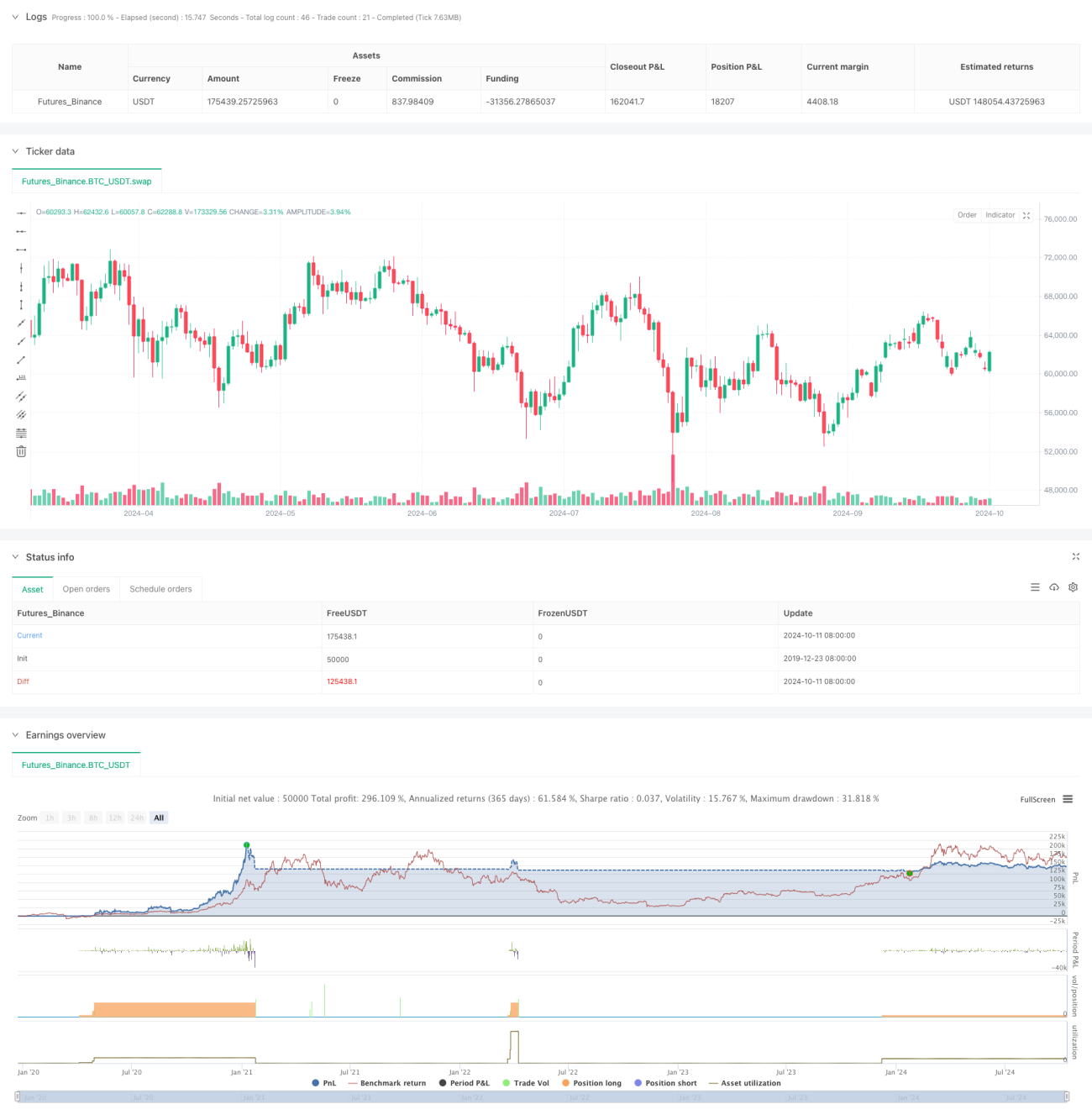
The Multi-Level Balanced Quantitative Trading Strategy is a complex trading system that combines multiple technical indicators and price levels. This strategy utilizes indicators such as MACD, RSI, EMA, and Bollinger Bands, along with Fibonacci retracement levels, to implement different trading tactics at various price ranges, achieving multi-level balanced trading. The core idea of the strategy is to increase trading accuracy through multiple confirmations while optimizing capital management through gradual position building.
Strategy Principles
The core principles of this strategy include:
- Using MACD, RSI, and EMA indicators to determine market trends and momentum.
- Utilizing Bollinger Bands and Fibonacci retracement levels to identify key support and resistance levels.
- Setting multiple entry points at different price levels to achieve gradual position building.
- Managing risk through different take-profit and stop-loss levels.
- Using Heikin Ashi candlesticks to provide additional market structure information.
The strategy comprehensively analyzes these factors to take appropriate trading actions under different market conditions, aiming to achieve stable returns.
Strategy Advantages
- Multiple Confirmations: Combining multiple technical indicators increases the reliability of trading signals.
- Flexible Capital Management: The gradual position building approach allows for better risk control and capital utilization optimization.
- High Adaptability: The strategy can adjust trading behavior according to different market conditions.
- Comprehensive Risk Management: Multiple levels of stop-loss and take-profit mechanisms effectively control risk.
- High Degree of Automation: The strategy can be fully automated, reducing human intervention.
Strategy Risks
- Over-trading: The multiple trading levels may lead to frequent trading, increasing transaction costs.
- Parameter Sensitivity: The strategy uses multiple indicators and parameters, requiring careful adjustment to adapt to different market environments.
- Drawdown Risk: In highly volatile markets, the strategy may face significant drawdown risks.
- Technical Dependence: The strategy heavily relies on technical indicators, which may fail under certain market conditions.
- Capital Management Risk: The gradual position building approach may lead to overexposure in certain situations.
Strategy Optimization Directions
- Dynamic Parameter Adjustment: Introduce machine learning algorithms to automatically adjust strategy parameters based on market conditions.
- Market Sentiment Analysis: Integrate market sentiment indicators, such as the VIX index, to improve strategy adaptability.
- Multi-Timeframe Analysis: Introduce multi-timeframe analysis to enhance the reliability of trading signals.
- Volatility Adjustment: Dynamically adjust trading volume and stop-loss levels based on market volatility.
- Transaction Cost Optimization: Introduce a transaction cost model to optimize trading frequency and size.
Summary
The Multi-Level Balanced Quantitative Trading Strategy is a comprehensive and adaptive trading system. By combining multiple technical indicators and price levels, this strategy can maintain stability in different market environments. Although there are some risks, they can be effectively controlled through continuous optimization and adjustment. In the future, by introducing more advanced technologies such as machine learning and sentiment analysis, this strategy has the potential to achieve better performance. For investors seeking a comprehensive, automated trading solution, this is a worthy option to consider.
- 1