Multi-Dimensional Technical Indicator Trend Following Quantitative Strategy

Overview
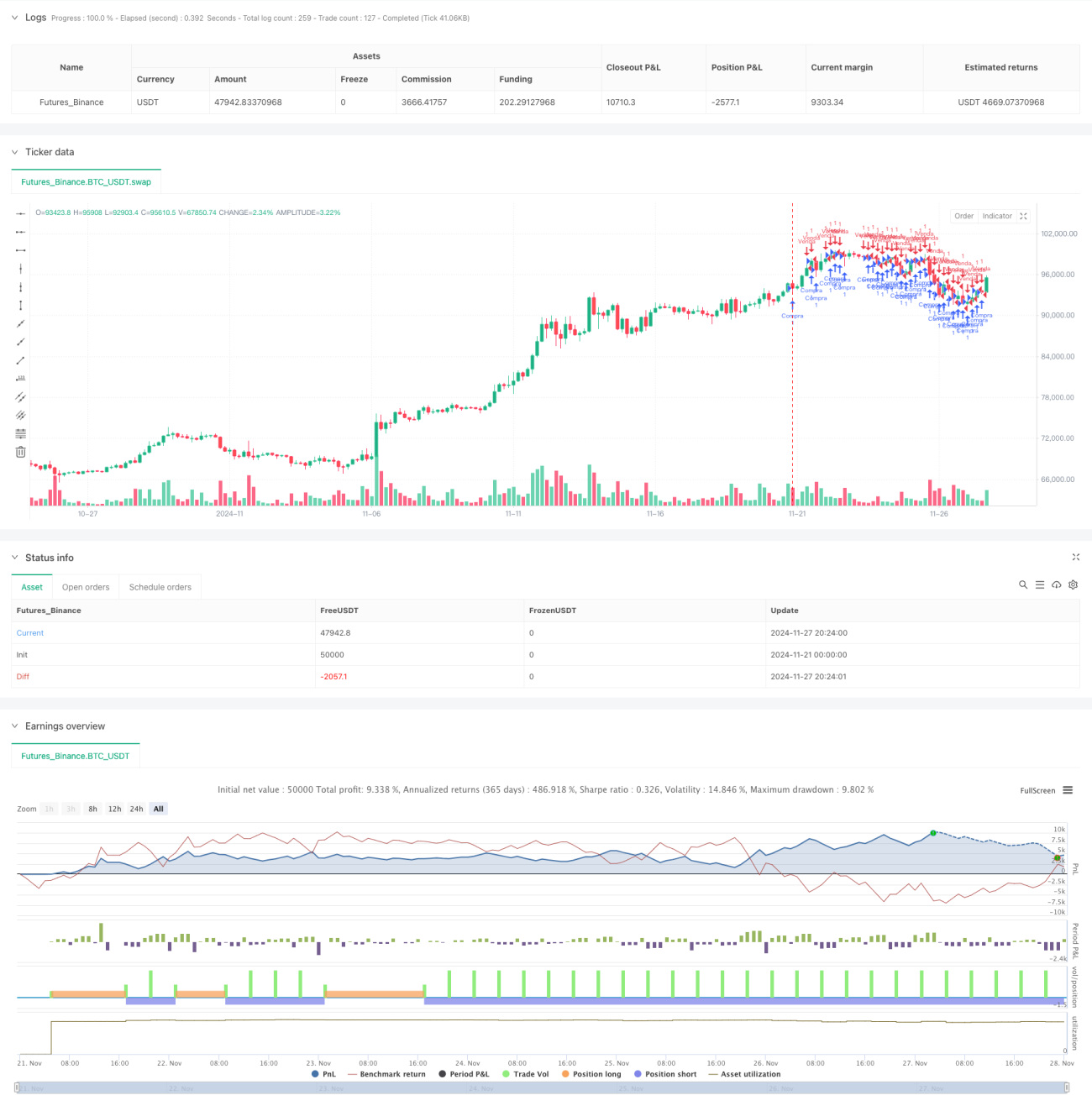
This strategy is a quantitative trading system based on multi-dimensional technical indicator analysis, integrating technical indicators such as Relative Strength Index (RSI), Moving Average Convergence Divergence (MACD), and Exponential Moving Average (EMA) to build a fully automated trading decision system. The strategy adopts a modular design, supports flexible configuration of trading parameters, and integrates dynamic take-profit, stop-loss, and trailing stop mechanisms to achieve stable returns under controlled risk.
Strategy Principles
The core logic is based on the synergistic analysis of three major technical indicators:
- RSI identifies overbought and oversold areas, generating buy signals when RSI is below 30 and sell signals above 70
- MACD determines trend changes through line crossovers, with upward crosses generating buy signals and downward crosses generating sell signals
- EMA confirms trend direction using 20-day and 50-day moving average crossovers, with short-term moving average crossing above long-term indicating buy signals and vice versa
The strategy triggers trades when any indicator generates a signal, while integrating percentage-based stop-loss, fixed take-profit, and trailing stop mechanisms. When price reaches the preset profit target, trailing stop is automatically activated to protect accumulated profits from significant drawdowns.
Strategy Advantages
- Multi-dimensional signal verification system improves trading signal reliability through cross-validation of different technical indicators
- Modular design supports flexible enabling/disabling of indicators to adapt to different market environments
- Comprehensive fund management mechanism achieves precise risk control for different capital scales through parameterized configuration
- Triple stop-loss protection system manages risk while securing profits
- Full automation reduces emotional interference and improves execution efficiency
- Real-time display of trading status and profit/loss facilitates monitoring and strategy adjustment
Strategy Risks
- Oscillating markets may generate frequent trading signals, increasing transaction costs
- Multiple indicator combinations may have signal lag, affecting entry timing
- Fixed parameter configuration may lack flexibility in volatile markets
- Technical indicators may generate contradictory signals
- Trailing stops may trigger premature exits in rapidly changing markets
Strategy Optimization Directions
- Introduce market volatility indicators to dynamically adjust trading parameters and stop-loss positions
- Develop indicator weighting system to adaptively adjust indicator influence based on market environment
- Add timeframe analysis to improve accuracy through multi-period signal confirmation
- Design intelligent fund management system to dynamically adjust position sizes based on account performance
- Optimize trailing stop algorithm to improve adaptation to extreme volatility
Summary
The strategy constructs a systematic trading decision framework through multi-dimensional technical indicator analysis and achieves precise management of the entire trading process through comprehensive risk control mechanisms. While facing specific challenges in certain market environments, the strategy has the potential to maintain stable performance across different market cycles through continuous optimization and improvement. The modular design approach also provides a solid foundation for future functional expansion and optimization.
- 1