Triple EMA Trend Following Quantitative Trading Strategy

Overview
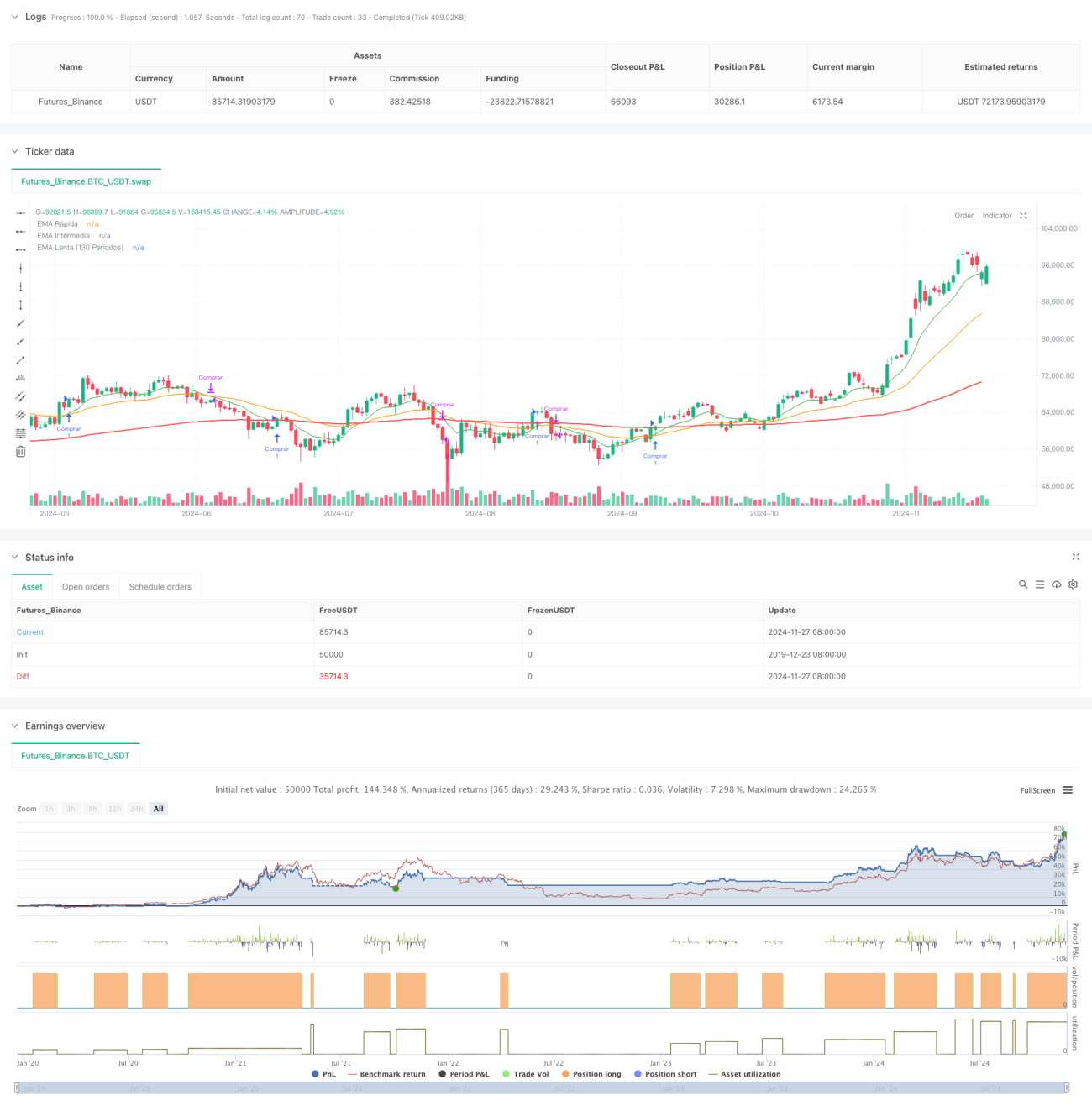
This strategy is a trend following system based on triple exponential moving averages (EMA). It captures market trends through crossover signals and trend direction confirmation using fast, intermediate, and slow EMAs, exclusively taking long positions in uptrends. The strategy implements strict stop-loss controls and backtesting validation mechanisms to achieve robust trading performance.
Strategy Principles
The strategy utilizes three EMAs with different periods: fast EMA (adjustable 3-20 periods), intermediate EMA (adjustable 21-60 periods), and slow EMA (fixed 130 periods). Trading signals are based on:
- Entry conditions: Fast EMA crosses above intermediate EMA with both intermediate and slow EMAs trending upward; or fast EMA crosses above slow EMA with slow EMA trending upward.
- Exit conditions: Fast EMA crosses below intermediate EMA.
- Risk control: Fixed 6% stop-loss.
- Trend confirmation: Calculated through slope analysis of intermediate and slow EMAs.
Strategy Advantages
- Multiple confirmation mechanism: Reduces false signals through triple EMA and trend slope confirmations.
- High flexibility: Adjustable periods for fast and intermediate EMAs for market-specific optimization.
- Comprehensive risk control: Fixed stop-loss percentage for strict single-trade risk management.
- Clear trend following: Ensures trading only in definitive uptrends through EMA slope analysis.
- Standardized execution: Clear trading rules suitable for programmatic implementation.
Strategy Risks
- Sideways market risk: May generate frequent false signals in ranging markets.
- Lag risk: Moving averages are inherently lagging indicators, potentially missing early trend opportunities.
- Parameter dependency: Optimal parameters may vary across different market environments.
- Stop-loss risk: Fixed stop-loss may lack flexibility in high-volatility environments.
- Trend reversal risk: Potential for significant losses during sudden trend reversals.
Strategy Optimization Directions
- Dynamic parameter optimization: Suggest adjusting EMA periods based on market volatility.
- Market environment filtering: Add trend strength indicators to avoid trading in weak trend environments.
- Stop-loss optimization: Consider incorporating volatility indicators like ATR for dynamic stop-loss adjustment.
- Position management: Implement dynamic position sizing based on market volatility.
- Exit optimization: Consider adding profit targets or trailing stop mechanisms.
Summary
This strategy represents a well-structured and logically rigorous trend following system. The combination of multiple technical indicators ensures both reliability and flexibility. While there is room for optimization, the overall framework provides a solid foundation for practical application. Traders are advised to thoroughly optimize parameters and conduct backtesting before live implementation, making specific adjustments based on market characteristics.
- 1