Estrategia de cruce MACD

Resumen
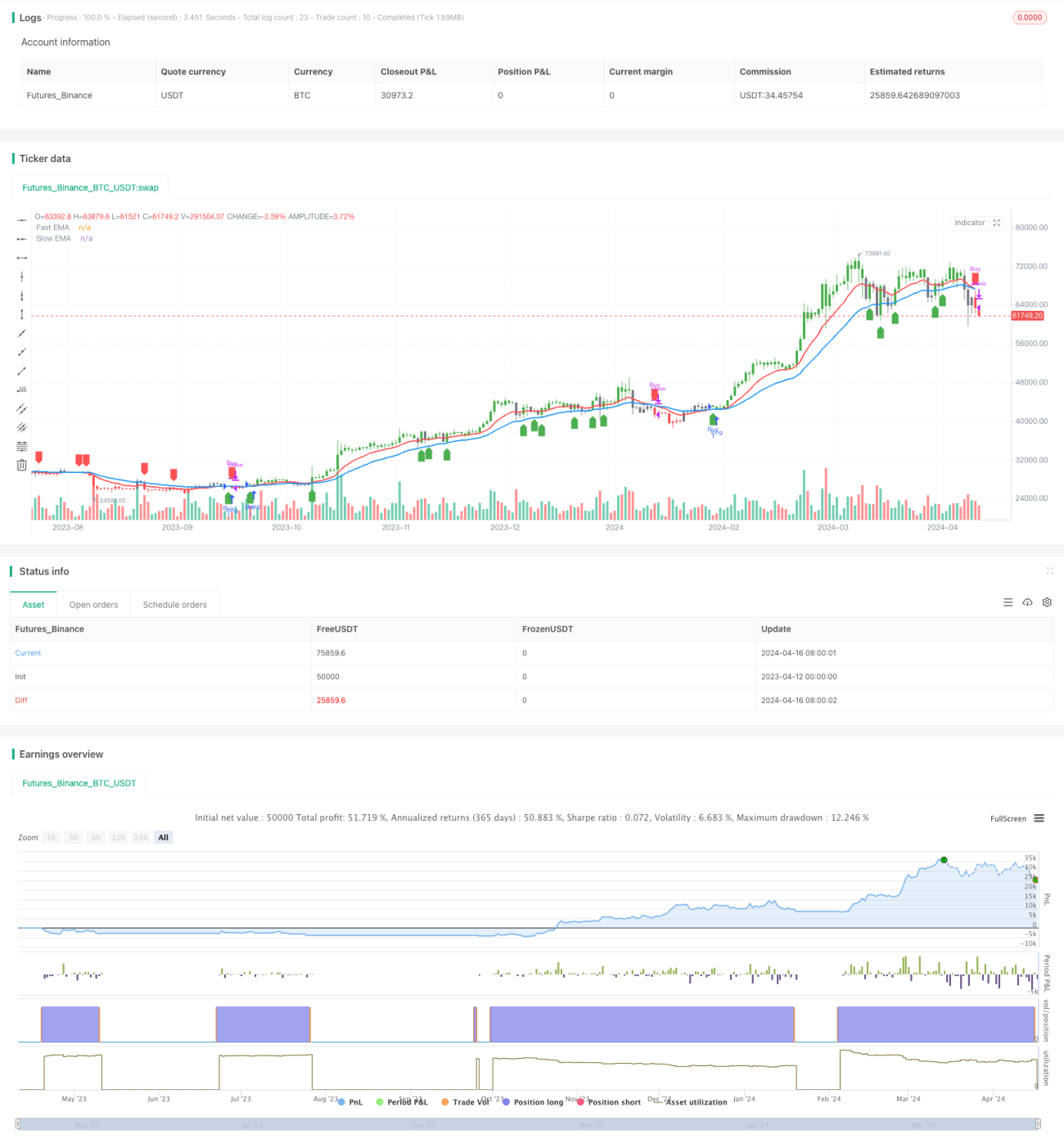
Esta estrategia utiliza el cruce de dos medias móviles exponenciales (EMA) de diferentes períodos. Se genera una señal de compra cuando la EMA rápida cruza de abajo hacia arriba a la EMA lenta, y una señal de venta cuando la EMA rápida cruza de arriba hacia abajo a la EMA lenta. La estrategia puede aplicarse a diversos instrumentos financieros y marcos temporales; por ejemplo, es más efectiva para el oro en el período de 2 horas y para Bitcoin en el gráfico diario, entre otros.
Principio de la estrategia
- Calcular la EMA rápida (período predeterminado de 12) y la EMA lenta (período predeterminado de 26).
- Definir la zona alcista (EMA rápida por encima de la EMA lenta y precio por encima de la EMA rápida) y la zona bajista (EMA rápida por debajo de la EMA lenta y precio por debajo de la EMA rápida).
- Comprar cuando se pasa de una zona bajista a una zona alcista, y vender cuando se pasa de una zona alcista a una zona bajista.
- En el gráfico, se marcan las zonas alcistas y bajistas en verde y rojo, respectivamente, y las señales de compra y venta con flechas.
Ventajas de la estrategia
- Simple y fácil de entender, adecuada para principiantes.
- Amplia aplicabilidad, puede utilizarse en diversos instrumentos financieros y marcos temporales.
- Fuerte capacidad de seguimiento de tendencias, capaz de capturar tendencias a medio y largo plazo.
- Parámetros ajustables, lo que aumenta la flexibilidad.
Riesgos de la estrategia
- En mercados laterales es propensa a generar señales falsas, lo que puede provocar pérdidas.
- Reacciona lentamente en los puntos de giro de tendencia, lo que puede generar cierto deslizamiento.
- Una elección inadecuada de parámetros puede afectar el rendimiento de la estrategia.
Direcciones de optimización de la estrategia
- Incorporar un filtro de tendencia, por ejemplo, operar solo cuando el ADX supere un determinado valor, para reducir pérdidas en mercados laterales.
- Optimizar los momentos de entrada y salida, por ejemplo, utilizando el ATR para determinar el stop loss y take profit, reduciendo así las pérdidas por operación.
- Optimizar los parámetros para encontrar la mejor combinación, mejorando la estabilidad y la rentabilidad.
- Combinar con otros indicadores auxiliares, como MACD, RSI, etc., para aumentar la precisión de las señales.
Conclusión
La estrategia de cruce de MACD es una estrategia simple basada en el seguimiento de tendencias. Su ventaja radica en su simplicidad, practicidad y amplia aplicabilidad. Su desventaja es la dificultad para identificar los giros de tendencia y la complejidad en la selección de parámetros. Mediante el filtrado de tendencias, la optimización de los puntos de entrada y salida, la selección óptima de parámetros y la combinación con otros indicadores, se puede mejorar el rendimiento de esta estrategia, lo que merece una mayor investigación y pruebas.
/*backtest
start: 2023-04-12 00:00:00
end: 2024-04-17 00:00:00
period: 1d
basePeriod: 1h
exchanges: [{"eid":"Futures_Binance","currency":"BTC_USDT"}]
*/

//@version=5
strategy('Advance EMA Crossover Strategy', overlay=true, precision=6)
//****************************************************************************//
// CDC Action Zone is based on a simple EMA crossover - 1