Large Volatility Breakout Dual-Direction Trading Strategy: Point-Based Threshold Entry System

Overview
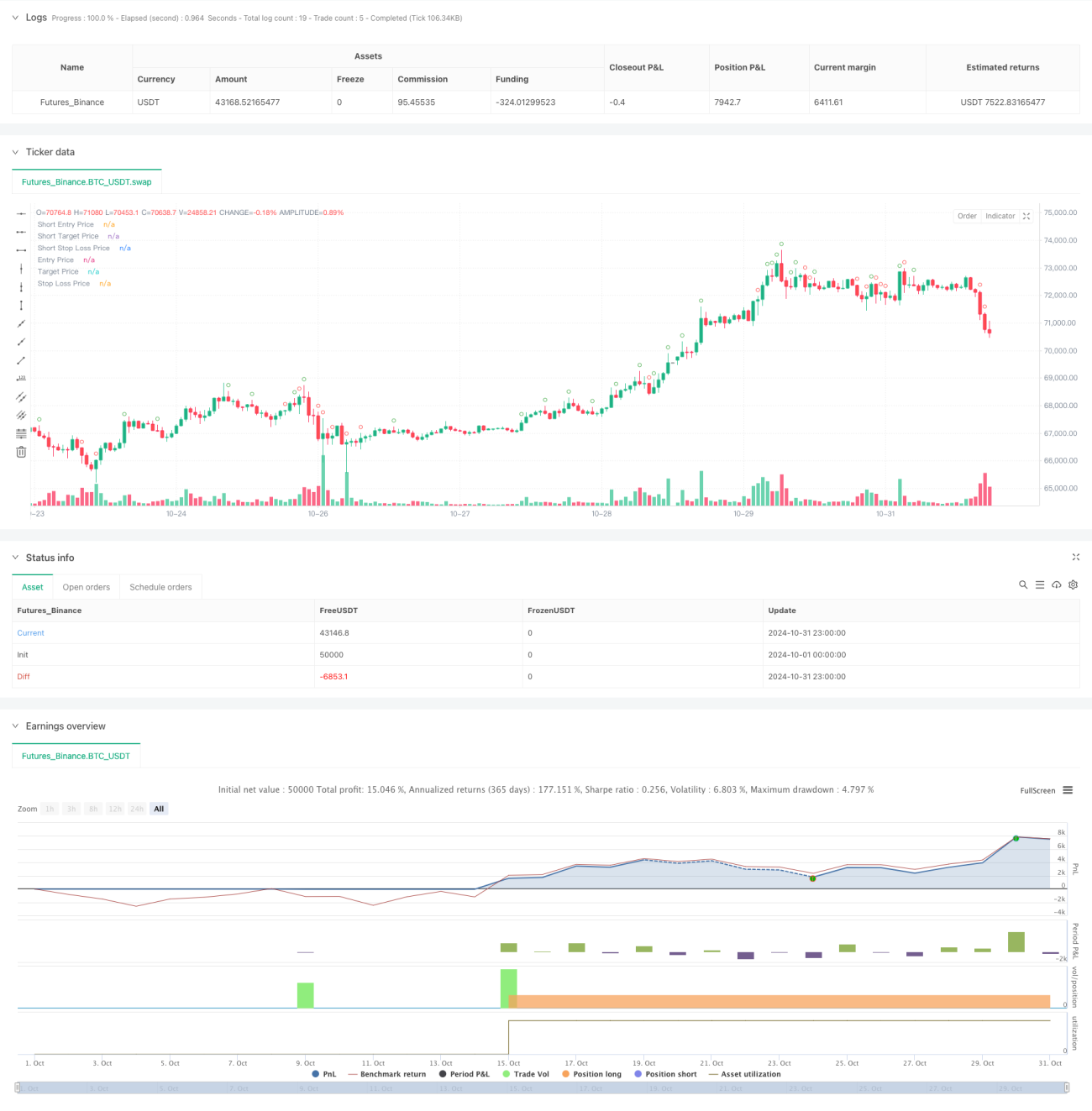
This strategy is a dual-direction trading system based on 30-minute candles, seeking trading opportunities through price volatility monitoring. The core mechanism involves identifying significant price movements using point thresholds and executing trades upon breakout confirmation. The strategy incorporates strict time management, stop-loss/take-profit mechanisms, and trade management protocols for controlled automated trading.
Strategy Principle
The strategy employs multiple filtering mechanisms to identify valid trading signals. It calculates the volatility range of each 30-minute candle at close, marking potential trading opportunities when the range exceeds preset thresholds. To ensure signal validity, the strategy implements additional buffer points, triggering actual trade signals only when prices break through this buffer zone. The system enables both long and short positions, entering longs on upward breakouts and shorts on downward breakouts, with corresponding profit targets and stop-loss levels.
Strategy Advantages
- Comprehensive time management: Limited trading windows avoid false signals during inactive periods
- Dual-direction trading: Captures opportunities in both market directions, improving capital efficiency
- Robust risk control: Fixed-point stop-loss and take-profit levels facilitate risk assessment and management
- High automation: Fully automated from signal identification to trade execution, minimizing human intervention
- Flexible parameter settings: Adjustable key parameters adapt to different market conditions
Strategy Risks
- False breakout risk: Large volatility may lead to false breakouts resulting in stop-loss exits
- Parameter sensitivity: Improper threshold settings may cause missed opportunities or overtrading
- Market environment dependency: May trigger frequent stop-losses in ranging markets
- Slippage impact: Actual execution prices may significantly deviate from signal prices during high volatility
- Capital management risk: Lack of position sizing mechanisms may lead to excessive risk exposure
Strategy Optimization Directions
- Add trend filtering: Incorporate longer-term trend indicators to improve signal quality
- Dynamic parameter optimization: Automatically adjust thresholds and stop-loss parameters based on market volatility
- Volume confirmation: Add volume filtering conditions to enhance breakout reliability
- Optimize stop-loss/take-profit: Implement dynamic exits adapting to different market conditions
- Incorporate position sizing: Dynamically adjust position sizes based on signal strength and market volatility
Conclusion
This is a comprehensively designed automated trading strategy with clear logic. Through strict condition filtering and risk control, the strategy demonstrates practical applicability. However, thorough testing and optimization in live trading are necessary, particularly in parameter settings and risk control aspects which need adjustment based on actual market conditions. Successful strategy implementation requires stable market conditions and appropriate parameter configuration, with recommended extensive backtesting before live deployment.
- 1