Type/to search

Multi-Period SAR Trend Following Strategy with Adaptive Stop-Loss Optimization

PSAR
1
Follow
1781
Followers

img

Overview

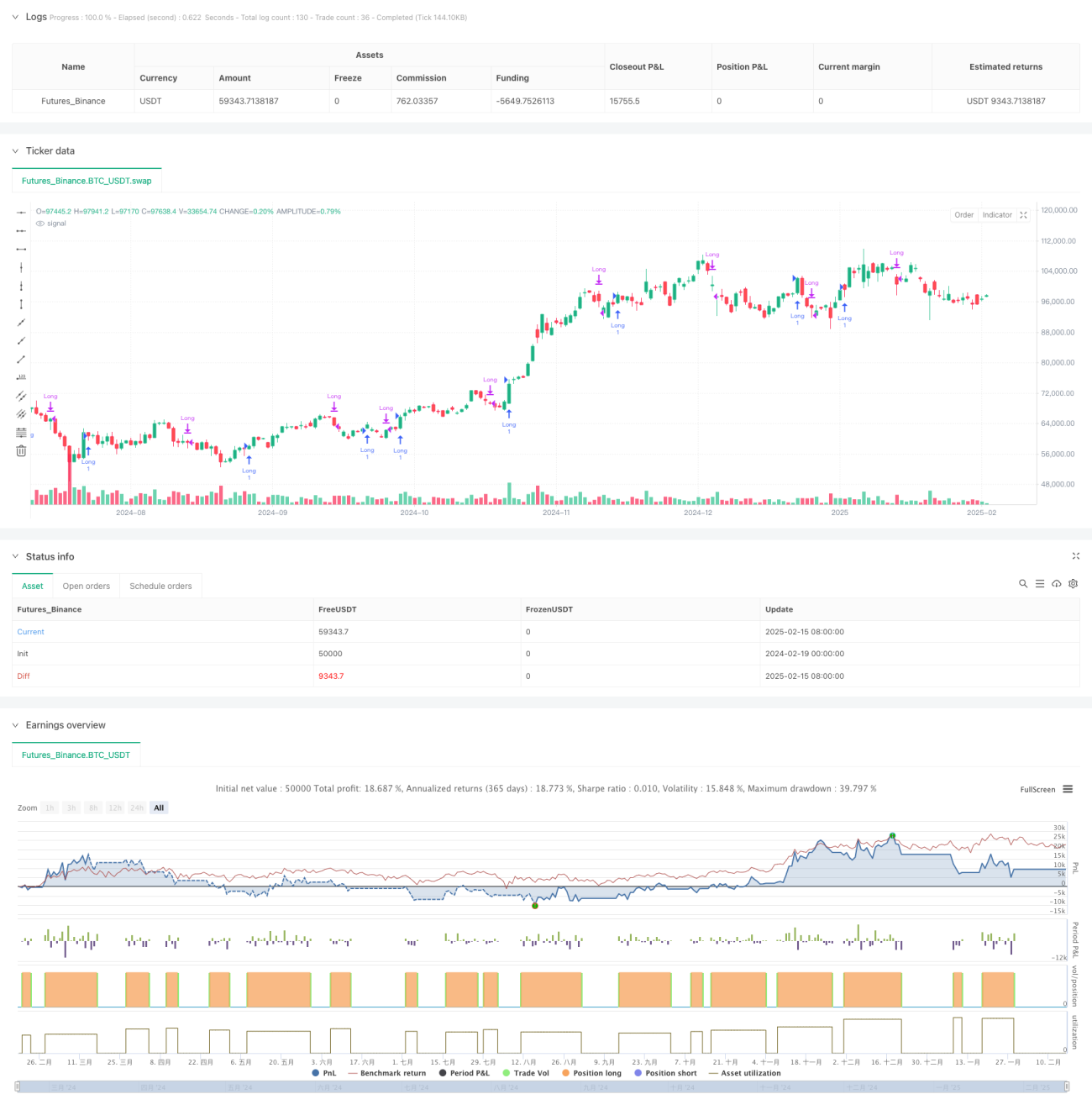
This strategy is a deep optimization of the traditional Parabolic SAR (Stop and Reverse) indicator, combining multi-period trend judgment and adaptive stop-loss mechanisms. The strategy employs a dynamic Acceleration Factor (AF) adjustment method, tracking market trends through continuous updates of Extreme Points (EP) to achieve precise capture of upward trends and risk control.

Strategy Principles

The core logic of the strategy is based on the following key elements:

  1. Dynamic SAR Calculation: Uses three parameters - initial AF, increment value, and maximum value - to dynamically adjust SAR values based on trend strength.
  2. Trend Determination Mechanism: Judges trend direction by comparing SAR values with price positions, triggering trend reversal signals when SAR crosses price.
  3. Entry Logic: Places entry orders using next period's predicted SAR value as stop-loss when uptrend is confirmed and no position is held.
  4. Stop-Loss Optimization: Uses extremes from the previous 1-2 candles as SAR adjustment benchmark, improving stop-loss accuracy and timeliness.

Strategy Advantages

  1. Strong Adaptability: Parameters automatically adjust to market volatility through dynamic AF adjustment.
  2. Comprehensive Risk Control: Uses predictive SAR values for stop-loss, ensuring forward-looking and effective risk management.
  3. Accurate Trend Capture: Multiple trend confirmation mechanisms reduce risks from false breakouts.
  4. Rigorous Calculation Logic: Employs variable state maintenance mechanism, ensuring strategy stability in historical backtesting.

Strategy Risks

  1. Sideways Market Risk: Frequent false signals may trigger consecutive stop-losses in ranging markets.
    Solution: Introduce volatility filters to reduce trading frequency in low volatility environments.
  2. Slippage Impact: Predictive SAR stops may face slippage risks in highly volatile markets.
    Solution: Set reasonable slippage tolerance and adjust parameters based on instrument characteristics.
  3. Trend Reversal Delay: Stop-loss may lag in sharp reversal situations.
    Solution: Incorporate short-period momentum indicators to improve stop-loss sensitivity.

Strategy Optimization Directions

  1. Multi-Period Synergy: Add trend confirmation mechanisms across multiple timeframes to improve signal reliability.
  2. Dynamic Parameter Optimization: Dynamically adjust AF parameters based on market volatility.
  3. Stop-Loss Mechanism Enhancement: Introduce ATR-based dynamic stop-loss bands for improved flexibility.
  4. Position Management Optimization: Add volatility-based dynamic position management mechanism.

Summary

The strategy effectively combines trend following and risk control through deep optimization of the classic PSAR indicator. Its adaptive features and comprehensive stop-loss mechanism provide strong practical application value. Through the suggested optimization directions, the strategy's stability and profitability can be further enhanced.

Source
Pine
/*backtest
start: 2024-02-19 00:00:00
end: 2025-02-16 08:00:00
period: 1d
basePeriod: 1d
exchanges: [{"eid":"Futures_Binance","currency":"BTC_USDT"}]
*/

//@version=6
strategy("A股抛物线策略(仅做多)- 完全移除SAR绘图", overlay=true)

// 参数设置
Strategy parameters
Strategy parameters
起始加速因子 (Optional)
加速因子增量 (Optional)
加速因子最大值 (Optional)
Comment
All comments (0)
No data
No data
  • 1
iPhone Download
Forums
PINE Language
© 2015 - ∞ INVENTOR PTE LTD (SG)