
偶然发现一个有趣的Pine策略
前几天在发明者论坛翻阅策略,看到一个叫 Panel Pro+ Quantum SmartPrompt 的策略。看了一遍代码,发现这个策略的思路挺有意思:用10个技术指标,根据市场状态给每个指标分配不同的权重,最后算出一个评分来决定买卖。比如在牛市状态下,趋势指标权重是2.0,RSI权重是1.5;在熊市状态下,权重又不一样。感觉像是在模仿人的思考方式:不同情况下,关注的重点不同。
仔细一想,这个结构挺像神经网络的:
- 10个技术指标当输入
- 市场状态分类像隐藏层
- 权重矩阵就是连接权重
- 最后输出一个评分
但问题是所有权重都是写死的,比如:
pine
if marketType == "Bull"
array.set(weights, 0, 2.0) // 趋势权重固定是2.0
array.set(weights, 1, 1.5) // RSI权重固定是1.5
这些数字完全是作者根据市场经验固定出来的,没有经过任何学习或优化。
想法:让权重能够学习
既然结构已经很像神经网络了,为什么不让它真的能学习呢?
我的想法很简单:
- 保留原来的权重计算方式,得到一个"权重评分"
- 用这个权重评分作为输入,训练一个小的神经网络
- 让网络学习从权重评分预测未来收益率
- 根据预测的收益率大小来决定要不要开仓
这样既保留了原策略的思路,又增加了学习能力。
在发明者平台动手实现
选择发明者平台主要因为它支持Python,而且包含丰富的数据。
第一步:重写技术指标
把Pine脚本里的所有指标用Python重新写了一遍,用talib库保证计算准确。包括EMA、MACD、RSI、ATR这些常用指标,还有成交量分析和简单的K线形态识别。
第二步:市场状态检测
照着原策略的逻辑,根据各种指标的组合判断市场类型:Bull、Bear、Eagle、Wolf等等。这部分基本就是if-else逻辑的组合。
第三步:权重评分计算
这是核心部分。我设了两套权重:
- 基础权重:[2.0, 1.5, 2.0, 1.3, 1.2, ...]
- 市场权重:根据不同市场状态调整
最终权重 = 基础权重 × 市场权重
然后用这个权重对10个指标的原始得分加权求和,得到"权重评分"。
第四步:神经网络预测器
写了个很简单的网络:
- 输入:1个特征(权重评分)
- 隐藏层:16个神经元,ReLU激活
- 输出:预测收益率,用tanh限制在±5%
训练目标:用t-1时刻的权重评分,预测t时刻的价格变化。
第五步:交易逻辑
不再根据评分高低直接买卖,而是看预测的收益率:
- 预测收益率 > 1.5%:开多或平空开多
- 预测收益率 < -1.5%:开空或平多开空
- 其他情况:保持现状
同时保留止盈止损,确保风险可控。
实际运行的一些观察
数据收集
策略能正常收集训练数据。每次有新K线时,会用前一根K线的权重评分作为特征,当前K线相对前一根的涨跌幅作为标签。
数据大概是这样的:
            权重评分=15.6, 收益率=+0.8%
权重评分=-8.2, 收益率=-1.2%
权重评分=22.1, 收益率=+0.3%
模型训练
神经网络能正常训练,MSE损失会逐步下降。设置每4小时重新训练一次,保证模型能适应市场变化。
预测效果
模型的预测和实际收益率确实有一定相关性,但不是特别强。主要问题:
- 单个特征太简单,可能信息不够
- 短期价格变动随机性很大
- 合约市场噪声比较多
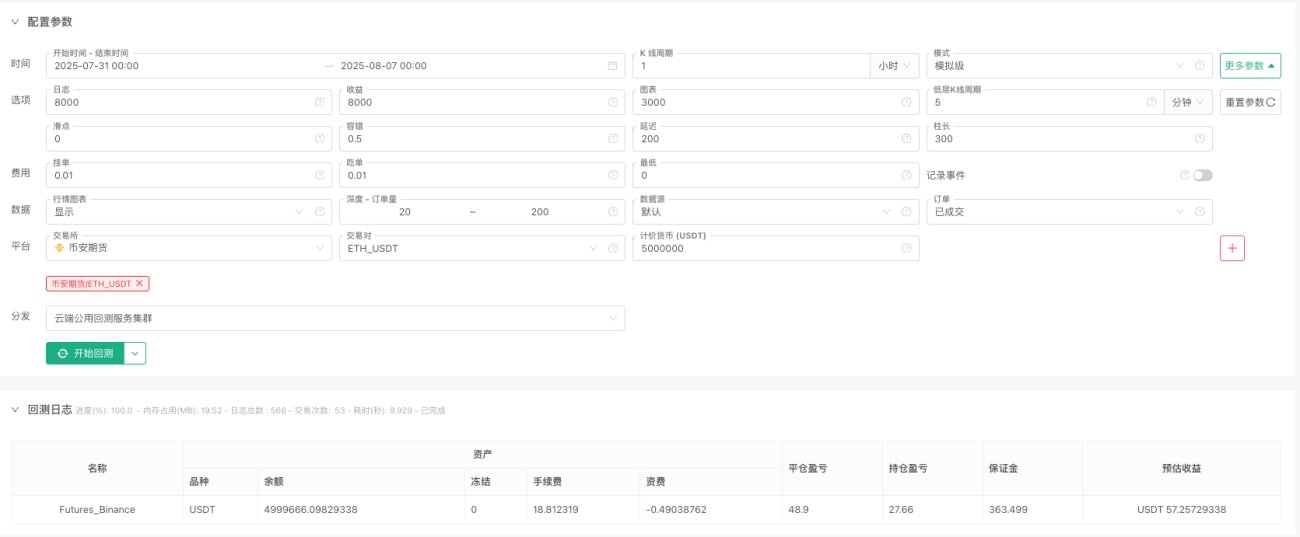
交易表现
由于有止盈止损保护,单笔交易的风险控制得不错。但整体盈利能力一般,主要还是预测准确性不够高。
遇到的一些问题
特征太单一:只用权重评分一个特征,确实有点简单。市场这么复杂,一个数字很难完全概括。
样本质量不稳定:合约价格短期波动很大,很多时候涨跌其实是随机的,这让训练样本的质量不太稳定。
过拟合风险:虽然网络很简单,但样本量有限时还是可能过拟合。
实时性要求:在线学习需要平衡训练时间和实时性。
时间有限,优化不够
这个策略还有很多可以改进的地方,但时间和精力有限,没法深入优化:
特征方面:可以加更多技术指标,或者用价格序列的统计特征。
模型方面:可以试试LSTM这种序列模型,或者用多个模型集成。
数据方面:改进样本质量,增加数据清洗。
风控方面:完善动态止损,优化仓位管理。
收获和感想
这次探索让我明白了一个道理:好的灵感重点在于及时实现!当时看到Pine脚本的权重矩阵设计,马上就想到了用神经网络改进的可能性。如果当时只是想想而已,或者拖着不动手,这个想法很可能就被遗忘了。恰好发明者平台提供了Python环境和数据接口,让我能够快速把想法变成可运行的代码。从产生想法到完成基本实现,前后也就花了一天时间。虽然最终的策略效果一般,但通过实际运行,至少验证了这个思路是可行的。更重要的是,在实现过程中又产生了新的想法和改进思路。如果没有及时动手,这些后续的发现和思考都不会有。纸上谈兵永远比不上真刀真枪地写代码、跑数据、看结果。量化交易就是这样,想法很多,但真正有价值的是那些被快速实现和验证的想法。
python
'''backtest
start: 2025-07-31 00:00:00
end: 2025-08-07 00:00:00
period: 1h
basePeriod: 5m
exchanges: [{"eid":"Futures_Binance","currency":"ETH_USDT","balance":5000000,"fee":[0.01,0.01]}]
'''
import numpy as np
from collections import deque
import talib as TA
# ========== 异常类 ==========
class Error_noSupport(BaseException):
def __init__(self):
Log("只支持期货交易!#FF0000")
class Error_AtBeginHasPosition(BaseException):
def __init__(self):
Log("启动时有期货持仓! #FF0000")
# ========== 收益率预测神经网络 ==========
class ReturnPredictor:
def __init__(self, input_size=10, hidden_size=20, output_size=1):
"""收益率预测网络: X[t] -> y[t+1] (收益率)"""
self.W1 = np.random.randn(input_size, hidden_size) * 0.1
self.b1 = np.zeros((1, hidden_size))
self.W2 = np.random.randn(hidden_size, output_size) * 0.1
self.b2 = np.zeros((1, output_size))
self.learning_rate = 0.001
def sigmoid(self, x):
return 1 / (1 + np.exp(-np.clip(x, -250, 250)))
def tanh(self, x):
return np.tanh(x)
def forward(self, X):
self.z1 = np.dot(X, self.W1) + self.b1
self.a1 = self.sigmoid(self.z1)
self.z2 = np.dot(self.a1, self.W2) + self.b2
# 输出预测收益率,使用tanh限制在合理范围
self.a2 = self.tanh(self.z2) * 0.1 # 限制在±10%范围内
return self.a2
def backward(self, X, y, output):
m = X.shape[0]
# MSE损失的梯度
dZ2 = (output - y) / m
# tanh的导数
tanh_derivative = 1 - (output / 0.1) ** 2
dZ2 = dZ2 * 0.1 * tanh_derivative
dW2 = np.dot(self.a1.T, dZ2)
db2 = np.sum(dZ2, axis=0, keepdims=True)
dA1 = np.dot(dZ2, self.W2.T)
dZ1 = dA1 * self.a1 * (1 - self.a1) # sigmoid导数
dW1 = np.dot(X.T, dZ1)
db1 = np.sum(dZ1, axis=0, keepdims=True)
# 更新权重
self.W2 -= self.learning_rate * dW2
self.b2 -= self.learning_rate * db2
self.W1 -= self.learning_rate * dW1
self.b1 -= self.learning_rate * db1
def train(self, X, y, epochs=100):
for i in range(epochs):
output = self.forward(X)
self.backward(X, y, output)
if i % 20 == 0:
loss = np.mean((output - y) ** 2)
Log(f"收益率预测训练轮次 {i}, MSE损失: {loss:.6f}")
def predict(self, X):
return self.forward(X)
# ========== 技术指标计算类 ==========
class TechnicalIndicators:
@staticmethod
def calculate_indicators(records, use_completed_only=True):
"""计算技术指标和特征"""
if len(records) < 55:
return None, None
# 只使用已完成的K线数据
if use_completed_only and len(records) > 1:
working_records = records[:-1]
else:
working_records = records
if len(working_records) < 55:
return None, None
closes = np.array([r['Close'] for r in working_records])
highs = np.array([r['High'] for r in working_records])
lows = np.array([r['Low'] for r in working_records])
volumes = np.array([r['Volume'] for r in working_records])
opens = np.array([r['Open'] for r in working_records])
try:
# 基础指标
ema_55 = TA.EMA(closes, timeperiod=55)
sma_vol20 = TA.SMA(volumes, timeperiod=20)
macd, signal_line, _ = TA.MACD(closes)
rsi_val = TA.RSI(closes, timeperiod=14)
atr14 = TA.ATR(highs, lows, closes, timeperiod=14)
range20 = TA.STDDEV(closes, timeperiod=20)
# 计算派生指标
sma_atr20 = TA.SMA(atr14, timeperiod=20)
sma_range20 = TA.SMA(range20, timeperiod=20)
rvol = volumes / sma_vol20 if sma_vol20[-1] > 0 else np.ones_like(volumes)
delta = closes - opens
# 计算量能阈值
vol_abs_thresh = sma_vol20 * 1.2
sniper_thresh = np.percentile(volumes[-40:], 80) if len(volumes) >= 40 else sma_vol20[-1]
# 趋势
trend = np.where(closes > ema_55, 1, np.where(closes < ema_55, -1, 0))
# 简化K线形态
body_size = np.abs(closes - opens)
total_range = highs - lows
# 锤子线
is_hammer = ((total_range > 3 * body_size) &
((closes - lows) / (total_range + 0.001) > 0.6) &
((opens - lows) / (total_range + 0.001) > 0.6))
# 吞噬形态
is_engulfing = np.zeros_like(closes, dtype=bool)
if len(closes) >= 2:
is_engulfing[1:] = ((closes[1:] > opens[:-1]) &
(opens[1:] < closes[:-1]) &
(closes[1:] > opens[1:]) &
(opens[1:] < closes[1:]))
pattern = np.where(is_hammer, 1, np.where(is_engulfing, 2, 0))
# 🔥 计算标准化特征向量(用于神经网络输入)
features = []
# 1. 趋势特征
if len(ema_55) > 0 and not np.isnan(ema_55[-1]):
trend_feature = (closes[-1] - ema_55[-1]) / ema_55[-1]
features.append(np.tanh(trend_feature * 100))
else:
features.append(0)
# 2. RSI特征
if len(rsi_val) > 0 and not np.isnan(rsi_val[-1]):
rsi_feature = (rsi_val[-1] - 50) / 50
features.append(rsi_feature)
else:
features.append(0)
# 3. MACD特征
if len(macd) > 0 and not np.isnan(macd[-1]) and not np.isnan(signal_line[-1]):
macd_feature = (macd[-1] - signal_line[-1]) / closes[-1] if closes[-1] > 0 else 0
features.append(np.tanh(macd_feature * 1000))
else:
features.append(0)
# 4. 成交量特征
if len(vol_abs_thresh) > 0 and vol_abs_thresh[-1] > 0:
vol_feature = volumes[-1] / vol_abs_thresh[-1] - 1
features.append(np.tanh(vol_feature))
else:
features.append(0)
# 5. 相对成交量特征
if len(rvol) > 0 and not np.isnan(rvol[-1]):
rvol_feature = rvol[-1] - 1
features.append(np.tanh(rvol_feature))
else:
features.append(0)
# 6. Delta特征
if len(delta) > 0 and not np.isnan(delta[-1]) and closes[-1] > 0:
delta_feature = delta[-1] / closes[-1]
features.append(np.tanh(delta_feature * 100))
else:
features.append(0)
# 7. ATR特征
if len(atr14) > 0 and len(sma_atr20) > 0 and sma_atr20[-1] > 0:
atr_feature = atr14[-1] / sma_atr20[-1] - 1
features.append(np.tanh(atr_feature))
else:
features.append(0)
# 8. Blocks特征
if len(volumes) >= 10:
highest_vol = np.max(volumes[-10:])
blocks_feature = volumes[-1] / highest_vol - 0.8 if highest_vol > 0 else 0
features.append(np.tanh(blocks_feature * 5))
else:
features.append(0)
# 9. Tick特征
if len(sma_vol20) > 0 and sma_vol20[-1] > 0:
tick_feature = volumes[-1] / sma_vol20[-1] - 1
features.append(np.tanh(tick_feature))
else:
features.append(0)
# 10. 形态特征
pattern_feature = pattern[-1] / 2.0 if len(pattern) > 0 else 0
features.append(pattern_feature)
# 确保特征数量正确
while len(features) < 10:
features.append(0)
features = np.array(features[:10]).reshape(1, -1)
indicators = {
'ema_55': ema_55,
'sma_vol20': sma_vol20,
'macd': macd,
'signal_line': signal_line,
'rsi_val': rsi_val,
'atr14': atr14,
'range20': range20,
'sma_atr20': sma_atr20,
'sma_range20': sma_range20,
'rvol': rvol,
'delta': delta,
'vol_abs_thresh': vol_abs_thresh,
'sniper_thresh': sniper_thresh,
'trend': trend,
'pattern': pattern,
'volumes': volumes,
'closes': closes,
'highs': highs,
'lows': lows
}
return indicators, features
except Exception as e:
Log(f"计算技术指标异常: {str(e)}")
return None, None
# ========== 市场状态检测类 ==========
class MarketStateDetector:
@staticmethod
def detect_market_type(indicators):
"""检测市场状态"""
if indicators is None:
return "Unknown"
try:
# 获取最新值
close = indicators['closes'][-1]
ema_55 = indicators['ema_55'][-1]
macd = indicators['macd'][-1]
signal_line = indicators['signal_line'][-1]
rsi_val = indicators['rsi_val'][-1]
atr14 = indicators['atr14'][-1]
volume = indicators['volumes'][-1]
sma_vol20 = indicators['sma_vol20'][-1]
sma_atr20 = indicators['sma_atr20'][-1]
range20 = indicators['range20'][-1]
sma_range20 = indicators['sma_range20'][-1]
rvol = indicators['rvol'][-1]
delta = indicators['delta'][-1]
# 检查有效性
if (np.isnan(ema_55) or np.isnan(macd) or np.isnan(signal_line) or
np.isnan(rsi_val) or np.isnan(atr14) or np.isnan(sma_atr20)):
return "Unknown"
# 市场类型判断
is_bull = (close > ema_55 and macd > signal_line and rsi_val > 50 and rvol > 1)
is_bear = (close < ema_55 and macd < signal_line and rsi_val < 50 and volume > sma_vol20)
is_sideways = (abs(close - ema_55) < atr14 * 0.5 and atr14 < sma_atr20)
is_volatile = (atr14 > sma_atr20 * 1.2)
# 需要历史数据的判断
if len(indicators['closes']) >= 2:
price_change = indicators['closes'][-1] - indicators['closes'][-2]
is_momentum = (price_change > atr14 * 1.5 and volume > sma_vol20 * 1.5)
is_wolf = (price_change < -atr14 and close < ema_55)
else:
is_momentum = False
is_wolf = False
is_mean_rev = (rsi_val > 70 or rsi_val < 30)
is_box = (is_sideways and range20 < sma_range20 * 0.8)
is_macro = (abs(delta) > atr14 * 2) if not np.isnan(delta) else False
is_eagle = (is_bull and atr14 < sma_atr20 * 0.8)
# 优先级判断
if is_eagle:
return "Eagle"
elif is_bull:
return "Bull"
elif is_wolf:
return "Wolf"
elif is_bear:
return "Bear"
elif is_box:
return "Box"
elif is_sideways:
return "Sideways"
elif is_volatile:
return "Volatile"
elif is_momentum:
return "Momentum"
elif is_mean_rev:
return "MeanRev"
elif is_macro:
return "Macro"
else:
return "Unknown"
except Exception as e:
Log(f"市场状态检测异常: {str(e)}")
return "Unknown"
# ========== 动态权重生成器 ==========
class DynamicWeightGenerator:
@staticmethod
def generate_weights_from_predicted_return(predicted_return, market_type):
"""根据预测收益率和市场状态生成动态权重"""
# 基础权重矩阵(不同市场类型)
base_weights_matrix = {
"Bull": [2.0, 1.5, 2.0, 1.3, 1.2, 1.0, 1.2, 1.0, 1.0, 1.0],
"Bear": [2.0, 1.5, 2.0, 1.5, 1.3, 1.1, 1.2, 1.1, 1.0, 1.0],
"Eagle": [2.2, 1.4, 2.1, 1.2, 1.3, 1.1, 1.1, 1.0, 1.0, 1.1],
"Wolf": [1.8, 1.6, 1.8, 1.6, 1.2, 1.0, 1.3, 1.2, 1.0, 0.9],
"Momentum": [1.5, 1.2, 1.8, 2.0, 2.0, 1.5, 1.5, 1.3, 1.2, 1.0],
"Sideways": [1.0, 1.4, 1.0, 0.8, 0.7, 1.0, 0.9, 0.8, 1.0, 1.3],
"Volatile": [1.2, 1.5, 1.3, 1.6, 1.8, 1.2, 1.4, 1.3, 1.4, 1.0],
}
base_weights = base_weights_matrix.get(market_type, [1.0] * 10)
# 🔥 根据预测收益率动态调整权重
adjustment_factors = [1.0] * 10
# 预测收益率的强度
return_strength = abs(predicted_return)
return_direction = 1 if predicted_return > 0 else -1
if return_strength > 0.02: # 强预测信号 > 2%
if return_direction > 0: # 预测上涨
adjustment_factors[0] *= 1.3 # 增强趋势权重
adjustment_factors[2] *= 1.2 # 增强MACD权重
adjustment_factors[4] *= 1.15 # 增强相对成交量权重
adjustment_factors[1] *= 0.9 # 降低RSI权重
else: # 预测下跌
adjustment_factors[1] *= 1.3 # 增强RSI权重
adjustment_factors[3] *= 1.2 # 增强成交量权重
adjustment_factors[0] *= 0.9 # 降低趋势权重
elif return_strength > 0.01: # 中等预测信号 1%-2%
if return_direction > 0:
adjustment_factors[0] *= 1.15
adjustment_factors[2] *= 1.1
else:
adjustment_factors[1] *= 1.15
adjustment_factors[3] *= 1.1
# 波动性调整
if return_strength > 0.03: # 高波动预期 > 3%
adjustment_factors[4] *= 1.2 # 增强相对成交量权重
adjustment_factors[6] *= 1.15 # 增强sniper权重
adjustment_factors[7] *= 1.1 # 增强blocks权重
# 生成最终动态权重
dynamic_weights = [base_weights[i] * adjustment_factors[i] for i in range(10)]
# 权重标准化(可选)
# total_weight = sum(dynamic_weights)
# dynamic_weights = [w / total_weight * 10 for w in dynamic_weights]
return dynamic_weights
# ========== 智能得分计算系统 ==========
class SmartScoringSystem:
def __init__(self):
self.return_predictor = ReturnPredictor()
self.weight_generator = DynamicWeightGenerator()
self.is_model_trained = False
def calculate_score(self, indicators, market_type, features=None):
"""计算交易得分(使用预测收益率的动态权重)"""
if indicators is None:
return 50.0
try:
# 🔥 核心逻辑:使用当前指标预测下期收益率
if self.is_model_trained and features is not None:
predicted_return = self.return_predictor.predict(features)[0, 0]
else:
predicted_return = 0.0
Log(f"📊 使用基础权重计算")
# 根据预测收益率生成动态权重
dynamic_weights = self.weight_generator.generate_weights_from_predicted_return(
predicted_return, market_type)
# 获取最新指标值
trend = indicators['trend'][-1]
rsi_val = indicators['rsi_val'][-1]
macd = indicators['macd'][-1]
signal_line = indicators['signal_line'][-1]
volume = indicators['volumes'][-1]
vol_abs_thresh = indicators['vol_abs_thresh'][-1]
sma_vol20 = indicators['sma_vol20'][-1]
rvol = indicators['rvol'][-1]
delta = indicators['delta'][-1]
sniper_thresh = indicators['sniper_thresh']
pattern = indicators['pattern'][-1]
# 计算各项得分
base_score = 0.0
# 1. 趋势得分
trend_score = 20 if trend == 1 else (-20 if trend == -1 else 0)
base_score += trend_score * dynamic_weights[0]
# 2. RSI得分
rsi_score = -10 if rsi_val > 70 else (10 if rsi_val < 30 else 0)
base_score += rsi_score * dynamic_weights[1]
# 3. MACD得分
macd_score = 10 if macd > signal_line else -10
base_score += macd_score * dynamic_weights[2]
# 4. 成交量得分
vol_score = 8 if volume > vol_abs_thresh else (-8 if volume < sma_vol20 else 0)
base_score += vol_score * dynamic_weights[3]
# 5. 相对成交量得分
rvol_score = 7 if rvol > 1.5 else (-7 if rvol < 0.8 else 0)
base_score += rvol_score * dynamic_weights[4]
# 6. Delta得分
delta_score = 6 if delta > 0 else -6
base_score += delta_score * dynamic_weights[5]
# 7. Sniper得分
sniper_score = 8 if volume > sniper_thresh else (-8 if volume < sma_vol20 else 0)
base_score += sniper_score * dynamic_weights[6]
# 8. Blocks得分
if len(indicators['volumes']) >= 10:
highest_vol = np.max(indicators['volumes'][-10:])
blocks_score = 5 if volume > highest_vol * 0.8 else (-5 if volume < sma_vol20 else 0)
else:
blocks_score = 0
base_score += blocks_score * dynamic_weights[7]
# 9. Tick得分
tick_score = 5 if volume > sma_vol20 else -5
base_score += tick_score * dynamic_weights[8]
# 10. 形态得分
pattern_score = 7 if pattern == 1 else (5 if pattern == 2 else 0)
base_score += pattern_score * dynamic_weights[9]
# 转换为百分比得分
score_pct = max(0, min(100, 50 + base_score))
return score_pct
except Exception as e:
Log(f"得分计算异常: {str(e)}")
return 50.0
def train_return_predictor(self, X, y):
"""训练收益率预测器"""
if len(X) < 20:
Log("训练数据不足,跳过收益率预测器训练")
return False
X_array = np.array(X)
y_array = np.array(y).reshape(-1, 1)
Log(f"🧠 开始训练收益率预测器,样本数: {len(X_array)}")
Log(f"📊 收益率范围: [{np.min(y_array)*100:.3f}%, {np.max(y_array)*100:.3f}%]")
self.return_predictor.train(X_array, y_array, epochs=100)
self.is_model_trained = True
# 验证模型预测效果
predictions = self.return_predictor.predict(X_array)
mse = np.mean((predictions - y_array) ** 2)
correlation = np.corrcoef(predictions.flatten(), y_array.flatten())[0, 1]
Log(f"✅ 收益率预测器训练完成")
Log(f"📈 MSE: {mse:.6f}, 相关系数: {correlation:.4f}")
return True
# ========== 动态参数管理器 ==========
class DynamicParameterManager:
def __init__(self):
self.market_params = {
"Bull": {"stop_loss": 0.02, "take_profit": 0.05},
"Bear": {"stop_loss": 0.02, "take_profit": 0.05},
"Eagle": {"stop_loss": 0.015, "take_profit": 0.06},
"Wolf": {"stop_loss": 0.025, "take_profit": 0.04},
"Momentum": {"stop_loss": 0.025, "take_profit": 0.06},
"Sideways": {"stop_loss": 0.01, "take_profit": 0.02},
"Volatile": {"stop_loss": 0.03, "take_profit": 0.07},
"Unknown": {"stop_loss": 0.02, "take_profit": 0.03}
}
def get_params(self, market_type):
return self.market_params.get(market_type, self.market_params["Unknown"])
# ========== 主策略类 ==========
class PredictiveNeuralTradingStrategy:
def __init__(self):
self.data_buffer = deque(maxlen=200)
self.feature_buffer = deque(maxlen=100)
self.label_buffer = deque(maxlen=100) # 存储收益率标签
self.scoring_system = SmartScoringSystem()
self.param_manager = DynamicParameterManager()
# 训练控制
self.last_retrain_time = 0
self.retrain_interval = 3600 * 6 # 6小时重新训练
self.min_train_samples = 30
# 交易状态
self.POSITION_NONE = 0
self.POSITION_LONG = 1
self.POSITION_SHORT = 2
self.position_state = self.POSITION_NONE
# 交易记录
self.open_price = 0
self.counter = {'win': 0, 'loss': 0}
# K线数据管理
self.last_processed_time = 0
def get_current_position(self):
"""获取当前期货持仓状态"""
try:
positions = exchange.GetPosition()
if not positions:
return self.POSITION_NONE, 0
long_amount = 0
short_amount = 0
for pos in positions:
amount = pos.get('Amount', 0)
pos_type = pos.get('Type', -1)
if amount > 0:
if pos_type == 0: # 多仓
long_amount += amount
elif pos_type == 1: # 空仓
short_amount += amount
net_position = long_amount - short_amount
if net_position > 0:
return self.POSITION_LONG, net_position
elif net_position < 0:
return self.POSITION_SHORT, abs(net_position)
else:
return self.POSITION_NONE, 0
except Exception as e:
Log(f"获取持仓异常: {str(e)}")
return self.POSITION_NONE, 0
def collect_data(self, records):
"""收集数据并生成训练样本"""
if not records or len(records) < 55:
return False
# 检查是否有新的已完成K线
if len(records) > 1:
latest_completed = records[-2]
current_time = latest_completed['Time']
# 如果这根K线已经处理过,跳过
if current_time <= self.last_processed_time:
return False
self.last_processed_time = current_time
# 添加已完成的K线到缓冲区
completed_records = records[:-1] if len(records) > 1 else []
if completed_records:
self.data_buffer.extend(completed_records[-5:])
# 🔥 生成训练样本:X[t] -> y[t+1]
if len(self.data_buffer) >= 2:
# 使用倒数第二条记录作为特征,最后一条记录计算收益率标签
buffer_list = list(self.data_buffer)
# 计算t-1时刻的指标作为特征
feature_records = buffer_list[:-1] if len(buffer_list) > 1 else buffer_list
indicators, features = TechnicalIndicators.calculate_indicators(
feature_records, use_completed_only=False)
if indicators is not None and features is not None:
# 计算t时刻相对于t-1时刻的收益率作为标签
if len(buffer_list) >= 2:
current_close = buffer_list[-1]['Close']
previous_close = buffer_list[-2]['Close']
if previous_close > 0:
return_rate = (current_close - previous_close) / previous_close
# 添加到训练集
self.feature_buffer.append(features[0])
self.label_buffer.append(return_rate)
Log(f"📈 新样本: 收益率={return_rate*100:.3f}%, 特征维度={features.shape}")
return True
def should_retrain(self):
"""判断是否需要重新训练"""
import time
current_time = time.time()
return (current_time - self.last_retrain_time > self.retrain_interval and
len(self.feature_buffer) >= self.min_train_samples)
def train_model(self):
"""训练收益率预测器"""
if len(self.feature_buffer) < self.min_train_samples:
Log("训练数据不足,跳过训练")
return False
X = list(self.feature_buffer)
y = list(self.label_buffer)
success = self.scoring_system.train_return_predictor(X, y)
if success:
import time
self.last_retrain_time = time.time()
return success
def get_trading_signals(self, records):
"""获取交易信号"""
# 计算当前时刻的技术指标
indicators, features = TechnicalIndicators.calculate_indicators(
list(self.data_buffer), use_completed_only=False)
if indicators is None:
return 50.0, "Unknown"
# 检测市场类型
market_type = MarketStateDetector.detect_market_type(indicators)
# 🔥 使用预测收益率的动态权重计算得分
score = self.scoring_system.calculate_score(indicators, market_type, features)
return score, market_type
def check_entry_conditions(self, score, market_type):
"""检查开仓条件"""
# 多头条件
long_condition = ((market_type in ["Bull", "Eagle", "Momentum"]) and score > 65)
# 空头条件
short_condition = ((market_type in ["Bear", "Wolf"]) and score < 35)
return long_condition, short_condition
def open_long(self):
"""开多仓"""
try:
ticker = exchange.GetTicker()
if not ticker:
return False
buy_price = ticker['Last'] + 20
order_id = exchange.CreateOrder("", "buy", buy_price, AmountOP)
if order_id:
Sleep(2000)
order_info = exchange.GetOrder(order_id)
if order_info and order_info.get('Status') == 1:
self.open_price = order_info.get('AvgPrice', buy_price)
self.position_state = self.POSITION_LONG
Log(f"🚀 开多仓成功: 价格={self.open_price}, 数量={AmountOP}")
return True
else:
exchange.CancelOrder(order_id)
Log("开多仓订单未完全成交,已取消")
return False
except Exception as e:
Log(f"开多仓异常: {str(e)}")
return False
def open_short(self):
"""开空仓"""
try:
ticker = exchange.GetTicker()
if not ticker:
return False
sell_price = ticker['Last'] - 20
order_id = exchange.CreateOrder("", "sell", sell_price, AmountOP)
if order_id:
Sleep(2000)
order_info = exchange.GetOrder(order_id)
if order_info and order_info.get('Status') == 1:
self.open_price = order_info.get('AvgPrice', sell_price)
self.position_state = self.POSITION_SHORT
Log(f"🎯 开空仓成功: 价格={self.open_price}, 数量={AmountOP}")
return True
else:
exchange.CancelOrder(order_id)
Log("开空仓订单未完全成交,已取消")
return False
except Exception as e:
Log(f"开空仓异常: {str(e)}")
return False
def close_position(self):
"""平仓"""
try:
positions = exchange.GetPosition()
if not positions:
Log("没有持仓需要平仓")
self.position_state = self.POSITION_NONE
self.open_price = 0
return True
ticker = exchange.GetTicker()
if not ticker:
return False
close_success = True
for pos in positions:
if pos['Amount'] == 0:
continue
amount = pos['Amount']
pos_type = pos['Type']
if pos_type == 0: # 平多仓
close_price = ticker['Last'] - 20
order_id = exchange.CreateOrder("", "closebuy", close_price, amount)
Log(f"📤 平多仓: 价格={close_price}, 数量={amount}")
elif pos_type == 1: # 平空仓
close_price = ticker['Last'] + 20
order_id = exchange.CreateOrder("", "closesell", close_price, amount)
Log(f"📤 平空仓: 价格={close_price}, 数量={amount}")
if order_id:
Sleep(2000)
order_info = exchange.GetOrder(order_id)
if order_info and order_info.get('Status') == 1:
close_price = order_info.get('AvgPrice', close_price)
Log(f"✅ 平仓成功: 成交价格={close_price}")
self.update_profit_stats(close_price)
else:
exchange.CancelOrder(order_id)
close_success = False
Log(f"平仓订单未完全成交,已取消")
else:
close_success = False
Log("平仓订单创建失败")
if close_success:
self.position_state = self.POSITION_NONE
self.open_price = 0
return close_success
except Exception as e:
Log(f"平仓异常: {str(e)}")
return False
def update_profit_stats(self, close_price):
"""更新盈亏统计"""
if self.open_price == 0:
return
if self.position_state == self.POSITION_LONG:
if close_price > self.open_price:
self.counter['win'] += 1
Log("💰 多仓盈利")
else:
self.counter['loss'] += 1
Log("💸 多仓亏损")
elif self.position_state == self.POSITION_SHORT:
if close_price < self.open_price:
self.counter['win'] += 1
Log("💰 空仓盈利")
else:
self.counter['loss'] += 1
Log("💸 空仓亏损")
def check_stop_loss_take_profit(self, current_price, params):
"""检查止损止盈并执行平仓"""
if self.open_price == 0 or self.position_state == self.POSITION_NONE:
return False
stop_loss_pct = params["stop_loss"]
take_profit_pct = params["take_profit"]
if self.position_state == self.POSITION_LONG:
profit_pct = (current_price - self.open_price) / self.open_price
if profit_pct <= -stop_loss_pct:
Log(f"🔴 多仓止损触发: 开仓价={self.open_price:.2f}, 当前价={current_price:.2f}, 亏损={profit_pct:.4f}")
return self.execute_close_position("止损")
elif profit_pct >= take_profit_pct:
Log(f"🟢 多仓止盈触发: 开仓价={self.open_price:.2f}, 当前价={current_price:.2f}, 盈利={profit_pct:.4f}")
return self.execute_close_position("止盈")
elif self.position_state == self.POSITION_SHORT:
profit_pct = (self.open_price - current_price) / self.open_price
if profit_pct <= -stop_loss_pct:
Log(f"🔴 空仓止损触发: 开仓价={self.open_price:.2f}, 当前价={current_price:.2f}, 亏损={profit_pct:.4f}")
return self.execute_close_position("止损")
elif profit_pct >= take_profit_pct:
Log(f"🟢 空仓止盈触发: 开仓价={self.open_price:.2f}, 当前价={current_price:.2f}, 盈利={profit_pct:.4f}")
return self.execute_close_position("止盈")
return False
def execute_close_position(self, reason):
"""执行平仓操作(专门用于止盈止损)"""
try:
positions = exchange.GetPosition()
if not positions:
Log(f"{reason}平仓: 没有持仓")
self.position_state = self.POSITION_NONE
self.open_price = 0
return True
ticker = exchange.GetTicker()
if not ticker:
Log(f"{reason}平仓失败: 无法获取ticker")
return False
Log(f"🚨 执行{reason}平仓操作...")
close_success = True
for pos in positions:
if pos['Amount'] == 0:
continue
amount = pos['Amount']
pos_type = pos['Type']
order_id = None
if pos_type == 0: # 平多仓
close_price = ticker['Last'] - 50
order_id = exchange.CreateOrder("", "closebuy", close_price, amount)
Log(f"📤 {reason}平多仓订单: 价格={close_price}, 数量={amount}")
elif pos_type == 1: # 平空仓
close_price = ticker['Last'] + 50
order_id = exchange.CreateOrder("", "closesell", close_price, amount)
Log(f"📤 {reason}平空仓订单: 价格={close_price}, 数量={amount}")
if order_id:
Log(f"📋 {reason}平仓订单ID: {order_id}")
Sleep(1500)
for retry in range(2):
order_info = exchange.GetOrder(order_id)
if order_info:
status = order_info.get('Status', -1)
if status == 1:
close_price = order_info.get('AvgPrice', close_price)
Log(f"✅ {reason}平仓成功: 成交价格={close_price}")
self.update_profit_stats(close_price)
break
elif status == 0:
if retry == 0:
Log(f"⏳ {reason}平仓订单执行中,等待...")
Sleep(1500)
else:
Log(f"⚠️ {reason}平仓订单未完全成交,强制取消")
exchange.CancelOrder(order_id)
close_success = False
else:
Log(f"❌ {reason}平仓订单状态异常: {status}")
exchange.CancelOrder(order_id)
close_success = False
break
else:
Log(f"⚠️ 无法获取{reason}平仓订单信息,重试 {retry+1}/2")
if retry == 1:
close_success = False
else:
Log(f"❌ {reason}平仓订单创建失败")
close_success = False
if close_success:
Sleep(1000)
new_positions = exchange.GetPosition()
total_amount = sum(pos['Amount'] for pos in new_positions) if new_positions else 0
if total_amount == 0:
Log(f"✅ {reason}平仓完成,持仓已清零")
self.position_state = self.POSITION_NONE
self.open_price = 0
return True
else:
Log(f"⚠️ {reason}平仓不完全,剩余持仓: {total_amount}")
return False
else:
Log(f"❌ {reason}平仓失败")
return False
except Exception as e:
Log(f"❌ {reason}平仓异常: {str(e)}")
return False
def execute_trade_logic(self, score, market_type, current_price):
"""执行交易逻辑"""
params = self.param_manager.get_params(market_type)
# 获取当前实际持仓状态
actual_position, position_amount = self.get_current_position()
# 同步内部状态
self.position_state = actual_position
# 先检查止损止盈(最高优先级)
if self.position_state != self.POSITION_NONE:
if self.check_stop_loss_take_profit(current_price, params):
Log("🚨 触发止盈止损,已执行平仓,跳过其他交易信号")
return
# 获取开仓条件
long_condition, short_condition = self.check_entry_conditions(score, market_type)
# 执行交易逻辑
if long_condition and self.position_state <= self.POSITION_NONE:
Log(f"📈 开多仓信号: 市场={market_type}, 预测得分={score:.1f} > 65")
self.open_long()
if short_condition and self.position_state >= self.POSITION_NONE:
Log(f"📉 开空仓信号: 市场={market_type}, 预测得分={score:.1f} < 35")
self.open_short()
if not long_condition and self.position_state > self.POSITION_NONE:
Log(f"📤 平多仓信号: 市场={market_type}, 预测得分={score:.1f}")
self.close_position()
if not short_condition and self.position_state < self.POSITION_NONE:
Log(f"📤 平空仓信号: 市场={market_type}, 预测得分={score:.1f}")
self.close_position()
def CancelPendingOrders():
"""取消所有挂单"""
while True:
orders = exchange.GetOrders()
if not orders:
break
for order in orders:
exchange.CancelOrder(order['Id'])
Sleep(500)
def main():
global AmountOP, LoopInterval
# 检查初始持仓
initial_positions = exchange.GetPosition()
if initial_positions and any(pos['Amount'] > 0 for pos in initial_positions):
raise Error_AtBeginHasPosition()
# 取消所有挂单
CancelPendingOrders()
# 初始化策略
strategy = PredictiveNeuralTradingStrategy()
Log("🔮 预测型神经网络期货交易策略启动")
LogProfitReset()
# 数据预热期
Log("进入数据预热期...")
warmup_count = 0
warmup_target = 60
while warmup_count < warmup_target:
records = exchange.GetRecords()
if records and len(records) >= 55:
if strategy.collect_data(records):
warmup_count += 1
if warmup_count % 10 == 0:
Log(f"预热进度: {warmup_count}/{warmup_target}")
Sleep(5000)
Log("数据预热完成,开始首次收益率预测器训练...")
strategy.train_model()
# 主交易循环
loop_count = 0
while True:
loop_count += 1
# 获取K线数据
records = exchange.GetRecords()
if not records or len(records) < 55:
Sleep(LoopInterval * 1000)
continue
# 数据处理
data_updated = strategy.collect_data(records)
# 检查是否需要重新训练
if strategy.should_retrain():
Log("🔄 重新训练收益率预测器...")
strategy.train_model()
# 获取交易信号
score, market_type = strategy.get_trading_signals(records)
# 获取当前实时价格
ticker = exchange.GetTicker()
if ticker:
current_price = ticker['Last']
else:
current_price = records[-1]['Close']
# 获取当前参数
params = strategy.param_manager.get_params(market_type)
# 优先检查止损止盈(使用实时价格)
if strategy.position_state != strategy.POSITION_NONE:
if strategy.check_stop_loss_take_profit(current_price, params):
Log("⚡ 触发止盈止损,已执行平仓")
Sleep(LoopInterval * 1000)
continue
# 执行交易逻辑(只在有新数据时执行)
if data_updated:
strategy.execute_trade_logic(score, market_type, current_price)
# 状态显示
pos_state_name = {
strategy.POSITION_NONE: "无仓",
strategy.POSITION_LONG: "多仓",
strategy.POSITION_SHORT: "空仓"
}.get(strategy.position_state, "未知")
data_status = "📊新数据" if data_updated else "⏸️等待"
model_status = "🔮预测" if strategy.scoring_system.is_model_trained else "📊基础"
# 获取开仓条件用于显示
long_cond, short_cond = strategy.check_entry_conditions(score, market_type)
signal_status = ""
if long_cond:
signal_status = "📈多头"
elif short_cond:
signal_status = "📉空头"
else:
signal_status = "🔄观望"
# 显示训练样本数量
sample_count = len(strategy.feature_buffer)
LogStatus(f"循环: {loop_count}, 价格: {current_price:.2f}, "
f"预测得分: {score:.1f}, 市场: {market_type}, "
f"持仓: {pos_state_name}, 信号: {signal_status}, "
f"状态: {data_status}, 模式: {model_status}, "
f"样本: {sample_count}, "
f"胜: {strategy.counter['win']}, 负: {strategy.counter['loss']}")
Sleep(LoopInterval * 1000)
# ========== 参数设置 ==========
AmountOP = 1 # 期货合约数量
LoopInterval = 3 # 循环间隔(秒)
if __name__ == "__main__":
main()


- 1