Estrategia de índice de momentum y reversión

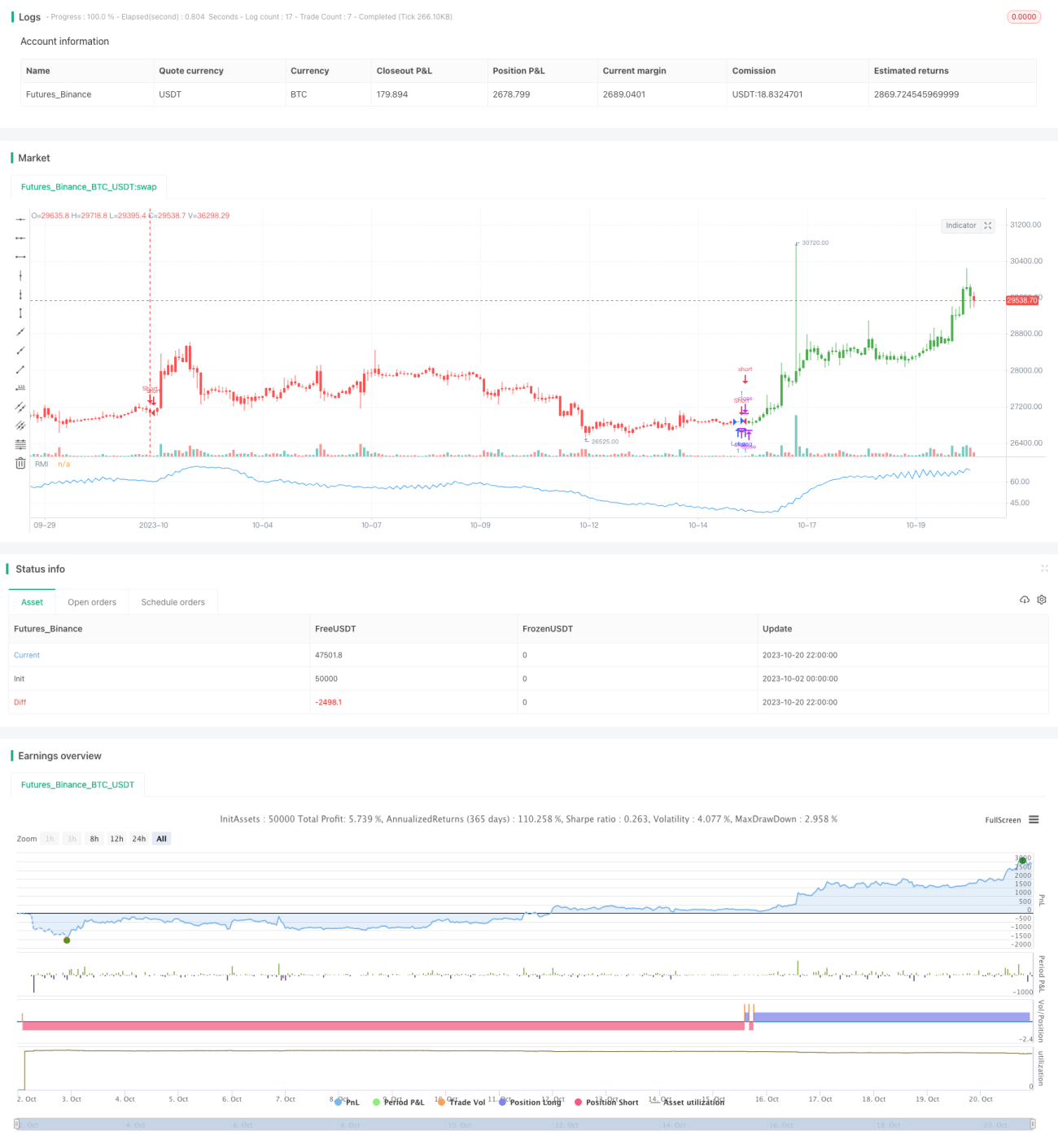
Resumen
La estrategia del Índice de Momento Relativo (Relative Momentum Index, RMI) es una mejora del Índice de Momento (Momentum Index). Esta estrategia calcula el momento del cambio de precio durante un período de tiempo para determinar si el mercado está en una condición de sobrecompra o sobreventa, con el fin de capturar oportunidades de reversión.
Principio de la estrategia
La fórmula de cálculo de la estrategia RMI es la siguiente:
xMom = xPrice - xPrice[Length] // Calcula el cambio de precio en el período Length
xMU = si xMom >= 0: xMU anterior menos xMU/Length más xMom; de lo contrario: xMU anterior
xMD = si xMom <= 0: xMD anterior menos xMD/Length más el valor absoluto de xMom; de lo contrario: 0
RM = xMU / xMD
RMI = 100 * (RM / (1 + RM))
La estrategia primero calcula el cambio de precio xMom en el período Length. Si xMom >= 0, lo que indica un aumento de precio, entonces xMU acumula xMom; si xMom < 0, lo que indica una caída de precio, entonces xMD acumula el valor absoluto de xMom. RM es la relación entre xMU y xMD y representa la fuerza del movimiento alcista o bajista. RMI normaliza RM para obtener un índice entre 0 y 100.
Cuando el RMI supera el umbral SellZone, indica sobrecompra y se abre una posición corta; cuando el RMI es inferior al umbral BuyZone, indica sobreventa y se abre una posición larga.
Ventajas de la estrategia
- En comparación con el RSI, el índice RMI es más sensible y puede capturar oportunidades de reversión de precios más temprano.
- RMI mide la fuerza del movimiento alcista/bajista y no se ve afectado por mercados oscilantes.
- Basado en el momento, RMI puede juzgar con mayor precisión las condiciones de sobrecompra y sobreventa.
Riesgos de la estrategia
- Al igual que otras estrategias de reversión, la estrategia RMI enfrenta el riesgo de ser arrastrada (ser atrapada en una tendencia). En mercados fuertes, los puntos de entrada pueden ser superados.
- Los parámetros del RMI deben optimizarse para diferentes instrumentos, de lo contrario el rendimiento puede no ser bueno.
- Los umbrales de sobrecompra y sobreventa deben establecerse razonablemente; de lo contrario, se generarán demasiadas señales falsas.
Se pueden reducir los riesgos mediante un stop loss adecuado, la optimización de combinaciones de parámetros y la combinación con estrategias de tendencia.
Optimización de la estrategia
La estrategia RMI se puede optimizar desde los siguientes aspectos:
- Optimizar el parámetro Length, seleccionando la longitud del período que maximice el beneficio de la estrategia.
- Optimizar los umbrales de sobrecompra y sobreventa para reducir la probabilidad de señales falsas.
- Agregar un mecanismo de stop loss para controlar las pérdidas por operación.
- Combinar con estrategias de seguimiento de tendencia o medias móviles para mejorar la tasa de aciertos.
- Elegir el horario de negociación adecuado según las características del instrumento para mejorar la estabilidad de la estrategia.
Conclusión
La estrategia RMI realiza operaciones de reversión midiendo el cambio en el momento del precio, y puede capturar eficazmente oportunidades de retroceso a corto plazo. En comparación con la estrategia RSI, la estrategia RMI es más sensible y no se ve afectada por mercados oscilantes. Sin embargo, todavía existe el riesgo de ser atrapado durante tendencias fuertes, por lo que es necesario optimizar los parámetros y combinarla con estrategias de tendencia para maximizar su efectividad.
/*backtest
start: 2023-10-02 00:00:00
end: 2023-10-21 00:00:00
period: 2h
basePeriod: 15m
exchanges: [{"eid":"Futures_Binance","currency":"BTC_USDT"}]
*/

//@version=2
////////////////////////////////////////////////////////////
//  Copyright by HPotter v1.0 19/10/2017
// The Relative Momentum Index (RMI) was developed by Roger Altman. Impressed - 1