Strategi Indeks Momentum Reversal

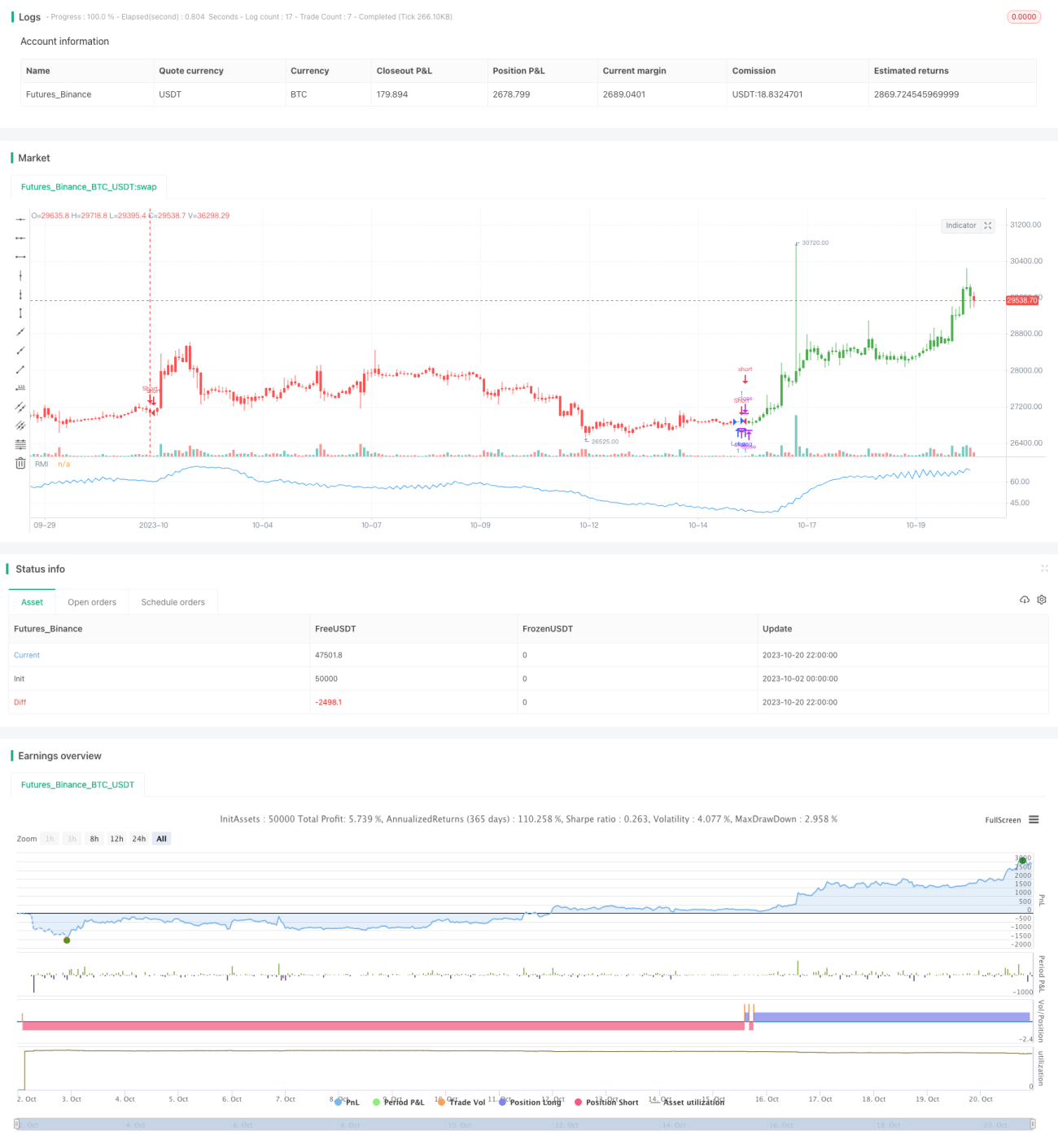
Ikhtisar
Strategi Relative Momentum Index (RMI) merupakan strategi yang disempurnakan dari Indeks Momentum. Strategi ini menghitung momentum perubahan harga selama periode tertentu untuk menentukan apakah pasar berada dalam kondisi jenuh beli atau jenuh jual, sehingga dapat menangkap peluang pembalikan.
Prinsip Strategi
Rumus perhitungan strategi RMI adalah sebagai berikut:
xMom = xPrice - xPrice[Length] //Menghitung perubahan harga dalam periode Length
xMU = Jika xMom >= 0: xMU sebelumnya dikurangi xMU/Length ditambah xMom; selain itu: xMU sebelumnya
xMD = Jika xMom <= 0: xMD sebelumnya dikurangi xMD/Length ditambah nilai absolut xMom; selain itu: 0
RM = xMU / xMD
RMI = 100 * (RM / (1 + RM))
Strategi ini pertama-tama menghitung perubahan harga xMom selama periode Length. Jika xMom >= 0, berarti harga naik, maka xMU diakumulasi dengan xMom; jika xMom < 0, berarti harga turun, maka xMD diakumulasi dengan nilai absolut xMom. RM adalah rasio antara xMU dan xMD, yang mewakili kekuatan kenaikan dan penurunan. RMI menormalkan RM untuk mendapatkan indeks antara 0-100.
Ketika RMI lebih tinggi dari ambang batas SellZone, menunjukkan kondisi jenuh beli, maka lakukan posisi jual; ketika RMI lebih rendah dari ambang batas BuyZone, menunjukkan kondisi jenuh jual, maka lakukan posisi beli.
Keunggulan Strategi
- Indeks RMI lebih sensitif dibandingkan Indeks RSI, sehingga dapat menangkap peluang pembalikan harga lebih awal.
- RMI mengukur kekuatan kenaikan dan penurunan, sehingga tidak terpengaruh oleh pergerakan harga yang sideways.
- Berbasis momentum, RMI dapat menilai kondisi jenuh beli dan jenuh jual dengan lebih akurat.
Risiko Strategi
- Seperti strategi pembalikan lainnya, strategi RMI memiliki risiko terkena jebakan (false breakout). Dalam tren yang kuat, titik beli dapat tertembus.
- Parameter RMI perlu dioptimalkan untuk setiap instrumen yang berbeda, jika tidak, hasilnya mungkin kurang optimal.
- Ambang batas jenuh beli dan jenuh jual perlu diatur dengan tepat, jika tidak, akan menghasilkan terlalu banyak sinyal palsu.
Risiko dapat dikurangi dengan memperlonggar level stop loss, mengoptimalkan kombinasi parameter, atau menggabungkannya dengan strategi tren.
Optimalisasi Strategi
Strategi RMI dapat dioptimalkan dari beberapa aspek berikut:
- Optimalkan parameter
Length, pilih panjang periode yang memaksimalkan profit strategi. - Optimalkan ambang batas jenuh beli dan jenuh jual untuk mengurangi kemungkinan sinyal palsu.
- Tambahkan mekanisme stop loss untuk mengendalikan kerugian per transaksi.
- Gabungkan dengan strategi pengikut tren atau moving average untuk meningkatkan tingkat kemenangan.
- Pilih sesi perdagangan yang sesuai berdasarkan karakteristik instrumen yang berbeda untuk meningkatkan stabilitas strategi.
Ringkasan
Strategi RMI melakukan operasi pembalikan dengan mengukur perubahan momentum harga, sehingga dapat secara efektif menangkap peluang pullback jangka pendek. Dibandingkan dengan strategi RSI, strategi RMI lebih sensitif dan tidak terpengaruh oleh pergerakan sideways. Namun, strategi ini tetap memiliki risiko jebakan, sehingga perlu mengoptimalkan parameter dan menggunakannya bersama strategi tren untuk mencapai hasil maksimal.
/*backtest
start: 2023-10-02 00:00:00
end: 2023-10-21 00:00:00
period: 2h
basePeriod: 15m
exchanges: [{"eid":"Futures_Binance","currency":"BTC_USDT"}]
*/

//@version=2
////////////////////////////////////////////////////////////
//  Copyright by HPotter v1.0 19/10/2017
// The Relative Momentum Index (RMI) was developed by Roger Altman. Impressed - 1