Chiến lược chỉ số đảo chiều động lượng

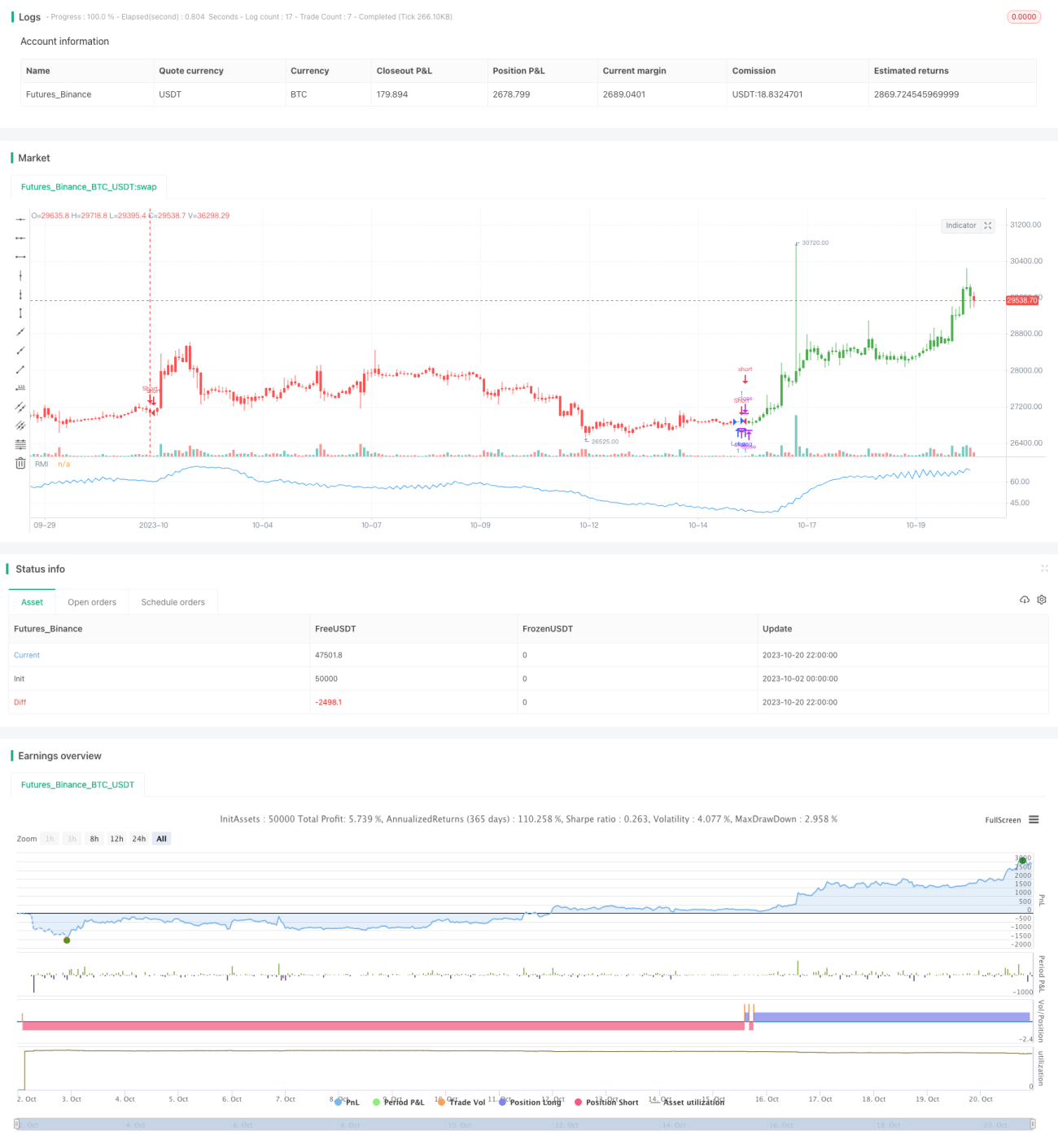
Tổng quan
Chiến lược Chỉ số Động lượng Tương đối (Relative Momentum Index, RMI) là một chiến lược cải tiến dựa trên chỉ số động lượng. Chiến lược này tính toán động lượng của biến động giá trong một khoảng thời gian nhất định để xác định xem thị trường đang ở trạng thái quá mua hay quá bán, nhằm nắm bắt cơ hội đảo chiều.
Nguyên lý chiến lược
Công thức tính toán của chiến lược RMI như sau:
xMom = xPrice - xPrice[Length] // Tính biến động giá trong khoảng thời gian Length
xMU = Nếu xMom >= 0: xMU trước đó trừ đi xMU/Length cộng với xMom; nếu không: xMU trước đó
xMD = Nếu xMom <= 0: xMD trước đó trừ đi xMD/Length cộng với giá trị tuyệt đối của xMom; nếu không: 0
RM = xMU / xMD
RMI = 100 * (RM / (1 + RM))
Chiến lược này trước tiên tính biến động giá xMom trong khoảng thời gian Length. Nếu xMom >= 0, nghĩa là giá tăng, thì xMU tích lũy thêm xMom; nếu xMom < 0, nghĩa là giá giảm, thì xMD tích lũy thêm giá trị tuyệt đối của xMom. RM là tỷ lệ giữa xMU và xMD, đại diện cho sức mạnh tăng/giảm. RMI chuẩn hóa RM để có chỉ số nằm trong khoảng 0-100.
Khi RMI cao hơn ngưỡng SellZone, biểu thị quá mua, thực hiện bán khống; khi RMI thấp hơn ngưỡng BuyZone, biểu thị quá bán, thực hiện mua.
Ưu điểm của chiến lược
- Chỉ số RMI nhạy hơn so với chỉ số RSI, có thể nắm bắt sớm hơn các cơ hội đảo chiều giá.
- RMI đo lường sức mạnh tăng/giảm, không bị ảnh hưởng bởi thị trường đi ngang.
- RMI dựa trên động lượng, có thể đánh giá chính xác hơn trạng thái quá mua/quá bán.
Rủi ro của chiến lược
- Giống như các chiến lược đảo chiều khác, chiến lược RMI có rủi ro bị mắc kẹt trong xu hướng mạnh. Trong xu hướng mạnh, điểm mua có thể bị phá vỡ.
- Tham số RMI cần được tối ưu hóa cho từng sản phẩm, nếu không hiệu quả có thể không tốt.
- Cần thiết lập ngưỡng quá mua/quá bán hợp lý, nếu không sẽ tạo ra quá nhiều tín hiệu giả.
Có thể giảm rủi ro thông qua nới lỏng điểm dừng lỗ phù hợp, tối ưu hóa tổ hợp tham số, kết hợp với chiến lược xu hướng, v.v.
Tối ưu hóa chiến lược
Chiến lược RMI có thể được tối ưu hóa từ các khía cạnh sau:
- Tối ưu hóa tham số Length, chọn độ dài chu kỳ giúp tối đa hóa lợi nhuận của chiến lược.
- Tối ưu hóa ngưỡng quá mua/quá bán, giảm xác suất tín hiệu giả.
- Thêm cơ chế dừng lỗ, kiểm soát tổn thất cho mỗi giao dịch.
- Kết hợp với chiến lược theo xu hướng hoặc đường trung bình động, nâng cao tỷ lệ thắng.
- Lựa chọn khung thời gian giao dịch phù hợp dựa trên đặc điểm của từng sản phẩm, nâng cao độ ổn định của chiến lược.
Tổng kết
Chiến lược RMI thực hiện giao dịch đảo chiều bằng cách đo lường sự thay đổi động lượng giá, có thể nắm bắt hiệu quả các cơ hội điều chỉnh ngắn hạn. So với chiến lược RSI, chiến lược RMI nhạy hơn và không bị ảnh hưởng bởi thị trường đi ngang. Tuy nhiên, chiến lược này vẫn có rủi ro bị mắc kẹt trong xu hướng mạnh, cần tối ưu hóa tham số và kết hợp với chiến lược xu hướng để phát huy hiệu quả tối đa.
/*backtest
start: 2023-10-02 00:00:00
end: 2023-10-21 00:00:00
period: 2h
basePeriod: 15m
exchanges: [{"eid":"Futures_Binance","currency":"BTC_USDT"}]
*/

//@version=2
////////////////////////////////////////////////////////////
//  Copyright by HPotter v1.0 19/10/2017
// The Relative Momentum Index (RMI) was developed by Roger Altman. Impressed - 1