Estratégia de Seguimento de Tendência com Média Móvel Adaptativa Dinâmica de Kaufman

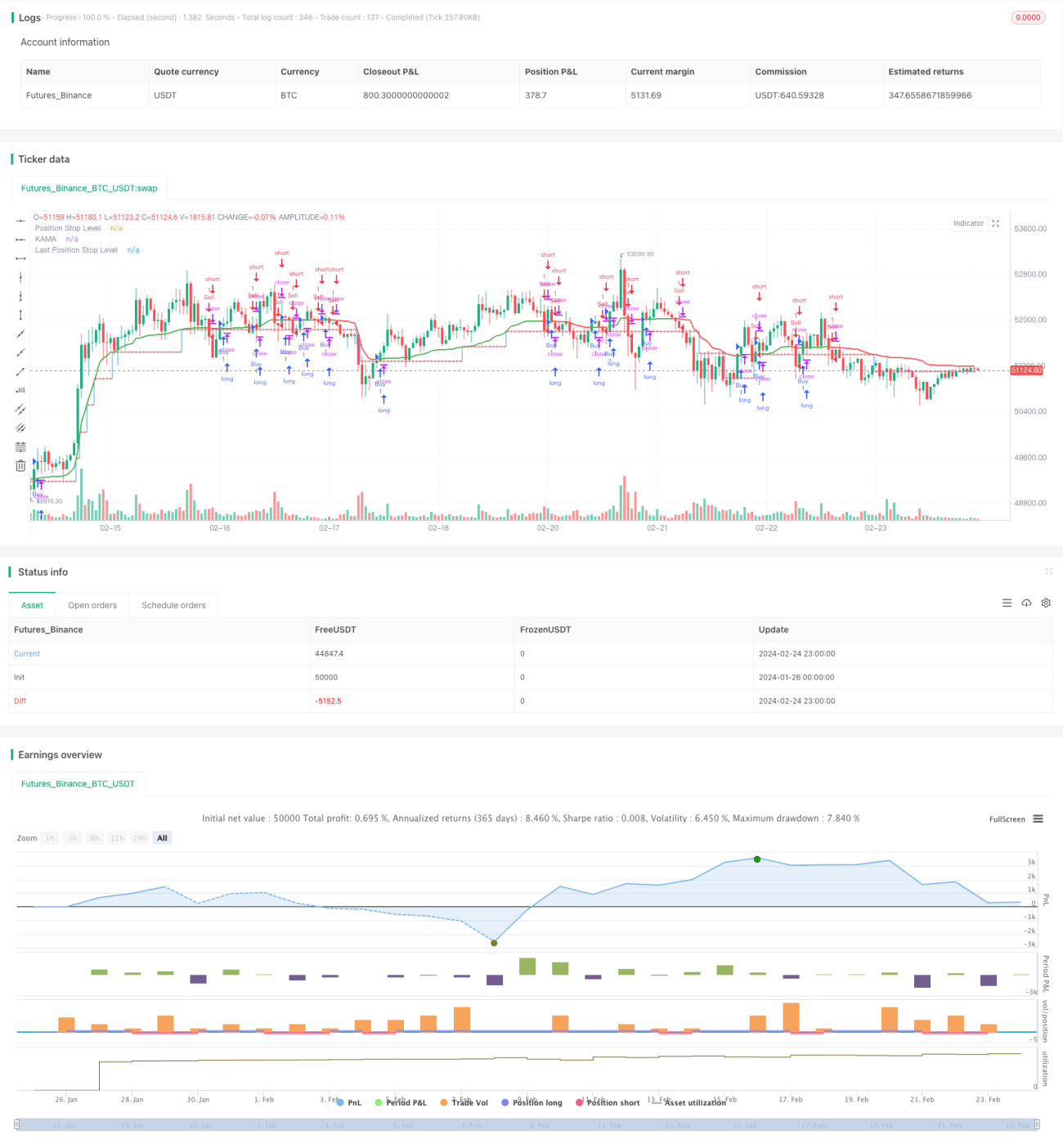
Visão Geral
Esta estratégia é baseada na Média Móvel Adaptativa de Kaufman (KAMA), permitindo ajustar dinamicamente as posições de negociação e acompanhar automaticamente a tendência do mercado. As principais funcionalidades da estratégia incluem:
- Cálculo dinâmico do tamanho do passo de negociação (em pontos), adaptando-se à volatilidade do mercado.
- Geração de sinais de compra e venda com base na direção da KAMA.
- Após a geração do sinal, define-se uma distância de stop loss, que é ajustada conforme o movimento do preço.
- Opcionalmente, aguarda o fechamento do candle para confirmar o sinal, filtrando sinais falsos.
Com estas funcionalidades, a estratégia busca obter ganhos adicionais da tendência, ao mesmo tempo que controla o risco.
Princípio da Estratégia
A estratégia funciona com base no indicador Média Móvel Adaptativa de Kaufman (KAMA). A KAMA ajusta dinamicamente o peso e a suavidade da média móvel calculando a relação entre momentum e volatilidade do preço, respondendo assim mais rapidamente às mudanças de preço.
Quando a KAMA cruza para cima a linha de stop loss descendente, indica uma reversão da tendência, gerando um sinal de compra. Quando a KAMA cruza para baixo a linha de stop loss ascendente, indica uma reversão da tendência, gerando um sinal de venda. Após entrar numa posição, a estratégia calcula uma distância de stop loss dinâmica com base no ATR e estabelece uma linha de stop loss. À medida que a KAMA se move na direção favorável, a linha de stop loss também é ajustada, movendo-a para uma posição mais favorável, garantindo mais lucro.
Desta forma, a estratégia pode acompanhar a tendência, movendo gradualmente a linha de stop loss até que esta seja acionada ou um sinal contrário force o fechamento da posição.
Vantagens da Estratégia
Comparada com estratégias tradicionais baseadas em médias móveis, esta estratégia apresenta as seguintes vantagens:
- O indicador KAMA tem alta sensibilidade, captando mais rapidamente as tendências de preço.
- O cálculo dinâmico da distância de stop loss ajusta-se à tendência, permitindo garantir lucros mais elevados.
- A confirmação opcional pelo fechamento do candle ajuda a filtrar sinais falsos, reduzindo aberturas de posições desnecessárias.
No geral, a estratégia responde rapidamente e tem boa controlabilidade, sendo uma estratégia típica de seguimento de tendência.
Riscos da Estratégia
Esta estratégia também apresenta alguns riscos:
- Risco de reversão repentina da tendência. O indicador KAMA pode adaptar-se às flutuações de preço, mas pode não responder com rapidez suficiente a reversões abruptas.
- Stop loss excessivamente agressivo. Se a distância de stop loss dinâmica for muito grande, pode ser demasiado agressiva, não permitindo garantir lucros a tempo.
- Risco de sinais falsos. A ativação da confirmação pelo fechamento do candle pode reduzir sinais falsos, mas não os elimina completamente.
Para mitigar estes riscos, podem ser aplicados controlos como otimizar a distância de stop loss ou definir uma percentagem máxima de stop loss. Também é possível combinar com outros indicadores como confirmação, evitando negociações erradas.
Direções de Otimização da Estratégia
As direções de otimização desta estratégia incluem:
- Otimizar os parâmetros da KAMA: ajustar o comprimento da média móvel e otimizar a suavidade.
- Otimizar o stop loss dinâmico: testar a melhor distância de stop loss e tamanho do passo de acordo com as características dos diferentes ativos.
- Adicionar indicadores de filtro: combinar com outros indicadores de tendência para confirmar os sinais de negociação e aumentar a fiabilidade dos sinais.
Por exemplo, pode-se testar a adição do MACD como indicador de confirmação auxiliar, exigindo que, no momento do cruzamento dourado da KAMA, o Dif do MACD também seja positivo e esteja a aumentar. Isto permite filtrar alguns sinais falsos, evitando aberturas e fechos desnecessários.
Resumo
Esta estratégia funciona de forma globalmente fluida, utilizando um stop loss dinâmico para acompanhar a tendência, maximizando a garantia dos lucros da tendência. A adaptabilidade do indicador KAMA permite que a estratégia acompanhe as mudanças rápidas do mercado. Com alguma otimização, a estratégia pode tornar-se um programa eficiente de seguimento de tendência, adequado para operações de médio e longo prazo.
/*backtest
start: 2024-01-26 00:00:00
end: 2024-02-25 00:00:00
period: 1h
basePeriod: 15m
exchanges: [{"eid":"Futures_Binance","currency":"BTC_USDT"}]
*/

//@version=5
strategy("THMA - Bharath Vc Improved", overlay=true, process_orders_on_close=true)

// Function to calculate pips with higher precision- 1