BabyShark-Handelsstrategie basierend auf VWAP- und OBV-RSI-Indikatoren

Strategieübersicht
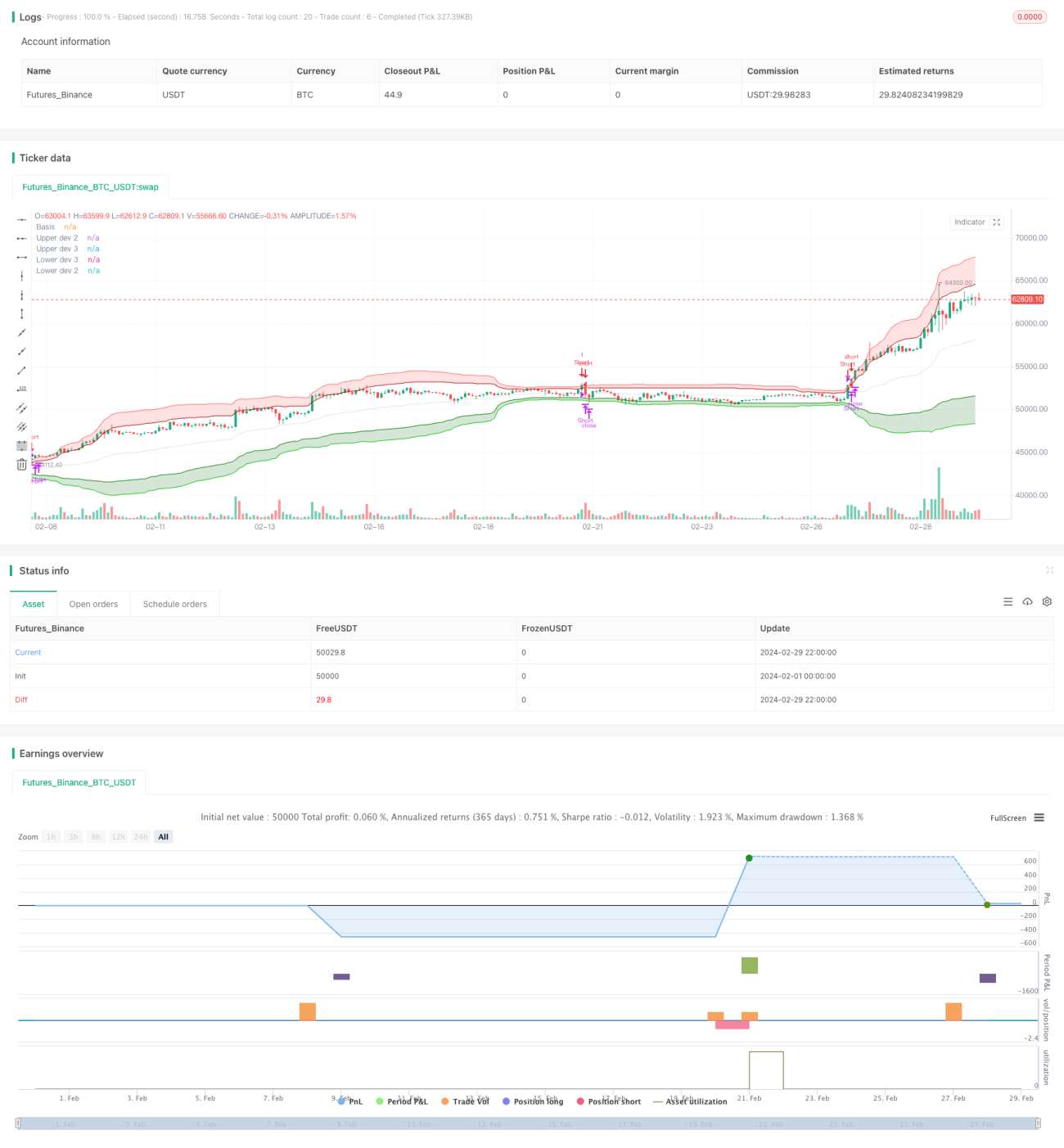
Die BabyShark VWAP-Handelsstrategie ist eine quantitative Handelsstrategie, die auf dem volumengewichteten Durchschnittspreis (VWAP) und dem Relative-Stärke-Index des On-Balance-Volumens (OBV RSI) basiert. Die Strategie zielt darauf ab, potenzielle Kauf- und Verkaufssignale anhand des Ausmaßes der Preisabweichung vom VWAP und des Überschreitens bestimmter Schwellenwerte des OBV RSI zu identifizieren.
Strategieprinzip
Das Kernprinzip der Strategie besteht darin, die beiden Indikatoren VWAP und OBV RSI zu nutzen, um Trend- und Momentumveränderungen im Markt zu erfassen. Der VWAP ist ein dynamischer gleitender Durchschnitt, der auf Preis und Volumen basiert und den wichtigsten Handelsbereich des Marktes widerspiegelt. Wenn der Preis deutlich vom VWAP abweicht, deutet dies in der Regel auf eine überkaufte oder überverkaufte Marktsituation hin. Der OBV RSI hingegen führt auf Basis des traditionellen RSI-Indikators Volumenfaktoren ein und misst die Stärke von Volumenänderungen, um die Robustheit des Markttrends zu beurteilen.
Konkret verwendet die Strategie 60 Kerzen als Berechnungszeitraum für den VWAP und nutzt den Schlusskurs als Eingabedaten. Anschließend werden basierend auf dem Intervall von +/- 3 Standardabweichungen der Preisabweichung vom VWAP überkaufte und überverkaufte Zonen konstruiert. Für den OBV RSI werden 5 Kerzen als Berechnungszeitraum verwendet, und es werden die Schwellenwerte von 70 und 30 als Beurteilungskriterien für überkaufte bzw. überverkaufte Zustände festgelegt.
In Bezug auf die Handelslogik sendet die Strategie ein Long-Signal, wenn sich der Preis in der überverkauften Zone unterhalb der VWAP-Untergrenze befindet und der OBV RSI kleiner als 30 ist. Ein Short-Signal wird ausgelöst, wenn sich der Preis in der überkauften Zone oberhalb der VWAP-Obergrenze befindet und der OBV RSI größer als 70 ist. Zusätzlich legt die Strategie einen Take-Profit- und Stop-Loss-Satz von 0,6 % fest und führt nach aufeinanderfolgenden Verlusten eine Abkühlungsphase von 10 Kerzen ein, um das Risiko zu kontrollieren.
Strategievorteile
- Kombination mehrerer Marktfaktoren wie Preis und Volumen, um Markttrends und Momentum umfassend zu erfassen.
- Verwendung dynamischer VWAP- und OBV-RSI-Indikatoren, die sich an Veränderungen in verschiedenen Marktzyklen anpassen können.
- Angemessene Festlegung von Take-Profit- und Stop-Loss-Sätzen sowie einer Abkühlungsphase, um Chancen zu nutzen und gleichzeitig Risiken effektiv zu kontrollieren.
- Klare Logik, leicht verständlich und umsetzbar, mit einer gewissen Interpretierbarkeit.
- Parametrisierbar und für Händler mit unterschiedlichen Stilen zur Optimierung und Verbesserung geeignet.
Strategierisiken
- In Seitwärtsmärkten oder bei wiederholten Marktbewegungen können häufige Handelssignale zu übermäßigem Handel und erhöhten Slippage-Kosten führen.
- In Trendmärkten kann ein reines Abhängig von VWAP für den Take-Profit dazu führen, dass die Strategie zu früh aussteigt und nachfolgende Trendgewinne verpasst.
- Feste Parametereinstellungen können sich möglicherweise nicht an veränderte Marktbedingungen anpassen; eine Optimierung für verschiedene Instrumente und Zeiträume ist erforderlich.
- Der OBV-Indikator ist stark vom Volumen abhängig. Bei unzuverlässigen oder manipulierten Volumendaten kann eine Verzerrung des Indikators die Beurteilung in die Irre führen.
- Die Strategie berücksichtigt keine externen Faktoren wie makroökonomische Daten oder Nachrichten und kann bei extremen Marktbedingungen versagen.
Optimierungsrichtungen
- Einführung weiterer Filterbedingungen für Seitwärtsmärkte, wie Trendbestätigungsindikatoren oder Volatilitätsindikatoren, um häufigen Handel zu reduzieren.
- Optimierung der Ausstiegsbedingungen, z. B. durch Verwendung eines nachlaufenden Take-Profit oder in Kombination mit anderen Trendfolgeindikatoren, um Trendmärkte besser zu nutzen.
- Adaptive Optimierung der Parameter von VWAP und OBV RSI, dynamische Anpassung der Berechnungszeiträume und Schwellenwerte.
- Einführung eines Mechanismus zur Überprüfung der Volumenauthentizität, um die Zuverlässigkeit des OBV-RSI-Indikators zu erhöhen.
- Integration von makroökonomischen Datenanalysen, Stimmungsindikatoren usw., um die Anpassungsfähigkeit und Robustheit der Strategie zu verbessern.
Zusammenfassung
Die BabyShark VWAP-Handelsstrategie ist eine quantitative Handelsstrategie, die den volumengewichteten Durchschnittspreis und den Relative-Stärke-Index des On-Balance-Volumens kombiniert. Sie generiert Handelssignale, indem sie überkaufte und überverkaufte Marktzustände sowie Trend- und Momentumveränderungen erfasst. Die Strategie hat eine klare Logik und kombiniert mehrere Marktfaktoren wie Preis und Volumen, um den Marktpuls umfassend zu erfassen. Gleichzeitig sorgen angemessene Take-Profit- und Stop-Loss-Einstellungen sowie Risikomanagementmechanismen dafür, dass die Strategie bei der Gewinnerzielung auch das Risikomanagement berücksichtigt. Natürlich hat die Strategie auch potenzielle Nachteile wie eine unzureichende Anpassungsfähigkeit an Seitwärts- und Trendmärkte sowie feste Parameter. In Zukunft könnte die Robustheit und Rentabilität der Strategie durch Optimierung der Einstiegsfilter, dynamischen Take-Profit, adaptive Parameter und verstärkte externe Datenanalyse weiter verbessert werden. Insgesamt bietet die BabyShark VWAP-Handelsstrategie einen Referenzrahmen und eine Struktur für die quantitative Handelspraxis, die es wert ist, weiter erforscht und verbessert zu werden.
/*backtest
start: 2024-02-01 00:00:00
end: 2024-02-29 23:59:59
period: 2h
basePeriod: 15m
exchanges: [{"eid":"Futures_Binance","currency":"BTC_USDT"}]
*/

// This Pine Script™ code is subject to the terms of the Mozilla Public License 2.0 at https://mozilla.org/MPL/2.0/
// © GreatestUsername

//@version=5- 1