# Estratégia de Negociação com Média Móvel de Amplo Espectro Oscilante

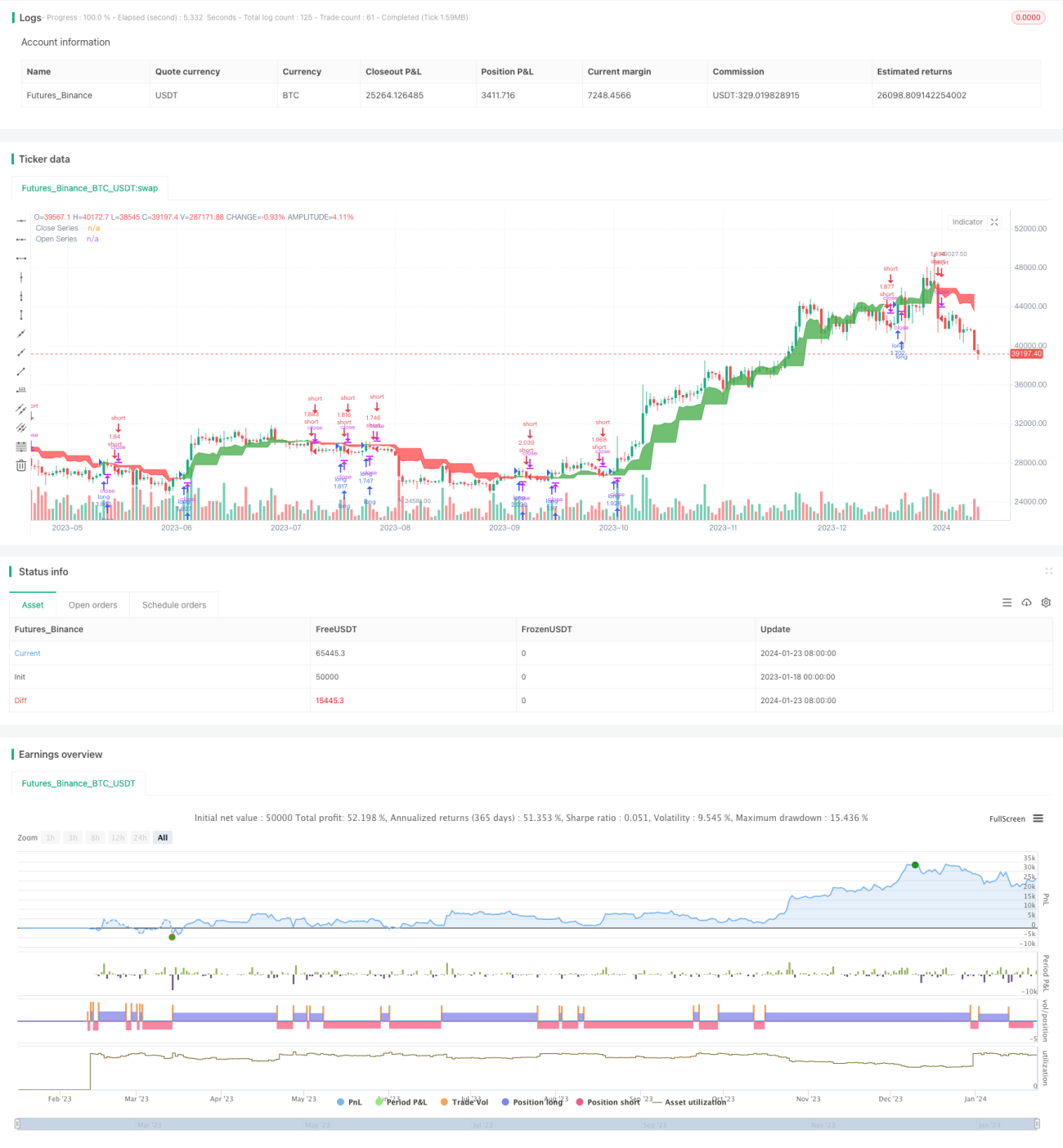
Visão Geral
Esta estratégia baseia-se em médias móveis de amplo espectro, gerando sinais de negociação através dos cruzamentos de ouro e morte entre médias móveis rápidas e lentas. As médias móveis de amplo espectro abrangem desde médias móveis simples até médias móveis oscilantes, entre outros tipos, podendo ser combinadas livremente por meio de parâmetros ajustáveis, oferecendo grande adaptabilidade.
Princípio da Estratégia
A estratégia utiliza uma função de média móvel variante, capaz de gerar 12 tipos diferentes de médias móveis. O princípio básico consiste em calcular duas médias móveis: a linha rápida (Média de Fechamento) e a linha lenta (Média de Abertura). Quando a linha rápida cruza acima da linha lenta, gera-se um sinal de compra; quando cruza abaixo, gera-se um sinal de venda. Além disso, são definidos parâmetros de stop loss e take profit para encerramento automático de posições.
A lógica fundamental é gerar duas médias móveis através da função variant: closeSeries = variant(basisType, close, basisLen, offsetSigma, offsetALMA) e openSeries = variant(basisType, open, basisLen, offsetSigma, offsetALMA). A função variant encapsula os métodos de cálculo de 12 tipos diferentes de médias, permitindo a livre escolha através do parâmetro basisType. Dessa forma, obtém-se a combinação de médias móveis de amplo espectro.
A lógica básica de geração de sinais de negociação é: longCond = xlong e shortCond = xshort, ou seja, quando a linha rápida cruza acima da linha lenta, abre-se posição comprada; quando cruza abaixo, abre-se posição vendida.
As regras de entrada na estratégia são: abrir posição comprada quando longCond for verdadeiro, e posição vendida quando shortCond for verdadeiro. As regras de stop loss e take profit acionam o fechamento automático quando o preço atinge os pontos pré-definidos.
Análise de Vantagens
A maior vantagem desta estratégia é a capacidade de combinar livremente vários tipos diferentes de médias móveis. Em diferentes mercados e períodos, não se sabe qual média móvel é a mais adequada; esta estratégia oferece uma poderosa capacidade de personalização. O usuário pode determinar a melhor combinação de parâmetros por meio de testes repetidos, elaborando assim a solução ideal para mercados específicos.
Outra vantagem é que a lógica da estratégia é simples e clara, porém oferece funcionalidades robustas. O usuário pode compreendê-la e utilizá-la facilmente. Além disso, os diversos parâmetros de entrada proporcionam amplo espaço para otimização por parte de usuários avançados.
Análise de Riscos
O maior risco da estratégia reside no fato de que as próprias médias móveis de amplo espectro apresentam certo grau de defasagem. Quando ocorrem rompimentos anormais de preço, podem gerar perdas significativas. Além disso, se os parâmetros não forem escolhidos adequadamente, pode-se ter uma frequência excessiva de negociações ou sinais espúrios.
Para reduzir riscos, recomenda-se combinar com outros indicadores para validar a eficácia dos sinais, evitando falsos rompimentos. Também é essencial realizar otimização de parâmetros e backtesting, testando repetidamente até encontrar a melhor combinação. Em operações ao vivo, deve-se reduzir adequadamente o tamanho da posição para controlar perdas individuais.
Direções de Otimização
Esta estratégia possui as seguintes principais direções de otimização:
- Testar mais combinações de tipos de médias móveis para encontrar a melhor combinação
- Adicionar filtros para evitar sinais falsos, por exemplo, combinando com indicadores de volume, etc.
- Otimizar os parâmetros de comprimento das médias móveis para encontrar os melhores valores
- Otimizar o tamanho da posição e os parâmetros de stop loss e take profit
- Experimentar diferentes ativos e períodos
Através da otimização nas direções acima, é possível melhorar continuamente o desempenho da estratégia em tempo real.
Conclusão
Esta estratégia de negociação oferece alta flexibilidade baseada em médias móveis de amplo espectro. Ela proporciona uma poderosa capacidade de personalização, permitindo ao usuário selecionar e combinar livremente diferentes tipos de médias. A lógica da estratégia é simples e clara, de fácil utilização, ao mesmo tempo que oferece amplo espaço para otimização. Por meio da otimização de parâmetros e controle de risco, a estratégia pode se adaptar a diferentes ambientes de mercado e gerar retornos estáveis. Trata-se de uma estratégia de acompanhamento de tendência eficiente e flexível.
/*backtest
start: 2023-01-18 00:00:00
end: 2024-01-24 00:00:00
period: 1d
basePeriod: 1h
exchanges: [{"eid":"Futures_Binance","currency":"BTC_USDT"}]
*/

//@version=4
//

strategy(title="Long/Short", shorttitle="Banana Maker", overlay=true, pyramiding=0, default_qty_type=strategy.percent_of_equity, default_qty_value=100, calc_on_every_tick=false)- 1