TrendSurfing - Chiến lược xu hướng giao cắt hai đường trung bình động

Tổng quan
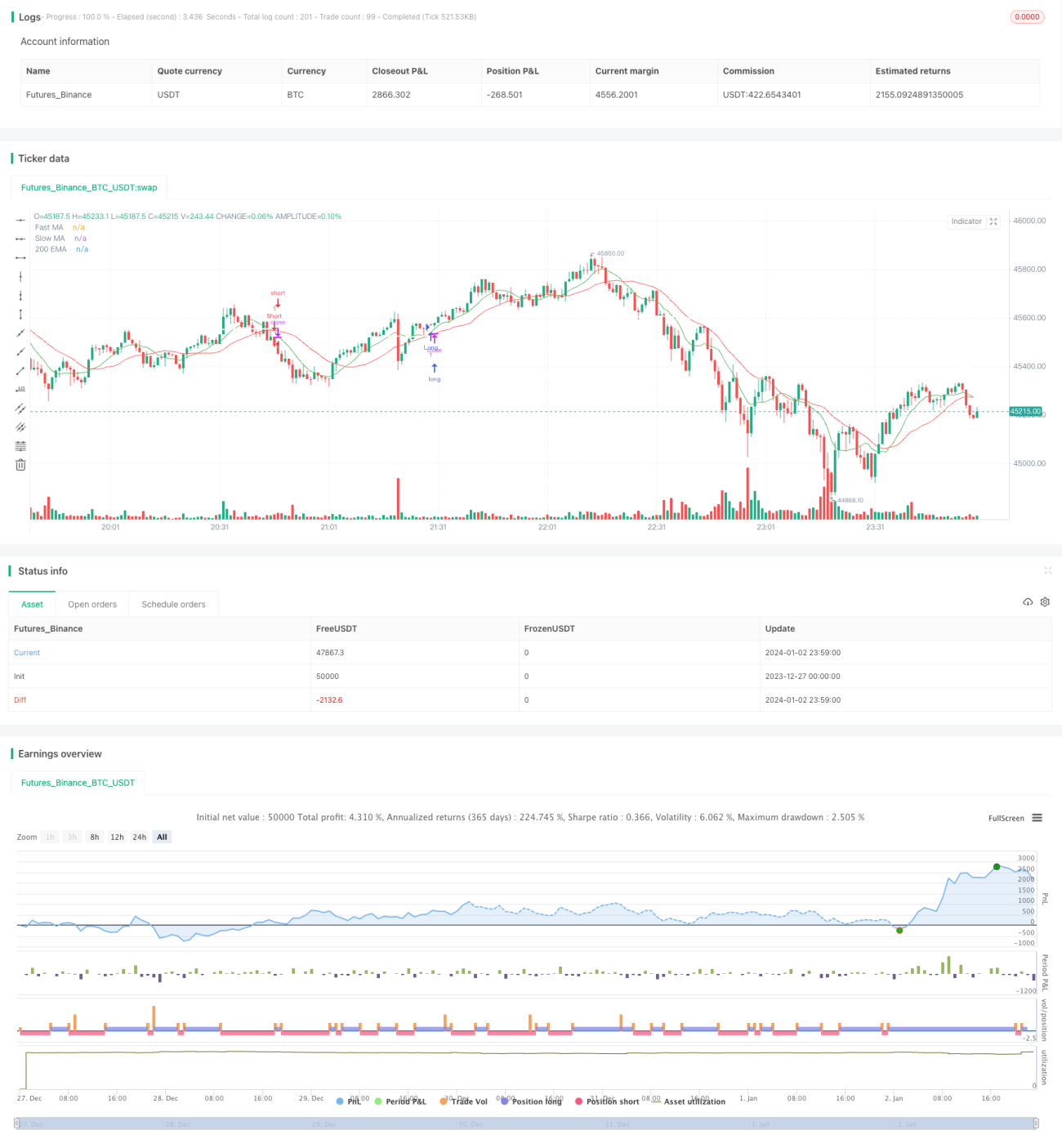
Chiến lược TrendSurfing là một chiến lược giao dịch theo xu hướng dựa trên tín hiệu giao cắt đường trung bình động kép. Chiến lược này kết hợp các chỉ báo hình tam giác trực quan, đường EMA 200 ngày, chỉ báo ROC và chỉ báo RSI để lọc nhiễu, đồng thời nắm bắt chính xác hướng xu hướng mới tại các điểm đảo chiều. Chiến lược này phù hợp với giao dịch nắm giữ trung và dài hạn, có thể đạt được sự tăng trưởng ổn định trong thị trường tăng giá.
Nguyên lý chiến lược
Chiến lược TrendSurfing chủ yếu dựa trên giao cắt vàng và giao cắt tử thần của đường trung bình động nhanh và đường trung bình động chậm để tạo tín hiệu mua và bán. Khi đường trung bình động nhanh cắt lên trên đường trung bình động chậm, tín hiệu mua được tạo ra; khi đường trung bình động nhanh cắt xuống dưới đường trung bình động chậm, tín hiệu bán được tạo ra.
Ngoài ra, chiến lược này còn đưa vào nhiều chỉ báo phụ trợ để lọc các tín hiệu giả hoặc xác định chất lượng xu hướng. Cụ thể:
- Chỉ báo ROC xác định xu hướng và tốc độ thay đổi giá
- Chỉ báo RSI xác định vùng quá mua hoặc quá bán
- Đường EMA 200 ngày xác định hướng xu hướng tổng thể
- Chỉ báo hình tam giác trực quan đánh dấu điểm vào lệnh trên biểu đồ
Thông qua đánh giá tổng hợp nhiều chỉ báo, chiến lược TrendSurfing có thể xác định chính xác các điểm đảo chiều xu hướng, theo dõi xu hướng rõ ràng trung và dài hạn, tránh bị đánh lừa bởi nhiễu thị trường hoặc điều chỉnh ngắn hạn.
Phân tích ưu điểm
1. Nắm bắt xu hướng trung và dài hạn rõ ràng
Chiến lược này về cơ bản xác định điểm đảo chiều xu hướng thông qua giao cắt đường trung bình động, kết hợp các chỉ báo như EMA 200 ngày để lọc nhiễu ngắn hạn, tập trung vào việc nắm bắt xu hướng trung và dài hạn.
2. Kết hợp nhiều chỉ báo xác nhận thời điểm vào lệnh chất lượng cao
Ngoài giao cắt đường trung bình động, chiến lược còn đưa vào các chỉ báo như ROC, RSI, giúp tránh các vùng dao động tại điểm đảo chiều xu hướng, đảm bảo chất lượng vào lệnh.
3. Chỉ báo hình tam giác trực quan, dễ đọc
Tam giác màu xanh lá cây hướng xuống đánh dấu thời điểm mua, tam giác màu đỏ hướng lên đánh dấu thời điểm bán, rất rõ ràng.
4. Có thể tùy chỉnh tham số để đáp ứng các nhu cầu khác nhau
Người dùng có thể tự do điều chỉnh các tham số như chu kỳ đường trung bình động, độ dài ROC, độ dài RSI,... để phù hợp với phong cách giao dịch của riêng mình.
5. Quản lý cắt lỗ và chốt lời
Chiến lược này sử dụng giá trị ATR nhân với tỷ lệ rủi ro làm mức cắt lỗ và chốt lời, có thể kiểm soát rủi ro cho từng giao dịch.
Phân tích rủi ro
1. Rủi ro bỏ lỡ tín hiệu
Bất kỳ chiến lược nào dựa trên giao cắt đường trung bình động đều phải đối mặt với rủi ro bỏ lỡ tín hiệu hoặc bị cắt lỗ nhất định khi đường trung bình động dao động.
2. Cài đặt tham số không phù hợp có thể dẫn đến tối ưu hóa quá mức
Người dùng cần tránh theo đuổi các tham số tiêu chuẩn lý tưởng hóa quá mức. Cần tiến hành kiểm tra tham số dựa trên các điều kiện thị trường và sản phẩm khác nhau.
3. Không thể lọc hoàn toàn các sự kiện rủi ro hệ thống của thị trường
Trong điều kiện thị trường cực đoan, chẳng hạn như gặp sự kiện thiên nga đen, vẫn có thể phải đối mặt với thua lỗ lớn.
Hướng tối ưu hóa
1. Kiểm tra và tối ưu hóa cài đặt tham số
Cần tiến hành backtest và tối ưu hóa các tham số như chu kỳ đường trung bình động, độ dài ROC, tham số RSI,... để phù hợp hơn với đặc điểm của từng sản phẩm giao dịch.
2. Kiểm tra và đưa vào các chỉ báo phụ trợ khác
Có thể tiếp tục kiểm tra hiệu quả kết hợp của các chỉ báo khác như BOLL, KDJ với giao cắt đường trung bình động.
3. Kết hợp giao dịch thuật toán để tối ưu hóa cắt lỗ và chốt lời
Đưa vào các thuật toán học máy để giúp cắt lỗ và chốt lời trở nên thông minh hơn, thích ứng với môi trường thị trường thay đổi linh hoạt.
4. Khám phá sự kết hợp với các chiến lược hoặc mô hình khác
Kết hợp với các chiến lược chọn cổ phiếu theo cơ bản, chiến lược kinh doanh chênh lệch thống kê, mô hình tối ưu hóa danh mục đầu tư,... có thể kiểm soát rủi ro và nâng cao tỷ suất lợi nhuận hơn nữa.
Tổng kết
Chiến lược TrendSurfing là một chiến lược giao dịch theo xu hướng đơn giản, trực tiếp và có thể kiểm soát rủi ro. Nó xoay quanh các tín hiệu giao dịch hình thành từ giao cắt đường trung bình động kép và sử dụng nhiều chỉ báo phụ trợ để lọc. Chiến lược này phù hợp với giao dịch nắm giữ trung và dài hạn, có thể theo dõi ổn định xu hướng thị trường tăng giá. Chúng tôi sẽ tiếp tục tối ưu hóa chiến lược này thông qua kiểm tra tham số, mở rộng chỉ báo, kiểm soát rủi ro,... để nó có thể hoạt động ổn định hơn trong phạm vi thị trường rộng lớn hơn.
3. Không Thể Lọc Hoàn Toàn Các Sự Kiện Thiên Nga Đen
Trong điều kiện thị trường cực đoan, chiến lược vẫn có thể đối mặt với tổn thất lớn do rủi ro hệ thống thị trường.
Hướng Tối Ưu Hóa
1. Kiểm Tra và Tối Ưu Hóa Giá Trị Tham Số
Chu kỳ của đường trung bình động (MA), độ dài của ROC, giá trị của RSI, v.v. cần phải trải qua quá trình backtesting nghiêm ngặt và tối ưu hóa để phù hợp với đặc điểm của các sản phẩm giao dịch khác nhau.
2. Kiểm Tra và Kết Hợp Các Chỉ Báo Hỗ Trợ Khác
Tiếp tục kiểm tra sự kết hợp của các chỉ báo khác như BOLL, KDJ, v.v. với tín hiệu giao cắt MA để đạt hiệu suất tốt hơn.
3. Phối Hợp với Giao Dịch Thuật Toán để Kiểm Soát Rủi Ro Tốt Hơn
Giới thiệu các thuật toán học máy để cho phép cắt lỗ và chốt lời thông minh hơn, thích ứng với môi trường thị trường năng động.
4. Khám Phá Sự Kết Hợp với Các Chiến Lược hoặc Mô Hình Khác
Kết hợp với các chiến lược chọn cổ phiếu dựa trên cơ bản, chiến lược kinh doanh chênh lệch giá thống kê, mô hình tối ưu hóa danh mục đầu tư, v.v. có thể tăng cường hơn nữa khả năng kiểm soát rủi ro và lợi nhuận.
Kết Luận
Chiến lược TrendSurfing là một chiến lược giao dịch theo xu hướng đơn giản, trực quan với rủi ro có thể kiểm soát được. Tín hiệu giao dịch được tạo ra từ sự giao cắt của các đường trung bình động (MA) và được lọc bởi nhiều chỉ báo hỗ trợ. Nó phù hợp cho việc nắm giữ trung và dài hạn để theo dõi ổn định các xu hướng thị trường tăng giá. Chúng tôi sẽ tiếp tục tối ưu hóa chiến lược này thông qua việc kiểm tra tham số, mở rộng chỉ báo, kiểm soát rủi ro, v.v. để đạt được hiệu suất đáng tin cậy hơn trên các thị trường đa dạng.
- 1