Dynamische CCI-Support-Resistance-Strategie

Überblick
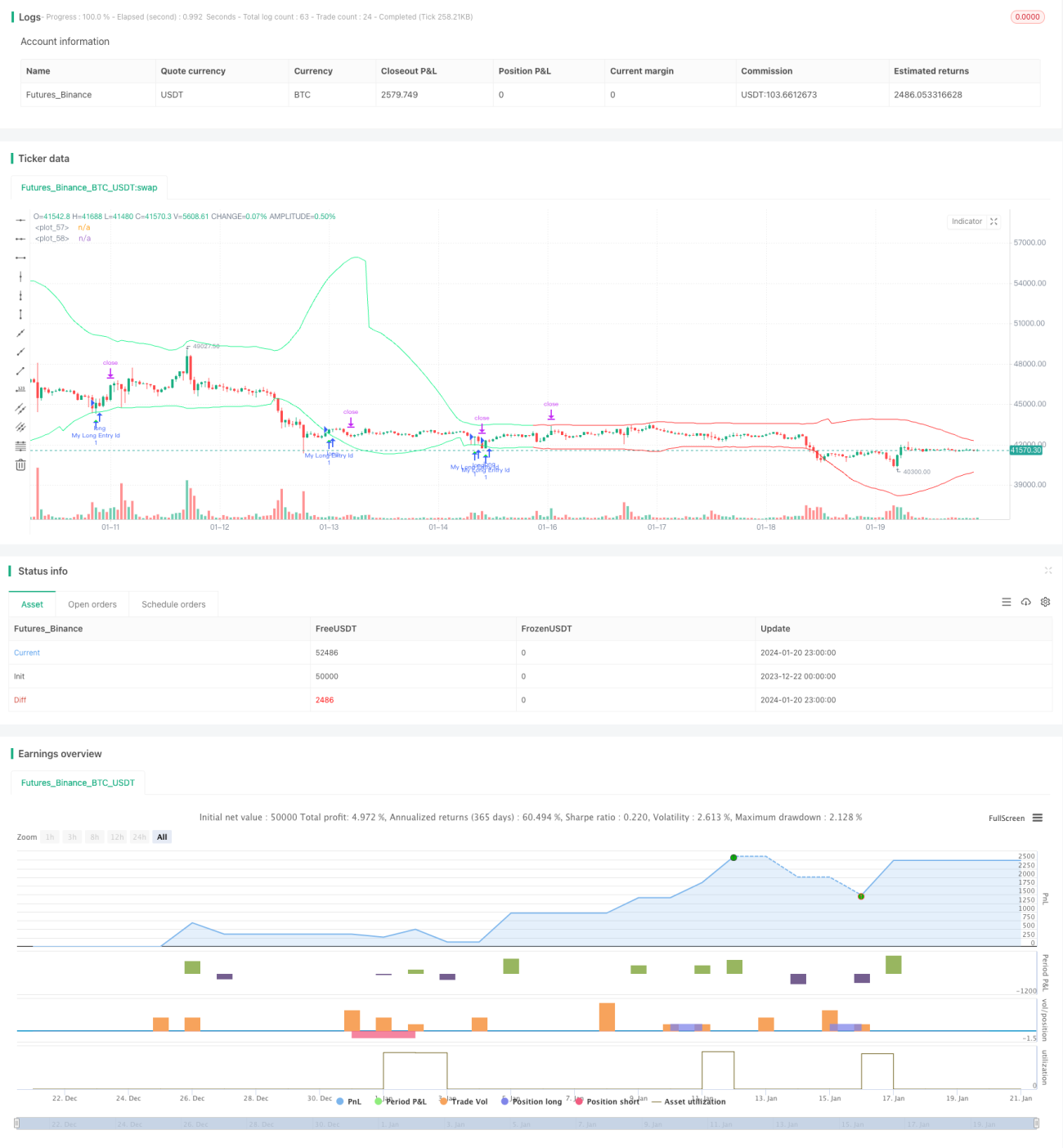
Diese Strategie nutzt die Wendepunkte des CCI-Indikators, um dynamische Unterstützungs- und Widerstandsniveaus zu berechnen, und kombiniert sie mit einer Trendbewertung, um Kauf- und Verkaufssignale zu finden. Die Strategie vereint die Umkehrcharakteristik des CCI mit Trendfolge-Fähigkeiten, um Umkehrpunkte in mittelfristigen Trends zu identifizieren und Gewinne zu erzielen.
Strategieprinzip
Der CCI-Indikator zeigt an, ob der Markt zu schwach oder zu stark ist. Die Extremwerte 80 und -80 können genutzt werden, um zu beurteilen, ob der Markt überkauft oder überverkauft ist. Diese Strategie nutzt diese Eigenschaft des CCI, indem sie die Wendepunkte links und rechts von jeweils 50 Kerzen berechnet, um obere und untere Wendepunkte zu erhalten. Auf Basis dieser Wendepunkte werden dann durch Addition/Subtraktion eines Puffers dynamische Widerstands- und Unterstützungslinien konstruiert.
Ein Kaufsignal wird generiert, wenn der Schlusskurs über dem Eröffnungskurs liegt und unter der oberen Unterstützungslinie liegt; ein Verkaufssignal wird generiert, wenn der Schlusskurs unter dem Eröffnungskurs liegt und über der unteren Widerstandslinie liegt. Um Signale zu filtern, die gegen den Haupttrend gerichtet sind, werden auch EMA und Steigungsindikator verwendet, um den aktuellen Haupttrend zu bestimmen. Kaufoperationen werden nur durchgeführt, wenn der Trend als bullisch eingestuft wird; Verkaufsoperationen werden nur durchgeführt, wenn der Trend als bärisch eingestuft wird.
Stop-Loss und Take-Profit werden dynamisch auf Basis des ATR-Indikators berechnet, was das Risikomanagement der Strategie relativ vernünftig macht.
Vorteilsanalyse
- Nutzung der Umkehrcharakteristik des CCI-Indikators, um in der Nähe von Umkehrpunkten zu handeln und die Gewinnwahrscheinlichkeit zu erhöhen.
- Kombination mit Trendbewertung vermeidet gegenläufige Geschäfte und reduziert Verluste.
- Dynamische Stop-Loss- und Take-Profit-Einstellungen sorgen für ein angemesseneres Risikomanagement.
- Anpassbare Parameter wie CCI-Periode, Puffergröße usw., um sich an verschiedene Marktbedingungen anzupassen.
Risikoanalyse
- Der CCI-Indikator kann leicht falsche Signale erzeugen; daher ist eine Trendfilterung erforderlich.
- Umkehrungen sind nicht immer erfolgreich; es besteht ein gewisses Verlustrisiko.
- Falsche Parametereinstellungen können zu übermäßigem Handel oder verpassten Handelsmöglichkeiten führen.
Durch Optimierung der Parameter, Anpassung der Stop-Loss-Spannen usw. kann das Risiko reduziert werden. Darüber hinaus kann diese Strategie auch als Hilfsinstrument für andere Indikatoren dienen, ohne sich vollständig auf ihre Handelssignale zu verlassen.
Optimierungsmöglichkeiten
- Optimierung der Puffergröße zur Anpassung an Märkte mit unterschiedlicher Volatilität.
- Optimierung der ATR-Periodenparameter für genauere dynamische Stop-Loss- und Take-Profit-Werte.
- Testen verschiedener CCI-Parametereinstellungen.
- Testen der Wirkung anderer Arten von Trendbewertungsindikatoren.
Zusammenfassung
Diese Strategie kombiniert die Long/Short-Filterfähigkeit des CCI-Indikators mit der Bestätigung durch Trendbewertung und hat einen gewissen praktischen Nutzen. Die dynamischen Stop-Loss- und Take-Profit-Einstellungen machen die Strategie im praktischen Einsatz risikokontrollierbar. Durch Parameteroptimierung und Verbesserungen können voraussichtlich bessere Ergebnisse erzielt werden.
- 1