High Probability Breakthrough Trading Strategy Based on Pressure Balance

Overview
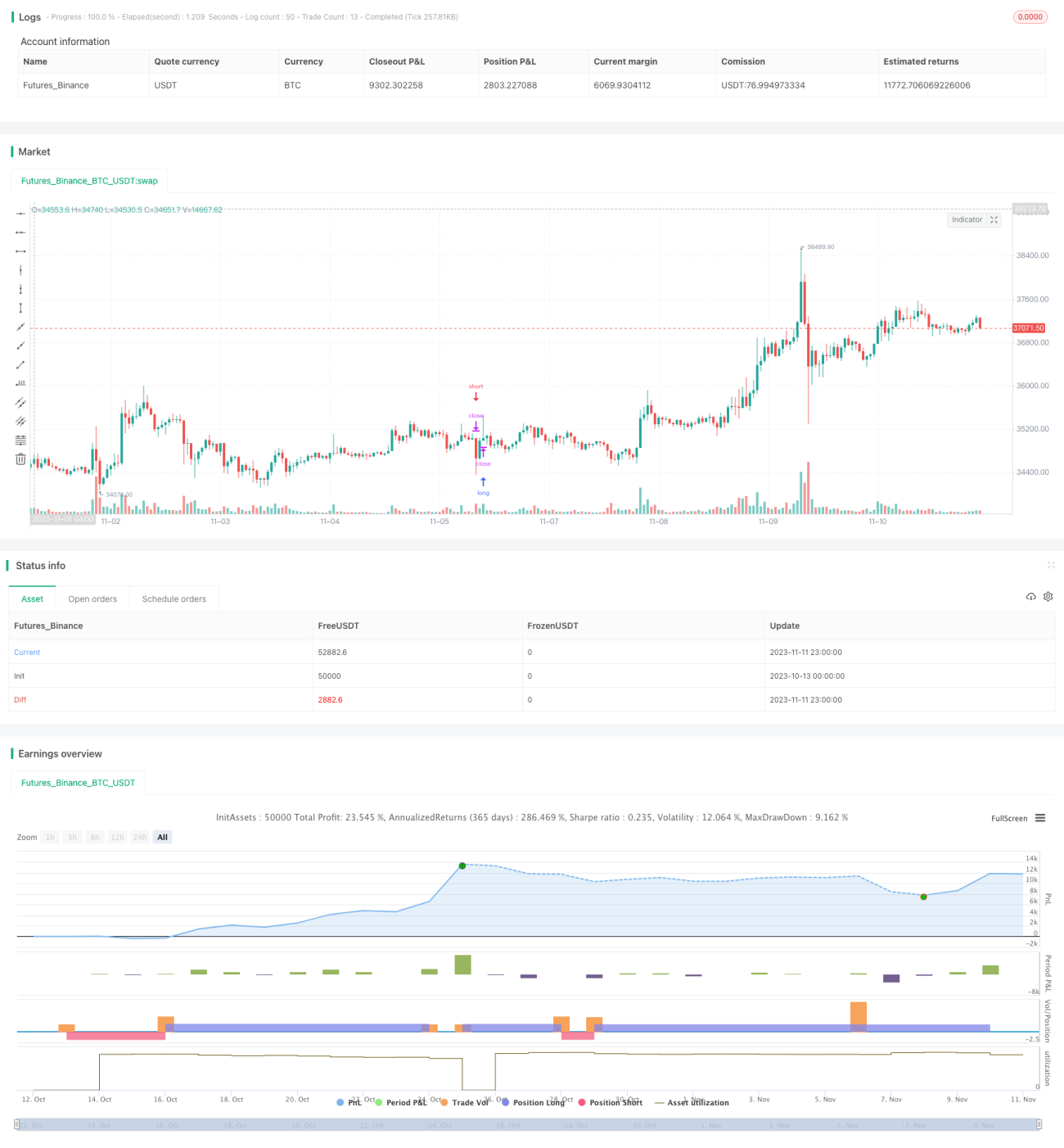
This strategy uses a combination of multiple indicators to determine the trend direction and trading opportunities, adopting a pressure balance approach to increase the winning rate of trades. It mainly utilizes MACD, PSAR and EMA indicators for judgement, and implements stop loss and take profit to achieve effective profitability.
Strategy Logic
-
Use EMA to calculate moving average to determine the overall trend direction. Larger EMA value indicates an uptrend, while smaller EMA value indicates a downtrend.
-
Use MACD to calculate the difference between fast and slow moving averages. When the difference is greater than 0, it indicates an uptrend, when less than 0, it indicates a downtrend.
-
Use PSAR to calculate the continuous varying point. When PSAR value is large, it indicates a downtrend, when PSAR value is small, it indicates an uptrend.
-
Combine the above three indicators to determine consistency of the trend. When the judgments of the three indicators are consistent, it represents a clear trend that allows entry trades.
-
Enter trades based on buy and sell criteria, and set stop loss and take profit points. Exit trades when stop loss or take profit conditions are met to realize profits.
-
Specific rules are:
- Buy condition: not in uptrend, MACD histogram < 0, close price > EMA
- Sell condition: in uptrend, MACD histogram > 0, close price < EMA
- Stop loss condition: price hits next PSAR value
- Take profit condition: reaching preset take profit ratio
Advantages of the Strategy
-
Using multiple indicators to determine the trend improves accuracy.
-
Opening trades based on definite trends identified through pressure balance increases winning rate.
-
Setting stop loss and take profit can limit losses and lock in profits.
-
Clear and systematic trading rules make it suitable for algorithm trading.
-
Parameters can be optimized to adapt to different products and timeframes.
Risks of the Strategy
-
Trend judgement may be wrong, resulting in incorrect trade direction.
-
Extreme market moves may generate false signals from the indicators.
-
Stop loss being set too wide, unable to exit timely.
-
Improper parameter tuning leads to over-trading or missing trades.
-
Illiquid products cannot fulfill stop loss and take profit plans.
-
Risks can be reduced by optimizing parameters, adjusting stops, and selecting liquid products.
Optimization Directions
-
Adjust EMA period to optimize trend accuracy.
-
Tune MACD fast and slow period to improve sensitivity.
-
Optimize stop loss and take profit ratios to find ideal balance.
-
Add other auxiliary indicators to improve entry timing.
-
Select products with good liquidity and large swings.
-
Adjust timeframes to suit different product characteristics.
Summary
This strategy integrates multiple indicators for trend analysis and enters trades based on definite trends, with preset stop loss and take profit, which can effectively capture market moves and achieve good returns while ensuring certain profitability. Further improvements on stability and profitability can be achieved through parameter tuning and additional indicators. The clear trading rules make this strategy very suitable for algorithmic trading.
- 1