Stratégie de retournement multiple basée sur la moyenne mobile de tendance

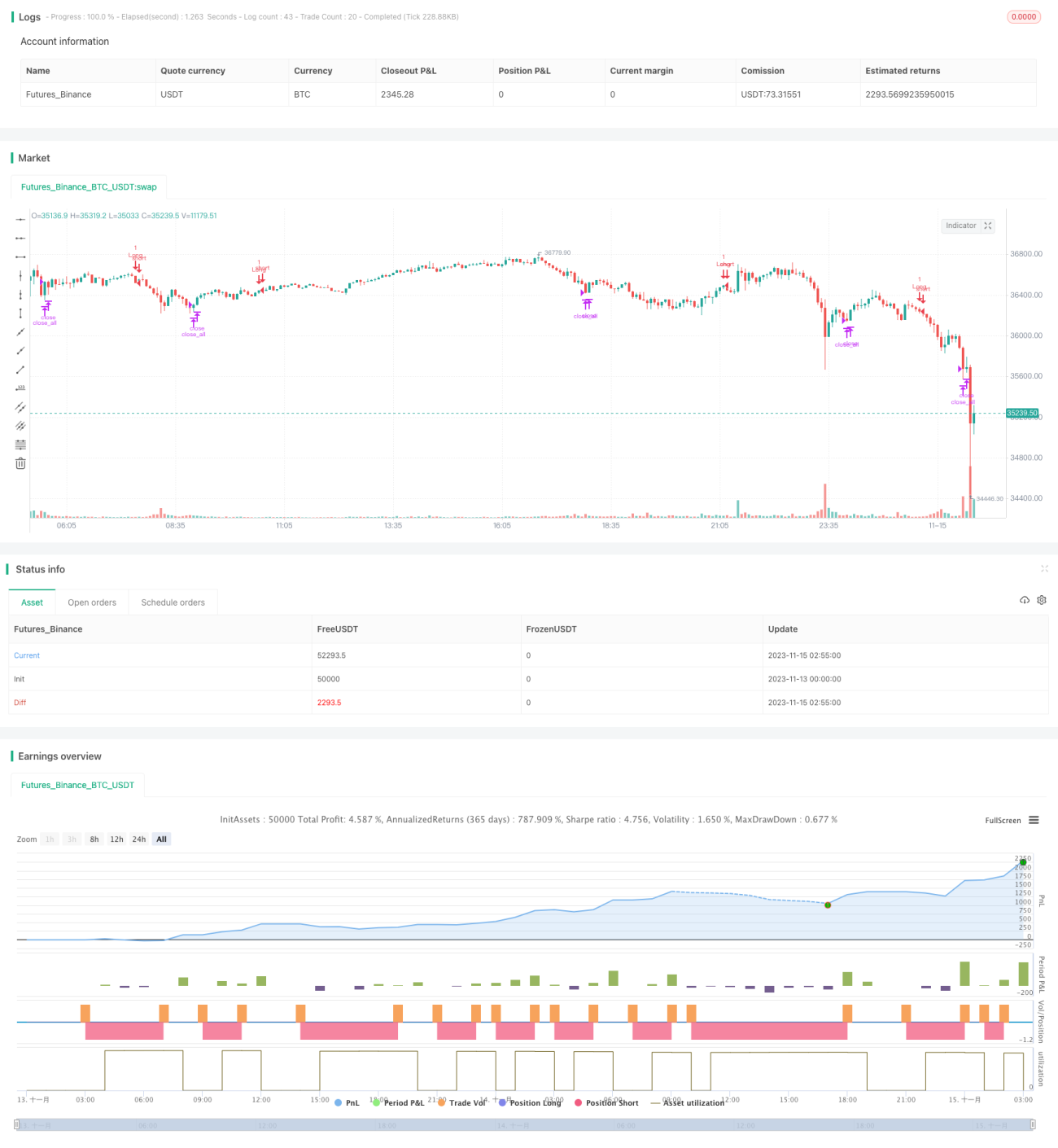
Aperçu
Cette stratégie calcule plusieurs indicateurs de tendance et effectue des opérations d'achat et de vente lorsqu'ils s'inversent. Les principaux indicateurs de tendance sont TDI, TCF, TTF et TII. La stratégie choisit parmi la configuration lequel utiliser pour générer des signaux de trading.
Principe de la stratégie
-
Indicateur TDI
L'indicateur TDI est basé sur le momentum des variations de prix. Il est construit à l'aide de techniques de sommation et de lissage. Lorsque l'indicateur de direction TDI croise au-dessus de la courbe TDI, on prend une position longue ; lorsqu'il croise en dessous, on liquide la position.
-
Indicateur TCF
L'indicateur TCF calcule les variations positives et négatives du prix pour évaluer la force haussière et baissière. Lorsque la force des variations positives est supérieure à celle des variations négatives, on prend une position longue ; sinon, on liquide.
-
Indicateur TTF
L'indicateur TTF compare la force des points hauts et bas pour déterminer la tendance. Un signal long est donné lorsque le TTF croise au-dessus de 100 ; inversement, on liquide.
-
Indicateur TII
L'indicateur TII combine une moyenne mobile et une fourchette de prix pour juger des inversions de tendance. Il prend en compte à la fois les tendances courtes et longues. Un signal long est donné lorsque le TII croise au-dessus de 80, et une liquidation lorsqu'il croise en dessous de 80.
La logique d'entrée en position longue et de liquidation choisit le signal de trading approprié en fonction de l'indicateur configuré.
Avantages de la stratégie
Cette stratégie intègre plusieurs indicateurs de trading de tendance courants, ce qui permet de s'adapter avec flexibilité aux conditions du marché. Les avantages spécifiques sont :
- Utiliser les signaux d'inversion de tendance pour saisir rapidement les opportunités de retournement.
- Configurer différents indicateurs permet une optimisation ciblée.
- Une riche combinaison d'indicateurs peut être utilisée pour confirmer les signaux.
Risques de la stratégie
Cette stratégie fait face aux risques suivants :
- Les signaux de trading générés par les indicateurs de tendance peuvent produire de faux signaux, entraînant des pertes.
- Un seul indicateur ne peut pas juger complètement la tendance et est facilement affecté par le bruit du marché.
- Des paramètres d'indicateur et de transaction mal configurés peuvent conduire à une interprétation erronée du marché, générant des transactions incorrectes.
On peut réduire les risques par les méthodes suivantes :
- Optimiser les paramètres des indicateurs pour trouver la meilleure combinaison.
- Combiner plusieurs signaux d'indicateurs pour trader, améliorant ainsi la qualité des signaux.
- Ajuster la stratégie de gestion des positions pour contrôler les pertes par transaction.
Pistes d'optimisation de la stratégie
Cette stratégie peut être optimisée sous les aspects suivants :
- Tester les combinaisons optimales d'indicateurs et de paramètres pour différents cycles de marché.
- Ajouter ou supprimer des indicateurs pour trouver la combinaison optimale.
- Filtrer les signaux de trading pour éliminer les faux signaux.
- Optimiser la gestion des positions, par exemple avec des positions variables, un trailing stop, etc.
- Ajouter un indicateur de score d'apprentissage automatique pour aider à évaluer la qualité des signaux.
Résumé
Cette stratégie combine les avantages de plusieurs indicateurs d'inversion de tendance. En configurant les indicateurs et les paramètres pour optimiser, elle peut s'adapter aux différentes conditions du marché en opérant aux points d'inversion de tendance. La clé est de trouver la combinaison optimale de paramètres et d'indicateurs, tout en contrôlant les risques. Grâce à une optimisation et une validation continues, on peut construire une stratégie stable générant de l'alpha.
- 1