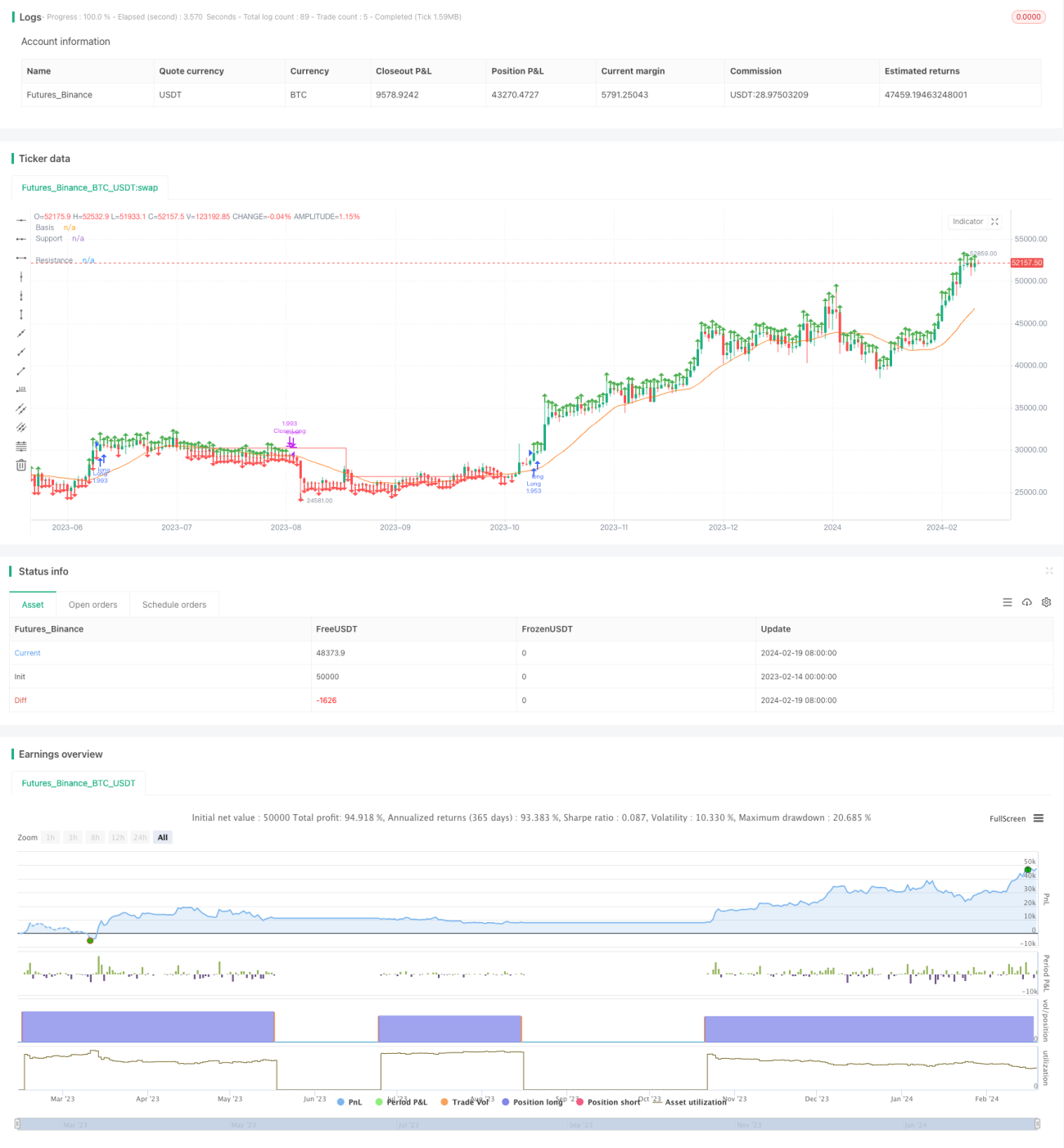
돌파 상승 추세에 대한 참조 전략


생성 날짜: 2024-02-21 10:58:01 마지막으로 수정됨: 2024-02-21 10:58:01
복사: 0 클릭수: 610
avatar of ChaoZhang ChaoZhang
1
집중하다
1617
수행원

돌파 상승 추세에 대한 참조 전략

개요

이 전략은 간단한 이동 평균을 기반으로 트렌드 방향을 결정하고, 저항지원선과 함께 돌파 신호를 형성하는 긴 선 포지션 전략이다. 가격의 Pivot 고점과 Pivot 저점을 계산하여, 저항선과 지지선을 그리며, 가격이 저항선 돌파를 할 때 더 많이하고, 지지선 돌파를 할 때 평소한다. 이 전략은 트렌드가 명백한 주식에 적합하며, 더 나은 위험-이익 비율을 얻을 수 있다.

전략 원칙

  1. 동향을 판단하는 기준으로 20일 간소 이동 평균을 계산합니다.
  2. 사용자 입력 변수에 따라 Pivot 하위점과 Pivot 하위점을 계산합니다.
  3. 피벗 고점과 피벗 저점에 따라 저항선과 지지선을 그리기
  4. 마감값이 저항선보다 높을 때 더 많은 입장을 취하십시오.
  5. 지지선 아래에서 저항선을 통과할 때 평행함

이 전략은 간단한 이동 평균을 사용하여 전체 트렌드 방향을 판단하고, 그 다음 핵심 포인트 브레이크를 사용하여 거래 신호를 형성하며, 전형적인 브레이크 타입 전략에 속한다. 핵심 포인트와 트렌드 판단을 통해 가짜 브레이크를 효과적으로 필터링 할 수 있다.

우위 분석

  1. 전략적 기회는 풍부하고, 동요가 높은 주식과 트렌드를 쉽게 잡을 수 있습니다.
  2. 위험 조절: 위험과 이익의 비율이 높다
  3. 해킹 신호를 사용하여 가짜 해킹의 위험을 피하십시오.
  4. 사용자 정의 가능한 파라미터, 적응력

위험 분석

  1. 변수 최적화에 의존하고, 변수가 잘못되면 가짜 돌파의 확률이 증가합니다.
  2. 갱신 신호 지연, 일부 기회를 놓칠 수 있다
  3. 지진으로 인한 손해
  4. 지원선 조정이 늦어지면 손실이 발생할 수 있습니다.

리스크를 줄일 수 있는 방법은 실디 최적화 매개 변수와 스톱 스톱 전략을 결합하는 것이다.

최적화 방향

  1. 이동 평균 주기 변수를 최적화
  2. 지원 저항선 파라미터를 최적화
  3. 더 많은 손실을 막는 전략
  4. 브레이크 확인 메커니즘
  5. 거래량과 같은 지표 필터링 신호

요약하다

이 전략은 전체적으로 전형적인 돌파구 전략으로, 변수 최적화와 유동성에 의존하며, 트렌드를 추적하는 거래자에게 적합하다. 참조 프레임워크로서, 실제 필요에 따라 모듈을 확장할 수 있으며, 손실 중지, 신호 필터링 등의 메커니즘을 통해 위험을 줄이고 안정성을 높인다.

전략 소스 코드
/*backtest
start: 2023-02-14 00:00:00
end: 2024-02-20 00:00:00
period: 1d
basePeriod: 1h
exchanges: [{"eid":"Futures_Binance","currency":"BTC_USDT"}]
*/

// This source code is subject to the terms of the Mozilla Public License 2.0 at https://mozilla.org/MPL/2.0/
// © CheatCode1

//@version=5
strategy("Quantitative Trend Strategy- Uptrend long", 'Steady Uptrend Strategy', overlay=true, initial_capital = 1500, default_qty_value = 100, commission_type = strategy.commission.percent, commission_value = 0.01, default_qty_type = strategy.percent_of_equity)


length = input.int(20, minval=1)
src = input(close, title="Source")
basis = ta.sma(src, length)
offset = input.int(0, "Offset", minval = -500, maxval = 500)
plot(basis, "Basis", color=#FF6D00, offset = offset)

inp1 = input.int(46, 'LookbackLeft')
inp2 = input.int(32, 'LookbackRight')

l1 = ta.pivothigh(close, inp1, inp2)
S1 = ta.pivotlow(close, inp1, inp2)

// plot(l1, 'Pivothigh', color.red, 1)
// // plot(S1, 'Pivot Low', color.red)

l1V = ta.valuewhen(l1, close, 0)
S1V = ta.valuewhen(S1, close, 0)

Plotl1 = not na(l1) ? l1V : na
PlotS1 = not na(S1) ? S1V : na

plot(Plotl1, 'Resistance', color.green, 1, plot.style_stepline, true)
plot(PlotS1, 'Support', color.red, 1, plot.style_stepline, true)

Priceforlong = close > l1V ? true : na
Priceforshort = close < S1V ? true : na

plotshape(Priceforlong ? high : na, 'p', shape.arrowup, location.abovebar, color.green, size = size.small)
plotshape(Priceforshort ? low : na, 's', shape.arrowdown, location.belowbar, color.red, size = size.small)

vol = volume
volma = ta.sma(vol, 20)

Plotl1C = ta.valuewhen(na(Plotl1), l1V, 0)
PlotS1C = ta.valuewhen(na(PlotS1), S1V, 0)
//Strategy Execution
volc = volume > volma 

Lc1 = Priceforlong 

Sc1 = Priceforshort

sL = Plotl1 < PlotS1 ? close : na
sS = PlotS1 > Plotl1 ? close : na


if Lc1 
    strategy.entry('Long', strategy.long)
// if Sc1 and C2
//     strategy.entry('Short', strategy.short)

if Priceforshort
    strategy.cancel('Long')
if Priceforlong   
    strategy.cancel('Short')


// Stp1 = ta.crossover(k, d)
// Ltp1 = ta.crossunder(k, d)
// Ltp = d > 70  ? Ltp1 : na
// Stp = d < 30  ? Stp1 : na


if strategy.openprofit >= 0 and sL
    strategy.close('Long')
if strategy.openprofit >= 0 and sS
    strategy.close('Short')
takeP = input.float(2, title='Take Profit') / 100
stopL = input.float(1.75, title='Stop Loss') / 100


// // Pre Directionality

Stop_L = strategy.position_avg_price * (1 - stopL)

Stop_S = strategy.position_avg_price * (1 + stopL)

Take_S= strategy.position_avg_price * (1 - takeP)

Take_L = strategy.position_avg_price * (1 + takeP)
     
// sL = Plotl1 < PlotS1 ? close : na
// sS = PlotS1 < Plotl1 ? close : na
     
// //Post Excecution
if strategy.position_size > 0 and not (Lc1)
    strategy.exit("Close Long", stop = Stop_L, limit = Take_L)

if strategy.position_size < 0 and not (Sc1)
    strategy.exit("Close Short", stop = Stop_S, limit = Take_S)