Strategi Kuantitatif Purata Bergerak Adaptif

Ringkasan
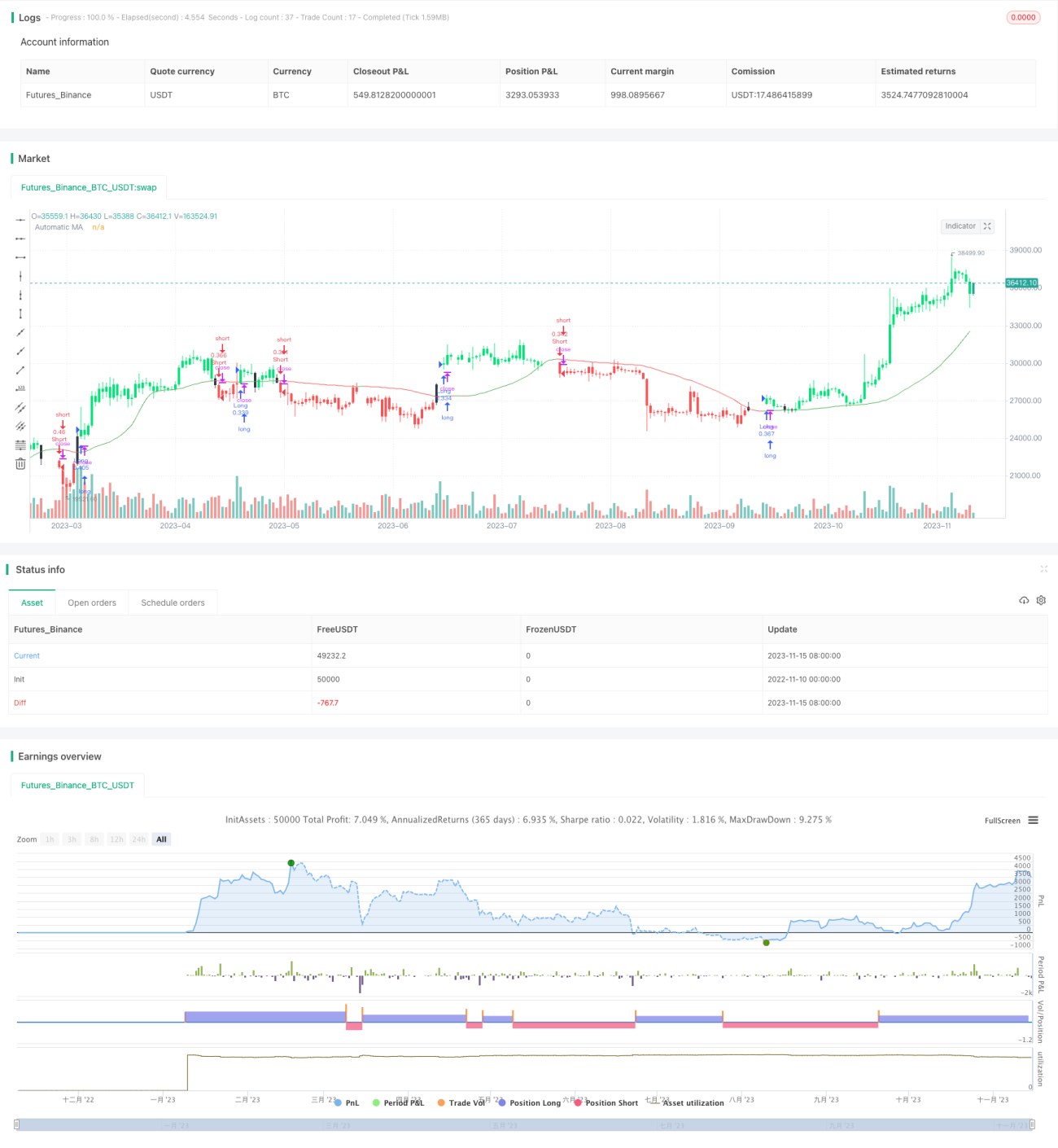
Strategi ini berdasarkan purata bergerak, boleh melaraskan parameter secara automatik, dan sesuai untuk pasaran yang berombak pada jangka masa yang tinggi. Ia dapat mencari kombinasi parameter terbaik secara automatik dan menghasilkan isyarat dagangan apabila harga menembusi purata bergerak.
Prinsip Strategi
Strategi ini menggunakan purata bergerak adaptif sebagai isyarat dagangan. Pertama, ia mengira purata bergerak mudah (CMA) bagi tempoh yang ditetapkan (start). Kemudian, ia menguji kombinasi parameter di sekitar CMA, menentukan kombinasi mana yang garis CMA-nya paling sedikit disentuh oleh badan dan bayang lilin (candlestick). Akhirnya, ia menggunakan CMA yang paling sedikit disentuh sebagai garis isyarat.
Secara khusus, strategi akan menguji garis CMA untuk tempoh ditambah 1 (CMA_P1) dan ditolak 1 (CMA_M1), dan mengira bilangan sentuhan oleh garis badan dan bayang lilin. Jika bilangan sentuhan CMA kurang daripada CMA_P1 dan CMA_M1, maka tempoh CMA semasa dikekalkan; jika bilangan sentuhan CMA_P1 lebih sedikit, maka tempoh CMA ditambah 1; jika bilangan sentuhan CMA_M1 lebih sedikit, maka tempoh CMA ditolak 1. Ini membolehkan pencarian CMA yang agak licin sebagai garis isyarat.
Apabila harga menembusi CMA dari bawah ke atas, isyarat beli dihasilkan; apabila harga menembusi CMA dari atas ke bawah, isyarat jual dihasilkan.
Analisis Kelebihan
Strategi purata bergerak adaptif ini mempunyai kelebihan berikut:
-
Mencari parameter optimum secara automatik. Tidak perlu memilih tempoh purata bergerak secara manual, strategi akan menguji tempoh yang berbeza secara automatik untuk mencari parameter optimum.
-
Mengurangkan isyarat palsu. Berbanding purata bergerak dengan tempoh tetap, purata bergerak adaptif boleh menapis lebih banyak bunyi bising, dengan itu mengurangkan banyak isyarat palsu.
-
Menyesuaikan diri dengan perubahan pasaran. Apabila pasaran berubah daripada mengumpul (range-bound) kepada cenderung (trending), tempoh purata bergerak akan memanjang secara automatik untuk menghasilkan isyarat; apabila pasaran berubah daripada cenderung kepada mengumpul, tempoh purata bergerak akan memendek secara automatik. Oleh itu, strategi boleh menyesuaikan diri secara dinamik dengan perubahan pasaran.
-
Memudahkan sistem dagangan. Kaedah adaptif ini boleh memudahkan keseluruhan sistem dagangan tanpa memerlukan pengoptimuman parameter secara manual.
-
Skalabiliti yang baik. Konsep strategi ini boleh diperluaskan kepada penunjuk lain, mereka bentuk strategi seperti jalur Bollinger adaptif, KD adaptif, dan lain-lain.
Analisis Risiko
Strategi ini juga mempunyai beberapa risiko yang perlu diberi perhatian:
-
Risiko Opsyen Beli (Call Option). Apabila pasaran menunjukkan corak opsyen beli, badan lilin mungkin gagal menembusi garis purata bergerak, menyebabkan isyarat yang salah. Syarat penapisan perlu ditambah untuk mengurangkan risiko ini.
-
Risiko Penembusan Gagal. Penembusan purata bergerak tidak selalu berterusan, terdapat risiko sebahagian penembusan gagal. Oleh itu, pengesahan penembusan diperlukan untuk memastikan kadar kejayaan yang tinggi.
-
Risiko Pembalikan Trend. Pembalikan selepas memasuki pasaran cenderung perlu ditukar arah tepat pada masanya, jika tidak, ia boleh menyebabkan kerugian. Syarat henti rugi boleh ditetapkan untuk mengawal kerugian.
-
Risiko Pengoptimuman Parameter. Parameter yang dilaraskan secara adaptif mungkin terperangkap dalam optimum setempat, menghasilkan purata bergerak yang berlebihan. Kaedah penilaian model perlu diperkenalkan untuk mengelakkan masalah ini.
-
Risiko Terlebih Optimum (Overfitting). Pelarasan parameter secara adaptif mungkin terlalu dioptimumkan, menyebabkan kehilangan keupayaan generalisasi model. Pengesahan dalam jangka masa panjang merentas persekitaran pasaran yang berbeza diperlukan, dan tidak boleh terlalu bergantung pada keputusan ujian semula (backtest).
Hala Tuju Pengoptimuman
Hala tuju pengoptimuman untuk strategi purata bergerak adaptif ini termasuk:
-
Menambah mekanisme pengesahan penembusan trend, menapis penembusan palsu melalui penembusan berturut-turut.
-
Menambah strategi henti rugi, henti rugi apabila harga kembali semula ke sisi lain purata bergerak.
-
Menambah mekanisme penapisan opsyen, mengelakkan isyarat salah semasa corak opsyen beli.
-
Memperkenalkan metrik penilaian untuk kekangan pelarasan parameter, seperti IC, LIC, SIC, dan lain-lain, untuk mengelakkan parameter terlebih optimum.
-
Perluasan kepada penunjuk lain, mereka bentuk strategi adaptif Golden Cross/Death Cross, strategi jalur Bollinger adaptif, dan lain-lain.
-
Mengoptimumkan kaedah pengiraan purata bergerak, menggunakan purata bergerak wajaran, purata bergerak eksponen dan lain-lain untuk melicinkan purata bergerak.
Kesimpulan
Strategi ini mencari parameter optimum dengan melaraskan tempoh purata bergerak secara adaptif, dengan itu menghasilkan isyarat dagangan. Berbanding parameter tetap, ia boleh mengurangkan banyak isyarat palsu dan menyesuaikan diri dengan perubahan pasaran. Walau bagaimanapun, kita juga perlu mengambil perhatian terhadap beberapa risiko yang berpotensi. Strategi perlu melalui pengesahan (verification) dan pengoptimuman walk forward untuk menjana keuntungan yang stabil dalam dagangan sebenar.
-
Risiko pembalikan arah aliran. Pembalikan arah aliran selepas memasuki arah aliran perlu ditukar tepat pada masanya, jika tidak boleh menyebabkan kerugian. Henti rugi perlu ditetapkan untuk mengawal kerugian.
-
Risiko pengoptimuman parameter. Parameter yang disesuaikan secara adaptif mungkin terperangkap dalam pengoptimuman tempatan, mengakibatkan MA yang berlebihan. Kaedah penilaian model perlu diperkenalkan untuk mengelakkan masalah ini.
-
Risiko terlebih padanan. Penalaan parameter yang berlebihan boleh menyebabkan terlebih padanan dan kehilangan keupayaan generalisasi model. Pengesahan lanjutan dalam persekitaran pasaran yang berbeza diperlukan, bukan hanya bergantung pada hasil ujian balik.
Hala Tuju Penambahbaikan
Beberapa hala tuju untuk menambah baik strategi MA adaptif ini:
-
Tambah pengesahan penembusan arah aliran melalui penembusan berturut-turut untuk menapis penembusan palsu.
-
Tambah strategi henti rugi, henti rugi apabila harga bergerak semula ke sisi lain MA.
-
Tambah penapis opsyen untuk mengelakkan isyarat salah apabila opsyen panggilan muncul.
-
Perkenalkan metrik penilaian seperti IC, LIC, SIC dan lain-lain untuk menyekat penalaan parameter dan mencegah terlebih padanan.
-
Kembangkan kepada penunjuk lain seperti strategi salib emas adaptif, Jalur Bollinger adaptif dan lain-lain.
-
Optimumkan pengiraan MA dengan menggunakan MA berwajaran, MA eksponen dan lain-lain untuk mendapatkan MA yang lebih licin.
Ringkasan
Strategi ini menjana isyarat dagangan dengan melaraskan tempoh MA secara adaptif untuk mencari parameter optimum. Berbanding dengan parameter tetap, ia dapat mengurangkan banyak isyarat palsu dan menyesuaikan diri dengan perubahan pasaran. Tetapi kita juga perlu berhati-hati terhadap risiko yang mungkin timbul, dan melakukan pengesahan serta pengoptimuman walk-forward sebelum mengaplikasikannya dalam dagangan langsung untuk keuntungan yang stabil.
- 1