Strategi Perdagangan Berdasarkan Saluran Donchian Berperingkat Pelbagai Skala

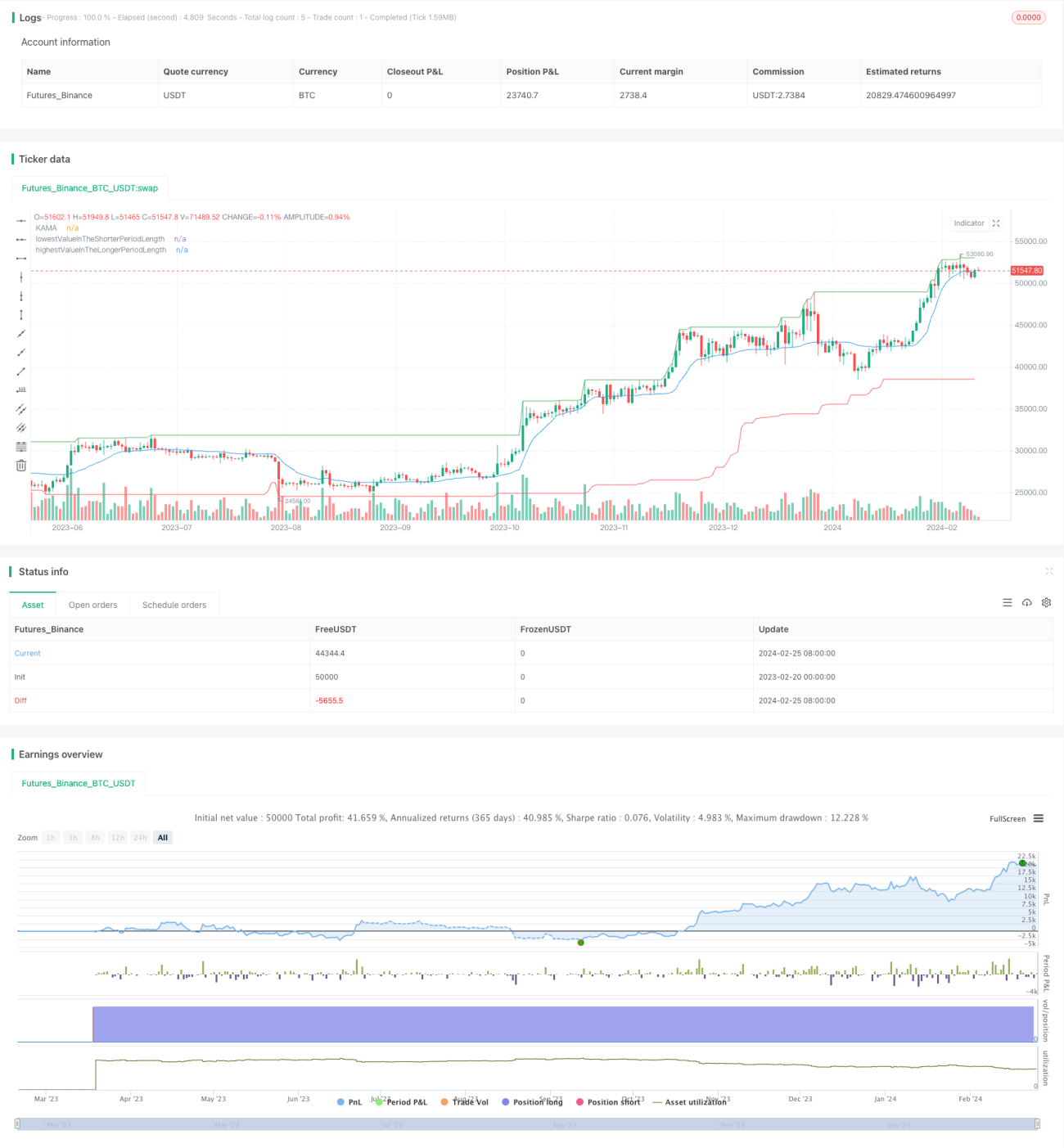
Gambaran Keseluruhan
Ini adalah strategi perdagangan yang menggunakan Saluran Donchian pelbagai jangka masa untuk menentukan titik masuk dan keluar. Idea utama strategi adalah: menentukan arah aliran pada jangka masa yang lebih panjang untuk mencari peluang masuk; menentukan pembalikan arah aliran pada jangka masa yang lebih pendek untuk mencari peluang keluar.
Prinsip Strategi
Strategi ini terutamanya menggunakan konsep Saluran Donchian. Saluran Donchian terdiri daripada had atas, had bawah dan garis tengah saluran. Lebar saluran berubah mengikut jangka masa. Di sini kita menggunakan jangka masa yang berbeza untuk membina Saluran Donchian, khususnya:
- Menggunakan kitaran 52 untuk membina Saluran Donchian jangka masa yang lebih panjang, mendapatkan had atas, had bawah dan garis tengah saluran.
- Menggunakan kitaran 12 untuk membina Saluran Donchian jangka masa yang lebih pendek, mendapatkan had atas, had bawah dan garis tengah saluran.
Logik masuk: Apabila harga menembusi had atas saluran jangka masa yang lebih panjang, ia dianggap sebagai masa masuk untuk posisi beli. Untuk mengelakkan penembusan palsu, kami memerlukan sekurang-kurangnya 1 daripada 3 batang lilin terbaru mempunyai harga penutup di atas had atas saluran lilin tersebut, dengan itu dapat mengelakkan penembusan palsu yang disebabkan oleh pengembangan berlebihan jangka pendek.
Logik keluar: Apabila harga menembusi had bawah saluran jangka masa yang lebih pendek, ia dianggap sebagai masa keluar untuk menutup posisi. Kami juga memerlukan sekurang-kurangnya 1 daripada 3 batang lilin terbaru mempunyai harga penutup di bawah had bawah saluran lilin tersebut, dengan itu dapat mengesahkan keberkesanan penembusan dan mengelakkan terperangkap.
Kelebihan Strategi
-
Strategi ini menggabungkan kelebihan perdagangan mengikut aliran dan perdagangan pembalikan. Jangka masa yang lebih panjang menentukan arah aliran, manakala jangka masa yang lebih pendek menentukan pembalikan tempatan. Gabungan kedua-duanya dapat menangkap pergerakan tempatan dalam aliran.
-
Menggunakan analisis pelbagai jangka masa dapat menangani masalah penembusan palsu dengan lebih baik, menjadikan titik masuk dan keluar lebih jelas dan berkesan.
-
Melalui pengoptimuman parameter, ia boleh disesuaikan dengan pelbagai instrumen dan keadaan pasaran.
Risiko dan Penyelesaian
-
Strategi ini agak sensitif terhadap parameter. Parameter yang berbeza mungkin menghasilkan keputusan yang berbeza sama sekali. Ujian dan pengoptimuman yang mencukupi diperlukan untuk mencari kombinasi parameter terbaik.
-
Dalam pasaran yang tidak menentu (sideways market), strategi mungkin menghasilkan banyak isyarat perdagangan, menyebabkan perdagangan berlebihan. Ini boleh dikawal dengan mengkonfigurasi stop loss untuk mengehadkan kerugian setiap perdagangan.
-
Strategi tidak mempertimbangkan logik penentuan arah aliran peringkat besar, dan mungkin gagal pada titik perubahan pasaran menaik ke menurun dan sebaliknya. Ia boleh digabungkan dengan penunjuk lain untuk menentukan arah aliran peringkat besar.
Hala Tuju Pengoptimuman
-
Melakukan pengoptimuman parameter untuk mencari kombinasi parameter terbaik. Optimumkan panjang kitaran, jenis saluran dan parameter lain.
-
Menambah logik stop loss. Konfigurasi stop loss bergerak yang munasabah untuk mengawal kerugian setiap perdagangan.
-
Menggabungkan dengan penunjuk lain untuk menentukan arah aliran peringkat besar. Contohnya EMA, Saluran K線 (K-line channel), MACD, dll. Elakkan kegagalan pada titik perubahan utama.
Kesimpulan
Secara keseluruhan, strategi ini adalah strategi penembusan saluran pelbagai jangka masa yang tipikal. Ia menggabungkan kelebihan perdagangan mengikut aliran dan perdagangan pembalikan dengan baik, menggunakan pertimbangan saluran pada jangka masa yang berbeza untuk menangkap pergerakan tempatan dalam aliran. Sekiranya parameter dioptimumkan dengan baik, prestasinya cemerlang dalam pasaran yang jelas alirannya. Walau bagaimanapun, strategi ini agak rapuh dan sangat sensitif terhadap parameter serta pertimbangan arah aliran keseluruhan. Disarankan untuk digunakan bersama dengan strategi atau penunjuk perdagangan peringkat besar yang lain untuk mencapai keputusan yang lebih baik.
- 1