Trendfolgestrategie auf Basis von Gleitender-Durchschnitts-Rückkehr-Ausbrüchen

Übersicht
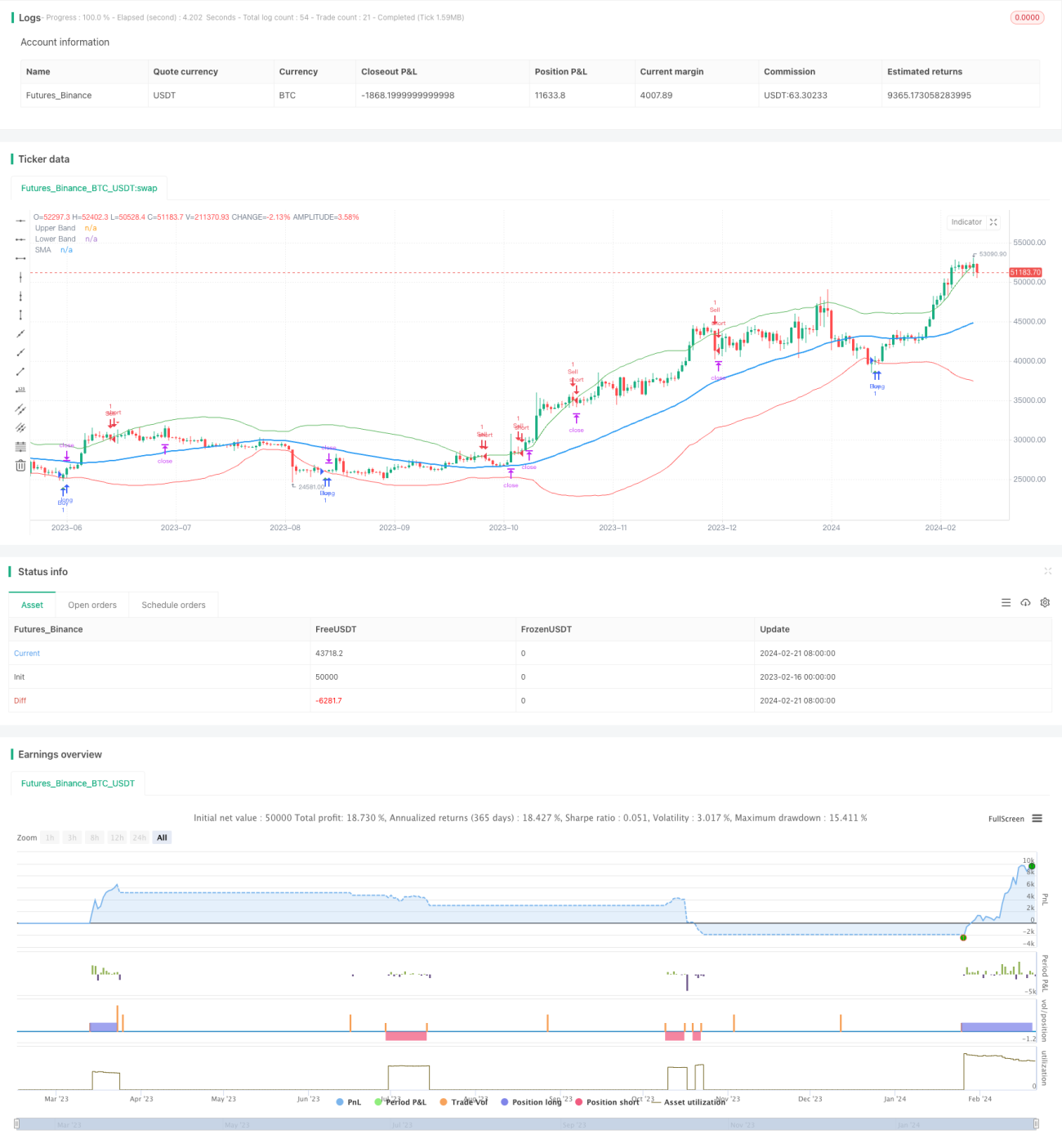
Die Moving-Average-Rückkehr-Durchbruchsstrategie ist eine typische Trendfolge-Quantitative-Trading-Strategie. Sie nutzt den gleitenden Durchschnitt und seinen Standardabweichungskanal, um die Marktrichtung zu bestimmen, und erzeugt Handelssignale, wenn der Preis den Standardabweichungskanal durchbricht.
Strategieprinzip
Die Strategie berechnet zunächst den einfachen gleitenden Durchschnitt (SMA) über N Tage (standardmäßig 50 Tage) und darauf basierend die Standardabweichung (StdDev) des Kurses im selben Zeitraum. Mit dem SMA als Mittelachse wird ein „Standardabweichungskanal“ gebildet, dessen obere und untere Begrenzung jeweils das Zweifache der StdDev über bzw. unter dem SMA beträgt. Wenn der Kurs die obere Begrenzung nach oben durchbricht, wird eine Short-Position eröffnet; durchbricht der Kurs die untere Begrenzung nach unten, wird eine Long-Position eröffnet.
Nach dem Einstieg in den Markt setzt die Strategie Stop-Loss- und Take-Profit-Niveaus. Konkret wird bei einer Long-Position der Stop-Loss auf (100 – Verlustprozentsatz) des Einstiegsschlusskurses gesetzt; bei einer Short-Position der Take-Profit auf (100 + Gewinnprozentsatz) des Einstiegsschlusskurses.
Vorteilsanalyse
Die Strategie bietet folgende Vorteile:
- Starke Trendfolgefähigkeit. Der Standardabweichungskanal ermöglicht eine dynamische Verfolgung der Marktvolatilität.
- Gute Kontrolle von Verlusten. Der nachlaufende Stop-Loss kann Einzelverluste effektiv begrenzen.
- Einfache Umsetzung. Sie kommt ohne umfangreiche Parameteroptimierung aus und ist sehr leicht zu implementieren.
Risikoanalyse
Die Strategie birgt jedoch auch einige Risiken:
- Trendumkehrrisiko. Bei Trendfolgestrategien kann es leicht zu Verlustausstiegen kommen, gefolgt von einer Trendumkehr.
- Parameterempfindlichkeit. Die Wahl der Periode des gleitenden Durchschnitts und des Standardabweichungsmultiplikators hat erheblichen Einfluss auf die Strategieleistung.
- Zu aggressiver Stop-Loss kann zusätzliche Verluste verursachen. Eine ungünstig gesetzte Stop-Loss-Schwelle kann zu unnötigen Verlusten führen.
Die Lösungsansätze für die genannten Risiken sind:
- Kombination mit Volatilitätsindikatoren, um Fehldurchbrüche zu vermeiden.
- Optimierung der Parameter zur Suche nach der optimalen Parameterkombination.
- Anpassung des Stop-Loss-Mechanismus, um übermäßige Aggressivität zu vermeiden.
Optimierungsrichtung
Die Strategie bietet weiteres Optimierungspotenzial:
- Verwendung gleitender Durchschnitte mehrerer Zeiträume zur Verifizierung, um eine zu sensitive Kurve zu vermeiden.
- Einbeziehung anderer Indikatoren wie MACD zur Beurteilung von Trends und Divergenzen.
- Einführung von Algorithmen des maschinellen Lernens zur dynamischen Parameteroptimierung.
Zusammenfassung
Die Moving-Average-Rückkehr-Durchbruchsstrategie ist insgesamt eine sehr praxistaugliche quantitative Trading-Strategie. Sie vereint die Vorteile der Trendfolge und der Verlustkontrolle, ist einfach umsetzbar und eignet sich für die Anforderungen des quantitativen Tradings. Gleichzeitig müssen jedoch Fragen der Parameterwahl und der Stop-Loss-Setzung beachtet werden. Durch eine Kombination mit Mehrebenen-Zeitachsenanalyse und Parameteroptimierung lässt sich eine noch bessere Strategieleistung erzielen.
- 1