Stratégie de suivi de tendance basée sur plusieurs indicateurs

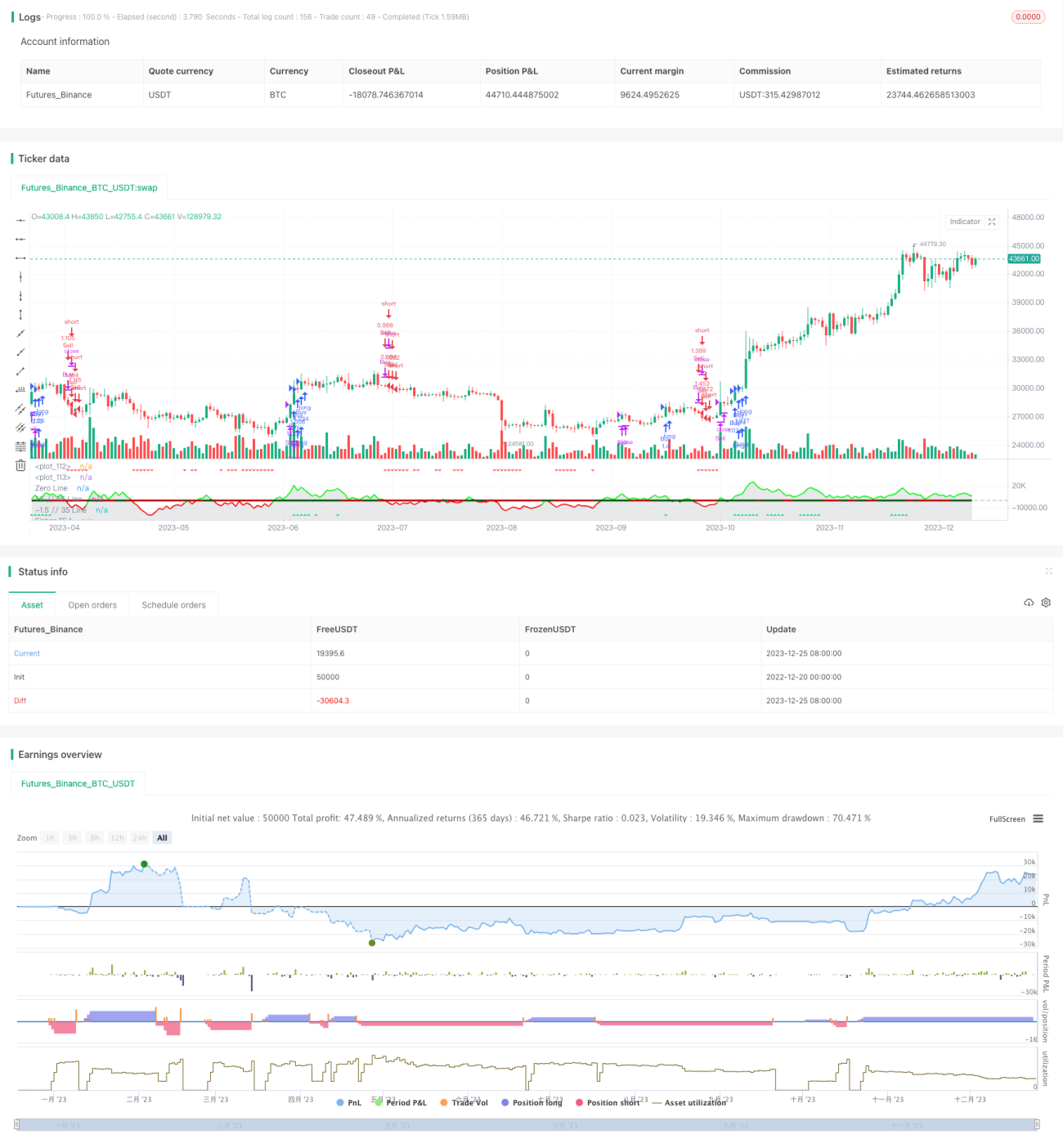
Aperçu
Le nom de cette stratégie est Stratégie de suivi de tendance multi-indicateurs (Multi-Indicator Trend Tracking Strategy). Elle utilise plusieurs indicateurs tels que l'indicateur de transformation de Fisher, la moyenne mobile pondérée (WMA), l'indice de force relative (RSI) et la ligne de volume d'équilibre (OBV) pour déterminer la direction de la tendance du marché et réaliser des transactions de suivi de tendance.
Principe de la stratégie
- L'indicateur de transformation de Fisher juge la tendance et la force des variations de prix. Un signal de transaction est émis lorsque les quatre lignes de Fisher changent de couleur simultanément.
- La WMA détermine la direction de la grande tendance. Le RSI filtre les faux signaux.
- L'indicateur OBV est utilisé pour confirmer la tendance.
Plus précisément, l'indicateur de transformation de Fisher comprend quatre lignes : 1x, 2x, 4x et 8x. Lorsque les quatre lignes deviennent vertes simultanément (vers le haut), un signal d'achat est généré ; lorsqu'elles deviennent rouges simultanément (vers le bas), un signal de vente est généré. La WMA détermine la direction de la grande tendance : si l'indicateur monte, la tendance est haussière ; s'il descend, elle est baissière. L'OBV confirme la direction de la tendance. Le RSI filtre les faux signaux.
Analyse des avantages
Cette stratégie présente les avantages suivants :
- L'indicateur de transformation de Fisher est puissant pour juger la force. Lorsque les quatre lignes de Fisher changent de couleur simultanément, la probabilité d'un renversement de tendance est très élevée.
- La WMA détermine la direction principale de la grande tendance, évitant les transactions à contre-tendance.
- L'indicateur OBV confirme la tendance, évitant les faux dépassements dans un marché sans tendance.
- Le RSI filtre les faux signaux, garantissant la fiabilité des signaux.
Grâce à la combinaison de plusieurs indicateurs, la stratégie assure à la fois l'exactitude et la fiabilité des signaux de transaction, tout en possédant une capacité de suivi de tendance, ce qui permet d'obtenir de bons résultats.
Analyse des risques
Cette stratégie comporte également certains risques :
- En cas de consolidation du marché, les lignes de Fisher peuvent facilement générer de faux signaux. Il faut alors s'appuyer sur le RSI pour les filtrer.
- Un paramétrage inapproprié de la WMA peut également affecter la précision des jugements.
- L'indicateur de transformation de Fisher est moins performant pour les mouvements de très court terme.
- En cas de chute brutale (cascade), la stratégie peut subir des pertes importantes.
Pour réduire les risques, on peut ajuster les paramètres du RSI et optimiser la période de la WMA. Il est également possible de définir un stop-loss pour éviter des pertes excessives.
Pistes d'optimisation
Cette stratégie peut être encore optimisée dans les directions suivantes :
- Tester l'efficacité de la stratégie avec différentes périodes de paramètres pour trouver la meilleure combinaison.
- Ajouter un mécanisme de stop-loss. Arrêter la perte lorsque celle-ci atteint un certain seuil.
- Ajuster davantage les paramètres de l'indicateur de transformation de Fisher en fonction des résultats des backtests pour trouver la combinaison la plus précise.
- Essayer d'ajouter d'autres indicateurs de filtrage, comme l'indice de force, le biais (Bias), etc.
- Tester différentes tailles de positions à l'ouverture.
Conclusion
Cette stratégie combine l'indicateur de transformation de Fisher, la WMA, l'OBV et le RSI pour déterminer la direction de la tendance du marché. Ses signaux sont précis, sa capacité de confirmation est forte, et elle permet de verrouiller efficacement les profits de tendance. Grâce à l'optimisation des paramètres, le facteur de profit de la stratégie peut être encore amélioré. Dans l'ensemble, cette stratégie, par le biais d'une combinaison d'indicateurs, réalise un suivi de tendance efficace, avec de bons résultats.
/*backtest
start: 2022-12-20 00:00:00
end: 2023-12-26 00:00:00
period: 1d
basePeriod: 1h
exchanges: [{"eid":"Futures_Binance","currency":"BTC_USDT"}]
*/

//@version=5
//author Sdover0123
strategy(title='FTR, WMA, OBV & RSI Strat', shorttitle='FTR WMA, OBV, RSI',overlay=false, default_qty_type=strategy.percent_of_equity, initial_capital = 100, default_qty_value=100, commission_value = 0.06, pyramiding = 3)
Len = input.int(10, minval=1, group ="Fisher Transform")- 1