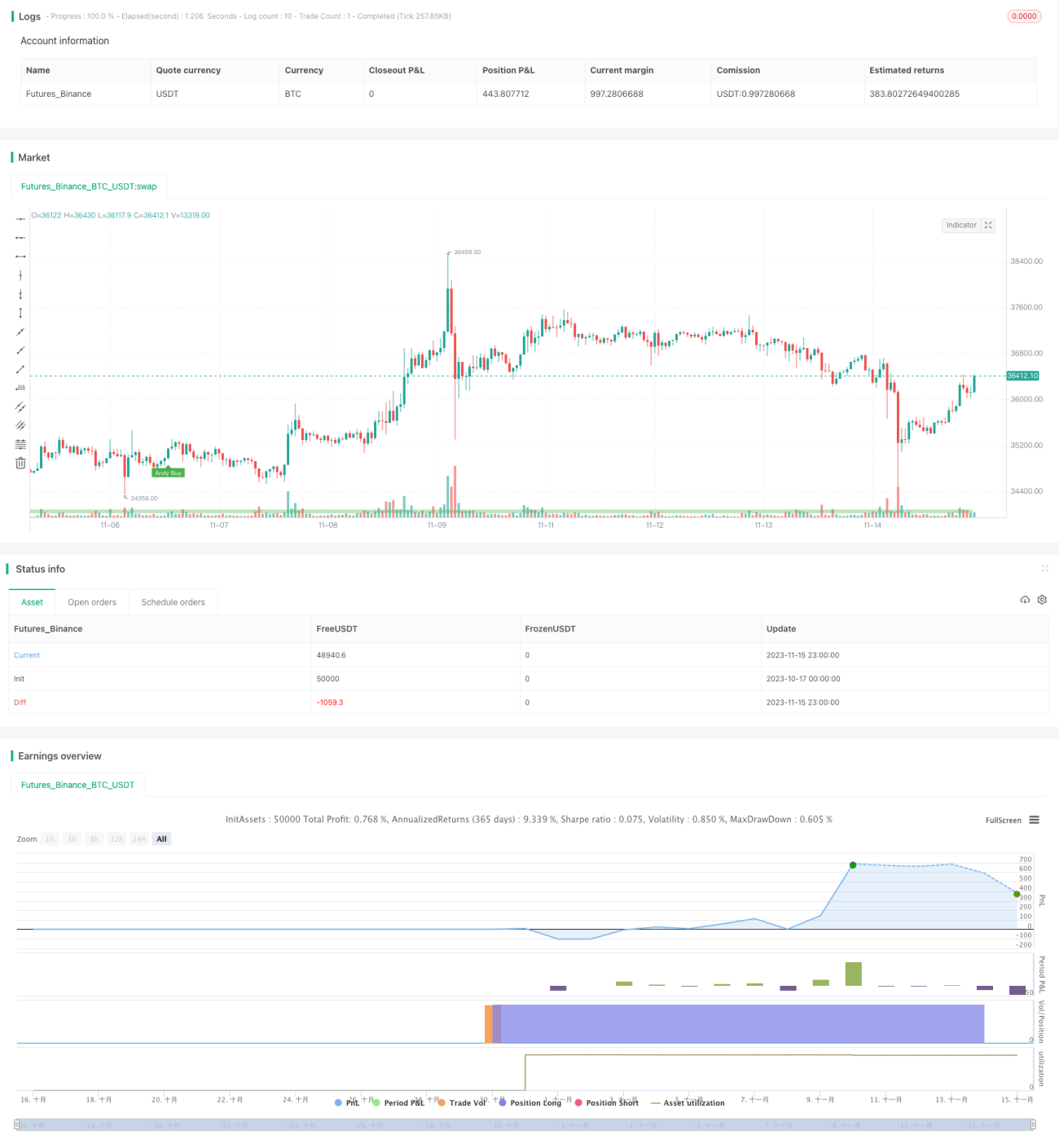
Strategi ini menggunakan kombinasi rata-rata bergerak dari kerangka waktu, untuk mengidentifikasi rotasi tren pada grafik jam besar dan menengah, untuk memungkinkan perdagangan pelacakan tren berisiko rendah. Strategi ini memiliki fleksibilitas konfigurasi, untuk mencapai kesederhanaan, dan keuntungan efisiensi tinggi, yang cocok untuk pedagang yang memegang posisi mengejar tren panjang dan menengah.
Strategi menggunakan tiga moving averages 5, 20, dan 40 hari untuk menilai kombinasi tersusun dari tren dalam berbagai kerangka waktu. Berdasarkan prinsip konsistensi tren grafik jam besar dan menengah, menentukan periode polygonal.
Secara khusus, 5 hari di jalur cepat melewati jalur tengah 20 hari dianggap sebagai sinyal pendek, 20 hari di jalur tengah melewati jalur lambat 40 hari dianggap sebagai sinyal tengah. Bila 3 jalur cepat dan lambat berturut-turut ((5 hari> 20 hari> 40 hari), dinilai sebagai siklus multihead; Bila 3 jalur cepat dan lambat berturut-turut ((5 hari < 20 hari < 40 hari), dinilai sebagai siklus kosong.
Dengan cara ini, berdasarkan arah penilaian tren siklus besar, kemudian dikombinasikan dengan kekuatan siklus kecil untuk mendeteksi masuknya secara spesifik. Hanya dalam kondisi tren yang sama arah dan siklus kecil yang kuat, Anda dapat secara efektif menyaring terobosan dan terobosan, untuk mencapai operasi dengan tingkat kemenangan tinggi.
Selain itu, strategi ini juga menggunakan ATR Stop Loss untuk mengendalikan risiko tunggal dan meningkatkan tingkat profit.
Fleksibilitas konfigurasi, pengguna dapat menyesuaikan parameter moving average sendiri untuk menyesuaikan dengan varietas dan preferensi perdagangan yang berbeda
Mudah untuk diimplementasikan dan mudah digunakan oleh pengguna pemula
Efisiensi dalam penggunaan dana, yang dapat dimanfaatkan secara maksimal
Risiko dapat dikontrol, mekanisme stop loss efektif untuk menghindari kerugian besar
Keahlian mengikuti tren yang kuat, keuntungan yang berkelanjutan setelah siklus besar menentukan arah
Tingkat kemenangan yang lebih tinggi, kualitas sinyal perdagangan yang baik, kurangnya kesalahan pertukaran jalur
Pengadilan periode besar bergantung pada alignment rata-rata bergerak, ada risiko kesalahan penghakiman yang tertinggal
Deteksi intensitas kecil dengan hanya satu K-line, mungkin dipicu lebih awal, dapat relaksasi sesuai
Stop loss dengan amplitudo tetap, dapat dioptimalkan menjadi stop loss dinamis
Pertimbangkan untuk menambahkan kondisi penyaringan tambahan, seperti energi volume transaksi dan sebagainya.
Anda dapat mencoba berbagai kombinasi parameter moving average, strategi optimasi
Strategi ini mengintegrasikan analisa multi-frame waktu dan manajemen stop loss, yang memungkinkan perdagangan pelacakan tren yang berisiko rendah. Dengan menyesuaikan parameter, dapat diterapkan pada varietas yang berbeda untuk memenuhi kebutuhan pengikut tren. Keputusan perdagangan lebih stabil dan sinyal lebih efisien dibandingkan dengan sistem kerangka waktu tunggal tradisional. Secara keseluruhan, strategi ini memiliki adaptasi pasar yang baik dan prospek pengembangan.
This strategy uses a combination of moving averages across timeframes to identify trend rotations on the hourly, daily and weekly charts. It allows low-risk trend following trading. The strategy is flexible, simple to implement, capital efficient and suitable for medium-long term trend traders.
The strategy employs 5, 20 and 40-day moving averages to determine the alignment of trends across different timeframes. Based on the consistency between larger and smaller timeframes, it identifies bullish and bearish cycles.
Specifically, the crossing of 5-day fast MA above 20-day medium MA indicates an uptrend in the short term. The crossing of 20-day medium MA above 40-day slow MA signals an uptrend in the medium term. When the fast, medium and slow MAs are positively aligned (5-day > 20-day > 40-day), it is a bull cycle. When they are negatively aligned (5-day < 20-day < 40-day), it is a bear cycle.
By determining direction from the larger cycles and confirming strength on the smaller cycles, this strategy opens positions only when major trend and minor momentum align. This effectively avoids false breakouts and achieves high win rate.
The strategy also utilizes ATR trailing stops to control single trade risks and further improve profitability.
Flexible configurations to suit different instruments and trading styles
Simple to implement even for beginner traders
High capital efficiency to maximize leverage
Effective risk control to avoid significant losses
Strong trend following ability for sustained profits
High win rate due to robust signals and fewer whipsaws
MA crossovers may lag and cause late trend detection
Single candle strength detection could trigger premature entry, relax condition
Fixed ATR stop loss, optimize to dynamic stops
Consider adding supplementary filters like volume
Explore different MA parameters for optimization
This strategy integrates multiple timeframe analysis and risk management for low-risk trend following trading. By adjusting parameters, it can be adapted to different instruments to suit trend traders. Compared to single timeframe systems, it makes more robust trading decisions and generates higher efficiency signals. In conclusion, this strategy has good market adaptiveness and development potential.
/*backtest
start: 2023-10-17 00:00:00
end: 2023-11-16 00:00:00
period: 1h
basePeriod: 15m
exchanges: [{"eid":"Futures_Binance","currency":"BTC_USDT"}]
*/
// This source code is subject to the terms of the Mozilla Public License 2.0 at https://mozilla.org/MPL/2.0/
// © kgynofomo
//@version=5
strategy(title="[Salavi] | Andy Advance Pro Strategy [BTC|M15]",overlay = true, pyramiding = 1,initial_capital = 10000, default_qty_type = strategy.cash,default_qty_value = 10000)
ema_short = ta.ema(close,5)
ema_middle = ta.ema(close,20)
ema_long = ta.ema(close,40)
cycle_1 = ema_short>ema_middle and ema_middle>ema_long
cycle_2 = ema_middle>ema_short and ema_short>ema_long
cycle_3 = ema_middle>ema_long and ema_long>ema_short
cycle_4 = ema_long>ema_middle and ema_middle>ema_short
cycle_5 = ema_long>ema_short and ema_short>ema_middle
cycle_6 = ema_short>ema_long and ema_long>ema_middle
bull_cycle = cycle_1 or cycle_2 or cycle_3
bear_cycle = cycle_4 or cycle_5 or cycle_6
// label.new("cycle_1")
// bgcolor(color=cycle_1?color.rgb(82, 255, 148, 60):na)
// bgcolor(color=cycle_2?color.rgb(82, 255, 148, 70):na)
// bgcolor(color=cycle_3?color.rgb(82, 255, 148, 80):na)
// bgcolor(color=cycle_4?color.rgb(255, 82, 82, 80):na)
// bgcolor(color=cycle_5?color.rgb(255, 82, 82, 70):na)
// bgcolor(color=cycle_6?color.rgb(255, 82, 82, 60):na)
// Inputs
a = input(2, title='Key Vaule. \'This changes the sensitivity\'')
c = input(7, title='ATR Period')
h = false
xATR = ta.atr(c)
nLoss = a * xATR
src = h ? request.security(ticker.heikinashi(syminfo.tickerid), timeframe.period, close, lookahead=barmerge.lookahead_off) : close
xATRTrailingStop = 0.0
iff_1 = src > nz(xATRTrailingStop[1], 0) ? src - nLoss : src + nLoss
iff_2 = src < nz(xATRTrailingStop[1], 0) and src[1] < nz(xATRTrailingStop[1], 0) ? math.min(nz(xATRTrailingStop[1]), src + nLoss) : iff_1
xATRTrailingStop := src > nz(xATRTrailingStop[1], 0) and src[1] > nz(xATRTrailingStop[1], 0) ? math.max(nz(xATRTrailingStop[1]), src - nLoss) : iff_2
pos = 0
iff_3 = src[1] > nz(xATRTrailingStop[1], 0) and src < nz(xATRTrailingStop[1], 0) ? -1 : nz(pos[1], 0)
pos := src[1] < nz(xATRTrailingStop[1], 0) and src > nz(xATRTrailingStop[1], 0) ? 1 : iff_3
xcolor = pos == -1 ? color.red : pos == 1 ? color.green : color.blue
ema = ta.ema(src, 1)
above = ta.crossover(ema, xATRTrailingStop)
below = ta.crossover(xATRTrailingStop, ema)
buy = src > xATRTrailingStop and above
sell = src < xATRTrailingStop and below
barbuy = src > xATRTrailingStop
barsell = src < xATRTrailingStop
atr = ta.atr(14)
atr_length = input.int(25)
atr_rsi = ta.rsi(atr,atr_length)
atr_valid = atr_rsi>50
long_condition = buy and bull_cycle and atr_valid
short_condition = sell and bear_cycle and atr_valid
Exit_long_condition = short_condition
Exit_short_condition = long_condition
if long_condition
strategy.entry("Andy Buy",strategy.long, limit=close,comment="Andy Buy Here")
if Exit_long_condition
strategy.close("Andy Buy",comment="Andy Buy Out")
// strategy.entry("Andy fandan Short",strategy.short, limit=close,comment="Andy 翻單 short Here")
// strategy.close("Andy fandan Buy",comment="Andy short Out")
if short_condition
strategy.entry("Andy Short",strategy.short, limit=close,comment="Andy short Here")
// strategy.exit("STR","Long",stop=longstoploss)
if Exit_short_condition
strategy.close("Andy Short",comment="Andy short Out")
// strategy.entry("Andy fandan Buy",strategy.long, limit=close,comment="Andy 翻單 Buy Here")
// strategy.close("Andy fandan Short",comment="Andy Buy Out")
inLongTrade = strategy.position_size > 0
inLongTradecolor = #58D68D
notInTrade = strategy.position_size == 0
inShortTrade = strategy.position_size < 0
// bgcolor(color = inLongTrade?color.rgb(76, 175, 79, 70):inShortTrade?color.rgb(255, 82, 82, 70):na)
plotshape(close!=0,location = location.bottom,color = inLongTrade?color.rgb(76, 175, 79, 70):inShortTrade?color.rgb(255, 82, 82, 70):na)
plotshape(long_condition, title='Buy', text='Andy Buy', style=shape.labelup, location=location.belowbar, color=color.new(color.green, 0), textcolor=color.new(color.white, 0), size=size.tiny)
plotshape(short_condition, title='Sell', text='Andy Sell', style=shape.labeldown, location=location.abovebar, color=color.new(color.red, 0), textcolor=color.new(color.white, 0), size=size.tiny)
//atr > close *0.01* parameter
// MONTHLY TABLE PERFORMANCE - Developed by @QuantNomad
// *************************************************************************************************************************************************************************************************************************************************************************
show_performance = input.bool(true, 'Show Monthly Performance ?', group='Performance - credits: @QuantNomad')
prec = input(2, 'Return Precision', group='Performance - credits: @QuantNomad')
if show_performance
new_month = month(time) != month(time[1])
new_year = year(time) != year(time[1])
eq = strategy.equity
bar_pnl = eq / eq[1] - 1
cur_month_pnl = 0.0
cur_year_pnl = 0.0
// Current Monthly P&L
cur_month_pnl := new_month ? 0.0 :
(1 + cur_month_pnl[1]) * (1 + bar_pnl) - 1
// Current Yearly P&L
cur_year_pnl := new_year ? 0.0 :
(1 + cur_year_pnl[1]) * (1 + bar_pnl) - 1
// Arrays to store Yearly and Monthly P&Ls
var month_pnl = array.new_float(0)
var month_time = array.new_int(0)
var year_pnl = array.new_float(0)
var year_time = array.new_int(0)
last_computed = false
if (not na(cur_month_pnl[1]) and (new_month or barstate.islastconfirmedhistory))
if (last_computed[1])
array.pop(month_pnl)
array.pop(month_time)
array.push(month_pnl , cur_month_pnl[1])
array.push(month_time, time[1])
if (not na(cur_year_pnl[1]) and (new_year or barstate.islastconfirmedhistory))
if (last_computed[1])
array.pop(year_pnl)
array.pop(year_time)
array.push(year_pnl , cur_year_pnl[1])
array.push(year_time, time[1])
last_computed := barstate.islastconfirmedhistory ? true : nz(last_computed[1])
// Monthly P&L Table
var monthly_table = table(na)
if (barstate.islastconfirmedhistory)
monthly_table := table.new(position.bottom_center, columns = 14, rows = array.size(year_pnl) + 1, border_width = 1)
table.cell(monthly_table, 0, 0, "", bgcolor = #cccccc)
table.cell(monthly_table, 1, 0, "Jan", bgcolor = #cccccc)
table.cell(monthly_table, 2, 0, "Feb", bgcolor = #cccccc)
table.cell(monthly_table, 3, 0, "Mar", bgcolor = #cccccc)
table.cell(monthly_table, 4, 0, "Apr", bgcolor = #cccccc)
table.cell(monthly_table, 5, 0, "May", bgcolor = #cccccc)
table.cell(monthly_table, 6, 0, "Jun", bgcolor = #cccccc)
table.cell(monthly_table, 7, 0, "Jul", bgcolor = #cccccc)
table.cell(monthly_table, 8, 0, "Aug", bgcolor = #cccccc)
table.cell(monthly_table, 9, 0, "Sep", bgcolor = #cccccc)
table.cell(monthly_table, 10, 0, "Oct", bgcolor = #cccccc)
table.cell(monthly_table, 11, 0, "Nov", bgcolor = #cccccc)
table.cell(monthly_table, 12, 0, "Dec", bgcolor = #cccccc)
table.cell(monthly_table, 13, 0, "Year", bgcolor = #999999)
for yi = 0 to array.size(year_pnl) - 1
table.cell(monthly_table, 0, yi + 1, str.tostring(year(array.get(year_time, yi))), bgcolor = #cccccc)
y_color = array.get(year_pnl, yi) > 0 ? color.new(color.teal, transp = 40) : color.new(color.gray, transp = 40)
table.cell(monthly_table, 13, yi + 1, str.tostring(math.round(array.get(year_pnl, yi) * 100, prec)), bgcolor = y_color, text_color=color.new(color.white, 0))
for mi = 0 to array.size(month_time) - 1
m_row = year(array.get(month_time, mi)) - year(array.get(year_time, 0)) + 1
m_col = month(array.get(month_time, mi))
m_color = array.get(month_pnl, mi) > 0 ? color.new(color.teal, transp = 40) : color.new(color.gray, transp = 40)
table.cell(monthly_table, m_col, m_row, str.tostring(math.round(array.get(month_pnl, mi) * 100, prec)), bgcolor = m_color, text_color=color.new(color.white, 0))