모멘텀 추종 적응 통계적 차익 거래 전략


생성 날짜: 2023-12-11 16:41:27 마지막으로 수정됨: 2023-12-11 16:41:27
복사: 0 클릭수: 791
avatar of ChaoZhang ChaoZhang
1
집중하다
1621
수행원

모멘텀 추종 적응 통계적 차익 거래 전략

개요

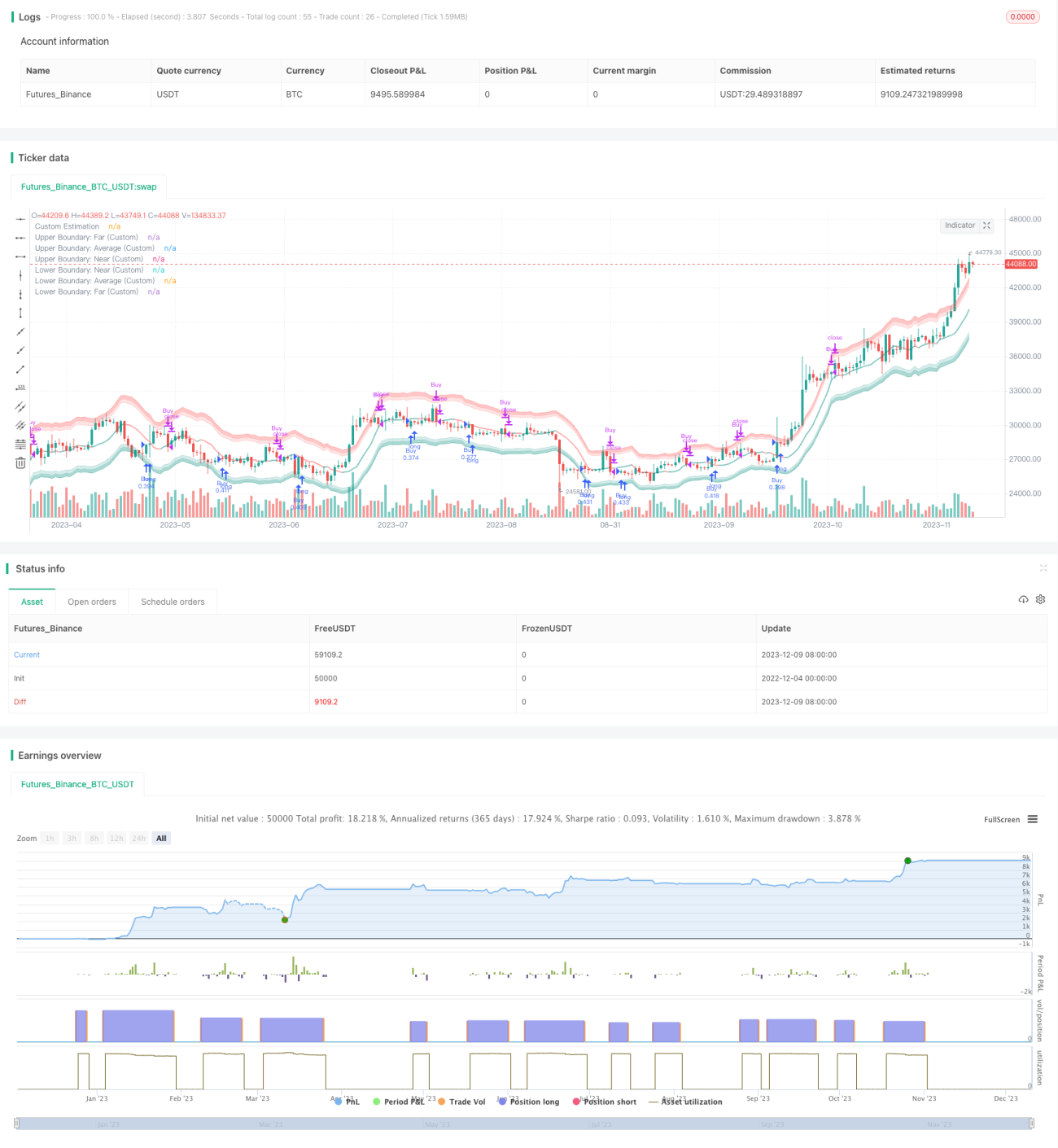
이 전략은 Nadaraya-Watson 핵 회귀 방법에 기초하여 동적 변동률 포괄대를 구성하여 가격과 포괄带의 교차 상황을 추적하여 낮은 가격과 높은 가격의 거래 신호를 구현합니다. 이 전략은 수학 분석 기반을 가지고 있으며 시장 변화에 적응 할 수 있습니다.

전략 원칙

전략의 핵심은 가격의 동적 포위대를 계산하는 것이다. 먼저, 사용자 정의된 회전 기간에 따라 가격 ((폐쇄 가격, 최고 가격, 최저 가격) 을 구성하는 나다라야-왓슨 핵 회귀 곡선을 구성하여 평형화된 가격 추정치를 얻는다. 그리고 사용자 정의된 ATR 길이를 기반으로 ATR 지수를 계산하여 근위 인자와 원위 인자를 결합하여 상하 포위대의 범위를 얻는다. 가격이 하위 포위대에서 상하 포위대로 침입하면 구매 신호를 발생시키고; 가격이 상하 포위대에서 상하 포위대에서 상하 포위대에서 벗어날 때 판매 신호를 발생시킨다. 이 전략은 가격의 변동률과 관련된 통계적 특성을 통해 거래 결정을 동적으로 조정한다.

전략적 이점

  1. 수학적 모델에 기반하여, 변수가 제어 가능하며, 과도한 최적화를 일으키지 않습니다.
  2. 시장 변화에 적응하여 가격과 변동성의 동적 관계를 활용하여 거래 기회를 잡습니다.
  3. 대칭 좌표를 사용하여 다른 시간 주기 및 변동의 크기를 잘 처리 할 수 있습니다.
  4. 사용자 정의 가능한 매개 변수 조정 정책의 민감도

전략적 위험

  1. 수학적 모델이 이론화되고, 실디 디스크의 성능이 예상보다 떨어질 수 있다.
  2. 핵심 매개 변수 선택은 경험이 필요하며, 잘못된 설정은 수익에 영향을 줄 수 있습니다.
  3. 이 경우, 거래가 늦어지고, 거래의 기회를 놓칠 수 있습니다.
  4. 시장의 큰 흔들림 속에서 잘못된 신호가 나올 수 있습니다.

이러한 위험을 피하고 줄이는 방법은 주로 매개 변수를 최적화하고, 재검토를 잘하고, 영향을 미치는 요소를 이해하고, 신중한 실판을 사용하는 것입니다.

전략 최적화 방향

  1. 더 나은 변수를 찾아서 최적의 변수 조합을 찾아내기
  2. 기계 학습을 이용한 자동 선택 변수
  3. 필터링 조건을 추가하고 특정 시장 환경에서 전략을 활성화합니다.
  4. 다른 지표와 함께 필터링 잘못된 신호
  5. 다른 수학 모형 알고리즘을 시도합니다.

요약하다

이 전략은 통계 분석과 기술 지표 분석을 통합하여 가격과 변동률을 동적으로 추적하여 낮은 가격과 높은 가격의 거래 신호를 구현합니다. 시장과 자신의 상황에 따라 파라미터를 조정할 수 있습니다. 전체적으로 전략 이론적 기반은 견고하며 실제 성능은 추가 검증되어야합니다. 신중하게 관찰하고 신중하게 실적을 조사해야합니다.

전략 소스 코드
/*backtest
start: 2022-12-04 00:00:00
end: 2023-12-10 00:00:00
period: 1d
basePeriod: 1h
exchanges: [{"eid":"Futures_Binance","currency":"BTC_USDT"}]
*/

// © Julien_Eche
//@version=5

strategy("Nadaraya-Watson Envelope Strategy", overlay=true, pyramiding=1, default_qty_type=strategy.percent_of_equity, default_qty_value=20)

// Helper Functions
getEnvelopeBounds(_atr, _nearFactor, _farFactor, _envelope) => 
    _upperFar = _envelope + _farFactor*_atr
    _upperNear = _envelope + _nearFactor*_atr
    _lowerNear = _envelope - _nearFactor*_atr
    _lowerFar = _envelope - _farFactor*_atr
    _upperAvg = (_upperFar + _upperNear) / 2
    _lowerAvg = (_lowerFar + _lowerNear) / 2 
    [_upperNear, _upperFar, _upperAvg, _lowerNear, _lowerFar, _lowerAvg]

customATR(length, _high, _low, _close) =>
    trueRange = na(_high[1])? math.log(_high)-math.log(_low) : math.max(math.max(math.log(_high) - math.log(_low), math.abs(math.log(_high) - math.log(_close[1]))), math.abs(math.log(_low) - math.log(_close[1])))
    ta.rma(trueRange, length)

customKernel(x, h, alpha, x_0) =>
    sumWeights = 0.0
    sumXWeights = 0.0
    for i = 0 to h
        weight = math.pow(1 + (math.pow((x_0 - i), 2) / (2 * alpha * h * h)), -alpha)
        sumWeights := sumWeights + weight
        sumXWeights := sumXWeights + weight * x[i]
    sumXWeights / sumWeights

// Custom Settings
customLookbackWindow = input.int(8, 'Lookback Window (Custom)', group='Custom Settings')
customRelativeWeighting = input.float(8., 'Relative Weighting (Custom)', step=0.25, group='Custom Settings')
customStartRegressionBar = input.int(25, "Start Regression at Bar (Custom)", group='Custom Settings')

// Envelope Calculations
customEnvelopeClose = math.exp(customKernel(math.log(close), customLookbackWindow, customRelativeWeighting, customStartRegressionBar))
customEnvelopeHigh = math.exp(customKernel(math.log(high), customLookbackWindow, customRelativeWeighting, customStartRegressionBar))
customEnvelopeLow = math.exp(customKernel(math.log(low), customLookbackWindow, customRelativeWeighting, customStartRegressionBar))
customEnvelope = customEnvelopeClose
customATRLength = input.int(60, 'ATR Length (Custom)', minval=1, group='Custom Settings')
customATR = customATR(customATRLength, customEnvelopeHigh, customEnvelopeLow, customEnvelopeClose)
customNearATRFactor = input.float(1.5, 'Near ATR Factor (Custom)', minval=0.5, step=0.25, group='Custom Settings')
customFarATRFactor = input.float(2.0, 'Far ATR Factor (Custom)', minval=1.0, step=0.25, group='Custom Settings')
[customUpperNear, customUpperFar, customUpperAvg, customLowerNear, customLowerFar, customLowerAvg] = getEnvelopeBounds(customATR, customNearATRFactor, customFarATRFactor, math.log(customEnvelopeClose))

// Colors
customUpperBoundaryColorFar = color.new(color.red, 60)
customUpperBoundaryColorNear = color.new(color.red, 80)
customBullishEstimatorColor = color.new(color.teal, 50)
customBearishEstimatorColor = color.new(color.red, 50)
customLowerBoundaryColorNear = color.new(color.teal, 80)
customLowerBoundaryColorFar = color.new(color.teal, 60)

// Plots
customUpperBoundaryFar = plot(math.exp(customUpperFar), color=customUpperBoundaryColorFar, title='Upper Boundary: Far (Custom)')
customUpperBoundaryAvg = plot(math.exp(customUpperAvg), color=customUpperBoundaryColorNear, title='Upper Boundary: Average (Custom)')
customUpperBoundaryNear = plot(math.exp(customUpperNear), color=customUpperBoundaryColorNear, title='Upper Boundary: Near (Custom)') 
customEstimationPlot = plot(customEnvelopeClose, color=customEnvelope > customEnvelope[1] ? customBullishEstimatorColor : customBearishEstimatorColor, linewidth=2, title='Custom Estimation')
customLowerBoundaryNear = plot(math.exp(customLowerNear), color=customLowerBoundaryColorNear, title='Lower Boundary: Near (Custom)')
customLowerBoundaryAvg = plot(math.exp(customLowerAvg), color=customLowerBoundaryColorNear, title='Lower Boundary: Average (Custom)') 
customLowerBoundaryFar = plot(math.exp(customLowerFar), color=customLowerBoundaryColorFar, title='Lower Boundary: Far (Custom)')

// Fills
fill(customUpperBoundaryFar, customUpperBoundaryAvg, color=customUpperBoundaryColorFar, title='Upper Boundary: Farmost Region (Custom)')
fill(customUpperBoundaryNear, customUpperBoundaryAvg, color=customUpperBoundaryColorNear, title='Upper Boundary: Nearmost Region (Custom)')
fill(customLowerBoundaryNear, customLowerBoundaryAvg, color=customLowerBoundaryColorNear, title='Lower Boundary: Nearmost Region (Custom)')
fill(customLowerBoundaryFar, customLowerBoundaryAvg, color=customLowerBoundaryColorFar, title='Lower Boundary: Farmost Region (Custom)')


longCondition = ta.crossover(close, customEnvelopeLow)
if (longCondition)
    strategy.entry("Buy", strategy.long)

exitLongCondition = ta.crossover(customEnvelopeHigh, close)
if (exitLongCondition)
    strategy.close("Buy")