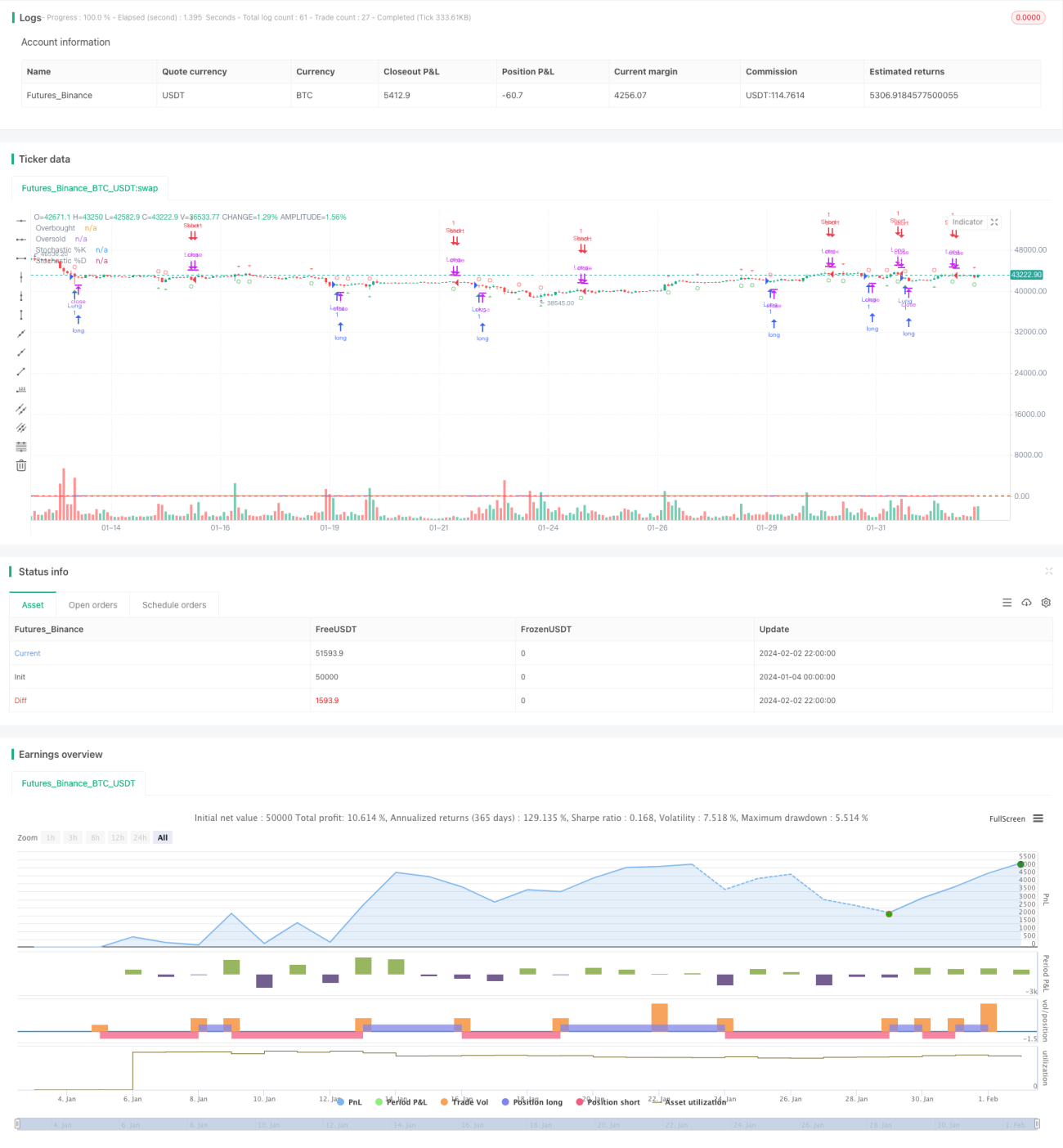
확률적 지표를 기반으로 한 순환 옵션 거래 전략


생성 날짜: 2024-02-04 15:14:43 마지막으로 수정됨: 2024-02-04 15:14:43
복사: 2 클릭수: 667
avatar of ChaoZhang ChaoZhang
1
집중하다
1617
수행원

확률적 지표를 기반으로 한 순환 옵션 거래 전략

개요

이 전략은 스토카스틱 지표에 기반한 주기적 옵션 거래 전략으로, 스토카스틱 흔들림 지표를 사용하여 옵션 거래의 잠재적인 입시 및 퇴출 지점을 식별합니다. 이 전략은 옵션 거래에 특화되어 있으며, 다공간의 양쪽 끝에서 거래 기회를 식별 할 수 있습니다.

전략 원칙

이 전략은 14주기 스토카스틱 %K 라인과 3주기 간단한 이동 평균을 사용하여 스토카스틱 %D 라인을 그리는 것이다. %K 라인이 낮은 곳에서%D 라인을 돌파할 때 호불호 신호로 간주한다. %K 라인이 높은 곳에서%D 라인을 돌파할 때 호불호 신호로 간주한다. 구체적인 입점 및 퇴출 조건은 다음과 같다:

다중 입점: %K 라인이 20 이하의 레벨에서 %D 라인을 뚫을 때 더 많이 한다 다중 헤드 탈퇴: %K 라인이 80% 이상의 레벨에서 %D 라인을 깨면 평점 공허 입구: %K 라인이 80 이상 레벨에서 %D 라인을 깨면 공허 빈 머리 탈퇴: %K 라인이 20 이하의 레벨에서 %D 라인을 돌파할 때 평점

전략적 이점

  1. 스토카스틱 지표를 사용하여 과매매 지역을 식별하고 상위에서 더 많은 하위 하위 하위 하위 하위 하락을 피하십시오.
  2. 지표 변수 최적화와 결합하여 거래 신호 품질을 향상시킵니다.
  3. 사용자 정의 입출장 조건, 포지션 관리 최적화
  4. 선택권 거래에 사용할 수 있으며, 자금 사용 효율을 높일 수 있습니다.

위험 분석

  1. 스토카스틱 지표는 가짜 신호를 발생하기 쉽고, 다른 지표와 함께 필터링을 해야 합니다.
  2. 고정 변수 설정으로 일부 거래 기회를 놓칠 수 있습니다.
  3. 철회 규모가 확대될 수 있으며, 단일 포지션 규모를 통제해야 한다.
  4. 주식 기본 사항과 거시 환경 변화에 주의해야 합니다.

전략 최적화 방향

  1. 이동 평균과 같은 지표들이 가짜 신호를 필터링합니다.
  2. 다양한 변수 조합을 테스트하고 변수 설정을 최적화합니다.
  3. 파격 변수를 높여서 가짜 신호를 줄여라
  4. 단위 손실을 제어하기 위한 절감 조건 최적화

요약하다

이 전략은 Stochastic 지표의 오버 바이 오버 셀 원칙을 사용하여 잠재적인 진입 시점을 식별한다. 전통적인 트렌드 추적 전략에 비해 시장의 전환점에 큰 시장을 포착할 수 있다. 변수 최적화, 신호 필터링 등의 수단으로 전략의 안정성을 더욱 향상시킬 수 있다. 이 전략은 옵션 거래에 사용할 수 있으며, 위험을 통제하는 조건에서 높은 수익을 얻을 수 있다.

전략 소스 코드
/*backtest
start: 2024-01-04 00:00:00
end: 2024-02-03 00:00:00
period: 2h
basePeriod: 15m
exchanges: [{"eid":"Futures_Binance","currency":"BTC_USDT"}]
*/

//@version=5
strategy("Stochastic Weekly Options Strategy", overlay=true, shorttitle="WOS")

// Stochastic settings
K = ta.stoch(close, high, low, 14)
D = ta.sma(K, 3)

// Entry and exit conditions
longEntry = ta.crossover(K, 20)
longExit = ta.crossunder(K, 80)

shortEntry = ta.crossunder(K, 80)
shortExit = ta.crossover(K, 20)

// Strategy execution
strategy.entry("Long", strategy.long, when=longEntry)
strategy.close("Long", when=longExit)

strategy.entry("Short", strategy.short, when=shortEntry)
strategy.close("Short", when=shortExit)

// Alert conditions
alertcondition(longEntry, title="Long Entry Alert", message="Stochastic bullish crossover! Consider buying a call option.")
alertcondition(longExit, title="Long Exit Alert", message="Stochastic bearish crossover! Consider selling the call option.")
alertcondition(shortEntry, title="Short Entry Alert", message="Stochastic bearish crossover! Consider buying a put option.")
alertcondition(shortExit, title="Short Exit Alert", message="Stochastic bullish crossover! Consider selling the put option.")

// Plotting shapes for buy and sell signals
plotshape(longEntry, title="Calls Entry Label", color=color.new(color.green, 25),
     textcolor=color.white, style=shape.triangleup, text="Calls", location=location.belowbar, size=size.small)
     
plotshape(longExit, title="Calls Exit Label", color=color.new(color.green, 25),
     textcolor=color.white, style=shape.circle, text="Exit", location=location.belowbar, size=size.small)

plotshape(shortEntry, title="Puts Entry Label", color=color.new(color.red, 25),
     textcolor=color.white, style=shape.triangledown, text="Puts", location=location.abovebar, size=size.small)

plotshape(shortExit, title="Puts Exit Label", color=color.new(color.red, 25),
     textcolor=color.white, style=shape.circle, text="Exit", location=location.abovebar, size=size.small)

// Plotting
plot(K, color=color.blue, title="Stochastic %K")
plot(D, color=color.red, title="Stochastic %D")
hline(80, "Overbought", color=color.red)
hline(20, "Oversold", color=color.green)