Estratégia de Seguimento de Tendência com Cruzamento de Médias Móveis

Visão Geral
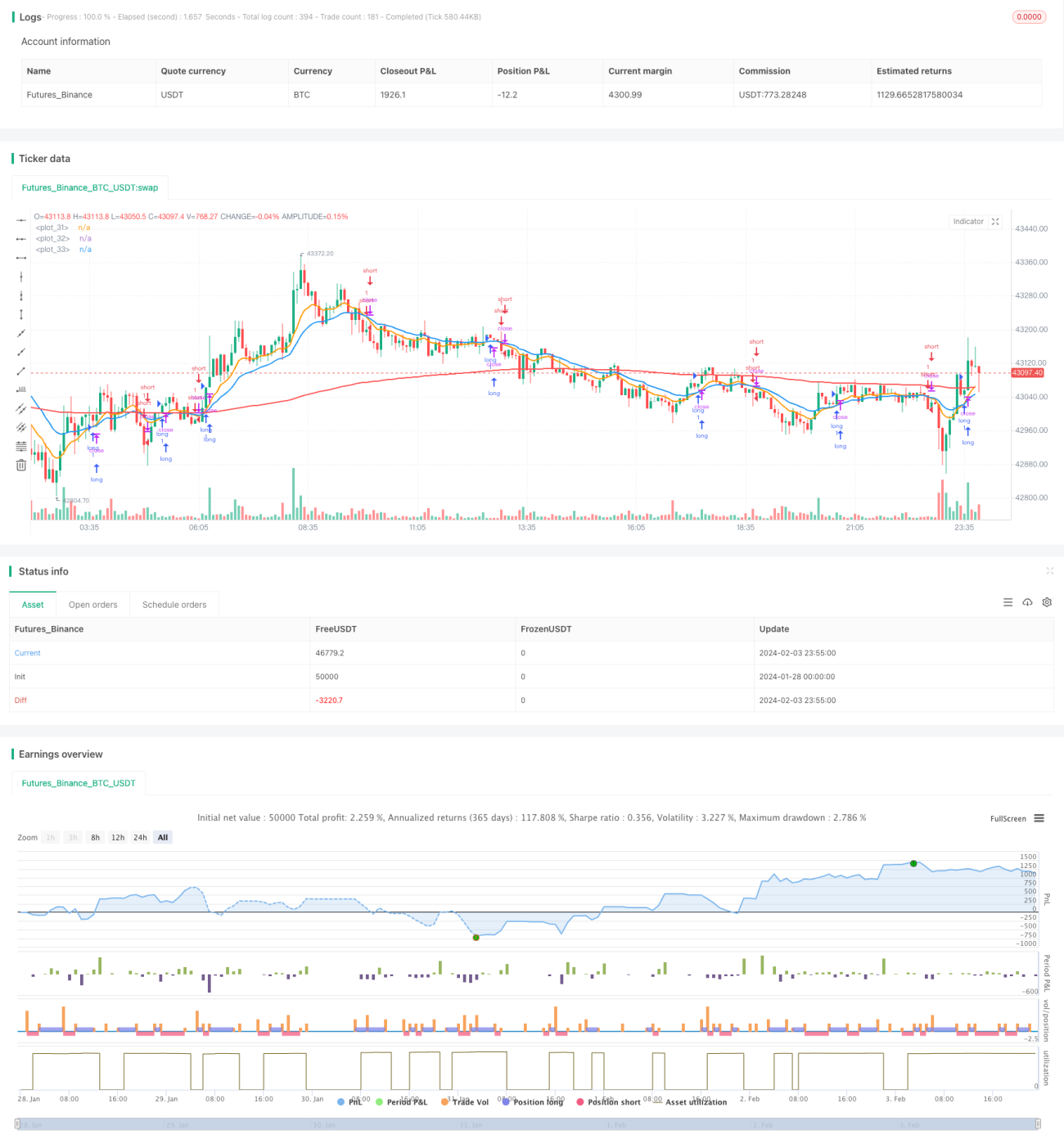
A estratégia de acompanhamento de tendência por cruzamento de médias móveis é uma estratégia de negociação quantitativa que segue as tendências do mercado. Esta estratégia calcula uma média móvel rápida e uma média móvel lenta, gerando sinais de negociação quando ocorre um cruzamento entre elas, a fim de capturar os pontos de inflexão da tendência do mercado.
Princípio da Estratégia
O princípio central da estratégia é usar médias móveis exponenciais (EMA) com diferentes parâmetros para julgar a tendência do mercado. A estratégia define uma EMA rápida e uma EMA lenta. Quando a EMA rápida cruza para cima da EMA lenta, indica que a tendência do mercado está se tornando de alta; quando a EMA rápida cruza para baixo da EMA lenta, indica que a tendência do mercado está se tornando de baixa.
No cruzamento para cima, a estratégia abre uma posição comprada; no cruzamento para baixo, abre uma posição vendida. A estratégia mantém a posição até que o stop loss/take profit seja acionado ou ocorra um novo sinal de cruzamento reverso.
Análise de Vantagens
A estratégia apresenta as seguintes vantagens:
- Lógica simples e clara, fácil de entender e implementar, adequada para iniciantes;
- O uso de EMA suaviza os preços, filtrando eficazmente o ruído do mercado e identificando tendências;
- Parâmetros ajustáveis, adaptando-se a diferentes períodos de mercado;
- Possibilidade de expandir a estratégia para versões com múltiplos períodos, aumentando a estabilidade.
Análise de Riscos
A estratégia também apresenta alguns riscos:
- Em mercados laterais, podem ocorrer múltiplos stops, afetando a rentabilidade;
- Incapacidade de identificar eficazmente o tipo de tendência (alta/baixa), podendo gerar perdas significativas;
- Parâmetros inadequados da EMA podem resultar em frequência excessiva de negociações ou atraso na identificação.
Para reduzir riscos, pode-se considerar a combinação com outros indicadores para julgar o tipo de tendência ou definir limites de stop loss mais flexíveis.
Direções de Otimização
A estratégia pode ser otimizada nos seguintes aspectos:
- Adicionar julgamento do tipo de tendência para evitar aberturas contrárias;
- Incluir análise em múltiplos períodos para melhorar a qualidade dos sinais;
- Ajustar dinamicamente as proporções de stop loss e take profit para otimizar pontos de saída;
- Combinar com outros indicadores para filtrar sinais, reduzindo negociações errôneas.
Resumo
De modo geral, a estratégia de acompanhamento de tendência por cruzamento de médias móveis é uma estratégia simples e prática de negociação de tendências. Seu conceito central é claro e fácil de implementar, mas também apresenta espaço para otimização. Através de ajustes de parâmetros, análise em múltiplos períodos e stop loss dinâmico, é possível melhorar continuamente a estabilidade e a rentabilidade da estratégia.
- 1