Стратегия следования за трендом, основанная на ротации импульса в нескольких временных интервалах


Дата создания: 2023-11-17 17:32:11 Последнее изменение: 2023-11-17 17:32:11
Копировать: 1 Количество просмотров: 710
1
Подписаться
1617
Подписчики

Стратегия следования за трендом, основанная на ротации импульса в нескольких временных интервалах

Обзор

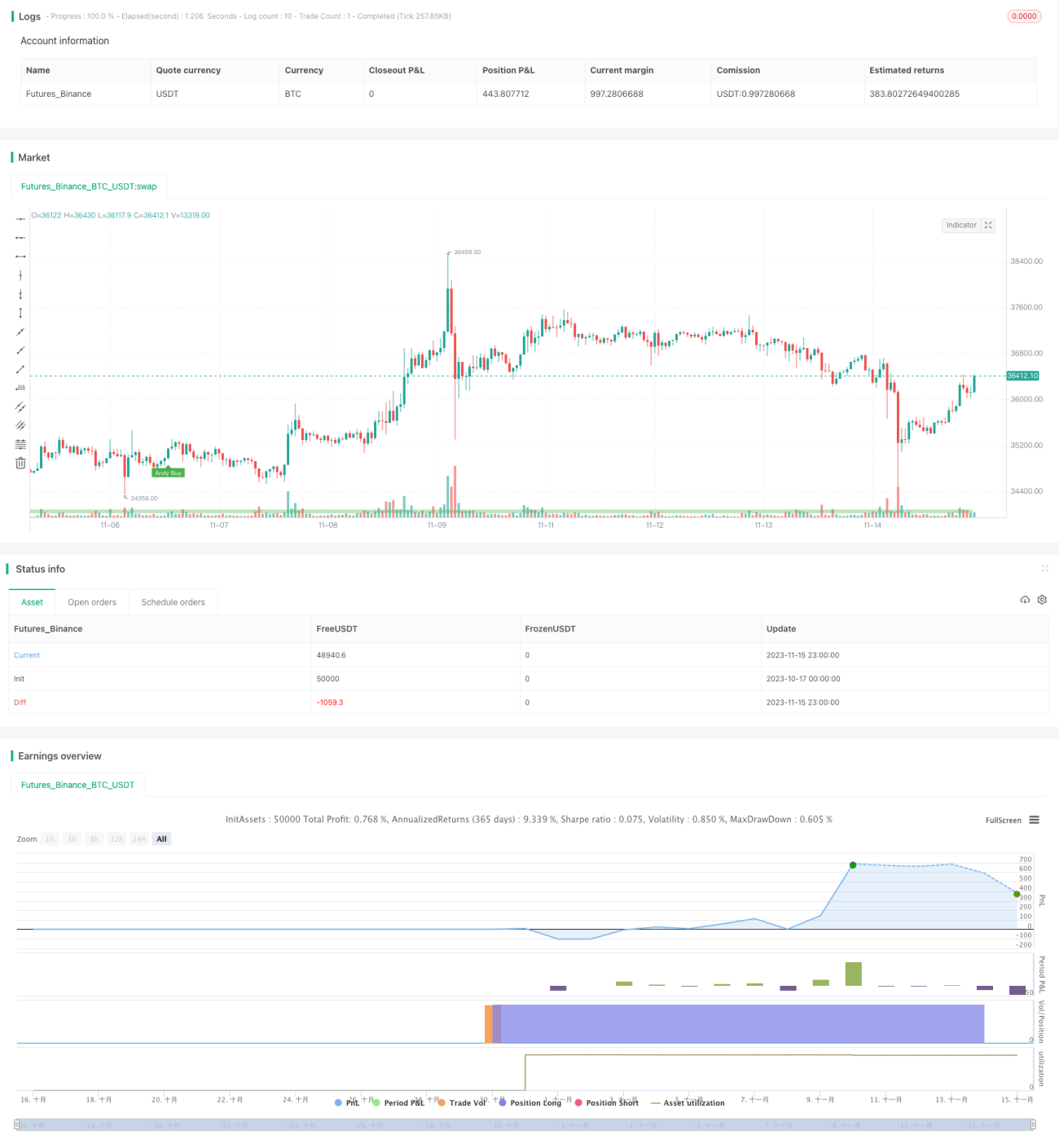
Стратегия использует комбинацию движущихся средних по временным рамкам, чтобы идентифицировать тенденцию на часовой графике, чтобы обеспечить низкий риск для торговли. Стратегия имеет гибкую конфигурацию, обеспечивает простоту и высокую эффективность капитала, и подходит для трейдеров, которые держат позиции на средних и длинных линиях.

Первоначальный анализ

Стратегия использует три скользящих средних 5, 20 и 40 дней, чтобы судить о сочетании тенденций в разных временных рамках. В соответствии с принципом согласованности тенденций на больших и средних часовых диаграммах, определяется многопространственный период.

В частности, 5-дневная скоростная линия через 20-дневную медленную линию рассматривается как сигнал короткой линии, 20-дневная медленная линия через 40-дневную медленную линию рассматривается как сигнал средней линии. Когда скоростная и медленная 3 линии в прямом порядке ((5 дней> 20 дней> 40 дней), это рассматривается как многоголовый цикл; когда скоростная и медленная 3 линии в обратном порядке ((5 дней < 20 дней < 40 дней), это рассматривается как пустой цикл.

Таким образом, в зависимости от направления тенденции большого цикла, а затем в сочетании с малой интенсивностью цикла для определения конкретного входа. То есть только в случае сильного сопутствующего большого тренда и малого цикла, открытие позиции может эффективно отфильтровать обратный поворотный прорыв и достичь высокой выигрышной операции.

Кроме того, стратегия использует ATR-стоп для управления риском в отдельных случаях, что еще больше повышает рентабельность.

Анализ преимуществ

  • Гибкость конфигурации, пользователь может самостоятельно регулировать параметры скользящих средних, чтобы адаптироваться к различным видам и торговым предпочтениям

  • Простая реализация, доступная даже новичкам

  • Высокая эффективность использования средств, позволяющая максимально использовать рычаг капитала

  • Контролируемые риски, эффективные механизмы по предотвращению крупных потерь

  • Сильная тенденция, устойчивая прибыль после большого цикла

  • Высокий коэффициент выигрыша, хорошее качество торговых сигналов, меньше ошибок при переключении

Риски и улучшения

  • Большие периодические суждения зависят от перемещенной средней линейной последовательности, существует риск задержки ошибочного суждения

  • Малоциклическая интенсивность обнаруживается с использованием только одной K-сварки, может быть заранее задействована, а также может быть расслаблена.

  • Стоп-потеря фиксированная, оптимизируемая как динамическая

  • Можно рассмотреть возможность добавления дополнительных фильтрующих условий, таких как энергия объема сделки и т.д.

  • Можно попробовать различные комбинации параметров движущейся средней, оптимизировать стратегию

Подвести итог

Эта стратегия объединяет анализ в нескольких временных рамках и управление остановками, что позволяет осуществлять сделки с низким риском. С помощью корректировки параметров она может быть применена к различным видам, чтобы удовлетворить потребности последователей тенденций.

Overview

This strategy uses a combination of moving averages across timeframes to identify trend rotations on the hourly, daily and weekly charts. It allows low-risk trend following trading. The strategy is flexible, simple to implement, capital efficient and suitable for medium-long term trend traders.

Trading Logic

The strategy employs 5, 20 and 40-day moving averages to determine the alignment of trends across different timeframes. Based on the consistency between larger and smaller timeframes, it identifies bullish and bearish cycles.

Specifically, the crossing of 5-day fast MA above 20-day medium MA indicates an uptrend in the short term. The crossing of 20-day medium MA above 40-day slow MA signals an uptrend in the medium term. When the fast, medium and slow MAs are positively aligned (5-day > 20-day > 40-day), it is a bull cycle. When they are negatively aligned (5-day < 20-day < 40-day), it is a bear cycle.

By determining direction from the larger cycles and confirming strength on the smaller cycles, this strategy opens positions only when major trend and minor momentum align. This effectively avoids false breakouts and achieves high win rate.

The strategy also utilizes ATR trailing stops to control single trade risks and further improve profitability.

Advantages

  • Flexible configurations to suit different instruments and trading styles

  • Simple to implement even for beginner traders

  • High capital efficiency to maximize leverage

  • Effective risk control to avoid significant losses

  • Strong trend following ability for sustained profits

  • High win rate due to robust signals and fewer whipsaws

Risks and Improvements

  • MA crossovers may lag and cause late trend detection

  • Single candle strength detection could trigger premature entry, relax condition

  • Fixed ATR stop loss, optimize to dynamic stops

  • Consider adding supplementary filters like volume

  • Explore different MA parameters for optimization

Conclusion

This strategy integrates multiple timeframe analysis and risk management for low-risk trend following trading. By adjusting parameters, it can be adapted to different instruments to suit trend traders. Compared to single timeframe systems, it makes more robust trading decisions and generates higher efficiency signals. In conclusion, this strategy has good market adaptiveness and development potential.

Исходный код стратегии
/*backtest
start: 2023-10-17 00:00:00
end: 2023-11-16 00:00:00
period: 1h
basePeriod: 15m
exchanges: [{"eid":"Futures_Binance","currency":"BTC_USDT"}]
*/

// This source code is subject to the terms of the Mozilla Public License 2.0 at https://mozilla.org/MPL/2.0/
// © kgynofomo

//@version=5
strategy(title="[Salavi] | Andy Advance Pro Strategy [BTC|M15]",overlay = true, pyramiding = 1,initial_capital = 10000, default_qty_type = strategy.cash,default_qty_value = 10000)

ema_short = ta.ema(close,5)
ema_middle = ta.ema(close,20)
ema_long = ta.ema(close,40)

cycle_1 = ema_short>ema_middle and ema_middle>ema_long
cycle_2 = ema_middle>ema_short and ema_short>ema_long
cycle_3 = ema_middle>ema_long and ema_long>ema_short
cycle_4 = ema_long>ema_middle and ema_middle>ema_short
cycle_5 = ema_long>ema_short and ema_short>ema_middle
cycle_6 = ema_short>ema_long and ema_long>ema_middle

bull_cycle = cycle_1 or cycle_2 or cycle_3
bear_cycle = cycle_4 or cycle_5 or cycle_6
// label.new("cycle_1")
// bgcolor(color=cycle_1?color.rgb(82, 255, 148, 60):na)
// bgcolor(color=cycle_2?color.rgb(82, 255, 148, 70):na)
// bgcolor(color=cycle_3?color.rgb(82, 255, 148, 80):na)
// bgcolor(color=cycle_4?color.rgb(255, 82, 82, 80):na)
// bgcolor(color=cycle_5?color.rgb(255, 82, 82, 70):na)
// bgcolor(color=cycle_6?color.rgb(255, 82, 82, 60):na)

// Inputs
a = input(2, title='Key Vaule. \'This changes the sensitivity\'')
c = input(7, title='ATR Period')
h = false

xATR = ta.atr(c)
nLoss = a * xATR

src = h ? request.security(ticker.heikinashi(syminfo.tickerid), timeframe.period, close, lookahead=barmerge.lookahead_off) : close

xATRTrailingStop = 0.0
iff_1 = src > nz(xATRTrailingStop[1], 0) ? src - nLoss : src + nLoss
iff_2 = src < nz(xATRTrailingStop[1], 0) and src[1] < nz(xATRTrailingStop[1], 0) ? math.min(nz(xATRTrailingStop[1]), src + nLoss) : iff_1
xATRTrailingStop := src > nz(xATRTrailingStop[1], 0) and src[1] > nz(xATRTrailingStop[1], 0) ? math.max(nz(xATRTrailingStop[1]), src - nLoss) : iff_2

pos = 0
iff_3 = src[1] > nz(xATRTrailingStop[1], 0) and src < nz(xATRTrailingStop[1], 0) ? -1 : nz(pos[1], 0)
pos := src[1] < nz(xATRTrailingStop[1], 0) and src > nz(xATRTrailingStop[1], 0) ? 1 : iff_3

xcolor = pos == -1 ? color.red : pos == 1 ? color.green : color.blue

ema = ta.ema(src, 1)
above = ta.crossover(ema, xATRTrailingStop)
below = ta.crossover(xATRTrailingStop, ema)

buy = src > xATRTrailingStop and above
sell = src < xATRTrailingStop and below

barbuy = src > xATRTrailingStop
barsell = src < xATRTrailingStop


atr = ta.atr(14)
atr_length = input.int(25)
atr_rsi = ta.rsi(atr,atr_length)
atr_valid = atr_rsi>50

long_condition =  buy and bull_cycle and atr_valid
short_condition =  sell and bear_cycle and atr_valid

Exit_long_condition = short_condition
Exit_short_condition = long_condition

if long_condition
    strategy.entry("Andy Buy",strategy.long, limit=close,comment="Andy Buy Here")

if Exit_long_condition
    strategy.close("Andy Buy",comment="Andy Buy Out")
    // strategy.entry("Andy fandan Short",strategy.short, limit=close,comment="Andy 翻單 short Here")
    // strategy.close("Andy fandan Buy",comment="Andy short Out")


if short_condition
    strategy.entry("Andy Short",strategy.short, limit=close,comment="Andy short Here")


// strategy.exit("STR","Long",stop=longstoploss)
if Exit_short_condition
    strategy.close("Andy Short",comment="Andy short Out")
    // strategy.entry("Andy fandan Buy",strategy.long, limit=close,comment="Andy 翻單 Buy Here")
    // strategy.close("Andy fandan Short",comment="Andy Buy Out")


inLongTrade = strategy.position_size > 0
inLongTradecolor = #58D68D
notInTrade = strategy.position_size == 0
inShortTrade = strategy.position_size < 0

// bgcolor(color = inLongTrade?color.rgb(76, 175, 79, 70):inShortTrade?color.rgb(255, 82, 82, 70):na)
plotshape(close!=0,location = location.bottom,color = inLongTrade?color.rgb(76, 175, 79, 70):inShortTrade?color.rgb(255, 82, 82, 70):na)


plotshape(long_condition, title='Buy', text='Andy Buy', style=shape.labelup, location=location.belowbar, color=color.new(color.green, 0), textcolor=color.new(color.white, 0), size=size.tiny)
plotshape(short_condition, title='Sell', text='Andy Sell', style=shape.labeldown, location=location.abovebar, color=color.new(color.red, 0), textcolor=color.new(color.white, 0), size=size.tiny)


//atr > close *0.01* parameter

// MONTHLY TABLE PERFORMANCE - Developed by @QuantNomad
// *************************************************************************************************************************************************************************************************************************************************************************
show_performance = input.bool(true, 'Show Monthly Performance ?', group='Performance - credits: @QuantNomad')
prec = input(2, 'Return Precision', group='Performance - credits: @QuantNomad')

if show_performance
    new_month = month(time) != month(time[1])
    new_year  = year(time)  != year(time[1])
    
    eq = strategy.equity
    
    bar_pnl = eq / eq[1] - 1
    
    cur_month_pnl = 0.0
    cur_year_pnl  = 0.0
    
    // Current Monthly P&L
    cur_month_pnl := new_month ? 0.0 : 
                     (1 + cur_month_pnl[1]) * (1 + bar_pnl) - 1 
    
    // Current Yearly P&L
    cur_year_pnl := new_year ? 0.0 : 
                     (1 + cur_year_pnl[1]) * (1 + bar_pnl) - 1  
    
    // Arrays to store Yearly and Monthly P&Ls
    var month_pnl  = array.new_float(0)
    var month_time = array.new_int(0)
    
    var year_pnl  = array.new_float(0)
    var year_time = array.new_int(0)
    
    last_computed = false
    
    if (not na(cur_month_pnl[1]) and (new_month or barstate.islastconfirmedhistory))
        if (last_computed[1])
            array.pop(month_pnl)
            array.pop(month_time)
            
        array.push(month_pnl , cur_month_pnl[1])
        array.push(month_time, time[1])
    
    if (not na(cur_year_pnl[1]) and (new_year or barstate.islastconfirmedhistory))
        if (last_computed[1])
            array.pop(year_pnl)
            array.pop(year_time)
            
        array.push(year_pnl , cur_year_pnl[1])
        array.push(year_time, time[1])
    
    last_computed := barstate.islastconfirmedhistory ? true : nz(last_computed[1])
    
    // Monthly P&L Table    
    var monthly_table = table(na)
    
    if (barstate.islastconfirmedhistory)
        monthly_table := table.new(position.bottom_center, columns = 14, rows = array.size(year_pnl) + 1, border_width = 1)
    
        table.cell(monthly_table, 0,  0, "",     bgcolor = #cccccc)
        table.cell(monthly_table, 1,  0, "Jan",  bgcolor = #cccccc)
        table.cell(monthly_table, 2,  0, "Feb",  bgcolor = #cccccc)
        table.cell(monthly_table, 3,  0, "Mar",  bgcolor = #cccccc)
        table.cell(monthly_table, 4,  0, "Apr",  bgcolor = #cccccc)
        table.cell(monthly_table, 5,  0, "May",  bgcolor = #cccccc)
        table.cell(monthly_table, 6,  0, "Jun",  bgcolor = #cccccc)
        table.cell(monthly_table, 7,  0, "Jul",  bgcolor = #cccccc)
        table.cell(monthly_table, 8,  0, "Aug",  bgcolor = #cccccc)
        table.cell(monthly_table, 9,  0, "Sep",  bgcolor = #cccccc)
        table.cell(monthly_table, 10, 0, "Oct",  bgcolor = #cccccc)
        table.cell(monthly_table, 11, 0, "Nov",  bgcolor = #cccccc)
        table.cell(monthly_table, 12, 0, "Dec",  bgcolor = #cccccc)
        table.cell(monthly_table, 13, 0, "Year", bgcolor = #999999)
    
    
        for yi = 0 to array.size(year_pnl) - 1
            table.cell(monthly_table, 0,  yi + 1, str.tostring(year(array.get(year_time, yi))), bgcolor = #cccccc)
            
            y_color = array.get(year_pnl, yi) > 0 ? color.new(color.teal, transp = 40) : color.new(color.gray, transp = 40)
            table.cell(monthly_table, 13, yi + 1, str.tostring(math.round(array.get(year_pnl, yi) * 100, prec)), bgcolor = y_color, text_color=color.new(color.white, 0))
            
        for mi = 0 to array.size(month_time) - 1
            m_row   = year(array.get(month_time, mi))  - year(array.get(year_time, 0)) + 1
            m_col   = month(array.get(month_time, mi)) 
            m_color = array.get(month_pnl, mi) > 0 ? color.new(color.teal, transp = 40) : color.new(color.gray, transp = 40)
            
            table.cell(monthly_table, m_col, m_row, str.tostring(math.round(array.get(month_pnl, mi) * 100, prec)), bgcolor = m_color, text_color=color.new(color.white, 0))