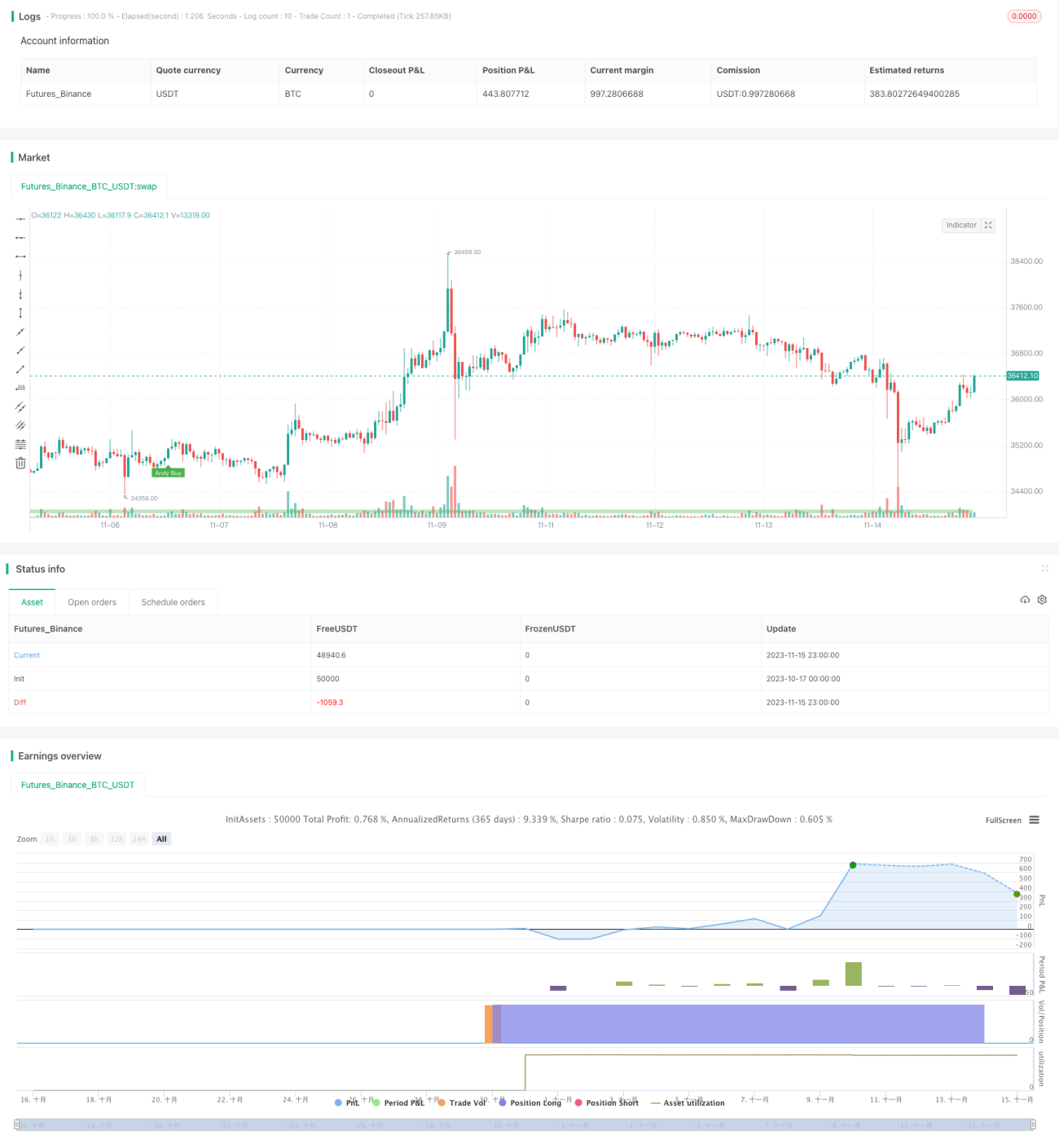
Chiến lược này sử dụng kết hợp trung bình di chuyển trên khung thời gian, nhận ra sự thay đổi xu hướng trên biểu đồ giờ lớn và trung bình, để thực hiện giao dịch theo dõi xu hướng có rủi ro thấp. Chiến lược này có tính linh hoạt cấu hình, tạo ra lợi thế đơn giản, hiệu quả tài chính cao, phù hợp với các nhà giao dịch có xu hướng theo đuổi vị thế trung bình và dài.
Chiến lược sử dụng ba đường trung bình di chuyển 5, 20 và 40 ngày để đánh giá sự kết hợp sắp xếp của xu hướng trong các khung thời gian khác nhau.
Cụ thể, 5 ngày trên đường nhanh vượt qua đường trung bình 20 ngày coi là tín hiệu đường ngắn vượt qua, 20 ngày trên đường trung bình vượt qua đường chậm 40 ngày coi là tín hiệu đường trung bình vượt qua. Khi nhanh trung bình chậm 3 đường thẳng hàng ((5 ngày> 20 ngày> 40 ngày), được đánh giá là chu kỳ đa đầu; Khi nhanh trung bình chậm 3 đường ngược hàng ((5 ngày < 20 ngày < 40 ngày), được đánh giá là chu kỳ không đầu.
Theo cách này, theo hướng định hướng của xu hướng chu kỳ lớn, sau đó kết hợp với cường độ chu kỳ nhỏ để phát hiện sự tham gia cụ thể. Đó là chỉ trong trường hợp xu hướng lớn đồng hướng và chu kỳ nhỏ mạnh, mở vị trí có thể lọc hiệu quả phá vỡ trục trặc, thực hiện hoạt động có tỷ lệ thắng cao.
Ngoài ra, chiến lược này còn sử dụng ATR Stop Loss để kiểm soát rủi ro đơn lẻ và tiếp tục nâng cao tỷ lệ lợi nhuận.
Tính linh hoạt, người dùng có thể tự điều chỉnh các tham số trung bình di chuyển để phù hợp với các giống và sở thích giao dịch khác nhau
Dễ sử dụng và dễ sử dụng cho người mới bắt đầu
Tăng cường hiệu quả sử dụng vốn, tận dụng hiệu quả đòn bẩy tài chính
Rủi ro có thể kiểm soát được, hệ thống ngăn chặn thiệt hại có hiệu quả trong việc tránh thiệt hại lớn
Khả năng theo dõi xu hướng mạnh mẽ, lợi nhuận bền vững sau khi định hướng chu kỳ lớn
Tỷ lệ chiến thắng cao, tín hiệu giao dịch tốt, ít sai lệch
Phân tích theo chu kỳ lớn dựa trên sự sắp xếp theo đường trung bình di chuyển, có nguy cơ bị sai lệch
Kiểm tra cường độ nhỏ chỉ với một dây K, có thể kích hoạt trước, có thể thư giãn thích hợp
Stop Loss có thể được tối ưu hóa thành Stop Loss Động
Có thể xem xét thêm các điều kiện lọc bổ sung, chẳng hạn như năng lượng khối lượng giao dịch
Bạn có thể thử nghiệm các kết hợp khác nhau của các tham số trung bình di chuyển, chiến lược tối ưu hóa
Chiến lược này tích hợp phân tích nhiều khung thời gian và quản lý lỗ hổng để thực hiện giao dịch theo dõi xu hướng có rủi ro thấp. Bằng cách điều chỉnh các tham số, có thể áp dụng cho các giống khác nhau để đáp ứng nhu cầu của người theo xu hướng. Quyết định giao dịch của nó ổn định hơn và tín hiệu hiệu quả hơn so với hệ thống khung thời gian đơn truyền thống.
This strategy uses a combination of moving averages across timeframes to identify trend rotations on the hourly, daily and weekly charts. It allows low-risk trend following trading. The strategy is flexible, simple to implement, capital efficient and suitable for medium-long term trend traders.
The strategy employs 5, 20 and 40-day moving averages to determine the alignment of trends across different timeframes. Based on the consistency between larger and smaller timeframes, it identifies bullish and bearish cycles.
Specifically, the crossing of 5-day fast MA above 20-day medium MA indicates an uptrend in the short term. The crossing of 20-day medium MA above 40-day slow MA signals an uptrend in the medium term. When the fast, medium and slow MAs are positively aligned (5-day > 20-day > 40-day), it is a bull cycle. When they are negatively aligned (5-day < 20-day < 40-day), it is a bear cycle.
By determining direction from the larger cycles and confirming strength on the smaller cycles, this strategy opens positions only when major trend and minor momentum align. This effectively avoids false breakouts and achieves high win rate.
The strategy also utilizes ATR trailing stops to control single trade risks and further improve profitability.
Flexible configurations to suit different instruments and trading styles
Simple to implement even for beginner traders
High capital efficiency to maximize leverage
Effective risk control to avoid significant losses
Strong trend following ability for sustained profits
High win rate due to robust signals and fewer whipsaws
MA crossovers may lag and cause late trend detection
Single candle strength detection could trigger premature entry, relax condition
Fixed ATR stop loss, optimize to dynamic stops
Consider adding supplementary filters like volume
Explore different MA parameters for optimization
This strategy integrates multiple timeframe analysis and risk management for low-risk trend following trading. By adjusting parameters, it can be adapted to different instruments to suit trend traders. Compared to single timeframe systems, it makes more robust trading decisions and generates higher efficiency signals. In conclusion, this strategy has good market adaptiveness and development potential.
/*backtest
start: 2023-10-17 00:00:00
end: 2023-11-16 00:00:00
period: 1h
basePeriod: 15m
exchanges: [{"eid":"Futures_Binance","currency":"BTC_USDT"}]
*/
// This source code is subject to the terms of the Mozilla Public License 2.0 at https://mozilla.org/MPL/2.0/
// © kgynofomo
//@version=5
strategy(title="[Salavi] | Andy Advance Pro Strategy [BTC|M15]",overlay = true, pyramiding = 1,initial_capital = 10000, default_qty_type = strategy.cash,default_qty_value = 10000)
ema_short = ta.ema(close,5)
ema_middle = ta.ema(close,20)
ema_long = ta.ema(close,40)
cycle_1 = ema_short>ema_middle and ema_middle>ema_long
cycle_2 = ema_middle>ema_short and ema_short>ema_long
cycle_3 = ema_middle>ema_long and ema_long>ema_short
cycle_4 = ema_long>ema_middle and ema_middle>ema_short
cycle_5 = ema_long>ema_short and ema_short>ema_middle
cycle_6 = ema_short>ema_long and ema_long>ema_middle
bull_cycle = cycle_1 or cycle_2 or cycle_3
bear_cycle = cycle_4 or cycle_5 or cycle_6
// label.new("cycle_1")
// bgcolor(color=cycle_1?color.rgb(82, 255, 148, 60):na)
// bgcolor(color=cycle_2?color.rgb(82, 255, 148, 70):na)
// bgcolor(color=cycle_3?color.rgb(82, 255, 148, 80):na)
// bgcolor(color=cycle_4?color.rgb(255, 82, 82, 80):na)
// bgcolor(color=cycle_5?color.rgb(255, 82, 82, 70):na)
// bgcolor(color=cycle_6?color.rgb(255, 82, 82, 60):na)
// Inputs
a = input(2, title='Key Vaule. \'This changes the sensitivity\'')
c = input(7, title='ATR Period')
h = false
xATR = ta.atr(c)
nLoss = a * xATR
src = h ? request.security(ticker.heikinashi(syminfo.tickerid), timeframe.period, close, lookahead=barmerge.lookahead_off) : close
xATRTrailingStop = 0.0
iff_1 = src > nz(xATRTrailingStop[1], 0) ? src - nLoss : src + nLoss
iff_2 = src < nz(xATRTrailingStop[1], 0) and src[1] < nz(xATRTrailingStop[1], 0) ? math.min(nz(xATRTrailingStop[1]), src + nLoss) : iff_1
xATRTrailingStop := src > nz(xATRTrailingStop[1], 0) and src[1] > nz(xATRTrailingStop[1], 0) ? math.max(nz(xATRTrailingStop[1]), src - nLoss) : iff_2
pos = 0
iff_3 = src[1] > nz(xATRTrailingStop[1], 0) and src < nz(xATRTrailingStop[1], 0) ? -1 : nz(pos[1], 0)
pos := src[1] < nz(xATRTrailingStop[1], 0) and src > nz(xATRTrailingStop[1], 0) ? 1 : iff_3
xcolor = pos == -1 ? color.red : pos == 1 ? color.green : color.blue
ema = ta.ema(src, 1)
above = ta.crossover(ema, xATRTrailingStop)
below = ta.crossover(xATRTrailingStop, ema)
buy = src > xATRTrailingStop and above
sell = src < xATRTrailingStop and below
barbuy = src > xATRTrailingStop
barsell = src < xATRTrailingStop
atr = ta.atr(14)
atr_length = input.int(25)
atr_rsi = ta.rsi(atr,atr_length)
atr_valid = atr_rsi>50
long_condition = buy and bull_cycle and atr_valid
short_condition = sell and bear_cycle and atr_valid
Exit_long_condition = short_condition
Exit_short_condition = long_condition
if long_condition
strategy.entry("Andy Buy",strategy.long, limit=close,comment="Andy Buy Here")
if Exit_long_condition
strategy.close("Andy Buy",comment="Andy Buy Out")
// strategy.entry("Andy fandan Short",strategy.short, limit=close,comment="Andy 翻單 short Here")
// strategy.close("Andy fandan Buy",comment="Andy short Out")
if short_condition
strategy.entry("Andy Short",strategy.short, limit=close,comment="Andy short Here")
// strategy.exit("STR","Long",stop=longstoploss)
if Exit_short_condition
strategy.close("Andy Short",comment="Andy short Out")
// strategy.entry("Andy fandan Buy",strategy.long, limit=close,comment="Andy 翻單 Buy Here")
// strategy.close("Andy fandan Short",comment="Andy Buy Out")
inLongTrade = strategy.position_size > 0
inLongTradecolor = #58D68D
notInTrade = strategy.position_size == 0
inShortTrade = strategy.position_size < 0
// bgcolor(color = inLongTrade?color.rgb(76, 175, 79, 70):inShortTrade?color.rgb(255, 82, 82, 70):na)
plotshape(close!=0,location = location.bottom,color = inLongTrade?color.rgb(76, 175, 79, 70):inShortTrade?color.rgb(255, 82, 82, 70):na)
plotshape(long_condition, title='Buy', text='Andy Buy', style=shape.labelup, location=location.belowbar, color=color.new(color.green, 0), textcolor=color.new(color.white, 0), size=size.tiny)
plotshape(short_condition, title='Sell', text='Andy Sell', style=shape.labeldown, location=location.abovebar, color=color.new(color.red, 0), textcolor=color.new(color.white, 0), size=size.tiny)
//atr > close *0.01* parameter
// MONTHLY TABLE PERFORMANCE - Developed by @QuantNomad
// *************************************************************************************************************************************************************************************************************************************************************************
show_performance = input.bool(true, 'Show Monthly Performance ?', group='Performance - credits: @QuantNomad')
prec = input(2, 'Return Precision', group='Performance - credits: @QuantNomad')
if show_performance
new_month = month(time) != month(time[1])
new_year = year(time) != year(time[1])
eq = strategy.equity
bar_pnl = eq / eq[1] - 1
cur_month_pnl = 0.0
cur_year_pnl = 0.0
// Current Monthly P&L
cur_month_pnl := new_month ? 0.0 :
(1 + cur_month_pnl[1]) * (1 + bar_pnl) - 1
// Current Yearly P&L
cur_year_pnl := new_year ? 0.0 :
(1 + cur_year_pnl[1]) * (1 + bar_pnl) - 1
// Arrays to store Yearly and Monthly P&Ls
var month_pnl = array.new_float(0)
var month_time = array.new_int(0)
var year_pnl = array.new_float(0)
var year_time = array.new_int(0)
last_computed = false
if (not na(cur_month_pnl[1]) and (new_month or barstate.islastconfirmedhistory))
if (last_computed[1])
array.pop(month_pnl)
array.pop(month_time)
array.push(month_pnl , cur_month_pnl[1])
array.push(month_time, time[1])
if (not na(cur_year_pnl[1]) and (new_year or barstate.islastconfirmedhistory))
if (last_computed[1])
array.pop(year_pnl)
array.pop(year_time)
array.push(year_pnl , cur_year_pnl[1])
array.push(year_time, time[1])
last_computed := barstate.islastconfirmedhistory ? true : nz(last_computed[1])
// Monthly P&L Table
var monthly_table = table(na)
if (barstate.islastconfirmedhistory)
monthly_table := table.new(position.bottom_center, columns = 14, rows = array.size(year_pnl) + 1, border_width = 1)
table.cell(monthly_table, 0, 0, "", bgcolor = #cccccc)
table.cell(monthly_table, 1, 0, "Jan", bgcolor = #cccccc)
table.cell(monthly_table, 2, 0, "Feb", bgcolor = #cccccc)
table.cell(monthly_table, 3, 0, "Mar", bgcolor = #cccccc)
table.cell(monthly_table, 4, 0, "Apr", bgcolor = #cccccc)
table.cell(monthly_table, 5, 0, "May", bgcolor = #cccccc)
table.cell(monthly_table, 6, 0, "Jun", bgcolor = #cccccc)
table.cell(monthly_table, 7, 0, "Jul", bgcolor = #cccccc)
table.cell(monthly_table, 8, 0, "Aug", bgcolor = #cccccc)
table.cell(monthly_table, 9, 0, "Sep", bgcolor = #cccccc)
table.cell(monthly_table, 10, 0, "Oct", bgcolor = #cccccc)
table.cell(monthly_table, 11, 0, "Nov", bgcolor = #cccccc)
table.cell(monthly_table, 12, 0, "Dec", bgcolor = #cccccc)
table.cell(monthly_table, 13, 0, "Year", bgcolor = #999999)
for yi = 0 to array.size(year_pnl) - 1
table.cell(monthly_table, 0, yi + 1, str.tostring(year(array.get(year_time, yi))), bgcolor = #cccccc)
y_color = array.get(year_pnl, yi) > 0 ? color.new(color.teal, transp = 40) : color.new(color.gray, transp = 40)
table.cell(monthly_table, 13, yi + 1, str.tostring(math.round(array.get(year_pnl, yi) * 100, prec)), bgcolor = y_color, text_color=color.new(color.white, 0))
for mi = 0 to array.size(month_time) - 1
m_row = year(array.get(month_time, mi)) - year(array.get(year_time, 0)) + 1
m_col = month(array.get(month_time, mi))
m_color = array.get(month_pnl, mi) > 0 ? color.new(color.teal, transp = 40) : color.new(color.gray, transp = 40)
table.cell(monthly_table, m_col, m_row, str.tostring(math.round(array.get(month_pnl, mi) * 100, prec)), bgcolor = m_color, text_color=color.new(color.white, 0))