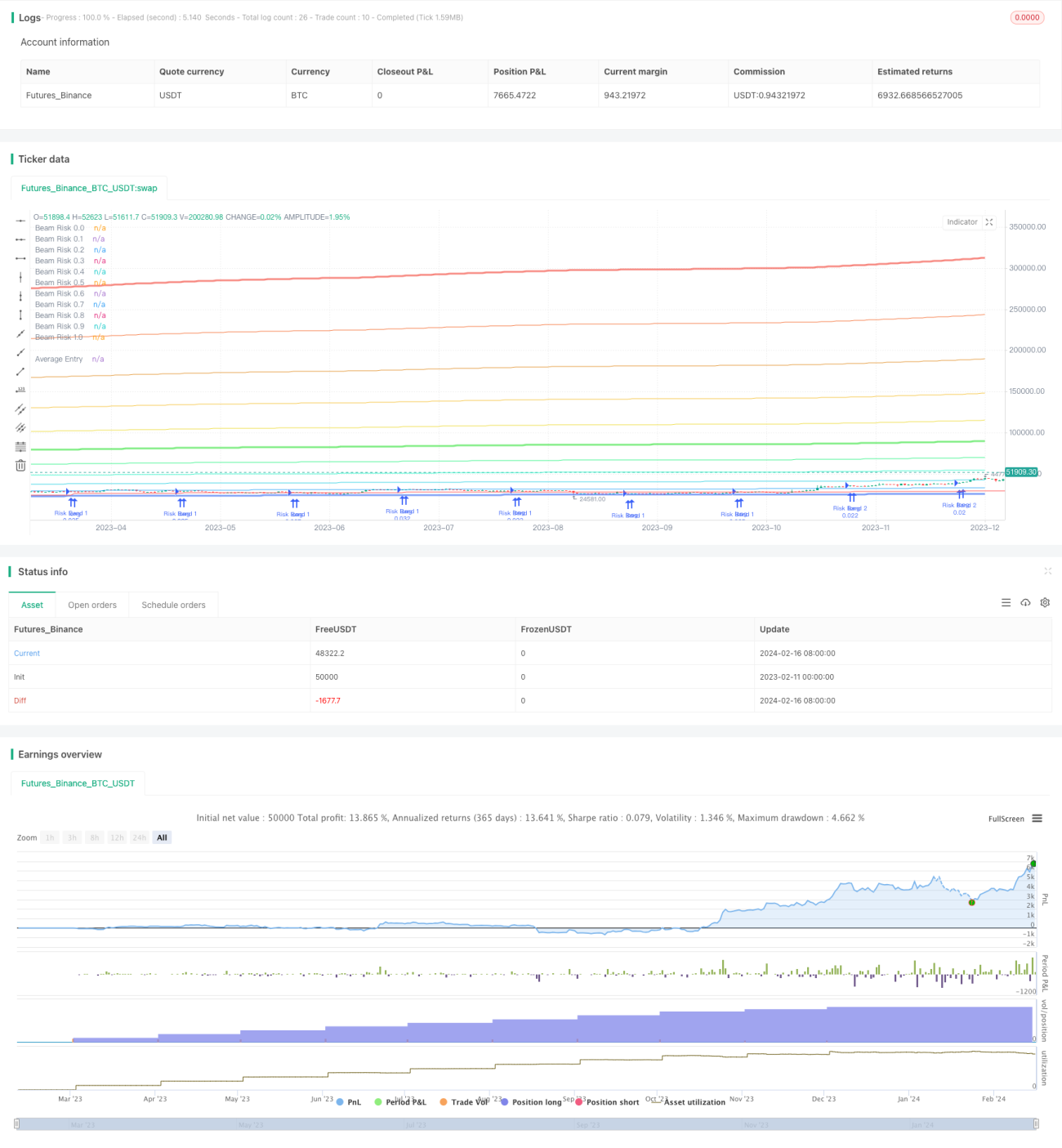
এই কৌশলটি বেন কাউয়েনের ঝুঁকি স্তর তত্ত্বের উপর ভিত্তি করে, যার লক্ষ্য বিইএএম ব্যাংকের স্তরগুলি ব্যবহার করে অনুরূপ পদ্ধতির বাস্তবায়ন করা। বিইএএম ব্যাংকের উপরের সীমাটি 200-সপ্তাহের চলমান গড়ের সমান্তরাল, এবং নীচের সীমাটি 200-সপ্তাহের চলমান গড় নিজেই। এটি আমাদের একটি 0 থেকে 1 এর পরিসীমা দেয়। যখন দাম 0.5 এর নীচে থাকে তখন একটি কেনার নির্দেশ দেওয়া হয়; যখন দাম 0.5 এর উপরে থাকে তখন একটি বিক্রয় নির্দেশ দেওয়া হয়।
এই কৌশলটি মূলত বেন কাউয়েনের BEAM তরঙ্গ তত্ত্বের উপর নির্ভর করে। বিটিসির দামের পরিবর্তনের উপর নির্ভর করে, দামকে 0 থেকে 1 এর মধ্যে 10 টি অঞ্চলে ভাগ করা যেতে পারে, এই 10 টি অঞ্চল 10 টি বিভিন্ন ঝুঁকি স্তরের প্রতিনিধিত্ব করে। 0 স্তরটি 200 সপ্তাহের চলমান গড়ের কাছাকাছি দামকে প্রতিনিধিত্ব করে, যার ঝুঁকি সর্বনিম্ন; 5 স্তরটি দামের মধ্যবর্তী অঞ্চলে রয়েছে; 10 স্তরটি দামের কাছাকাছি ট্র্যাকের প্রতিনিধিত্ব করে, যার ঝুঁকি সর্বাধিক।
যখন দাম কম হয়, তখন এই কৌশলটি ক্রমান্বয়ে ক্রয় করার অবস্থান বাড়িয়ে তোলে। বিশেষত, যদি দাম 0 থেকে 0.5 এর মধ্যে থাকে তবে কৌশলটি সেট করা প্রতিটি মাসের নির্দিষ্ট দিনে ক্রয়ের নির্দেশ দেওয়া হবে এবং ক্রয়ের পরিমাণ ক্রমান্বয়ে বৃদ্ধি পাবে। উদাহরণস্বরূপ, তরঙ্গ 5 এ, ক্রয়ের পরিমাণটি মাসের মোট ডিসিএর 20%; তরঙ্গ 1 এ, ক্রয়ের পরিমাণটি বাড়িয়ে মাসে মোট ডিসিএর 100% করা হয়েছে।
যখন দাম উচ্চ স্তরে পৌঁছে যায়, তখন এই কৌশলটি ধীরে ধীরে পজিশনগুলি হ্রাস করে। বিশেষত, যদি দাম 0.5 টি ব্যাপ্তির বেশি হয় তবে অনুপাতের ভিত্তিতে বিক্রয় নির্দেশ জারি করা হয়, এবং পজিশনগুলি ধীরে ধীরে ব্যাপ্তি সংখ্যা বাড়ার সাথে সাথে বাড়তে থাকে। উদাহরণস্বরূপ, ব্যাপ্তি 6 এ, 6.67% বিক্রি করুন; ব্যাপ্তি 10 এ, সমস্ত পজিশন বিক্রি করুন।
এই বিইএএম রেঞ্জের ডিসিএ খরচ গড় কৌশলটির সবচেয়ে বড় সুবিধা হল এটি বিটিসির ওভারল্যাপ ট্রেডিংয়ের বৈশিষ্ট্যগুলিকে পুরোপুরি ব্যবহার করে, বিটিসির দাম যখন নিম্ন প্রান্তে নেমে আসে তখন অবতরণ করে এবং যখন দাম বেড়ে যায় তখন লাভ করে। এই পদ্ধতিটি কোনও ক্রয় বা বিক্রয়ের সুযোগ মিস করে না। নির্দিষ্ট সুবিধাগুলি নিম্নরূপ সংক্ষিপ্ত করা যেতে পারেঃ
সব মিলিয়ে, এটি একটি পরিমাপযোগ্য প্যারামিটার নিয়ন্ত্রণ কৌশল যা বিটিসির অস্থির পরিস্থিতিতে দীর্ঘমেয়াদী স্থিতিশীল লাভ অর্জন করতে পারে।
যদিও BEAM-ব্যান্ড DCA কৌশলটির অনেকগুলি সুবিধা রয়েছে, তবে কিছু সম্ভাব্য ঝুঁকি রয়েছে যা সম্পর্কে সতর্ক হওয়া দরকার। প্রধান ঝুঁকিগুলি নিম্নরূপ সংক্ষিপ্ত করা যেতে পারেঃ
ঝুঁকি কমানোর জন্য নিম্নলিখিত পদক্ষেপগুলি গ্রহণ করা যেতে পারেঃ
উপরোক্ত ঝুঁকিগুলো বিবেচনা করে, এই কৌশলটি মূলত নিম্নলিখিত দিকগুলি থেকে অপ্টিমাইজ করা যেতে পারেঃ
এর মাধ্যমে, কৌশলটির স্থিতিশীলতা এবং সুরক্ষা ব্যাপকভাবে বাড়ানো যেতে পারে।
বিইএএম ওয়েভব্যান্ড ডিসিএ খরচ গড় কৌশল একটি পরিমাণগত কৌশল যা অত্যন্ত যুদ্ধের মূল্যবান। এটি বিইএএম তত্ত্বকে সফলভাবে ব্যবহার করে ট্রেডিং সিদ্ধান্তের নির্দেশনা দেয় এবং ব্যয় গড় মডেলের সাহায্যে ক্রয় ব্যয় নিয়ন্ত্রণ করে। একই সাথে, এটি ঝুঁকি ব্যবস্থাপনার দিকেও মনোযোগ দেয়, ক্ষতির বিস্তার রোধে স্টপ লস সেট করে। প্যারামিটার অপ্টিমাইজেশন এবং মডিউল ইনক্রিমেশন দ্বারা, এই কৌশলটি বিটিসি বাজারে দীর্ঘমেয়াদী স্থিতিশীল আয় অর্জনের জন্য পরিমাণগত ব্যবসায়ের একটি গুরুত্বপূর্ণ হাতিয়ার হতে পারে। এটি পরিমাণগত ব্যবসায়ীদের আরও গবেষণা এবং প্রয়োগের জন্য উপযুক্ত।
/*backtest
start: 2023-02-11 00:00:00
end: 2024-02-17 00:00:00
period: 1d
basePeriod: 1h
exchanges: [{"eid":"Futures_Binance","currency":"BTC_USDT"}]
*/
// © gjfsdrtytru - BEAM DCA Strategy {
// Based on Ben Cowen's risk level strategy, this aims to copy that method but with BEAM band levels.
// Upper BEAM level is derived from ln(price/200W MA)/2.5, while the 200W MA is the floor price. This is our 0-1 range.
// Buy limit orders are set at the < 0.5 levels and sell orders are set at the > 0.5 level.
//@version=5
strategy(
title = "BEAM DCA Strategy Monthly",
shorttitle = "BEAM DCA M",
overlay = true,
pyramiding = 500,
default_qty_type = strategy.percent_of_equity,
default_qty_value = 0,
initial_capital = 0) //}
// Inputs { ————————————————————————————————————————————————————————————————————
T_ceiling = input.string("Off", "Diminishing Returns", ["Off","Linear","Parabolic"], "Account for diminishing returns as time increases")
day = input.int(1, "DCA Day of Month",1,28,1,"Select day of month for buy orders.")
DCAamount = input.int(1000,"DCA Amount",400,tooltip="Enter the maximum amount you'd be willing to DCA for any given month.")
T_buy = input(true,"Buy Orders","Toggle buy orders.")
T_sell = input(true,"Sell Orders","Toggle sell orders.")
// Time period
testStartYear = input.int(2018, title="Backtest Start Year", minval=2010,maxval=2100,group="Backtest Period")
testStartMonth = input.int(1, title="Backtest Start Month", minval=1, maxval=12, group="Backtest Period")
testStartDay = input.int(1, title="Backtest Start Day", minval=1, maxval=31, group="Backtest Period")
testPeriodLen = input.int(9999, title="Backtest Period (days)", minval=1, group="Backtest Period",tooltip="Days until strategy ends") * 86400000 // convert days into UNIX time
testPeriodStart = timestamp(testStartYear,testStartMonth,testStartDay,0,0)
testPeriodStop = testPeriodStart + testPeriodLen
testPeriod() => true
// ——————————————————————————————————————————————————————————————————————————— }
// Diminishing Returns { ———————————————————————————————————————————————————————
x = bar_index + 1
assetDivisor= 2.5
switch
T_ceiling == "Linear" => assetDivisor:= 3.50542 - 0.000277696 * x
T_ceiling == "Parabolic"=> assetDivisor:= -0.0000001058992338 * math.pow(x,2) + 0.000120729 * x + 3.1982
// ——————————————————————————————————————————————————————————————————————————— }
// Risk Levels { ———————————————————————————————————————————————————————————————
cycleLen = 1400
getMaLen() =>
if bar_index < cycleLen
bar_index + 1
else
cycleLen
// Define Risk Bands
price = close
riskLow = ta.sma(price,getMaLen())
risk1 = riskLow * math.exp((assetDivisor)*0.1)
risk2 = riskLow * math.exp((assetDivisor)*0.2)
risk3 = riskLow * math.exp((assetDivisor)*0.3)
risk4 = riskLow * math.exp((assetDivisor)*0.4)
risk5 = riskLow * math.exp((assetDivisor)*0.5)
risk6 = riskLow * math.exp((assetDivisor)*0.6)
risk7 = riskLow * math.exp((assetDivisor)*0.7)
risk8 = riskLow * math.exp((assetDivisor)*0.8)
risk9 = riskLow * math.exp((assetDivisor)*0.9)
riskHigh = riskLow * math.exp((assetDivisor))
// Plot Risk Bands
p_low = plot(riskLow, "Beam Risk 0.0",color.new(#0042F0,50),3,editable=false)
p_band1 = plot(risk1, "Beam Risk 0.1",color.new(#0090F5,20),1,editable=false)
p_band2 = plot(risk2, "Beam Risk 0.2",color.new(#00C6DB,20),1,editable=false)
p_band3 = plot(risk3, "Beam Risk 0.3",color.new(#00F5BD,20),1,editable=false)
p_band4 = plot(risk4, "Beam Risk 0.4",color.new(#00F069,20),1,editable=false)
p_band5 = plot(risk5, "Beam Risk 0.5",color.new(#00DB08,50),3,editable=false)
p_band6 = plot(risk6, "Beam Risk 0.6",color.new(#E8D20C,20),1,editable=false)
p_band7 = plot(risk7, "Beam Risk 0.7",color.new(#F2B40C,20),1,editable=false)
p_band8 = plot(risk8, "Beam Risk 0.8",color.new(#DC7A00,20),1,editable=false)
p_band9 = plot(risk9, "Beam Risk 0.9",color.new(#F2520C,20),1,editable=false)
p_band10 = plot(riskHigh, "Beam Risk 1.0",color.new(#F01102,50),3,editable=false)
// ——————————————————————————————————————————————————————————————————————————— }
// Order Execution { ———————————————————————————————————————————————————————————
band5 = price<risk5 and price>risk4
band4 = price<risk4 and price>risk3
band3 = price<risk3 and price>risk2
band2 = price<risk2 and price>risk1
band1 = price<risk1
// DCA buy order weights
y = DCAamount / 5
switch
band5 => y:= y * 1
band4 => y:= y * 2
band3 => y:= y * 3
band2 => y:= y * 4
band1 => y:= y * 5
// Contracts per order
contracts =(y/price)
if testPeriod()
// Buy orders
if T_buy == true
if dayofmonth == day
strategy.entry("Risk Band 5",strategy.long,qty=contracts,when=band5)
strategy.entry("Risk Band 4",strategy.long,qty=contracts,when=band4)
strategy.entry("Risk Band 3",strategy.long,qty=contracts,when=band3)
strategy.entry("Risk Band 2",strategy.long,qty=contracts,when=band2)
strategy.entry("Risk Band 1",strategy.long,qty=contracts,when=band1)
// Sell orders
if T_sell == true
if strategy.opentrades > 5
strategy.exit("Risk Band 6",qty_percent=6.67,limit=risk6)
strategy.exit("Risk Band 7",qty_percent=14.28,limit=risk7)
strategy.exit("Risk Band 8",qty_percent=25.00,limit=risk8)
strategy.exit("Risk Band 9",qty_percent=44.44,limit=risk9)
strategy.exit("Risk Band 10",qty_percent=100,limit=riskHigh)
// ——————————————————————————————————————————————————————————————————————————— }
// Info { ——————————————————————————————————————————————————————————————————————
// Line plot of avg. entry price
plot(strategy.position_size > 0 ? strategy.position_avg_price : na,"Average Entry",color.red,trackprice=true,editable=false)
// Unrealised PNL
uPNL = price/strategy.position_avg_price
// Realised PNL
realPNL = 0.
for i = 0 to strategy.closedtrades-1
realPNL += strategy.closedtrades.profit(i)
// Size of open position in ($)
openPosSize = 0.
for i = 0 to strategy.opentrades-1
openPosSize += strategy.opentrades.size(i) * strategy.position_avg_price
// Size of closed position in ($)
closePosSize = 0.
if strategy.closedtrades > 0
for i = 0 to strategy.closedtrades-1
closePosSize += strategy.closedtrades.size(i) * strategy.closedtrades.entry_price(i)
invested = openPosSize+closePosSize // Total capital ($) put into strategy
equity = openPosSize+closePosSize+strategy.openprofit+realPNL // Total current equity ($) in strategy (counting realised PNL)
ROI = (equity-invested) / invested * 100 // ROI of strategy (compare capital invested to excess return)
// // Info Table
// var table table1 = table.new(position.bottom_right,2,9,color.black,color.gray,1,color.gray,2)
// table.cell(table1,0,0,"Capital Invested", text_color=color.white,text_halign=text.align_right)
// table.cell(table1,0,1,"Open Position", text_color=color.white,text_halign=text.align_right)
// table.cell(table1,0,2,"Average Entry", text_color=color.white,text_halign=text.align_right)
// table.cell(table1,0,3,"Last Price", text_color=color.white,text_halign=text.align_right)
// table.cell(table1,0,4,"Open PNL (%)", text_color=color.white,text_halign=text.align_right)
// table.cell(table1,0,5,"Open PNL ($)", text_color=color.white,text_halign=text.align_right)
// table.cell(table1,0,6,"Realised PNL ($)", text_color=color.white,text_halign=text.align_right)
// table.cell(table1,0,7,"Total Equity", text_color=color.white,text_halign=text.align_right)
// table.cell(table1,0,8,"Strategy ROI", text_color=color.white,text_halign=text.align_right)
// table.cell(table1,1,0,"$" + str.tostring(invested, "#,###.00"), text_halign=text.align_right,text_color = color.white)
// table.cell(table1,1,1,"$" + str.tostring(openPosSize, "#,###.00"), text_halign=text.align_right,text_color = color.white)
// table.cell(table1,1,2,"$" + str.tostring(strategy.position_avg_price, "#,###.00"), text_halign=text.align_right,text_color = color.white)
// table.cell(table1,1,3,"$" + str.tostring(price, "#,###.00"), text_halign=text.align_right,text_color = color.white)
// table.cell(table1,1,4, str.tostring((uPNL-1)*100, "#,###.00") + "%",text_halign=text.align_right,text_color = uPNL > 1 ? color.lime : color.red)
// table.cell(table1,1,5,"$" + str.tostring(strategy.openprofit, "#,###.00"), text_halign=text.align_right,text_color = uPNL > 1 ? color.lime : color.red)
// table.cell(table1,1,6,"$" + str.tostring(realPNL, "#,###.00"), text_halign=text.align_right,text_color = color.white)
// table.cell(table1,1,7,"$" + str.tostring(equity, "#,###.00"), text_halign=text.align_right,text_color = color.white)
// table.cell(table1,1,8, str.tostring(ROI, "#,###.00") + "%",text_halign=text.align_right,text_color = ROI > 1 ? color.lime : color.red)
// // ——————————————————————————————————————————————————————————————————————————— }