Sentimentgesteuerte Breakout-Strategie mit Integration mehrerer Indikatoren


Erstellungsdatum: 2024-01-17 17:53:55 zuletzt geändert: 2024-01-17 17:53:55
Kopie: 0 Klicks: 745
1
konzentrieren Sie sich auf
1617
Anhänger

Sentimentgesteuerte Breakout-Strategie mit Integration mehrerer Indikatoren

Überblick

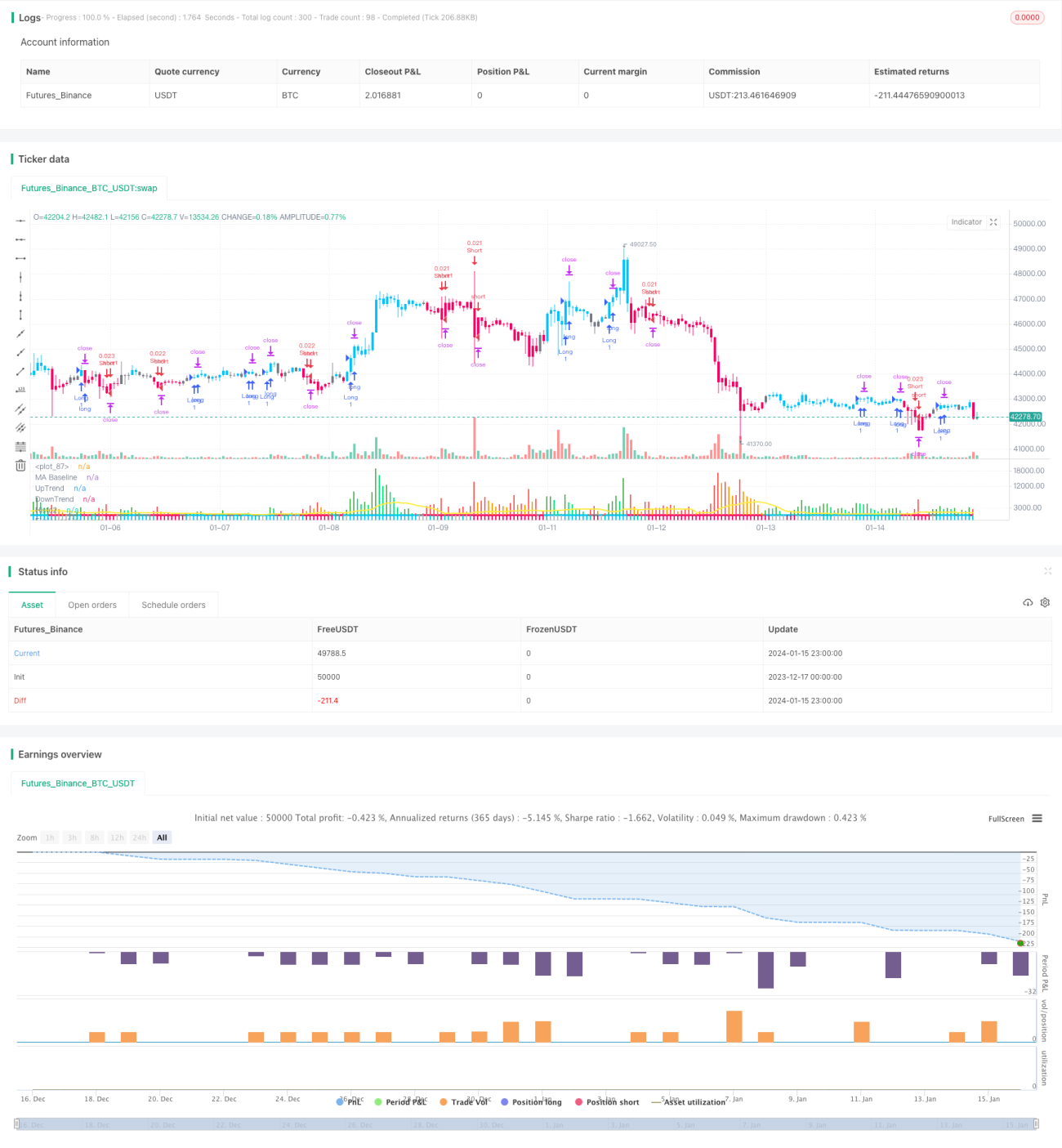
Diese Strategie kombiniert die QQE-Verbesserungs-Indikator, die SSL-Hybrid-Indikator und die Waddah Attar-Explosions-Indikator, die drei Emotions-Indikatoren, um ein Handelssignal zu bilden. Sie gehört zu den Emotions-Breakout-Strategien, die von mehreren Indikatoren angetrieben werden.

Strategieprinzip

Die Kernlogik der Strategie basiert auf drei Indikatoren, die die Handelsentscheidungen beeinflussen:

QQE-VerbesserungsindikatorenDer RSI-Indikator wurde verbessert, um die Sensibilität zu erhöhen und die Stimmung der Märkte zu beurteilen. Die Strategie nutzt den RSI-Indikator, um die Unter- und Obergehenssignale zu bestimmen.

SSL-HybrideDer Indikator berücksichtigt die brechen mehrerer beweglichen Durchschnittslinien, um die Marktanzeichen zu beurteilen. Diese Strategie verwendet den Indikator, um die Form der Kanalbrechungen zu beurteilen.

Waddah Attar: Der Ausbruch des IndexDer Indikator beurteilt, wie stark der Preis innerhalb des Kanals ausbricht. Die Strategie verwendet den Indikator, um zu bestimmen, ob der Durchbruch ausreichend ist.

Die Strategie erzeugt eine Kaufentscheidung, wenn der QQE-Indikator ein unteres Umkehrsignal sendet, der SSL-Indikator einen Durchbruch auf der Straße zeigt und der Waddah Attar-Indikator den Momentumstoß beurteilt. Wenn die drei Indikatoren gleichzeitig ein gegenteiliges Signal senden, wird eine Verkaufsentscheidung getroffen.

Die Strategie, die sowohl einen Stop-Loss als auch einen Stop-Stop-Exit-Punkt festlegt, um den Gewinn zu maximieren, gehört zu den hochwertigen emotionalen Durchbruchstrategien.

Analyse der Stärken

Diese Strategie hat folgende Vorteile:

  1. Die Integration von mehreren Indikatoren zur Beurteilung der Marktstimmung verhindert die Gefahr von falschen Durchbrüchen
  2. Gleichzeitig werden die Umkehrungs-, Kanal- und Dynamikindikatoren berücksichtigt, um eine hohe Marktbestätigung bei einem Durchbruch zu gewährleisten
  3. Mit hochpräzisen mobilen Stop-Losses Risiken begrenzen, Gewinne verfolgen und sperren
  4. Die Parameter wurden intensiv optimiert, sind stabil und eignen sich für mittlere bis lange Zeilen.
  5. Konfigurationsfähige Kennzahlen, die den Strategie-Stil an die breiteren Marktbedingungen anpassen

Risikoanalyse

Diese Strategie birgt folgende Risiken:

  1. Bei anhaltend niedrigen Aktienmärkten können kleinere Verlustgeschäfte erfolgen.
  2. Es ist notwendig, sich auf mehrere Indikatoren zu stützen, die in einigen Märkten außergewöhnlich ungünstig sein können.
  3. Mehrfache Kennzahlen wie QQE-Kennzahlen sind mit einem Risiko einer Parameterüberoptimierung konfrontiert und müssen mit Vorsicht eingestellt werden
  4. Bewegungsschaden kann in besonderen Situationen schwieriger sein, normal zu funktionieren.

Angesichts der oben genannten Risiken empfiehlt es sich, die Parameter der Indikatoren anzupassen, um sie stabiler zu machen und die Haltedauer angemessen zu erhöhen, um eine höhere Rendite zu erzielen.

Optimierungsrichtung

Die Strategie kann in folgenden Bereichen weiter optimiert werden:

  1. Anpassung der Parameter der einzelnen Indikatoren, um sie gleichmäßiger oder empfindlicher zu machen
  2. Erweiterung des Moduls zur Optimierung der Positionsgröße auf Basis der Volatilität
  3. Mehr Module für die Windkontrolle mit maschinellem Lernen, um die Marktlage in Echtzeit zu bewerten
  4. Mit Hilfe von Deep-Learning-Modellen werden Kennzahlen vorhersagt, um die Entscheidungsgenauigkeit zu verbessern
  5. Einführung von Zeit-Zeitraum-Analysen zur Verringerung der Wahrscheinlichkeit von False-Breaks

Zusammenfassen

Die Strategie nutzt die Vorteile von mehreren Mainstream-Emotion-Indikatoren, um eine effiziente Emotion-Driven-Breakthrough-Strategie zu entwickeln. Sie umgeht die Risiken vieler minderwertiger Breakthroughs und bietet eine hochgradig präzise Stop-Loss-Theorie, um Gewinne zu lockern. Es ist eine bewährte und zuverlässige Kombination aus Breakthrough-Strategien, die es wert sind, gelernt und angewendet zu werden.

Strategiequellcode
/*backtest
start: 2023-12-17 00:00:00
end: 2024-01-16 00:00:00
period: 1h
basePeriod: 15m
exchanges: [{"eid":"Futures_Binance","currency":"BTC_USDT"}]
*/

// Strategy based on the 3 indicators:
//  - QQE MOD
//  - SSL Hybrid
//  - Waddah Attar Explosion
//
// Strategy was designed for the purpose of back testing. 
// See strategy documentation for info on trade entry logic.
// 
// Credits:
//  - QQE MOD: Mihkel00 (https://www.tradingview.com/u/Mihkel00/)
//  - SSL Hybrid: Mihkel00 (https://www.tradingview.com/u/Mihkel00/)
//  - Waddah Attar Explosion: shayankm (https://www.tradingview.com/u/shayankm/)

//@version=5
strategy("QQE MOD + SSL Hybrid + Waddah Attar Explosion", overlay=false)

// =============================================================================
// STRATEGY INPUT SETTINGS
// =============================================================================

// ---------------
// Risk Management
// ---------------
swingLength = input.int(10, "Swing High/Low Lookback Length", group='Strategy: Risk Management', tooltip='Stop Loss is calculated by the swing high or low over the previous X candles')
accountRiskPercent = input.float(2, "Account percent loss per trade", step=0.1, group='Strategy: Risk Management', tooltip='Each trade will risk X% of the account balance')

// ----------
// Date Range
// ----------
start_year = input.int(title='Start Date', defval=2022, minval=2010, maxval=3000, group='Strategy: Date Range', inline='1')
start_month = input.int(title='', defval=1, group='Strategy: Date Range', inline='1', options = [1, 2, 3, 4, 5, 6, 7, 8, 9, 10, 11, 12])
start_date = input.int(title='', defval=1, group='Strategy: Date Range', inline='1', options = [1, 2, 3, 4, 5, 6, 7, 8, 9, 10, 11, 12, 13, 14, 15, 16, 17, 18, 19, 20, 21, 22, 23, 24, 25, 26, 27, 28, 29, 30, 31])
end_year = input.int(title='End Date', defval=2023, minval=1800, maxval=3000, group='Strategy: Date Range', inline='2')
end_month = input.int(title='', defval=1, group='Strategy: Date Range', inline='2', options = [1, 2, 3, 4, 5, 6, 7, 8, 9, 10, 11, 12])
end_date = input.int(title='', defval=1, group='Strategy: Date Range', inline='2', options = [1, 2, 3, 4, 5, 6, 7, 8, 9, 10, 11, 12, 13, 14, 15, 16, 17, 18, 19, 20, 21, 22, 23, 24, 25, 26, 27, 28, 29, 30, 31])
in_date_range = true
// =============================================================================
// INDICATORS
// =============================================================================

// -------
// QQE MOD
// -------
RSI_Period = input.int(6, title='RSI Length', group='Indicators: QQE Mod Settings')
SF = input.int(6, title='RSI Smoothing', group='Indicators: QQE Mod Settings')
QQE = input.int(3, title='Fast QQE Factor', group='Indicators: QQE Mod Settings')
ThreshHold = input.int(3, title='Thresh-hold', group='Indicators: QQE Mod Settings')
qqeSrc = input(close, title='RSI Source', group='Indicators: QQE Mod Settings')
Wilders_Period = RSI_Period * 2 - 1

Rsi = ta.rsi(qqeSrc, RSI_Period)
RsiMa = ta.ema(Rsi, SF)
AtrRsi = math.abs(RsiMa[1] - RsiMa)
MaAtrRsi = ta.ema(AtrRsi, Wilders_Period)
dar = ta.ema(MaAtrRsi, Wilders_Period) * QQE

longband = 0.0
shortband = 0.0
trend = 0

DeltaFastAtrRsi = dar
RSIndex = RsiMa
newshortband = RSIndex + DeltaFastAtrRsi
newlongband = RSIndex - DeltaFastAtrRsi
longband := RSIndex[1] > longband[1] and RSIndex > longband[1] ? math.max(longband[1], newlongband) : newlongband
shortband := RSIndex[1] < shortband[1] and RSIndex < shortband[1] ? math.min(shortband[1], newshortband) : newshortband
cross_1 = ta.cross(longband[1], RSIndex)
trend := ta.cross(RSIndex, shortband[1]) ? 1 : cross_1 ? -1 : nz(trend[1], 1)
FastAtrRsiTL = trend == 1 ? longband : shortband

length = input.int(50, minval=1, title='Bollinger Length', group='Indicators: QQE Mod Settings')
qqeMult = input.float(0.35, minval=0.001, maxval=5, step=0.1, title='BB Multiplier', group='Indicators: QQE Mod Settings')
basis = ta.sma(FastAtrRsiTL - 50, length)
dev = qqeMult * ta.stdev(FastAtrRsiTL - 50, length)
upper = basis + dev
lower = basis - dev
//qqe_color_bar = RsiMa - 50 > upper ? #00c3ff : RsiMa - 50 < lower ? #ff0062 : color.gray

// Zero cross
QQEzlong = 0
QQEzlong := nz(QQEzlong[1])
QQEzshort = 0
QQEzshort := nz(QQEzshort[1])
QQEzlong := RSIndex >= 50 ? QQEzlong + 1 : 0
QQEzshort := RSIndex < 50 ? QQEzshort + 1 : 0

Zero = hline(0, color=color.white, linestyle=hline.style_dotted, linewidth=1, display=display.none)

RSI_Period2 = input.int(6, title='RSI Length', group='Indicators: QQE Mod Settings')
SF2 = input.int(5, title='RSI Smoothing', group='Indicators: QQE Mod Settings')
QQE2 = input.float(1.61, title='Fast QQE2 Factor', group='Indicators: QQE Mod Settings')
ThreshHold2 = input.int(3, title='Thresh-hold', group='Indicators: QQE Mod Settings')
src2 = input(close, title='RSI Source', group='Indicators: QQE Mod Settings')
Wilders_Period2 = RSI_Period2 * 2 - 1

Rsi2 = ta.rsi(src2, RSI_Period2)
RsiMa2 = ta.ema(Rsi2, SF2)
AtrRsi2 = math.abs(RsiMa2[1] - RsiMa2)
MaAtrRsi2 = ta.ema(AtrRsi2, Wilders_Period2)
dar2 = ta.ema(MaAtrRsi2, Wilders_Period2) * QQE2
longband2 = 0.0
shortband2 = 0.0
trend2 = 0

DeltaFastAtrRsi2 = dar2
RSIndex2 = RsiMa2
newshortband2 = RSIndex2 + DeltaFastAtrRsi2
newlongband2 = RSIndex2 - DeltaFastAtrRsi2
longband2 := RSIndex2[1] > longband2[1] and RSIndex2 > longband2[1] ? math.max(longband2[1], newlongband2) : newlongband2
shortband2 := RSIndex2[1] < shortband2[1] and RSIndex2 < shortband2[1] ? math.min(shortband2[1], newshortband2) : newshortband2
cross_2 = ta.cross(longband2[1], RSIndex2)
trend2 := ta.cross(RSIndex2, shortband2[1]) ? 1 : cross_2 ? -1 : nz(trend2[1], 1)
FastAtrRsi2TL = trend2 == 1 ? longband2 : shortband2

// Zero cross
QQE2zlong = 0
QQE2zlong := nz(QQE2zlong[1])
QQE2zshort = 0
QQE2zshort := nz(QQE2zshort[1])
QQE2zlong := RSIndex2 >= 50 ? QQE2zlong + 1 : 0
QQE2zshort := RSIndex2 < 50 ? QQE2zshort + 1 : 0

hcolor2 = RsiMa2 - 50 > ThreshHold2 ? color.silver : RsiMa2 - 50 < 0 - ThreshHold2 ? color.silver : na
plot(RsiMa2 - 50, color=hcolor2, title='Histo2', style=plot.style_columns, transp=50)

Greenbar1 = RsiMa2 - 50 > ThreshHold2
Greenbar2 = RsiMa - 50 > upper
Redbar1 = RsiMa2 - 50 < 0 - ThreshHold2
Redbar2 = RsiMa - 50 < lower

plot(Greenbar1 and Greenbar2 == 1 ? RsiMa2 - 50 : na, title='QQE Up', style=plot.style_columns, color=color.new(#00c3ff, 0))
plot(Redbar1 and Redbar2 == 1 ? RsiMa2 - 50 : na, title='QQE Down', style=plot.style_columns, color=color.new(#ff0062, 0))

// ----------
// SSL HYBRID
// ----------
show_Baseline = input(title='Show Baseline', defval=true)
show_SSL1 = input(title='Show SSL1', defval=false)
show_atr = input(title='Show ATR bands', defval=true)
//ATR
atrlen = input(14, 'ATR Period')
mult = input.float(1, 'ATR Multi', step=0.1)
smoothing = input.string(title='ATR Smoothing', defval='WMA', options=['RMA', 'SMA', 'EMA', 'WMA'])

ma_function(source, atrlen) =>
    if smoothing == 'RMA'
        ta.rma(source, atrlen)
    else
        if smoothing == 'SMA'
            ta.sma(source, atrlen)
        else
            if smoothing == 'EMA'
                ta.ema(source, atrlen)
            else
                ta.wma(source, atrlen)
atr_slen = ma_function(ta.tr(true), atrlen)
////ATR Up/Low Bands
upper_band = atr_slen * mult + close
lower_band = close - atr_slen * mult

////BASELINE / SSL1 / SSL2 / EXIT MOVING AVERAGE VALUES
maType = input.string(title='SSL1 / Baseline Type', defval='HMA', options=['SMA', 'EMA', 'DEMA', 'TEMA', 'LSMA', 'WMA', 'MF', 'VAMA', 'TMA', 'HMA', 'JMA', 'Kijun v2', 'EDSMA', 'McGinley'])
len = input(title='SSL1 / Baseline Length', defval=60)

SSL2Type = input.string(title='SSL2 / Continuation Type', defval='JMA', options=['SMA', 'EMA', 'DEMA', 'TEMA', 'WMA', 'MF', 'VAMA', 'TMA', 'HMA', 'JMA', 'McGinley'])
len2 = input(title='SSL 2 Length', defval=5)
SSL3Type = input.string(title='EXIT Type', defval='HMA', options=['DEMA', 'TEMA', 'LSMA', 'VAMA', 'TMA', 'HMA', 'JMA', 'Kijun v2', 'McGinley', 'MF'])
len3 = input(title='EXIT Length', defval=15)
src = input(title='Source', defval=close)

tema(src, len) =>
    ema1 = ta.ema(src, len)
    ema2 = ta.ema(ema1, len)
    ema3 = ta.ema(ema2, len)
    3 * ema1 - 3 * ema2 + ema3
kidiv = input.int(defval=1, maxval=4, title='Kijun MOD Divider')

jurik_phase = input(title='* Jurik (JMA) Only - Phase', defval=3)
jurik_power = input(title='* Jurik (JMA) Only - Power', defval=1)
volatility_lookback = input(10, title='* Volatility Adjusted (VAMA) Only - Volatility lookback length')
//MF
beta = input.float(0.8, minval=0, maxval=1, step=0.1, title='Modular Filter, General Filter Only - Beta')
feedback = input(false, title='Modular Filter Only - Feedback')
z = input.float(0.5, title='Modular Filter Only - Feedback Weighting', step=0.1, minval=0, maxval=1)
//EDSMA
ssfLength = input.int(title='EDSMA - Super Smoother Filter Length', minval=1, defval=20)
ssfPoles = input.int(title='EDSMA - Super Smoother Filter Poles', defval=2, options=[2, 3])

//EDSMA
get2PoleSSF(src, length) =>
    PI = 2 * math.asin(1)
    arg = math.sqrt(2) * PI / length
    a1 = math.exp(-arg)
    b1 = 2 * a1 * math.cos(arg)
    c2 = b1
    c3 = -math.pow(a1, 2)
    c1 = 1 - c2 - c3

    ssf = 0.0
    ssf := c1 * src + c2 * nz(ssf[1]) + c3 * nz(ssf[2])
    ssf

get3PoleSSF(src, length) =>
    PI = 2 * math.asin(1)

    arg = PI / length
    a1 = math.exp(-arg)
    b1 = 2 * a1 * math.cos(1.738 * arg)
    c1 = math.pow(a1, 2)

    coef2 = b1 + c1
    coef3 = -(c1 + b1 * c1)
    coef4 = math.pow(c1, 2)
    coef1 = 1 - coef2 - coef3 - coef4

    ssf = 0.0
    ssf := coef1 * src + coef2 * nz(ssf[1]) + coef3 * nz(ssf[2]) + coef4 * nz(ssf[3])
    ssf

ma(type, src, len) =>
    float result = 0
    if type == 'TMA'
        result := ta.sma(ta.sma(src, math.ceil(len / 2)), math.floor(len / 2) + 1)
        result
    if type == 'MF'
        ts = 0.
        b = 0.
        c = 0.
        os = 0.
        //----
        alpha = 2 / (len + 1)
        a = feedback ? z * src + (1 - z) * nz(ts[1], src) : src
        //----
        b := a > alpha * a + (1 - alpha) * nz(b[1], a) ? a : alpha * a + (1 - alpha) * nz(b[1], a)
        c := a < alpha * a + (1 - alpha) * nz(c[1], a) ? a : alpha * a + (1 - alpha) * nz(c[1], a)
        os := a == b ? 1 : a == c ? 0 : os[1]
        //----
        upper = beta * b + (1 - beta) * c
        lower = beta * c + (1 - beta) * b
        ts := os * upper + (1 - os) * lower
        result := ts
        result
    if type == 'LSMA'
        result := ta.linreg(src, len, 0)
        result
    if type == 'SMA'  // Simple
        result := ta.sma(src, len)
        result
    if type == 'EMA'  // Exponential
        result := ta.ema(src, len)
        result
    if type == 'DEMA'  // Double Exponential
        e = ta.ema(src, len)
        result := 2 * e - ta.ema(e, len)
        result
    if type == 'TEMA'  // Triple Exponential
        e = ta.ema(src, len)
        result := 3 * (e - ta.ema(e, len)) + ta.ema(ta.ema(e, len), len)
        result
    if type == 'WMA'  // Weighted
        result := ta.wma(src, len)
        result
    if type == 'VAMA'  // Volatility Adjusted
        /// Copyright © 2019 to present, Joris Duyck (JD)
        mid = ta.ema(src, len)
        dev = src - mid
        vol_up = ta.highest(dev, volatility_lookback)
        vol_down = ta.lowest(dev, volatility_lookback)
        result := mid + math.avg(vol_up, vol_down)
        result
    if type == 'HMA'  // Hull
        result := ta.wma(2 * ta.wma(src, len / 2) - ta.wma(src, len), math.round(math.sqrt(len)))
        result
    if type == 'JMA'  // Jurik
        /// Copyright © 2018 Alex Orekhov (everget)
        /// Copyright © 2017 Jurik Research and Consulting.
        phaseRatio = jurik_phase < -100 ? 0.5 : jurik_phase > 100 ? 2.5 : jurik_phase / 100 + 1.5
        beta = 0.45 * (len - 1) / (0.45 * (len - 1) + 2)
        alpha = math.pow(beta, jurik_power)
        jma = 0.0
        e0 = 0.0
        e0 := (1 - alpha) * src + alpha * nz(e0[1])
        e1 = 0.0
        e1 := (src - e0) * (1 - beta) + beta * nz(e1[1])
        e2 = 0.0
        e2 := (e0 + phaseRatio * e1 - nz(jma[1])) * math.pow(1 - alpha, 2) + math.pow(alpha, 2) * nz(e2[1])
        jma := e2 + nz(jma[1])
        result := jma
        result
    if type == 'Kijun v2'
        kijun = math.avg(ta.lowest(len), ta.highest(len))  //, (open + close)/2)
        conversionLine = math.avg(ta.lowest(len / kidiv), ta.highest(len / kidiv))
        delta = (kijun + conversionLine) / 2
        result := delta
        result
    if type == 'McGinley'
        mg = 0.0
        mg := na(mg[1]) ? ta.ema(src, len) : mg[1] + (src - mg[1]) / (len * math.pow(src / mg[1], 4))
        result := mg
        result
    if type == 'EDSMA'

        zeros = src - nz(src[2])
        avgZeros = (zeros + zeros[1]) / 2

        // Ehlers Super Smoother Filter 
        ssf = ssfPoles == 2 ? get2PoleSSF(avgZeros, ssfLength) : get3PoleSSF(avgZeros, ssfLength)

        // Rescale filter in terms of Standard Deviations
        stdev = ta.stdev(ssf, len)
        scaledFilter = stdev != 0 ? ssf / stdev : 0

        alpha = 5 * math.abs(scaledFilter) / len

        edsma = 0.0
        edsma := alpha * src + (1 - alpha) * nz(edsma[1])
        result := edsma
        result
    result

///SSL 1 and SSL2
emaHigh = ma(maType, high, len)
emaLow = ma(maType, low, len)

maHigh = ma(SSL2Type, high, len2)
maLow = ma(SSL2Type, low, len2)

///EXIT
ExitHigh = ma(SSL3Type, high, len3)
ExitLow = ma(SSL3Type, low, len3)

///Keltner Baseline Channel
BBMC = ma(maType, close, len)
useTrueRange = input(true)
multy = input.float(0.2, step=0.05, title='Base Channel Multiplier')
Keltma = ma(maType, src, len)
range_1 = useTrueRange ? ta.tr : high - low
rangema = ta.ema(range_1, len)
upperk = Keltma + rangema * multy
lowerk = Keltma - rangema * multy

//Baseline Violation Candle
open_pos = open * 1
close_pos = close * 1
difference = math.abs(close_pos - open_pos)
atr_violation = difference > atr_slen
InRange = upper_band > BBMC and lower_band < BBMC

//SSL1 VALUES
Hlv = int(na)
Hlv := close > emaHigh ? 1 : close < emaLow ? -1 : Hlv[1]
sslDown = Hlv < 0 ? emaHigh : emaLow

//EXIT VALUES
Hlv3 = int(na)
Hlv3 := close > ExitHigh ? 1 : close < ExitLow ? -1 : Hlv3[1]
sslExit = Hlv3 < 0 ? ExitHigh : ExitLow
base_cross_Long = ta.crossover(close, sslExit)
base_cross_Short = ta.crossover(sslExit, close)
codiff = base_cross_Long ? 1 : base_cross_Short ? -1 : na

//COLORS
show_color_bar = input(title='Color Bars', defval=true)
color_bar = close > upperk ? #00c3ff : close < lowerk ? #ff0062 : color.gray
color_ssl1 = close > sslDown ? #00c3ff : close < sslDown ? #ff0062 : na

//PLOTS
plotarrow(codiff, colorup=color.new(#00c3ff, 20), colordown=color.new(#ff0062, 20), title='Exit Arrows', maxheight=20, offset=0, display=display.none)
p1 = plot(0, color=color_bar, linewidth=3, title='MA Baseline', transp=0)
barcolor(show_color_bar ? color_bar : na)

// ---------------------
// WADDAH ATTAR EXPLOSION
// ---------------------
sensitivity = input.int(180, title="Sensitivity", group='Indicators: Waddah Attar Explosion')
fastLength=input.int(20, title="FastEMA Length", group='Indicators: Waddah Attar Explosion')
slowLength=input.int(40, title="SlowEMA Length", group='Indicators: Waddah Attar Explosion')
channelLength=input.int(20, title="BB Channel Length", group='Indicators: Waddah Attar Explosion')
waeMult=input.float(2.0, title="BB Stdev Multiplier", group='Indicators: Waddah Attar Explosion')

calc_macd(source, fastLength, slowLength) =>
	fastMA = ta.ema(source, fastLength)
	slowMA = ta.ema(source, slowLength)
	fastMA - slowMA

calc_BBUpper(source, length, mult) => 
	basis = ta.sma(source, length)
	dev = mult * ta.stdev(source, length)
	basis + dev

calc_BBLower(source, length, mult) => 
	basis = ta.sma(source, length)
	dev = mult * ta.stdev(source, length)
	basis - dev

t1 = (calc_macd(close, fastLength, slowLength) - calc_macd(close[1], fastLength, slowLength))*sensitivity

e1 = (calc_BBUpper(close, channelLength, waeMult) - calc_BBLower(close, channelLength, waeMult))

trendUp = (t1 >= 0) ? t1 : 0
trendDown = (t1 < 0) ? (-1*t1) : 0

plot(trendUp, style=plot.style_columns, linewidth=1, color=(trendUp<trendUp[1]) ? color.lime : color.green, transp=45, title="UpTrend", display=display.none)
plot(trendDown, style=plot.style_columns, linewidth=1, color=(trendDown<trendDown[1]) ? color.orange : color.red, transp=45, title="DownTrend", display=display.none)
plot(e1, style=plot.style_line, linewidth=2, color=color.yellow, title="ExplosionLine", display=display.none)

// =============================================================================
// STRATEGY LOGIC
// =============================================================================

// QQE Mod
qqeGreenBar = Greenbar1 and Greenbar2
qqeRedBar = Redbar1 and Redbar2
qqeBuy = qqeGreenBar and not qqeGreenBar[1]
qqeSell = qqeRedBar and not qqeRedBar[1]

// SSL Hybrid
sslBuy = close > upperk and close > BBMC
sslSell = close < lowerk and close < BBMC

// Waddah Attar Explosion
waeBuy = trendUp > 0 and trendUp > e1
waeSell = trendDown > 0 and trendDown > e1

inLong = strategy.position_size > 0
inShort = strategy.position_size < 0

longCondition = qqeBuy and sslBuy and waeBuy and in_date_range
shortCondition = qqeSell and sslSell and waeSell and in_date_range

swingLow = ta.lowest(source=low, length=swingLength)
swingHigh = ta.highest(source=high, length=swingLength)

longStopPercent = math.abs((1 - (swingLow / close)) * 100)
shortStopPercent = math.abs((1 - (swingHigh / close)) * 100)

// Position sizing (default risk 2% per trade)
riskAmt = strategy.equity * accountRiskPercent / 100
longQty = math.abs(riskAmt / longStopPercent * 100) / close
shortQty = math.abs(riskAmt / shortStopPercent * 100) / close

if (longCondition and not inShort and not inLong)
    strategy.entry("Long", strategy.long, qty=longQty)
    strategy.exit("Long  SL/TP", from_entry="Long", stop=swingLow, alert_message='Long SL Hit')
    buyLabel = label.new(x=bar_index, y=high[1], color=color.green, style=label.style_label_up)
    label.set_y(id=buyLabel, y=0)
    label.set_tooltip(id=buyLabel, tooltip="Risk Amt: " + str.tostring(riskAmt) + " Qty: " + str.tostring(longQty) + " Swing low: " + str.tostring(swingLow) + " Stop Percent: " + str.tostring(longStopPercent))

if (shortCondition and not inLong and not inShort)
    strategy.entry("Short", strategy.short, qty=shortQty)
    strategy.exit("Short  SL/TP", from_entry="Short", stop=swingHigh, alert_message='Short SL Hit')
    sellLabel = label.new(x=bar_index, y=high[1], color=color.red, style=label.style_label_up)
    label.set_y(id=sellLabel, y=0)
    label.set_tooltip(id=sellLabel, tooltip="Risk Amt: " + str.tostring(riskAmt) + " Qty: " + str.tostring(shortQty) + " Swing high: " + str.tostring(swingHigh) + " Stop Percent: " + str.tostring(shortStopPercent))

openTradesInProfit() =>
    result = 0.
    for i = 0 to strategy.opentrades-1
        result += strategy.opentrades.profit(i)
    result > 0

exitLong = inLong and base_cross_Short and openTradesInProfit()
strategy.close(id = "Long", when = exitLong, comment = "Closing Long", alert_message="Long TP Hit")

exitShort = inShort and base_cross_Long and openTradesInProfit()
strategy.close(id = "Short", when = exitShort, comment = "Closing Short", alert_message="Short TP Hit")

// =============================================================================
// DATA WINDOW PLOTTING
// =============================================================================

plotchar(0, "===========", "", location = location.top, color=#141823)
plotchar(0, "BUY SIGNALS:", "", location = location.top, color=#141823)
plotchar(0, "===========", "", location = location.top, color=#141823)

plotchar(qqeBuy, "QQE Mod: Buy Signal", "", location = location.top, color=qqeBuy ? color.green : color.orange)
plotchar(sslBuy, "SSL Hybrid: Buy Signal", "", location = location.top, color=sslBuy ? color.green : color.orange)
plotchar(waeBuy, "Waddah Attar Explosion: Buy Signal", "", location = location.top, color=waeBuy ? color.green : color.orange)
plotchar(inLong, "inLong", "", location = location.top, color=inLong ? color.green : color.orange)
plotchar(exitLong, "Exit Long", "", location = location.top, color=exitLong ? color.green : color.orange)

plotchar(0, "============", "", location = location.top, color=#141823)
plotchar(0, "SELL SIGNALS:", "", location = location.top, color=#141823)
plotchar(0, "============", "", location = location.top, color=#141823)

plotchar(qqeSell, "QQE Mod: Sell Signal", "", location = location.top, color=qqeSell ? color.red : color.orange)
plotchar(sslSell, "SSL Hybrid: Sell Signal", "", location = location.top, color=sslSell ? color.red : color.orange)
plotchar(waeSell, "Waddah Attar Explosion: Sell Signal", "", location = location.top, color=waeSell ? color.red : color.orange)
plotchar(inShort, "inShort", "", location = location.top, color=inShort ? color.red : color.orange)
plotchar(exitShort, "Exit Short", "", location = location.top, color=exitShort ? color.red : color.orange)