Estrategia de ladrillos de momento

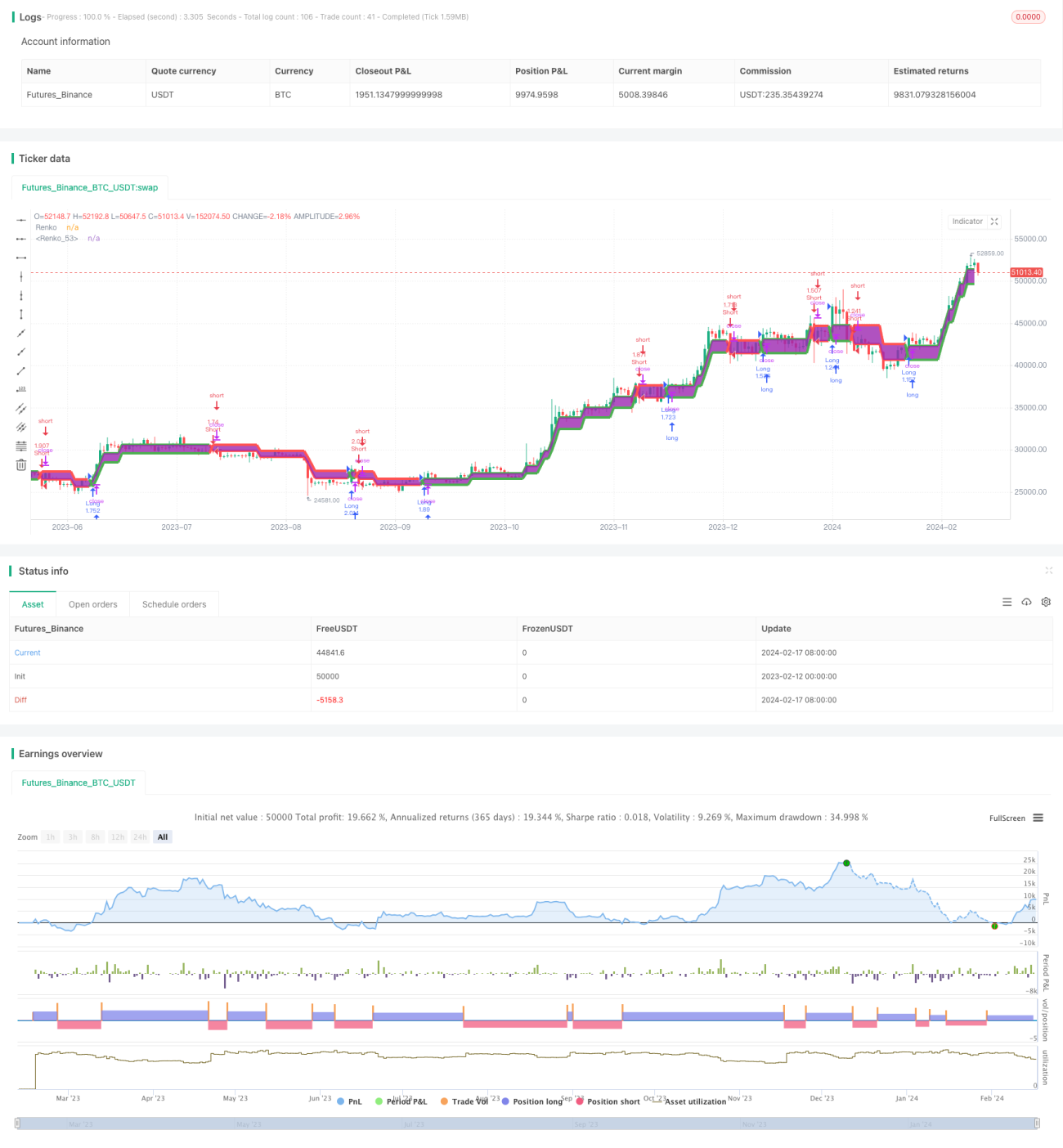
Esta estrategia determina los cambios en el momento del mercado simulando la formación de ladrillos, y abre posiciones largas o cortas según la dirección de los ladrillos.
Principio de la Estrategia
El núcleo de la estrategia consiste en calcular la relación entre el ATR y el precio de cierre para simular la formación de ladrillos. Específicamente, se definen dos variables: Brick1 y Brick2.
El cálculo de Brick1 es: si el precio de cierre supera el valor de Brick1 del día anterior + ATR, entonces Brick1 es igual al valor de Brick1 del día anterior + ATR; si el precio de cierre es inferior al valor de Brick1 del día anterior - ATR, entonces Brick1 es igual al valor de Brick1 del día anterior - ATR; de lo contrario, Brick1 hereda el valor de Brick1 del día anterior.
El cálculo de Brick2 es: si el valor de Brick1 es diferente del valor de Brick1 del día anterior, entonces Brick2 es igual al valor de Brick1 del día anterior; de lo contrario, hereda el valor de Brick2 del día anterior.
De esta manera se simula la formación de ladrillos. Cuando Brick1 sube más de un ATR, se forma un ladrillo alcista; cuando Brick1 baja más de un ATR, se forma un ladrillo bajista. Brick2 registra la posición del ladrillo anterior.
Cuando Brick1 y Brick2 cruzan al alza, indica que el ladrillo se expande hacia arriba, interpretándose como condición alcista; cuando Brick1 y Brick2 cruzan a la baja, indica que el ladrillo se contrae hacia abajo, interpretándose como condición bajista.
Ventajas de la Estrategia
- Utiliza el ATR para determinar la formación de ladrillos, evitando ladrillos de tamaño fijo y adaptándose dinámicamente a la volatilidad del mercado.
- Determina la dirección alcista o bajista mediante el cruce de ladrillos, identificando cambios en el momento.
- Permite ajustar la sensibilidad al momento del mercado modificando el período del ATR.
- Visualiza la formación y el cruce de ladrillos para interpretar intuitivamente la tendencia del mercado.
Riesgos de la Estrategia
- La elección del tamaño del ATR afecta la rentabilidad de la estrategia. Si el ATR es demasiado pequeño, se formarán demasiados ladrillos generando señales no válidas; si es demasiado grande, habrá pocos ladrillos y se podrían perder oportunidades.
- El comportamiento real del mercado puede no seguir el patrón de ladrillos, y las señales de cruce pueden ser invalidadas por reversiones.
- Es muy sensible a los costos de transacción; de lo contrario, el frecuente cruce de ladrillos reducirá significativamente la ganancia neta.
Se puede encontrar el período óptimo del ATR mediante optimización de parámetros; ajustar las estrategias de stop-loss y take-profit para reducir pérdidas por señales no válidas; y ampliar adecuadamente los activos negociados para mitigar el impacto de los costos en el rendimiento.
Optimización de la Estrategia
- Se pueden combinar otros indicadores para filtrar señales, como indicadores de volumen o de oscilación, para evitar señales no válidas.
- Añadir un filtro de tendencia, emitiendo señales solo en la dirección de la tendencia para evitar pérdidas por reversiones.
- Emplear métodos de optimización de parámetros con toda la muestra dentro del período de prueba para encontrar automáticamente los parámetros óptimos.
Resumen
Esta estrategia identifica la tendencia y el momento a corto y mediano plazo mediante la simulación dinámica del cruce de ladrillos, con una visualización intuitiva. La estrategia tiene un amplio margen de optimización, y la optimización de parámetros y el filtrado de señales pueden mejorar aún más su estabilidad.
- 1