Système de croisement de moyennes mobiles

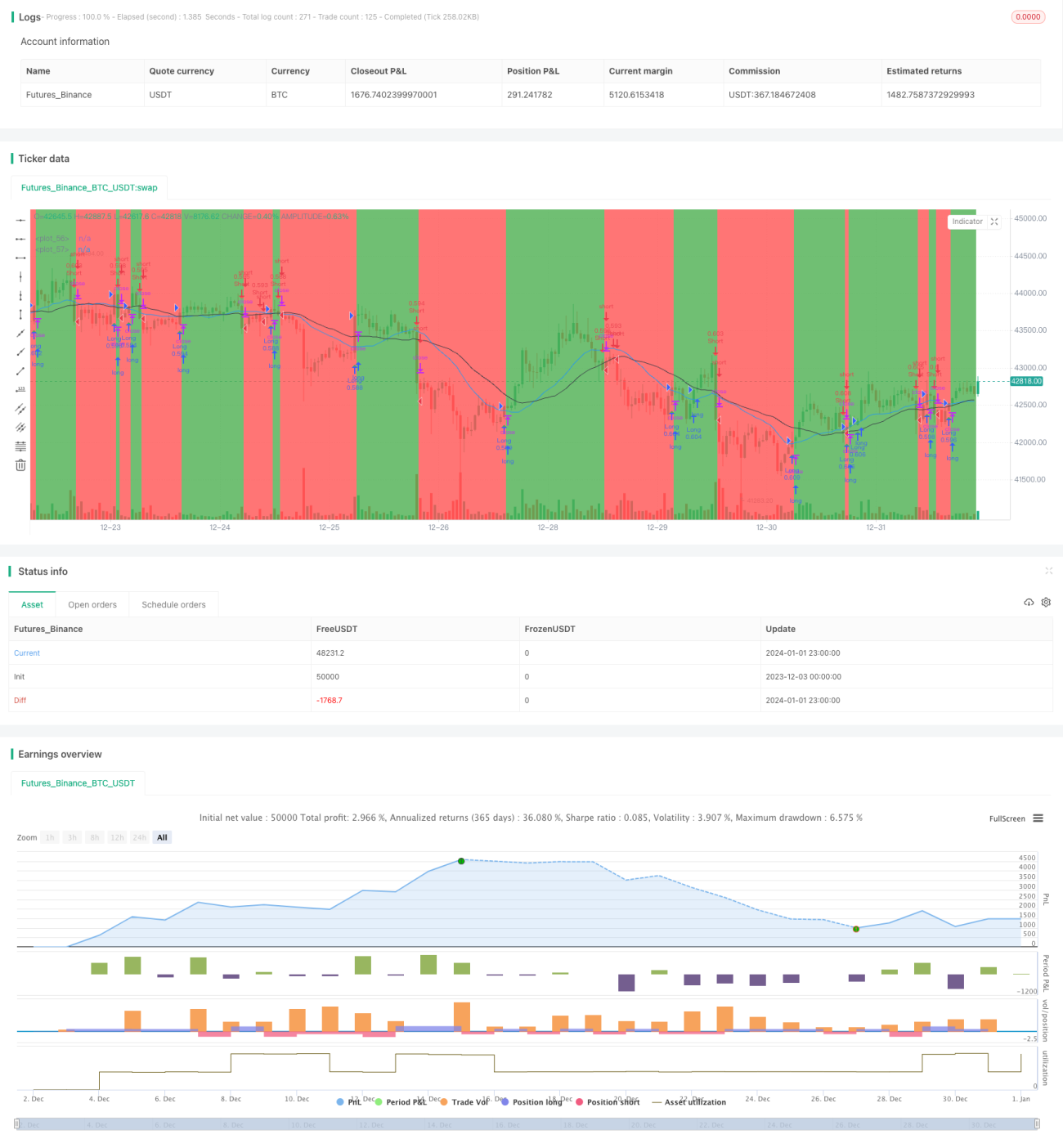
Aperçu
Cette stratégie est une stratégie de trading directionnel longue/courte qui se base sur les croisements de moyennes mobiles pour générer des signaux de trading. Lorsque la moyenne mobile rapide croise la moyenne mobile lente par le bas, un signal d’achat est généré ; lorsqu’elle la croise par le haut, un signal de vente est émis.
Principe de la stratégie
La stratégie utilise deux moyennes mobiles : une moyenne mobile simple sur 20 jours et une moyenne mobile simple sur 30 jours. Lorsque la moyenne mobile sur 20 jours croise la moyenne mobile sur 30 jours par le bas, un signal d’achat est généré ; lorsqu’elle la croise par le haut, un signal de vente est émis.
En tant qu’indicateur de tendance, la moyenne mobile permet de décrire efficacement la direction du marché. Le principe de croisement permet à la stratégie de capter rapidement les points de retournement de tendance et de former des signaux de trading. Les périodes de 20 et 30 jours sont bien choisies : elles reflètent la tendance du marché sans être trop sensibles, ce qui évite les faux signaux.
Analyse des avantages
Les principaux atouts de cette stratégie sont les suivants :
- Logique simple et claire, facile à comprendre et à mettre en œuvre, adaptée aux débutants ;
- Trading directionnel (dans le sens de la tendance), évite les positions contraires à la tendance et réduit les pertes inutiles ;
- La moyenne mobile elle‑même possède un effet de filtrage qui atténue le bruit du marché et évite les faux signaux ;
- Les paramètres de période sont raisonnables : pas trop sensibles, ce qui préserve la stabilité de la stratégie.
Analyse des risques
Les risques principaux sont les suivants :
- En cas de marché oscillant, les croisements de moyennes mobiles peuvent être fréquents et générer de nombreux ordres de stop‑loss ;
- En tendance, les moyennes mobiles présentent un retard, ce qui peut faire manquer une partie des profits ;
- Un mauvais réglage des paramètres peut nuire à la stabilité de la stratégie.
Solutions :
- Ajuster la période des moyennes mobiles ou utiliser des techniques comme la moyenne mobile triangulaire pour lisser la courbe et réduire la fréquence des croisements ;
- Ajouter d’autres indicateurs pour confirmer la tendance et éviter de trader en marché oscillant ;
- Optimiser les paramètres pour trouver la meilleure combinaison.
Pistes d’optimisation
La stratégie peut être améliorée sur plusieurs axes :
- Essayer différents types de moyennes mobiles (moyenne pondérée, moyenne triangulaire, etc.) ;
- Intégrer d’autres indicateurs techniques pour éviter les signaux en marché oscillant ;
- Combiner avec des méthodes d’analyse technique comme la théorie des vagues ou les canaux pour juger de la tendance ;
- Utiliser des modèles de machine learning pour optimiser les paramètres en temps réel ;
- Associer des outils quantitatifs et mettre en place des stratégies de stop‑loss et take‑profit pour améliorer la gestion du capital.
Résumé
Le système de croisement de moyennes mobiles est une stratégie de suivi de tendance simple et efficace. Son principe est clair, facile à comprendre et très adapté aux débutants. Cette stratégie repose sur les croisements dorés et mortels des moyennes mobiles pour générer des signaux de trading et profiter du mouvement directionnel. Elle peut être optimisée de multiples façons pour devenir plus stable et plus performante.
- 1