Strategi Regresi Sinterklas Dinamis

Ikhtisar
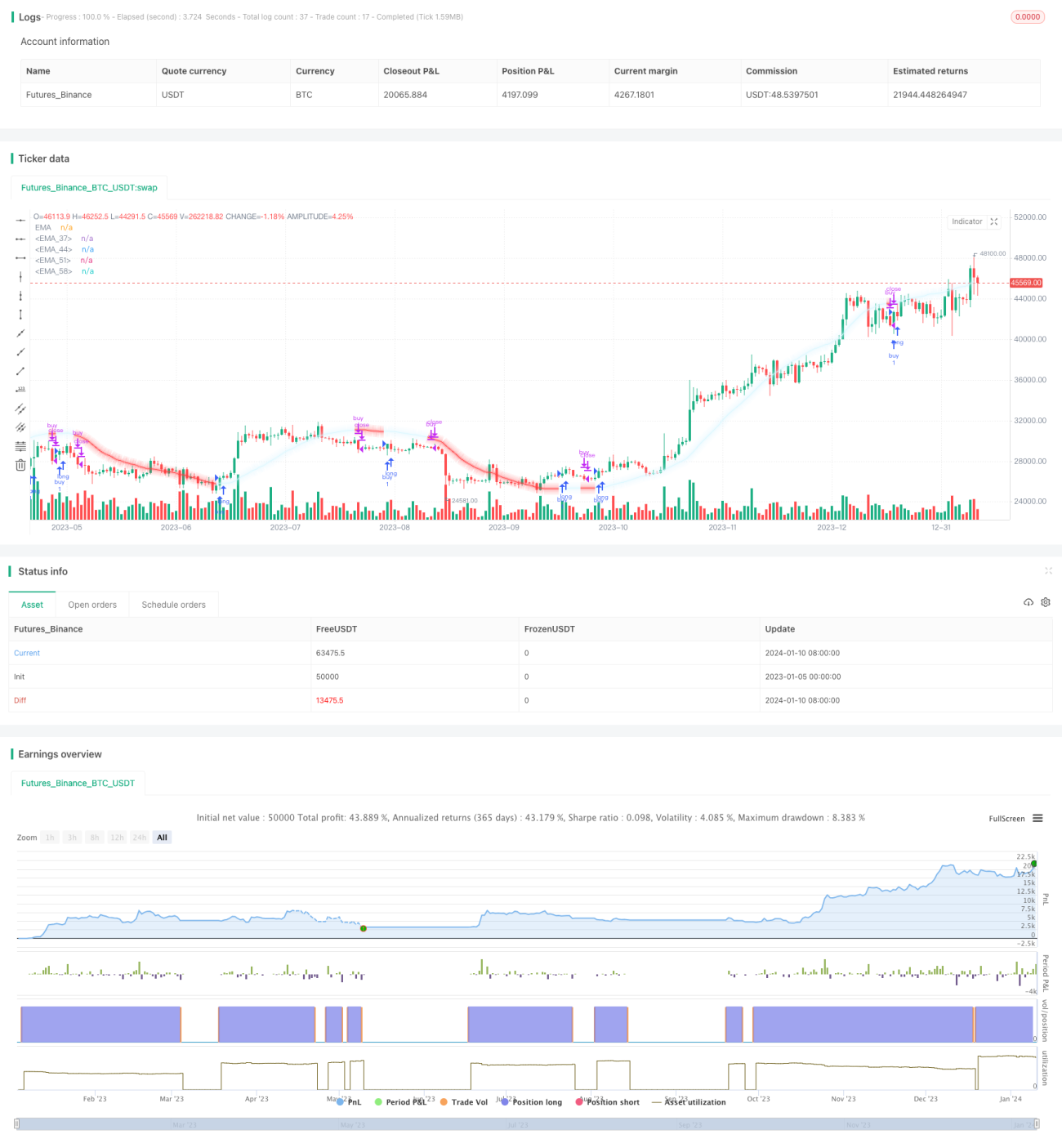
Strategi Regresi Sinterklas Dinamis adalah strategi perdagangan kuantitatif yang mengidentifikasi titik masuk dan keluar potensial berdasarkan hubungan regresi dinamis antara harga dan indeks batang. Strategi ini menggunakan parameter rata-rata bergerak dinamis dengan panjang yang dapat disesuaikan untuk menggambar garis tren regresi harga. Dengan menganalisis arah garis regresi, strategi menentukan apakah akan masuk atau keluar.
Prinsip Strategi
Inti dari strategi ini adalah menghitung hubungan regresi linier antara harga dan indeks batang. Pertama, hitung rata-rata bergerak sederhana dan standar deviasi dengan panjang N. Kemudian, berdasarkan koefisien korelasi sampel dan rasio standar deviasi, hitung kemiringan k dan intersep b dari garis regresi. Dengan demikian diperoleh persamaan regresi linier yang disesuaikan secara dinamis:
y = kx + b
di mana x adalah indeks batang, y adalah harga.
Berdasarkan perbandingan antara garis regresi saat ini dan sebelumnya, arah tren ditentukan. Jika garis regresi naik dan harga penutupan lebih tinggi dari harga pembukaan dan harga tertinggi sebelumnya, maka sinyal beli dihasilkan; jika garis regresi turun dan harga penutupan lebih rendah dari harga pembukaan dan harga terendah sebelumnya, maka sinyal jual dihasilkan.
Keunggulan Strategi
- Pengaturan parameter dinamis, dapat menyesuaikan nilai N untuk beradaptasi dengan perubahan harga pada periode yang berbeda
- Hubungan regresi mempertimbangkan pengaruh faktor waktu, lebih mencerminkan tren harga
- Menggabungkan berbagai kondisi untuk menghasilkan sinyal perdagangan, menghindari kesalahan
- Menampilkan tren regresi harga secara intuitif, mudah dibaca
Risiko dan Solusi
-
Nilai N tidak tepat, dapat menyebabkan garis regresi terlalu halus atau sensitif
- Solusi: Sesuaikan nilai N untuk menemukan titik keseimbangan optimal
-
Fluktuasi harga jangka pendek, penilaian regresi gagal
- Solusi: Gabungkan dengan indikator lain untuk memfilter titik masuk
-
Perbandingan hanya mempertimbangkan satu titik waktu, mungkin melewatkan ekstrem lokal
- Solusi: Tetapkan rentang yang longgar untuk menghindari kesalahan penilaian
Arah Optimalisasi
- Menambahkan mekanisme keluar dinamis, menyesuaikan titik stop loss berdasarkan hubungan regresi
- Menggabungkan indikator volume seperti volume perdagangan untuk verifikasi sinyal, mengurangi perdagangan yang salah
- Memanfaatkan pembelajaran mesin untuk mengoptimalkan parameter secara otomatis, beradaptasi dengan kondisi pasar yang lebih luas
- Menambahkan tampilan grafis untuk menyajikan hasil strategi secara lebih intuitif
Kesimpulan
Strategi Regresi Sinterklas Dinamis memanfaatkan hubungan regresi dinamis antara harga dan waktu untuk mewujudkan sistem perdagangan kuantitatif yang fleksibel, intuitif, dan dengan parameter yang dapat disesuaikan. Strategi ini memiliki logika yang jelas dan mudah dipahami, melalui optimalisasi parameter dapat diterapkan pada berbagai produk dan periode perdagangan. Inovasi dari strategi ini terletak pada pengenalan faktor waktu untuk membangun model dinamis, sehingga penilaian lebih bersifat tren. Secara keseluruhan, strategi ini menyediakan sampel yang layak dijadikan referensi untuk perdagangan kuantitatif.
- 1