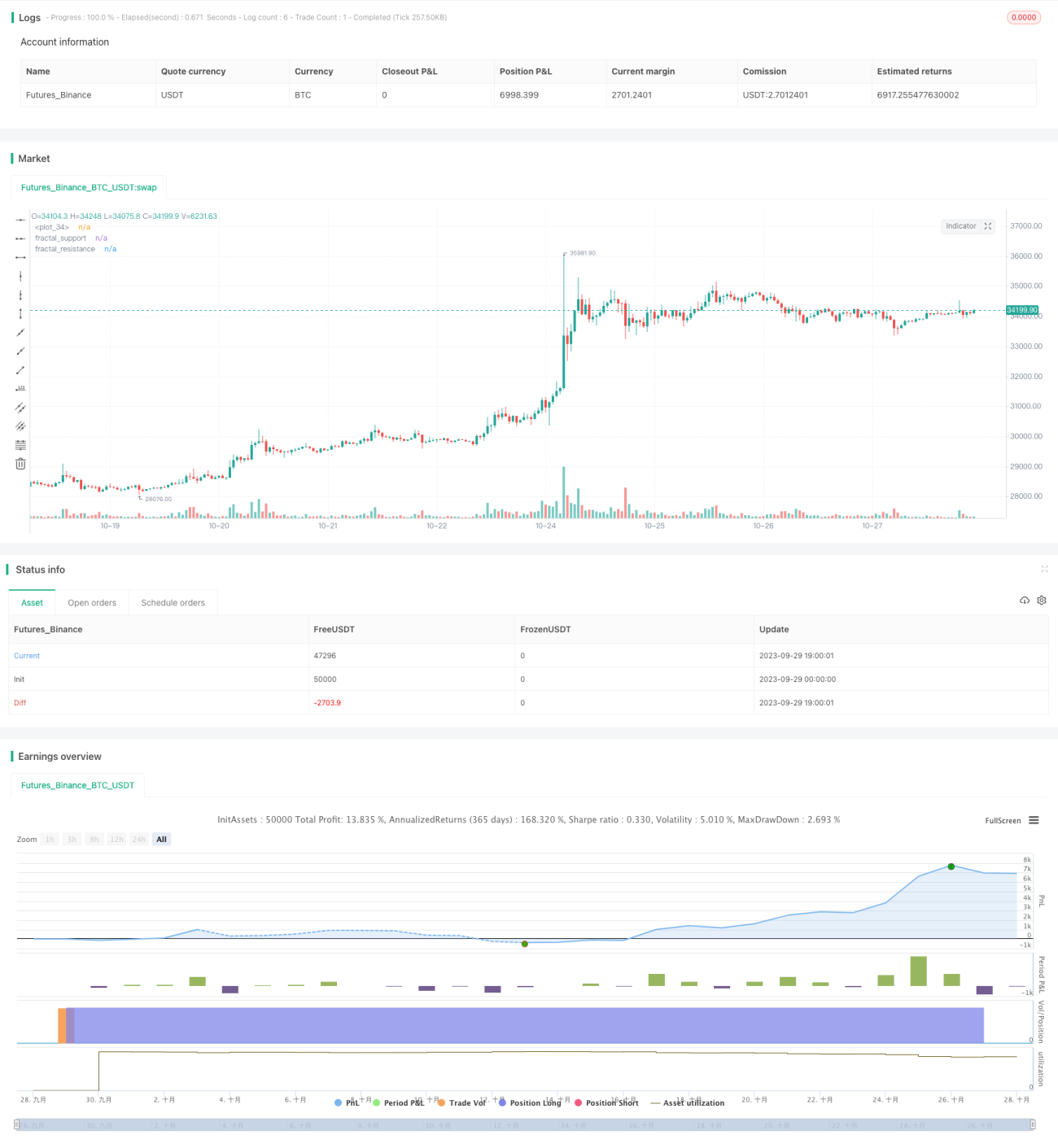
Chiến lược này dựa trên các chỉ số yếu tố nhiều không gian để thực hiện giao dịch đảo ngược, đồng thời thiết lập lợi ích mục tiêu. Cốt lõi của yếu tố nhiều không gian là hình thức mở rộng dựa trên khối lượng giao dịch.
Xác định yếu tố hỗ trợ / kháng cự dựa trên số lượng giao dịch
Sử dụng hình dạng K-line để xác định hỗ trợ / kháng cự cổ điển, lọc phá vỡ giả mạo cho khối lượng giao dịch lớn hơn
Hỗ trợ / kháng cự khái quát có tính bao gồm tốt hơn so với hình thức cổ điển
Tiến phá định nghĩa rộng được hỗ trợ bởi tín hiệu đa yếu tố, vượt qua định nghĩa rộng được kháng cự bởi tín hiệu không yếu tố
Giao dịch chuyển đổi
Sau khi phát ra tín hiệu nhân, thực hiện thao tác ngược
Nếu đã giữ vị thế, hãy giảm vị thế ngược hoặc mở vị thế ngược
Đặt mục tiêu lợi nhuận
Thiết lập dừng lỗ theo ATR
Thiết lập nhiều mục tiêu như 1R/2R/3R có lợi
Cắt giảm hàng loạt sau khi đạt được mục tiêu lợi nhuận khác nhau
Sự phá vỡ kháng cự hỗ trợ đại diện cho một tín hiệu đảo ngược xu hướng mạnh mẽ, có độ tin cậy nhất định, có thể bắt được sự đảo ngược lớn trong ngắn hạn.
Đặt mục tiêu dừng lỗ và lợi nhuận nhiều giai đoạn để đạt được lợi nhuận nhanh chóng và hạn chế việc rút cổ phiếu.
Chiến lược này phụ thuộc vào chỉ số khối lượng giao dịch, cần có đủ nguồn vốn của tổ chức để hỗ trợ xu hướng; đồng thời cần một số không gian dao động để tạo ra lợi nhuận.
Các hoạt động dừng lỗ, thoát ra và quay ngược vào thị trường có thể gây ra sự cố thường xuyên.
Khả năng kháng cự hỗ trợ không hoàn toàn đáng tin cậy, có khả năng đảo ngược thử nghiệm thất bại.
Chiến lược này hoàn toàn là đảo ngược, không tính đến việc theo dõi xu hướng và có thể bỏ lỡ cơ hội định hướng lớn hơn.
Kiểm soát gió
Các điều kiện yếu tố của giao dịch đảo ngược có thể được nới lỏng một cách thích hợp, không nhất thiết phải đảo ngược mỗi lần đột phá
Có thể kết hợp với các bộ lọc khác, chẳng hạn như giá lệch
Có thể tối ưu hóa chiến lược dừng lỗ để giảm khả năng bị mắc kẹt
Tối ưu hóa các tham số kháng cự hỗ trợ khái quát, xác định các yếu tố đáng tin cậy hơn
Bạn có thể thêm mục tiêu lợi nhuận ở nhiều cấp, hoặc có thể sử dụng mục tiêu lợi nhuận không cố định
Điều chỉnh tham số ATR hoặc sử dụng statistics để dừng lỗ, giảm chi phí giao dịch do dừng lỗ mạnh không cần thiết
Có thể đưa ra phán đoán xu hướng như đường trung bình, tránh đối đầu nghiêm trọng với xu hướng; cũng có thể đưa ra các yếu tố hỗ trợ khác
Cốt lõi của chiến lược này là sử dụng giao dịch đảo ngược để nắm bắt sự biến động lớn trong ngắn hạn. Ý tưởng chiến lược đơn giản và trực tiếp, hiệu quả thực tế tốt có thể đạt được bằng cách điều chỉnh tham số. Tuy nhiên, chiến lược đảo ngược khá quyết liệt, có một số rủi ro rút lại và được đặt, cần tối ưu hóa thêm chiến lược dừng lỗ và lợi nhuận, và kết hợp hợp hợp với phán đoán xu hướng để giảm tổn thất không cần thiết.
/*backtest
start: 2023-09-29 00:00:00
end: 2023-10-29 00:00:00
period: 1h
basePeriod: 15m
exchanges: [{"eid":"Futures_Binance","currency":"BTC_USDT"}]
*/
// This source code is subject to the terms of the Mozilla Public License 2.0 at https://mozilla.org/MPL/2.0/
// © DojiEmoji
//@version=5
strategy("Fractal Strat [KL] ", overlay=true, pyramiding=1, initial_capital=1000000000)
var string ENUM_LONG = "Long"
var string GROUP_ENTRY = "Entry"
var string GROUP_TSL = "Stop loss"
var string GROUP_TREND = "Trend prediction"
var string GROUP_ORDER = "Order size and Profit taking"
// backtest_timeframe_start = input.time(defval=timestamp("01 Apr 2000 13:30 +0000"), title="Backtest Start Time")
within_timeframe = true
// TSL: calculate the stop loss price. {
_multiple = input(2.0, title="ATR Multiplier for trailing stop loss", group=GROUP_TSL)
ATR_TSL = ta.atr(input(14, title="Length of ATR for trailing stop loss", group=GROUP_TSL, tooltip="Initial risk amount = atr(this length) x multiplier")) * _multiple
TSL_source = low
TSL_line_color = color.green
TSL_transp = 100
var stop_loss_price = float(0)
var float initial_entry_p = float(0)
var float risk_amt = float(0)
var float initial_order_size = float(0)
if strategy.position_size == 0 or not within_timeframe
TSL_line_color := color.black
stop_loss_price := TSL_source - ATR_TSL
else if strategy.position_size > 0
stop_loss_price := math.max(stop_loss_price, TSL_source - ATR_TSL)
TSL_transp := 0
plot(stop_loss_price, color=color.new(TSL_line_color, TSL_transp))
// } end of "TSL" block
// Order size and profit taking {
pcnt_alloc = input.int(5, title="Allocation (%) of portfolio into this security", tooltip="Size of positions is based on this % of undrawn capital. This is fixed throughout the backtest period.", minval=0, maxval=100, group=GROUP_ORDER) / 100
// Taking profits at user defined target levels relative to risked amount (i.e 1R, 2R, 3R)
var bool tp_mode = input(true, title="Take profit and different levels", group=GROUP_ORDER)
var float FIRST_LVL_PROFIT = input.float(1, title="First level profit", tooltip="Relative to risk. Example: entry at $10 and inital stop loss at $9. Taking first level profit at 1R means taking profits at $11", group=GROUP_ORDER)
var float SECOND_LVL_PROFIT = input.float(2, title="Second level profit", tooltip="Relative to risk. Example: entry at $10 and inital stop loss at $9. Taking second level profit at 2R means taking profits at $12", group=GROUP_ORDER)
var float THIRD_LVL_PROFIT = input.float(3, title="Third level profit", tooltip="Relative to risk. Example: entry at $10 and inital stop loss at $9. Taking third level profit at 3R means taking profits at $13", group=GROUP_ORDER)
// }
// Fractals {
// Modified from synapticEx's implementation: https://www.tradingview.com/script/cDCNneRP-Fractal-Support-Resistance-Fixed-Volume-2/
rel_vol_len = 6 // Relative volume is used; the middle candle has to have volume above the average (say sma over prior 6 bars)
rel_vol = ta.sma(volume, rel_vol_len)
_up = high[3]>high[4] and high[4]>high[5] and high[2]<high[3] and high[1]<high[2] and volume[3]>rel_vol[3]
_down = low[3]<low[4] and low[4]<low[5] and low[2]>low[3] and low[1]>low[2] and volume[3]>rel_vol[3]
fractal_resistance = high[3], fractal_support = low[3] // initialize
fractal_resistance := _up ? high[3] : fractal_resistance[1]
fractal_support := _down ? low[3] : fractal_support[1]
plot(fractal_resistance, "fractal_resistance", color=color.new(color.red,50), linewidth=2, style=plot.style_cross, offset =-3, join=false)
plot(fractal_support, "fractal_support", color=color.new(color.lime,50), linewidth=2, style=plot.style_cross, offset=-3, join=false)
// }
// ATR diversion test {
// Hypothesis testing (2-tailed):
//
// Null hypothesis (H0) and Alternative hypothesis (Ha):
// H0 : atr_fast equals atr_slow
// Ha : atr_fast not equals to atr_slow; implies atr_fast is either too low or too high
len_fast = input(5,title="Length of ATR (fast) for diversion test", group=GROUP_ENTRY)
atr_fast = ta.atr(len_fast)
atr_slow = ta.atr(input(50,title="Length of ATR (slow) for diversion test", group=GROUP_ENTRY, tooltip="This needs to be larger than Fast"))
// Calculate test statistic (test_stat)
std_error = ta.stdev(ta.tr, len_fast) / math.pow(len_fast, 0.5)
test_stat = (atr_fast - atr_slow) / std_error
// Compare test_stat against critical value defined by user in settings
//critical_value = input.float(1.645,title="Critical value", tooltip="Strategy uses 2-tailed test to compare atr_fast vs atr_slow. Null hypothesis (H0) is that both should equal. Based on the computed test statistic value, if absolute value of it is +/- this critical value, then H0 will be rejected.", group=GROUP_ENTRY)
conf_interval = input.string(title="Confidence Interval", defval="95%", options=["90%","95%","99%"], tooltip="Critical values of 1.645, 1.96, 2.58, for CI=90%/95%/99%, respectively; Under 2-tailed test to compare atr_fast vs atr_slow. Null hypothesis (H0) is that both should equal. Based on the computed test statistic value, if absolute value of it is +/- critical value, then H0 will be rejected.")
critical_value = conf_interval == "90%" ? 1.645 : conf_interval == "95%" ? 1.96 : 2.58
reject_H0_lefttail = test_stat < -critical_value
reject_H0_righttail = test_stat > critical_value
// } end of "ATR diversion test" block
// Entry Signals
entry_signal_long = close >= fractal_support and reject_H0_lefttail
// MAIN {
// Update the stop limit if strategy holds a position.
if strategy.position_size > 0
strategy.exit(ENUM_LONG, comment="SL", stop=stop_loss_price)
// Entry
if within_timeframe and entry_signal_long and strategy.position_size == 0
initial_entry_p := close
risk_amt := ATR_TSL
initial_order_size := math.floor(pcnt_alloc * strategy.equity / close)
strategy.entry(ENUM_LONG, strategy.long, qty=initial_order_size)
var int TP_taken_count = 0
if tp_mode and close > strategy.position_avg_price
if close >= initial_entry_p + THIRD_LVL_PROFIT * risk_amt and TP_taken_count == 2
strategy.close(ENUM_LONG, comment="TP Lvl3", qty=math.floor(initial_order_size / 3))
TP_taken_count := TP_taken_count + 1
else if close >= initial_entry_p + SECOND_LVL_PROFIT * risk_amt and TP_taken_count == 1
strategy.close(ENUM_LONG, comment="TP Lvl2", qty=math.floor(initial_order_size / 3))
TP_taken_count := TP_taken_count + 1
else if close >= initial_entry_p + FIRST_LVL_PROFIT * risk_amt and TP_taken_count == 0
strategy.close(ENUM_LONG, comment="TP Lvl1", qty=math.floor(initial_order_size / 3))
TP_taken_count := TP_taken_count + 1
// Alerts
_atr = ta.atr(14)
alert_helper(msg) =>
prefix = "[" + syminfo.root + "] "
suffix = "(P=" + str.tostring(close, "#.##") + "; atr=" + str.tostring(_atr, "#.##") + ")"
alert(str.tostring(prefix) + str.tostring(msg) + str.tostring(suffix), alert.freq_once_per_bar)
if strategy.position_size > 0 and ta.change(strategy.position_size)
if strategy.position_size > strategy.position_size[1]
alert_helper("BUY")
else if strategy.position_size < strategy.position_size[1]
alert_helper("SELL")
// Clean up - set the variables back to default values once no longer in use
if ta.change(strategy.position_size) and strategy.position_size == 0
TP_taken_count := 0
initial_entry_p := float(0)
risk_amt := float(0)
initial_order_size := float(0)
stop_loss_price := float(0)
// } end of MAIN block