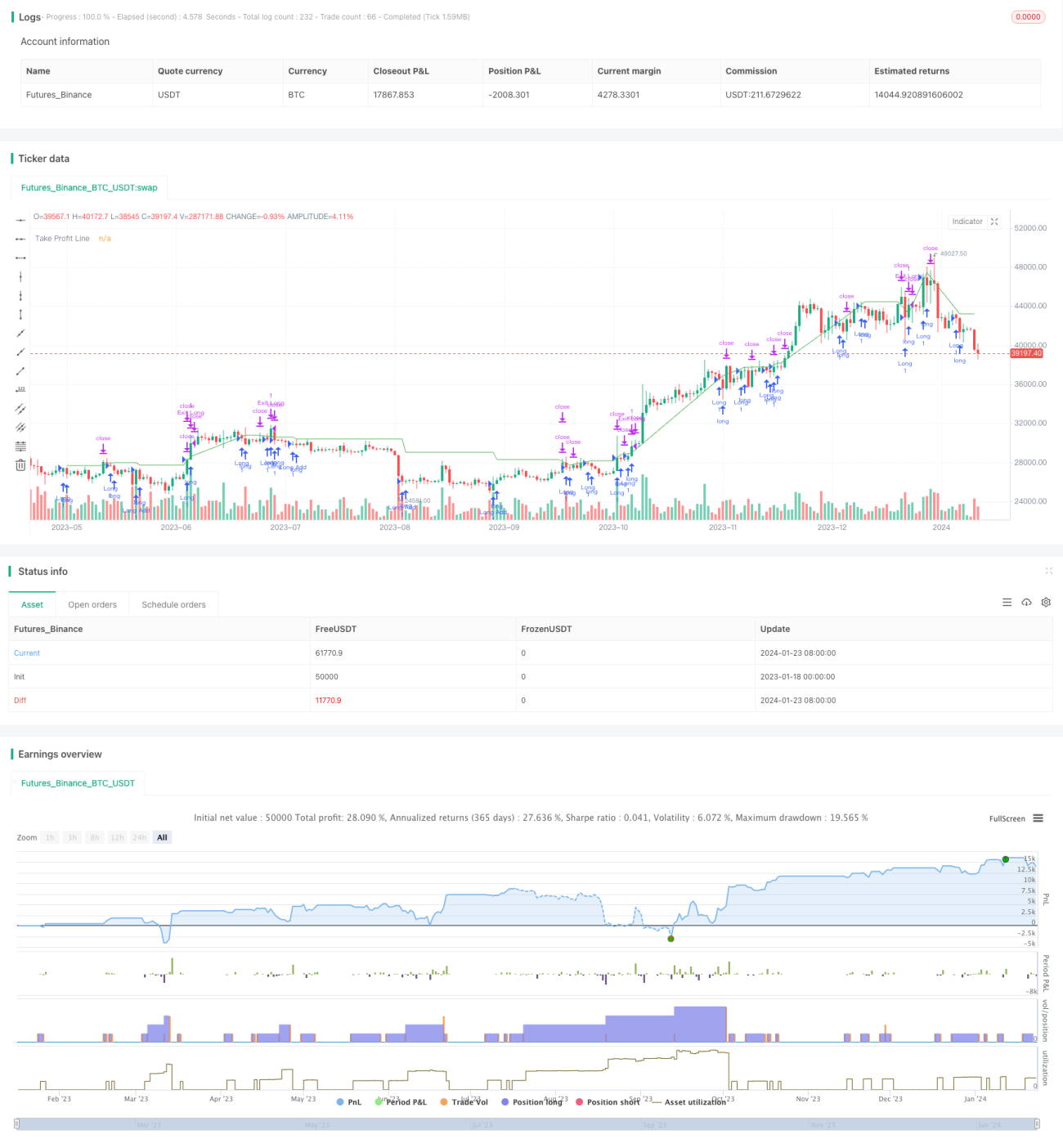
Die Strategie ist eine Multi-Faktor-Quantitative-Trading-Strategie, die mehrere technische Indikatoren wie RSI, MACD, OBV, CCI, CMF, MFI und VWMACD kombiniert, um einen automatisierten Quantifizierungs-Trading von Aktien zu ermöglichen. Die Strategie wird als “Quantitative Multi-Faktor-Hochspielstrategie” bezeichnet.
Die Kernlogik der Strategie besteht darin, nach der Form von mehreren technischen Indikatoren zu urteilen und einen Kauf zu tätigen, wenn mehrere Indikatoren gleichzeitig ein Kaufsignal senden.
Die RSI, MACD, OBV, CCI, CMF, MFI und VWMACD-Indikatoren in der Strategie erkennen, ob sie in einem Abwärtstrend sind, aber die Indikatorenwerte selbst nicht fallen. Wenn dies der Fall ist, kann dies auf eine bevorstehende Aufwärtswende hindeuten.
Darüber hinaus wurde die Logik der Beurteilung von außergewöhnlichen Transaktionsmengen eingeführt. Wenn der Preis schwankt, aber die Transaktionsmengen nicht deutlich erhöht sind, ist es wahrscheinlich, dass es sich um einen falschen Durchbruch handelt, der auch ein Kaufsignal auslöst.
Insgesamt verbessert die Strategie die Entscheidungsgenauigkeit durch die Beobachtung von Umkehrsignalen in mehreren technischen Indikatoren und kombiniert mit einer außergewöhnlichen Beurteilung des Umsatzes, was der Schlüssel zum Erfolg der quantitativen Handelsstrategie ist.
Die Strategie hat folgende Vorteile:
Das Multi-Faktor-Modell kombiniert die Signale von sieben gängigen technischen Indikatoren und verbessert die Genauigkeit von Handelsentscheidungen.
Durch die Einführung von Umkehrsignalen im Verkehrsbetrieb wird vermieden, dass falsche Durchbrüche getäuscht werden und die ungültigen Signale gefiltert werden.
Der Wert der Aktien wird von den Aktien der anderen Aktien ausgesucht, um die Zeit zu erfassen, in der die Aktien wieder ansteigen.
Automatische Transaktionen ohne menschliche Intervention reduzieren die Betriebskosten erheblich.
Die Strategie ist klar und einfach zu verstehen, zu ändern und zu optimieren.
Die Strategie birgt auch einige Risiken:
Eine falsche Kombination von mehreren Faktoren kann zu einem Konflikt zwischen den Handelssignalen führen. Die Parameter für die einzelnen Faktoren müssen getestet und angepasst werden, um die optimale Konfiguration zu finden.
Reverse-Trading ist mit einem gewissen Risiko verbunden. Es besteht die Möglichkeit, dass es erneut umgedreht wird. Sie können einen Stop-Loss-Punkt einrichten, um das Risiko zu kontrollieren.
Der VOLUME-Indikator kann für einige Aktien mit geringer Liquidität unwirksam sein, wodurch die VOLUME-Gewichtung verringert oder diese Aktien ausgeschlossen werden können.
Bei der Rückmessung funktioniert die Anpassung der Daten gut, die Leistung in der Echtzeit kann schlechter sein. Es ist notwendig, mehr Echtzeitdaten zu sammeln, um sie zu testen.
Die Strategie kann in folgenden Bereichen weiter optimiert werden:
Hinzufügen oder Entfernen einiger technischer Kennzahlen, um das optimal konfigurierte Multifaktormodell zu finden.
Verschiedene Parameter oder Gewichte für verschiedene Aktienarten, um die Strategie gezielt zu nutzen.
Setzen Sie dynamische Stop-Losses, bewegen Sie Stop-Stops, um Gewinne zu sichern und Risiken zu kontrollieren.
Aktienhandel in bestimmten Sektoren, kombiniert mit Informationen über Branchen, Konzepte usw.
Mit Hilfe von Machine Learning-Algorithmen werden die Parameter automatisch optimiert.
Diese Strategie ist insgesamt eine sehr potenzielle Quantifizierungs-Handelsstrategie. Sie kombiniert mehrere technische Kennzeichensignale, ergänzt durch quantitative Rückschlüsse, um die Chancen für eine Aktienumkehr zu erkennen und den Handel zu automatisieren. Nach der Optimierung der Parameter und der Risikokontrolle wird eine bessere Rendite erwartet.
/*backtest
start: 2023-01-18 00:00:00
end: 2024-01-24 00:00:00
period: 1d
basePeriod: 1h
exchanges: [{"eid":"Futures_Binance","currency":"BTC_USDT"}]
*/
// This Pine Script™ code is subject to the terms of the Mozilla Public License 2.0 at https://mozilla.org/MPL/2.0/
// © mkose81
//@version=5
strategy("MK future stopsuz 40 alım (Sadece Long)", overlay=true, max_bars_back=4000,use_bar_magnifier= true,pyramiding=40)
// RSI Hesaplama
rsi = ta.rsi(close, 14)
float botRSI = na
botRSI := ta.pivotlow(5, 5)
botcRSI = 0
botcRSI := botRSI ? 5 : nz(botcRSI[1]) + 1
newbotRSI = ta.pivotlow(5, 0)
emptylRSI = true
if not na(newbotRSI) and newbotRSI < low[botcRSI]
diffRSI = (newbotRSI - low[botcRSI]) / botcRSI
llineRSI = newbotRSI - diffRSI
for x = 1 to botcRSI - 1 by 1
if close[x] < llineRSI
emptylRSI := false
break
llineRSI -= diffRSI
emptylRSI
// Pozitif Uyumsuzluk Alım Sinyali - RSI
alRSI = 0
if emptylRSI and not na(newbotRSI)
if rsi[botcRSI] < rsi
alRSI := 1
// MACD Hesaplama
[macd, signal, _] = ta.macd(close, 21, 55, 8)
float botMACD = na
botMACD := ta.pivotlow(5, 5)
botcMACD = 0
botcMACD := botMACD ? 5 : nz(botcMACD[1]) + 1
newbotMACD = ta.pivotlow(5, 0)
emptylMACD = true
if not na(newbotMACD) and newbotMACD < low[botcMACD]
diffMACD = (newbotMACD - low[botcMACD]) / botcMACD
llineMACD = newbotMACD - diffMACD
for x = 1 to botcMACD - 1 by 1
if close[x] < llineMACD
emptylMACD := false
break
llineMACD -= diffMACD
emptylMACD
// Pozitif Uyumsuzluk Alım Sinyali - MACD
alMACD = 0
if emptylMACD and not na(newbotMACD)
if macd[botcMACD] < macd
alMACD := 1
// OBV Hesaplama ve Uyumsuzluk Tespiti
obv = ta.cum(ta.change(close) > 0 ? volume : ta.change(close) < 0 ? -volume : 0)
float botOBV = na
botOBV := ta.pivotlow(5, 5)
botcOBV = 0
botcOBV := botOBV ? 5 : nz(botcOBV[1]) + 1
newbotOBV = ta.pivotlow(5, 0)
emptylOBV = true
if not na(newbotOBV) and newbotOBV < obv[botcOBV]
diffOBV = (newbotOBV - obv[botcOBV]) / botcOBV
llineOBV = newbotOBV - diffOBV
for x = 1 to botcOBV - 1 by 1
if obv[x] < llineOBV
emptylOBV := false
break
llineOBV -= diffOBV
emptylOBV
// Pozitif Uyumsuzluk Alım Sinyali - OBV
alOBV = 0
if emptylOBV and not na(newbotOBV)
if obv[botcOBV] < obv
alOBV := 1
// CCI Hesaplama ve Uyumsuzluk Tespiti
cci = ta.cci(close, 20)
float botCCI = na
botCCI := ta.pivotlow(5, 5)
botcCCI = 0
botcCCI := botCCI ? 5 : nz(botcCCI[1]) + 1
newbotCCI = ta.pivotlow(5, 0)
emptylCCI = true
if not na(newbotCCI) and newbotCCI < cci[botcCCI]
diffCCI = (newbotCCI - cci[botcCCI]) / botcCCI
llineCCI = newbotCCI - diffCCI
for x = 1 to botcCCI - 1 by 1
if cci[x] < llineCCI
emptylCCI := false
break
llineCCI -= diffCCI
emptylCCI
// Pozitif Uyumsuzluk Alım Sinyali - CCI
alCCI = 0
if emptylCCI and not na(newbotCCI)
if cci[botcCCI] < cci
alCCI := 1
// CMF Hesaplama
length = 20
mfm = ((close - low) - (high - close)) / (high - low)
mfv = mfm * volume
cmf = ta.sma(mfv, length) / ta.sma(volume, length)
float botCMF = na
botCMF := ta.pivotlow(5, 5)
botcCMF = 0
botcCMF := botCMF ? 5 : nz(botcCMF[1]) + 1
newbotCMF = ta.pivotlow(5, 0)
emptylCMF = true
if not na(newbotCMF) and newbotCMF < cmf[botcCMF]
diffCMF = (newbotCMF - cmf[botcCMF]) / botcCMF
llineCMF = newbotCMF - diffCMF
for x = 1 to botcCMF - 1 by 1
if cmf[x] < llineCMF
emptylCMF := false
break
llineCMF -= diffCMF
emptylCMF
// Pozitif Uyumsuzluk Alım Sinyali - CMF
alCMF = 0
if emptylCMF and not na(newbotCMF)
if cmf[botcCMF] < cmf
alCMF := 1
// MFI Hesaplama
lengthMFI = 14
mfi = ta.mfi(close, lengthMFI)
float botMFI = na
botMFI := ta.pivotlow(mfi, 5, 5)
botcMFI = 0
botcMFI := botMFI ? 5 : nz(botcMFI[1]) + 1
newbotMFI = ta.pivotlow(mfi, 5, 0)
emptylMFI = true
if not na(newbotMFI) and newbotMFI < mfi[botcMFI]
diffMFI = (newbotMFI - mfi[botcMFI]) / botcMFI
llineMFI = newbotMFI - diffMFI
for x = 1 to botcMFI - 1 by 1
if mfi[x] < llineMFI
emptylMFI := false
break
llineMFI -= diffMFI
emptylMFI
// Pozitif Uyumsuzluk Alım Sinyali - MFI
alMFI = 0
if emptylMFI and not na(newbotMFI)
if mfi[botcMFI] < mfi
alMFI := 1
// VWMACD Hesaplama
fastLength = 12
slowLength = 26
signalSmoothing = 9
vwmacd = ta.ema(close, fastLength) - ta.ema(close, slowLength)
signalLine = ta.ema(vwmacd, signalSmoothing)
histogram = vwmacd - signalLine
// VWMACD Uyumsuzluk Tespiti
float botVWMACD = na
botVWMACD := ta.pivotlow(histogram, 5, 5)
botcVWMACD = 0
botcVWMACD := botVWMACD ? 5 : nz(botcVWMACD[1]) + 1
newbotVWMACD = ta.pivotlow(histogram, 5, 0)
emptylVWMACD = true
if not na(newbotVWMACD) and newbotVWMACD < histogram[botcVWMACD]
diffVWMACD = (newbotVWMACD - histogram[botcVWMACD]) / botcVWMACD
llineVWMACD = newbotVWMACD - diffVWMACD
for x = 1 to botcVWMACD - 1 by 1
if histogram[x] < llineVWMACD
emptylVWMACD := false
break
llineVWMACD -= diffVWMACD
emptylVWMACD
// Pozitif Uyumsuzluk Alım Sinyali - VWMACD
alVWMACD = 0
if emptylVWMACD and not na(newbotVWMACD)
if histogram[botcVWMACD] < histogram
alVWMACD := 1
//Dipci indikator
lengthd= 130
coef = 0.2
vcoef = 2.5
signalLength = 5
smoothVFI = false
ma(x, y) =>
smoothVFI ? ta.sma(x, y) : x
typical = hlc3
inter = math.log(typical) - math.log(typical[1])
vinter = ta.stdev(inter, 30)
cutoff = coef * vinter * close
vave = ta.sma(volume, lengthd)[1]
vmax = vave * vcoef
vc = volume < vmax ? volume : vmax //min( volume, vmax )
mf = typical - typical[1]
iff_4 = mf < -cutoff ? -vc : 0
vcp = mf > cutoff ? vc : iff_4
vfi = ma(math.sum(vcp, lengthd) / vave, 3)
vfima = ta.ema(vfi, signalLength)
d = vfi - vfima
// Kullanıcı girdileri
volatilityThreshold = input.float(1.005, title="Volume Percentage Threshold")
pinThreshold = input.float(1.005, title="Deep Percentage Threshold")
// Hesaplamalar
volatilityPercentage = (high - low) / open
pinPercentage = close > open ? (high - close) / open : (close - low) / open
// Volatilite koşulu ve VFI ile filtreleme
voldip = volatilityPercentage >= volatilityThreshold or pinPercentage >= pinThreshold
volCondition = voldip and vfi< 0 // VFI değeri 0'dan küçükse volCondition aktif olacak
threeCommasEntryComment = input.string(title="3Commas Entry Comment", defval="")
threeCommasExitComment = input.string(title="3Commas Exit Comment", defval="")
takeProfitPerc = input.float(1, title="Take Profit Percentage (%)") / 100
fallPerc = input.float(5, title="Percentage for Additional Buy (%)") / 100
// Değişkenlerin tanımlanması
var float lastBuyPrice = na
var float tpPrice = na
var int lastTpBar = na
// Alım koşulları
longCondition = alRSI or alMACD or alOBV or alCCI or alCMF or alMFI or alVWMACD or volCondition
// Son alım fiyatını saklamak için değişken
// İlk alım stratejisi
if (longCondition and strategy.position_size == 0)
strategy.entry("Long", strategy.long, comment=threeCommasEntryComment)
lastBuyPrice := open
// İkinci ve sonraki alım koşulları (son alım fiyatının belirlenen yüzde altında)
if (open < lastBuyPrice * (1 - fallPerc) and strategy.position_size > 0)
strategy.entry("Long Add", strategy.long, comment=threeCommasEntryComment)
lastBuyPrice := open
// Kar alma fiyatını hesaplama ve strateji çıkışı
tp_price = strategy.position_avg_price * (1 + takeProfitPerc)
if strategy.position_size > 0
strategy.exit("Exit Long", "Long", limit=tp_price, comment=threeCommasExitComment)
strategy.exit("Exit Long Add", "Long Add", limit=tp_price, comment=threeCommasExitComment)
tpPrice := na // Pozisyon kapandığında TP çizgisini sıfırla
// Kar alma seviyesi çizgisi çizme
plot(strategy.position_size > 0 ? tp_price : na, color=color.green, title="Take Profit Line")