Stratégie quantitative sur l'indice de volatilité de la théorie du rendement


Date de création: 2024-02-05 13:54:34 Dernière modification: 2024-02-05 13:54:34
Copier: 0 Nombre de clics: 583
1
Suivre
1617
Abonnés

Stratégie quantitative sur l’indice de volatilité de la théorie du rendement

Aperçu

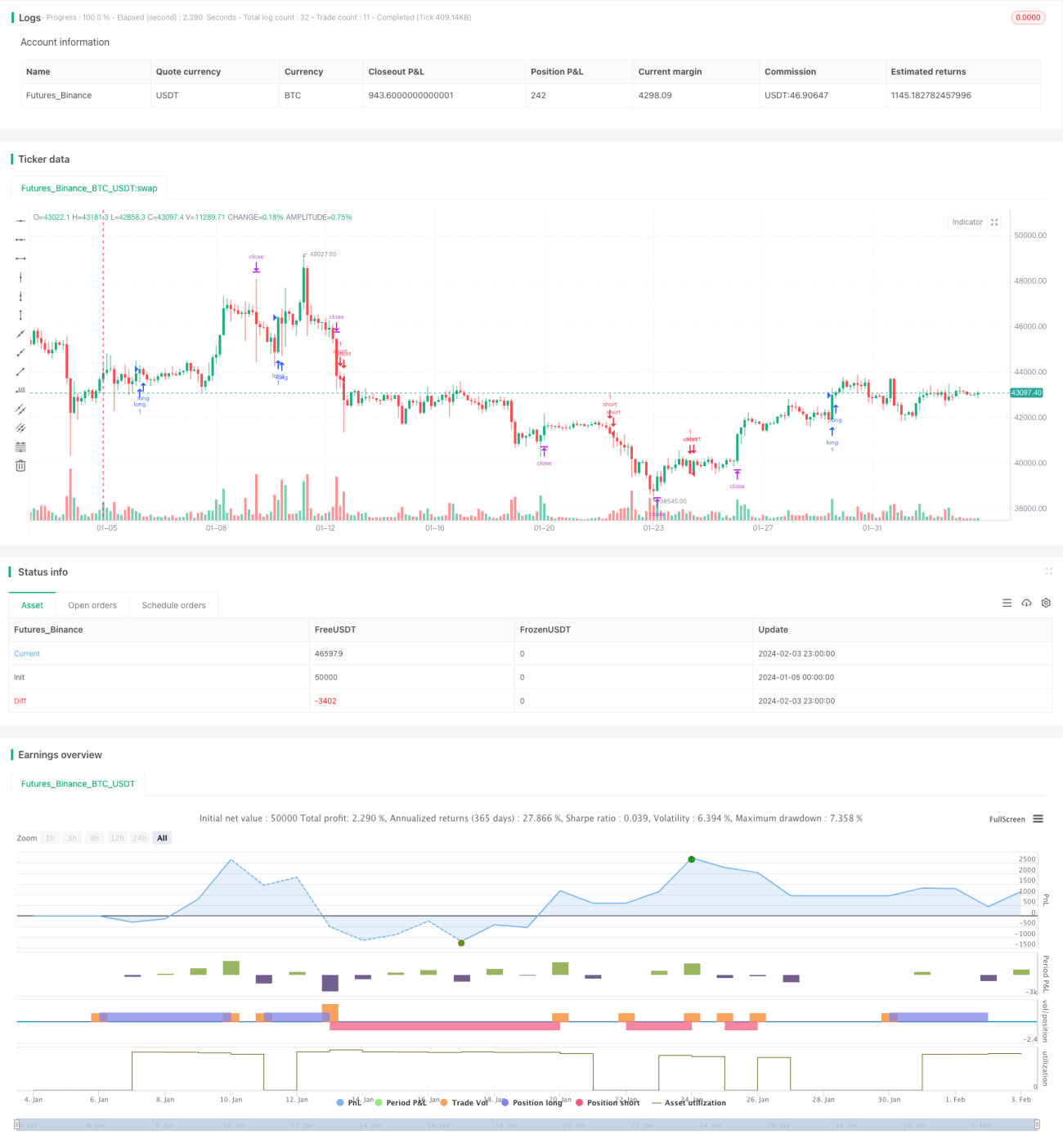
La stratégie utilise un système de notation d’indicateurs techniques pour choisir dynamiquement le moment de l’achat et de la vente en le comparant à une moyenne mobile. La stratégie contient des positions longues et des positions vides, qui peuvent être activées ou désactivées de manière personnalisée. La stratégie est favorable aux transactions à long terme à faible risque.

Principe de stratégie

Cette stratégie, combinée à plusieurs méthodes de notation d’indicateurs techniques, permet d’évaluer le timing du marché en temps réel. Elle comprend principalement les étapes suivantes:

  1. Calculer plusieurs moyennes mobiles, y compris SMA, EMA, Hull MA et les moyennes mobiles pondérées VWMA, etc. Le niveau de la volatilité est évalué en le comparant aux prix actuels.
  2. Calculer une série d’indicateurs de choc, y compris le RSI, le CCI, le MACD, l’indicateur William% R, l’indicateur aléatoire, etc.; juger de la différence entre le taux de choc et le taux de choc.
  3. La méthode de notation des indicateurs techniques combine les résultats des deux indicateurs ci-dessus et donne le signal de fonctionnement final. La valeur absolue du signal supérieure à 0,5 est un signal fort et 0.1-0.5 est un signal faible.
  4. Selon le signal de l’opération finale, la stratégie peut faire plus ou faire moins. En même temps, la logique d’arrêt de la perte et de l’arrêt de la sortie est définie.

L’avantage de la stratégie réside dans le fait que la méthode de notation des indicateurs permet de juger de manière plus globale du moment du marché et est plus fiable qu’un seul indicateur. De plus, les paramètres personnalisés permettent de choisir librement la catégorie d’indicateur de notation, ce qui permet de personnaliser la stratégie.

Analyse des avantages

  1. La combinaison d’un large éventail d’indicateurs techniques permet une évaluation plus complète et plus fiable de l’échéance du marché.
  2. La mise en place d’arrêts et de freins dynamiques aide à réduire le risque de perte
  3. Composants de notation de l’indicateur personnalisables permettant des opérations personnalisées sur la stratégie
  4. Soutenir les deux axes de la sur- et de la sous-traitance pour s’adapter à un environnement de marché plus large
  5. Vous pouvez choisir d’activer ou non une direction de transaction, réduisant ainsi le nombre de transactions inutiles.

Analyse des risques

  1. Le système de notation des indicateurs, qui sert de base à la prise de décision, est lui-même subjectif.
  2. Certains indicateurs de choc sont inexacts pour juger des hauts et des bas de l’innovation
  3. La pondération des indicateurs techniques doit être évaluée en détail afin d’optimiser la notation
  4. Les calculs de masse augmentent le volume de calcul de la stratégie et peuvent affecter l’efficacité opérationnelle
  5. Attention à la rentabilité globale des opérations à long terme et à la prévention des transactions excessives

La principale solution à ces risques est d’optimiser la pondération des indicateurs de notation, en testant à plusieurs reprises les données historiques et en choisissant les paramètres les plus avantageux. Une réduction appropriée du nombre d’indicateurs de notation peut également améliorer l’efficacité opérationnelle.

Direction d’optimisation

Cette stratégie peut être optimisée dans les domaines suivants:

  1. Évaluer l’efficacité de chaque indicateur technique et optimiser le choix de l’indicateur dans la méthode de notation
  2. Adaptation des poids de notation et des seuils de force et de faiblesse des signaux pour les indicateurs techniques
  3. Optimisation des paramètres du stop loss mobile pour une meilleure maîtrise des risques de transaction
  4. Définition des paramètres d’indicateur optimaux en fonction des caractéristiques des différentes variétés
  5. Augmentation des signaux de notation des indicateurs de jugement par l’ajout de l’apprentissage automatique

Grâce à l’optimisation des paramètres, la stratégie peut être adaptée de manière ciblée à un plus grand nombre de variétés du marché, ce qui permet d’obtenir un meilleur rendement des revenus.

Résumer

Cette stratégie utilise une méthode d’évaluation d’indicateurs techniques pour déterminer le moment où le marché fait plus de blanchiment. La stratégie présente des avantages tels que la personnalisation du choix des indicateurs, le stop-loss dynamique et la possibilité de choisir la direction d’ouverture des transactions.

Code source de la stratégie
/*backtest
start: 2024-01-05 00:00:00
end: 2024-02-04 00:00:00
period: 3h
basePeriod: 15m
exchanges: [{"eid":"Futures_Binance","currency":"BTC_USDT"}]
*/

//@version=4
strategy(title="Ratings", shorttitle="Ratings", default_qty_type = strategy.percent_of_equity, default_qty_value = 100, commission_value = 0.1, overlay=true)

//Settings
useLong = input(true, title = "Long")
useShort = input(true, title = "Short")
res = input("", title="Indicator Timeframe", type=input.resolution)
ratingSignal = input(defval = "All", title = "Rating is based on", options = ["MAs", "Oscillators", "All"])
startTime = input(defval = timestamp("01 Jan 2000 00:00 +0000"), title = "Start Time", type = input.time, inline = "time1")
finalTime = input(defval = timestamp("31 Dec 2099 23:59 +0000"), title = "Final Time", type = input.time, inline = "time1")
trueTime = true

// Awesome Oscillator
AO() => 
    sma(hl2, 5) - sma(hl2, 34)
// Stochastic RSI
StochRSI() =>
    rsi1 = rsi(close, 14)
    K = sma(stoch(rsi1, rsi1, rsi1, 14), 3)
    D = sma(K, 3)
    [K, D]
// Ultimate Oscillator
tl() => close[1] < low ? close[1]: low
uo(ShortLen, MiddlLen, LongLen) =>
    Value1 = sum(tr, ShortLen)
    Value2 = sum(tr, MiddlLen)
    Value3 = sum(tr, LongLen)
    Value4 = sum(close - tl(), ShortLen)
    Value5 = sum(close - tl(), MiddlLen)
    Value6 = sum(close - tl(), LongLen)
    float UO = na
    if Value1 != 0 and Value2 != 0 and Value3 != 0
        var0 = LongLen / ShortLen
        var1 = LongLen / MiddlLen
        Value7 = (Value4 / Value1) * (var0)
        Value8 = (Value5 / Value2) * (var1)
        Value9 = (Value6 / Value3)
        UO := (Value7 + Value8 + Value9) / (var0 + var1 + 1)
    UO
// Ichimoku Cloud
donchian(len) => avg(lowest(len), highest(len))
ichimoku_cloud() =>
    conversionLine = donchian(9)
    baseLine = donchian(26)
    leadLine1 = avg(conversionLine, baseLine)
    leadLine2 = donchian(52)
    [conversionLine, baseLine, leadLine1, leadLine2]
    
calcRatingMA(ma, src) => na(ma) or na(src) ? na : (ma == src ? 0 : ( ma < src ? 1 : -1 ))
calcRating(buy, sell) => buy ? 1 : ( sell ? -1 : 0 )
calcRatingAll() =>
    //============== MA =================
    SMA10 = sma(close, 10)
    SMA20 = sma(close, 20)
    SMA30 = sma(close, 30)
    SMA50 = sma(close, 50)
    SMA100 = sma(close, 100)
    SMA200 = sma(close, 200)
    
    EMA10 = ema(close, 10)
    EMA20 = ema(close, 20)
    EMA30 = ema(close, 30)
    EMA50 = ema(close, 50)
    EMA100 = ema(close, 100)
    EMA200 = ema(close, 200)
    
    HullMA9 = hma(close, 9)
    
    // Volume Weighted Moving Average (VWMA)
    VWMA = vwma(close, 20)
    
    [IC_CLine, IC_BLine, IC_Lead1, IC_Lead2] = ichimoku_cloud()
    
    // ======= Other =============
    // Relative Strength Index, RSI
    RSI = rsi(close,14)
    
    // Stochastic
    lengthStoch = 14
    smoothKStoch = 3
    smoothDStoch = 3
    kStoch = sma(stoch(close, high, low, lengthStoch), smoothKStoch)
    dStoch = sma(kStoch, smoothDStoch)
    
    // Commodity Channel Index, CCI
    CCI = cci(close, 20)
    
    // Average Directional Index
    float adxValue = na, float adxPlus = na, float adxMinus = na
    [P, M, V] = dmi(14, 14)
    adxValue := V
    adxPlus := P
    adxMinus := M
    // Awesome Oscillator
    ao = AO()
    
    // Momentum
    Mom = mom(close, 10)
    // Moving Average Convergence/Divergence, MACD
    [macdMACD, signalMACD, _] = macd(close, 12, 26, 9)
    // Stochastic RSI
    [Stoch_RSI_K, Stoch_RSI_D] = StochRSI()
    // Williams Percent Range
    WR = wpr(14)
    
    // Bull / Bear Power
    BullPower = high - ema(close, 13)
    BearPower = low - ema(close, 13)
    // Ultimate Oscillator
    UO = uo(7,14,28)
    if not na(UO)
        UO := UO * 100
    ////////////////////////////////////////////////////////////////////////////////////////////////////////////////////////
    
    PriceAvg = ema(close, 50)
    DownTrend = close < PriceAvg
    UpTrend = close > PriceAvg
    // calculate trading recommendation based on SMA/EMA
    float ratingMA = 0
    float ratingMAC = 0
    
    if not na(SMA10)
        ratingMA := ratingMA + calcRatingMA(SMA10, close)
        ratingMAC := ratingMAC + 1
    if not na(SMA20)
        ratingMA := ratingMA + calcRatingMA(SMA20, close)
        ratingMAC := ratingMAC + 1
    if not na(SMA30)
        ratingMA := ratingMA + calcRatingMA(SMA30, close)
        ratingMAC := ratingMAC + 1
    if not na(SMA50)
        ratingMA := ratingMA + calcRatingMA(SMA50, close)
        ratingMAC := ratingMAC + 1
    if not na(SMA100)
        ratingMA := ratingMA + calcRatingMA(SMA100, close)
        ratingMAC := ratingMAC + 1
    if not na(SMA200)
        ratingMA := ratingMA + calcRatingMA(SMA200, close)
        ratingMAC := ratingMAC + 1
    if not na(EMA10)
        ratingMA := ratingMA + calcRatingMA(EMA10, close)
        ratingMAC := ratingMAC + 1
    if not na(EMA20)
        ratingMA := ratingMA + calcRatingMA(EMA20, close)
        ratingMAC := ratingMAC + 1
    if not na(EMA30)
        ratingMA := ratingMA + calcRatingMA(EMA30, close)
        ratingMAC := ratingMAC + 1
    if not na(EMA50)
        ratingMA := ratingMA + calcRatingMA(EMA50, close)
        ratingMAC := ratingMAC + 1
    if not na(EMA100)
        ratingMA := ratingMA + calcRatingMA(EMA100, close)
        ratingMAC := ratingMAC + 1
    if not na(EMA200)
        ratingMA := ratingMA + calcRatingMA(EMA200, close)
        ratingMAC := ratingMAC + 1
    
    if not na(HullMA9)
        ratingHullMA9 = calcRatingMA(HullMA9, close)
        ratingMA := ratingMA + ratingHullMA9
        ratingMAC := ratingMAC + 1
    
    if not na(VWMA)
        ratingVWMA = calcRatingMA(VWMA, close)
        ratingMA := ratingMA + ratingVWMA
        ratingMAC := ratingMAC + 1
    
    float ratingIC = na
    if not (na(IC_Lead1) or na(IC_Lead2) or na(close) or na(close[1]) or na(IC_BLine) or na(IC_CLine))
        ratingIC := calcRating(
         IC_Lead1 > IC_Lead2 and close > IC_Lead1 and close < IC_BLine and close[1] < IC_CLine and close > IC_CLine,
         IC_Lead2 > IC_Lead1 and close < IC_Lead2 and close > IC_BLine and close[1] > IC_CLine and close < IC_CLine)
    if not na(ratingIC)
        ratingMA := ratingMA + ratingIC
        ratingMAC := ratingMAC + 1
    
    ratingMA := ratingMAC > 0 ? ratingMA / ratingMAC : na
    
    float ratingOther = 0
    float ratingOtherC = 0
    
    ratingRSI = RSI
    if not(na(ratingRSI) or na(ratingRSI[1]))
        ratingOtherC := ratingOtherC + 1
        ratingOther := ratingOther + calcRating(ratingRSI < 30 and ratingRSI[1] < ratingRSI, ratingRSI > 70 and ratingRSI[1] > ratingRSI)
    
    if not(na(kStoch) or na(dStoch) or na(kStoch[1]) or na(dStoch[1]))
        ratingOtherC := ratingOtherC + 1
        ratingOther := ratingOther + calcRating(kStoch < 20 and dStoch < 20 and kStoch > dStoch and kStoch[1] < dStoch[1], kStoch > 80 and dStoch > 80 and kStoch < dStoch and kStoch[1] > dStoch[1])
    
    ratingCCI = CCI
    if not(na(ratingCCI) or na(ratingCCI[1]))
        ratingOtherC := ratingOtherC + 1
        ratingOther := ratingOther + calcRating(ratingCCI < -100 and ratingCCI > ratingCCI[1], ratingCCI > 100 and ratingCCI < ratingCCI[1])
    
    if not(na(adxValue) or na(adxPlus[1]) or na(adxMinus[1]) or na(adxPlus) or na(adxMinus))
        ratingOtherC := ratingOtherC + 1
        ratingOther := ratingOther + calcRating(adxValue > 20 and adxPlus[1] < adxMinus[1] and adxPlus > adxMinus, adxValue > 20 and adxPlus[1] > adxMinus[1] and adxPlus < adxMinus)
    
    if not(na(ao) or na(ao[1]))
        ratingOtherC := ratingOtherC + 1
        ratingOther := ratingOther + calcRating(crossover(ao,0) or (ao > 0 and ao[1] > 0 and ao > ao[1] and ao[2] > ao[1]), crossunder(ao,0) or (ao < 0 and ao[1] < 0 and ao < ao[1] and ao[2] < ao[1]))
    
    if not(na(Mom) or na(Mom[1]))
        ratingOtherC := ratingOtherC + 1
        ratingOther := ratingOther + calcRating(Mom > Mom[1], Mom < Mom[1])
    
    if not(na(macdMACD) or na(signalMACD))
        ratingOtherC := ratingOtherC + 1
        ratingOther := ratingOther + calcRating(macdMACD > signalMACD, macdMACD < signalMACD)
    
    float ratingStoch_RSI = na
    if not(na(DownTrend) or na(UpTrend) or na(Stoch_RSI_K) or na(Stoch_RSI_D) or na(Stoch_RSI_K[1]) or na(Stoch_RSI_D[1]))
        ratingStoch_RSI := calcRating(
         DownTrend and Stoch_RSI_K < 20 and Stoch_RSI_D < 20 and Stoch_RSI_K > Stoch_RSI_D and Stoch_RSI_K[1] < Stoch_RSI_D[1],
         UpTrend and Stoch_RSI_K > 80 and Stoch_RSI_D > 80 and Stoch_RSI_K < Stoch_RSI_D and Stoch_RSI_K[1] > Stoch_RSI_D[1])
    if not na(ratingStoch_RSI)
        ratingOtherC := ratingOtherC + 1
        ratingOther := ratingOther + ratingStoch_RSI
    
    float ratingWR = na
    if not(na(WR) or na(WR[1]))
        ratingWR := calcRating(WR < -80 and WR > WR[1], WR > -20 and WR < WR[1])
    if not na(ratingWR)
        ratingOtherC := ratingOtherC + 1
        ratingOther := ratingOther + ratingWR
    
    float ratingBBPower = na
    if not(na(UpTrend) or na(DownTrend) or na(BearPower) or na(BearPower[1]) or na(BullPower) or na(BullPower[1]))
        ratingBBPower := calcRating(
         UpTrend and BearPower < 0 and BearPower > BearPower[1],
         DownTrend and BullPower > 0 and BullPower < BullPower[1])
    if not na(ratingBBPower)
        ratingOtherC := ratingOtherC + 1
        ratingOther := ratingOther + ratingBBPower
    
    float ratingUO = na
    if not(na(UO))
        ratingUO := calcRating(UO > 70, UO < 30)
    if not na(ratingUO)
        ratingOtherC := ratingOtherC + 1
        ratingOther := ratingOther + ratingUO
    
    ratingOther := ratingOtherC > 0 ? ratingOther / ratingOtherC : na
    
    float ratingTotal = 0
    float ratingTotalC = 0
    if not na(ratingMA)
        ratingTotal := ratingTotal + ratingMA
        ratingTotalC := ratingTotalC + 1
    if not na(ratingOther)
        ratingTotal := ratingTotal + ratingOther
        ratingTotalC := ratingTotalC + 1
    ratingTotal := ratingTotalC > 0 ? ratingTotal / ratingTotalC : na
    
    [ratingTotal, ratingOther, ratingMA, ratingOtherC, ratingMAC]
[ratingTotal, ratingOther, ratingMA, ratingOtherC, ratingMAC]  = security(syminfo.tickerid, res, calcRatingAll())
StrongBound = 0.5
WeakBound = 0.1
getSignal(ratingTotal, ratingOther, ratingMA) =>
    float _res = ratingTotal
    if ratingSignal == "MAs"
        _res := ratingMA
    if ratingSignal == "Oscillators"
        _res := ratingOther
    _res
tradeSignal = getSignal(ratingTotal, ratingOther, ratingMA)

dynSLpoints(factor) => factor * atr(14) / syminfo.mintick

//Trading
lotLong = useLong and trueTime ? na : 0
lotShort = useShort and trueTime ? na : 0
strategy.entry("long", strategy.long, lotLong, when = tradeSignal > StrongBound)
strategy.entry("short", strategy.short, lotShort, when = tradeSignal < -StrongBound)
strategy.exit("sl/tp", loss = dynSLpoints(3), trail_points = dynSLpoints(5), trail_offset = dynSLpoints(2))

//Cancel all
if time > finalTime
    strategy.close_all()
    strategy.cancel("long")
    strategy.cancel("short")