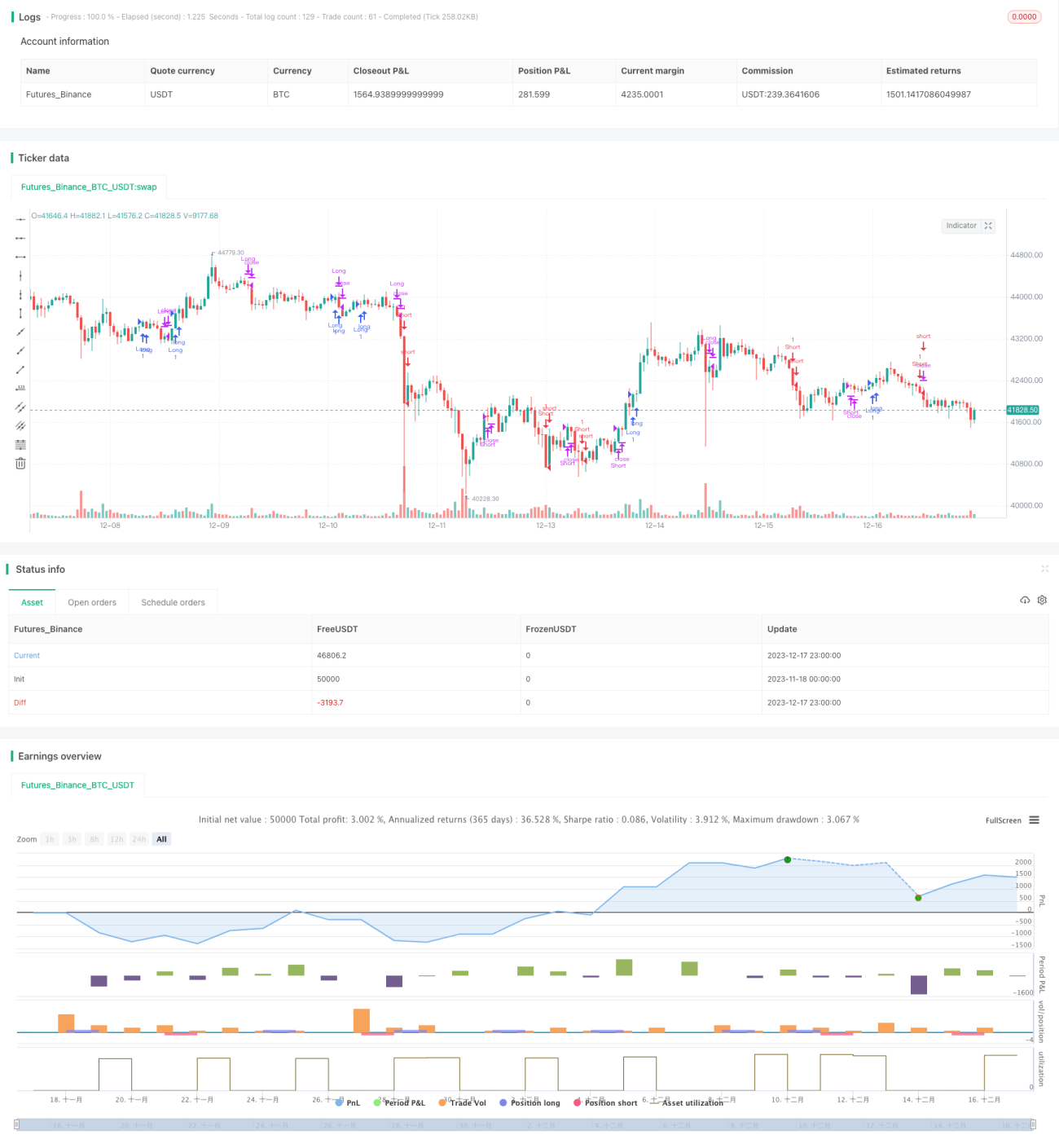
एमएसीडी ट्रेंड ट्रैकिंग शॉर्ट-लाइन रणनीति एक शॉर्ट-लाइन ट्रेडिंग रणनीति है जिसमें मूविंग एवरेज, एमएसीडी इंडिकेटर और विलियम्स इंडिकेटर शामिल हैं। यह रणनीति तीन संकेतकों के विभिन्न संयोजनों का उपयोग करती है, जो शॉर्ट-लाइन की कीमतों की ट्रेंडिंग विशेषताओं को पकड़ने के लिए बहु-खाली स्थिति में प्रवेश और बाहर निकलने की शर्तें बनाती हैं।
इस रणनीति का मुख्य लेनदेन तर्क निम्नलिखित पर आधारित हैः
जब कीमतें एक्सपोनेंशियल मूविंग एवरेज (ईएमए) के माध्यम से जाती हैं तो अधिक देखें, जब कीमतें नीचे जाती हैं तो कम देखें;
जब MACD की तेज रेखा धीमी रेखा से अधिक हो तो अधिक देखें, और जब तेज रेखा धीमी रेखा से कम हो तो कम देखें;
विलियम सूचकांक में तेजी से चलती औसत धीमी गति से चलती औसत की तुलना में अधिक है, और इसके विपरीत कम है;
इन तीनों स्थितियों के संयोजन के आधार पर प्रवेश की शर्तें तय की जाती हैं।
उन्होंने कहा, “मैंने यह नहीं कहा था कि मैं इस खेल में नहीं खेलूंगा।
ईएमए द्वारा महाप्रवृत्ति की दिशा और एमएसीडी द्वारा अल्पकालिक मूल्य गतिशीलता का आकलन करने के संयोजन के माध्यम से, यह रणनीति अच्छी प्रविष्टि बिंदुओं पर कीमतों की प्रवृत्ति विशेषताओं को पकड़ सकती है, जिससे लाभ होता है। जबकि विलियम सूचकांक का उपयोग झूठे ब्रेक से बचने के लिए किस्मों के ओवरबॉय और ओवरसेलिंग की स्थिति को और अधिक सत्यापित करने के लिए किया जा सकता है।
इस तरह के बहु-सूचक संयोजन संरचना एक विशिष्ट लघु-रेखा प्रवृत्ति ट्रैकिंग रणनीति है, जिसमें मुख्य रूप से निम्नलिखित फायदे हैंः
तीन सूचकांक एक-दूसरे को सत्यापित करते हैं, जिससे झूठे संकेतों की संभावना कम हो जाती है।
ईएमए ने मुख्य प्रवृत्ति की दिशा का आकलन किया, जबकि एमएसीडी ने छोटी गतिशीलता को मजबूत माना;
विलियम सूचकांक ने भारी उतार-चढ़ाव के दौरान उतार-चढ़ाव से बचने का फैसला किया।
रिवर्स सूचकांक पोर्टफोलियो निर्णय से बाहर निकलना, जोखिम नियंत्रण के साथ निकटता से जुड़ा हुआ है।
इस रणनीति में निम्नलिखित प्रमुख जोखिम भी हैं:
बहु-सूचक संयोजन संरचना जटिल है, और पैरामीटर को अनुकूलित करने में अधिक कठिनाई है;
“हमारे पास बहुत सारे विकल्प हैं, लेकिन हम सभी के पास एक विकल्प नहीं है।
इस तरह की घटनाओं के बीच, एक व्यक्ति ने एक बार फिर से अपने जीवन के बारे में बात की, और उसने अपने जीवन के बारे में कुछ भी नहीं सोचा।
इस रणनीति में मुख्य रूप से पैरामीटर के अनुकूलन और रोकथाम के संदर्भ में, पैरामीटर के इष्टतम संयोजन की तलाश की जाती है, और एकल लेनदेन पर अधिकतम नुकसान को नियंत्रित करने के लिए उचित रोकथाम स्तर निर्धारित किया जाता है।
इस रणनीति को निम्नलिखित क्षेत्रों में अनुकूलित किया जा सकता हैः
अधिक सूचकांक मापदंडों के संयोजनों का परीक्षण करें और इष्टतम मापदंडों को खोजें;
इस तरह के आंकड़ों के साथ, हम यह सुनिश्चित कर सकते हैं कि हम अपने डेटा को सही तरीके से उपयोग कर सकें।
गतिशील स्टॉप-लॉस या ट्रैक-स्टॉप-लॉस सेट करना जो जोखिम नियंत्रण को मजबूत करता है;
मशीन लर्निंग मॉडलों के साथ वास्तविक रुझानों को समझने के लिए।
एमएसीडी ट्रेंड ट्रैकिंग शॉर्ट लाइन रणनीति कई संकेतकों के व्यापक उपयोग के फायदे, शॉर्ट लाइन प्रवृत्ति का न्याय करने के लिए एक साथ जोखिम को नियंत्रित करना। पैरामीटर अनुकूलन, स्टॉप लॉस स्तर की स्थापना और अधिक डेटा स्रोतों की शुरूआत के माध्यम से, रणनीति की जीत और लाभप्रदता के स्तर को और बढ़ाया जा सकता है। यह रणनीति विचार आगे विस्तार और गहन अध्ययन के लायक है।
/*backtest
start: 2023-11-18 00:00:00
end: 2023-12-18 00:00:00
period: 1h
basePeriod: 15m
exchanges: [{"eid":"Futures_Binance","currency":"BTC_USDT"}]
*/
// This source code is subject to the terms of the Mozilla Public License 2.0 at https://mozilla.org/MPL/2.0/
// © platsn
//@version=5
strategy("MACD Willy Strategy", overlay=true, pyramiding=1, initial_capital=10000)
// ******************** Trade Period **************************************
startY = input(title='Start Year', defval=2011, group = "Trading window")
startM = input.int(title='Start Month', defval=1, minval=1, maxval=12, group = "Trading window")
startD = input.int(title='Start Day', defval=1, minval=1, maxval=31, group = "Trading window")
finishY = input(title='Finish Year', defval=2050, group = "Trading window")
finishM = input.int(title='Finish Month', defval=12, minval=1, maxval=12, group = "Trading window")
finishD = input.int(title='Finish Day', defval=31, minval=1, maxval=31, group = "Trading window")
timestart = timestamp(startY, startM, startD, 00, 00)
timefinish = timestamp(finishY, finishM, finishD, 23, 59)
// t1 = time(timeframe.period, "0945-1545:23456")
// window = time >= timestart and time <= timefinish and t1 ? true : false
// t2 = time(timeframe.period, "0930-1555:23456")
// window2 = time >= timestart and time <= timefinish and t2 ? true : false
leverage = input.float(1, title="Leverage (if applicable)", step=0.1, group = "Trading Options")
reinvest = input.bool(defval=false,title="Reinvest profit", group = "Trading Options")
reinvest_percent = input.float(defval=20, title = "Reinvest percentage", group="Trading Options")
// entry_lookback = input.int(defval=10, title="Lookback period for entry condition", group = "Trading Options")
// -------------------------------------------- Data Source --------------------------------------------
src = input(title="Source", defval=close)
// ***************************************************************************************************** Daily ATR *****************************************************
atrlen = input.int(14, minval=1, title="ATR period", group = "Daily ATR")
iPercent = input.float(5, minval=1, maxval=100, step=0.1, title="% ATR to use for SL / PT", group = "Daily ATR")
percentage = iPercent * 0.01
datr = request.security(syminfo.tickerid, "1D", ta.rma(ta.tr, atrlen))
datrp = datr * percentage
// plot(datr,"Daily ATR")
// plot(datrp, "Daily % ATR")
//*********************************************************** VIX volatility index ****************************************
VIX = request.security("BTC_USDT:swap", timeframe.period, close)
vix_thres = input.float(20.0, "VIX Threshold for entry", step=0.5, group="VIX Volatility Index")
// ************************************************ Volume ******************************************************
vol_len = input(50, 'Volume MA Period')
avg_vol = ta.sma(volume, vol_len)
//-------------------------------------------------------- Moving Average ------------------------------------
emalen1 = input.int(200, minval=1, title='EMA', group= "Moving Averages")
ema1 = ta.ema(src, emalen1)
// ------------------------------------------ MACD ------------------------------------------
// Getting inputs
fast_length = input(title="Fast Length", defval=12)
slow_length = input(title="Slow Length", defval=26)
signal_length = input.int(title="Signal Smoothing", minval = 1, maxval = 50, defval = 9)
sma_source = input.string(title="Oscillator MA Type", defval="EMA", options=["SMA", "EMA"])
sma_signal = input.string(title="Signal Line MA Type", defval="EMA", options=["SMA", "EMA"])
// Plot colors
col_macd = input(#2962FF, "MACD Line ", group="Color Settings", inline="MACD")
col_signal = input(#FF6D00, "Signal Line ", group="Color Settings", inline="Signal")
col_grow_above = input(#26A69A, "Above Grow", group="Histogram", inline="Above")
col_fall_above = input(#B2DFDB, "Fall", group="Histogram", inline="Above")
col_grow_below = input(#FFCDD2, "Below Grow", group="Histogram", inline="Below")
col_fall_below = input(#FF5252, "Fall", group="Histogram", inline="Below")
// Calculating
fast_ma = sma_source == "SMA" ? ta.sma(src, fast_length) : ta.ema(src, fast_length)
slow_ma = sma_source == "SMA" ? ta.sma(src, slow_length) : ta.ema(src, slow_length)
macd = fast_ma - slow_ma
signal = sma_signal == "SMA" ? ta.sma(macd, signal_length) : ta.ema(macd, signal_length)
hist = macd - signal
// ---------------------------------------- William %R --------------------------------------
w_length = input.int(defval=34, minval=1)
w_upper = ta.highest(w_length)
w_lower = ta.lowest(w_length)
w_output = 100 * (close - w_upper) / (w_upper - w_lower)
fast_period = input(defval=5, title='Smoothed %R Length')
slow_period = input(defval=13, title='Slow EMA Length')
w_fast_ma = ta.wma(w_output,fast_period)
w_slow_ma = ta.ema(w_output,slow_period)
// ------------------------------------------------ Entry Conditions ----------------------------------------
L_entry1 = close > ema1 and hist > 0 and w_fast_ma > w_slow_ma
S_entry1 = close < ema1 and hist < 0 and w_fast_ma < w_slow_ma
// -------------------------------------------------- Entry -----------------------------------------------
strategy.initial_capital = 50000
profit = strategy.netprofit
trade_amount = math.floor(strategy.initial_capital*leverage / close)
if strategy.netprofit > 0 and reinvest
trade_amount := math.floor((strategy.initial_capital+(profit*reinvest_percent*0.01))*leverage / close)
else
trade_amount := math.floor(strategy.initial_capital*leverage/ close)
if L_entry1 //and window
strategy.entry("Long", strategy.long, trade_amount)
if S_entry1 //and window
strategy.entry("Short", strategy.short, trade_amount)
// --------------------------------------------------- Exit Conditions -------------------------------------
L_exit1 = hist < 0 and w_fast_ma < w_slow_ma and w_fast_ma < -20
S_exit1 = hist > 0 and w_fast_ma > w_slow_ma and w_fast_ma > -80
// ----------------------------------------------------- Exit ---------------------------------------------
if L_exit1 //and window2
strategy.close("Long")
if S_exit1 //and window2
strategy.close("Short")
// if time(timeframe.period, "1530-1600:23456")
// strategy.close_all()