Strategi Pengikut Tren dengan Pembalikan Ganda

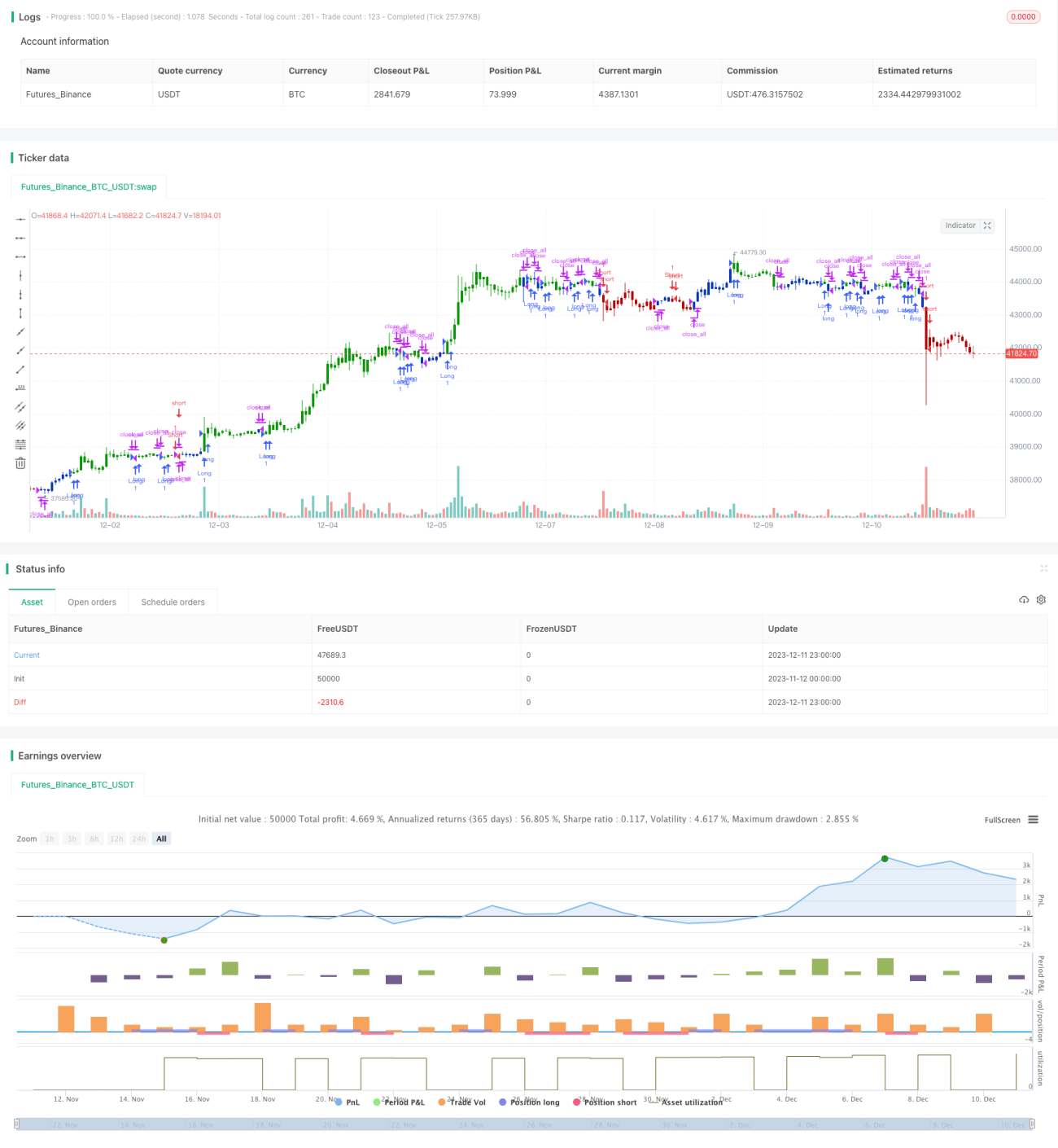
Ikhtisar
Ini adalah strategi pelacakan tren yang menggabungkan sinyal pembalikan ganda. Strategi ini mengintegrasikan strategi pembalikan 123 dan strategi indeks kinerja, melacak titik pembalikan harga, untuk mencapai penilaian tren yang lebih andal.
Prinsip Strategi
Strategi ini terdiri dari dua sub-strategi:
-
Strategi Pembalikan 123
Menggunakan candle 14 hari untuk menilai sinyal pembalikan. Aturan spesifiknya adalah:
- Sinyal bullish: harga penutupan dua hari sebelumnya turun, harga penutupan candle saat ini lebih tinggi dari harga penutupan hari sebelumnya, dan Stochastic Slow 9 hari di bawah 50
- Sinyal bearish: harga penutupan dua hari sebelumnya naik, harga penutupan candle saat ini lebih rendah dari harga penutupan hari sebelumnya, dan Stochastic Fast 9 hari di atas 50
-
Strategi Indeks Kinerja
Menghitung persentase perubahan harga selama 14 hari terakhir sebagai indikator. Aturannya sebagai berikut:
- Indeks kinerja > (0), menghasilkan sinyal bullish
- Indeks kinerja < (0), menghasilkan sinyal bearish
Sinyal akhir adalah kombinasi dari kedua sinyal. Artinya, diperlukan sinyal bullish atau bearish yang searah untuk menghasilkan operasi jual-beli yang aktual.
Dengan cara ini, sebagian noise dapat difilter, membuat sinyal lebih andal.
Keunggulan Strategi
Sistem pembalikan ganda ini memiliki keunggulan sebagai berikut:
- Menggabungkan penilaian dua faktor, sinyal lebih andal
- Mampu menyaring noise pasar secara efektif, menghindari sinyal palsu
- Pola 123 klasik dan praktis, mudah dinilai dan direproduksi
- Indeks kinerja dapat menilai arah tren masa depan
- Kombinasi parameter fleksibel, dapat dioptimalkan lebih lanjut
Risiko Strategi
Strategi ini juga memiliki beberapa risiko:
- Mungkin melewatkan pembalikan mendadak, tidak dapat menangkap tren secara menyeluruh
- Kombinasi kondisi ganda menyebabkan sinyal berkurang, dapat mempengaruhi profitabilitas
- Perlu penilaian searah, rentan terhadap fluktuasi spesifik saham individu
- Masalah pengaturan parameter dapat menyebabkan penyimpangan sinyal
Beberapa aspek optimasi yang dapat dipertimbangkan:
- Menyesuaikan parameter, seperti panjang candle, periode Stochastic, dll.
- Mengoptimalkan logika penilaian sinyal ganda
- Menggabungkan lebih banyak faktor, seperti volume perdagangan, dll.
- Menambahkan mekanisme stop loss
Kesimpulan
Strategi ini mengintegrasikan penilaian pembalikan ganda, mampu mendeteksi titik balik harga secara efektif. Meskipun probabilitas sinyal menurun, keandalannya lebih tinggi, cocok untuk menangkap tren jangka menengah-panjang. Efek strategi dapat lebih ditingkatkan melalui penyesuaian parameter dan optimalisasi multi-faktor.
/*backtest
start: 2023-11-12 00:00:00
end: 2023-12-12 00:00:00
period: 1h
basePeriod: 15m
exchanges: [{"eid":"Futures_Binance","currency":"BTC_USDT"}]
*/

//@version=4
////////////////////////////////////////////////////////////
//  Copyright by HPotter v1.0 15/04/2021
// This is combo strategies for get a cumulative signal. - 1