Стратегия следования за трендом с двойным разворотом

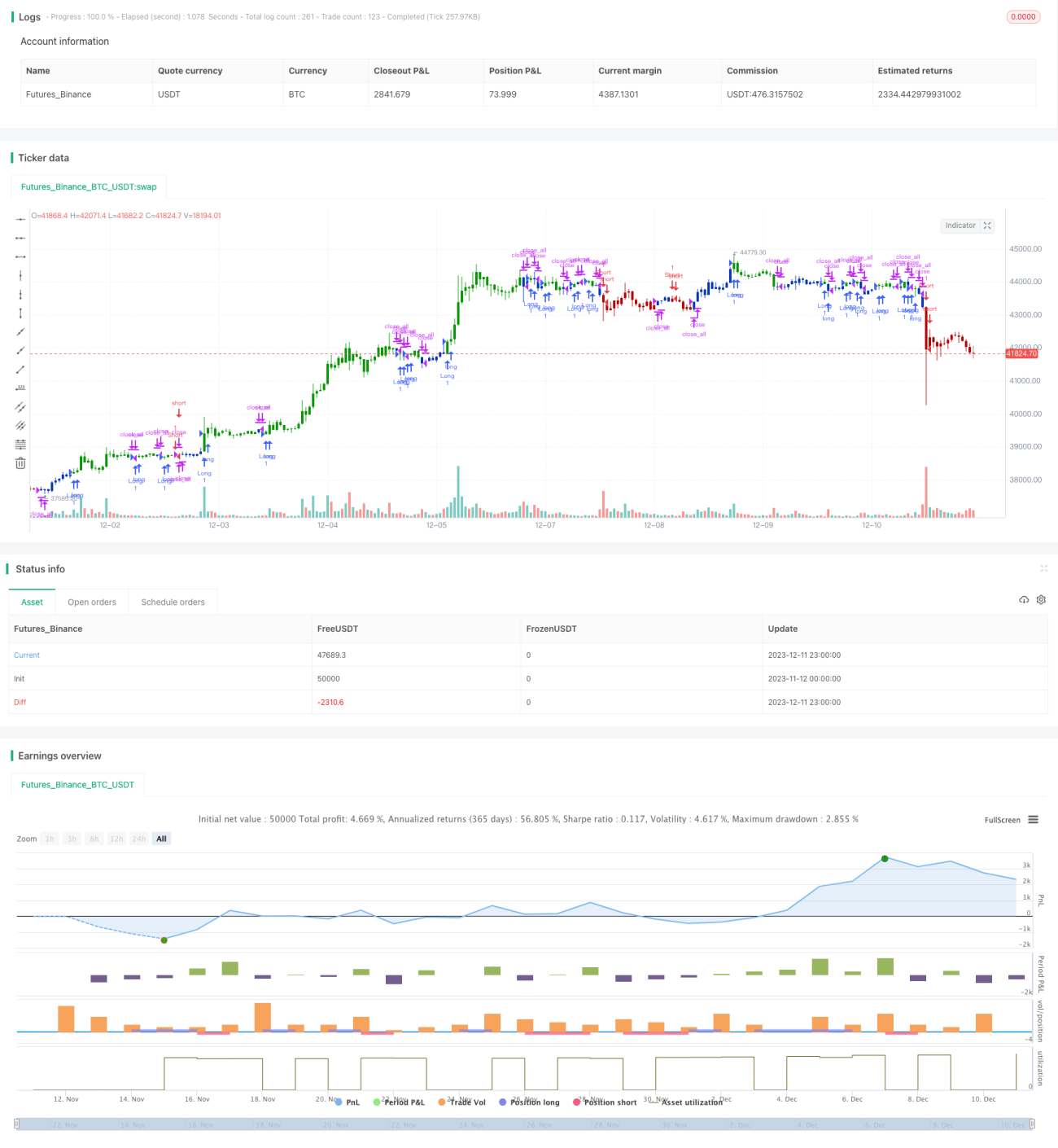
Обзор
Это стратегия следования за трендом, объединяющая двойные сигналы разворота. Она интегрирует стратегию разворота 123 и стратегию индекса производительности для отслеживания точек разворота цен, обеспечивая более надежное определение тренда.
Принцип стратегии
Стратегия состоит из двух подстратегий:
-
Стратегия разворота 123
Использует 14-дневные свечи для определения сигналов разворота. Правила:
- Сигнал на покупку: цена закрытия за предыдущие два дня снижалась, текущая свеча закрывается выше предыдущей, 9-дневный медленный стохастик (Stochastic Slow) ниже 50.
- Сигнал на продажу: цена закрытия за предыдущие два дня росла, текущая свеча закрывается ниже предыдущей, 9-дневный быстрый стохастик (Stochastic Fast) выше 50.
-
Стратегия индекса производительности
Рассчитывает процентное изменение цены за последние 14 дней в качестве индикатора. Правила:
- Если индекс производительности > 0, генерируется сигнал на покупку.
- Если индекс производительности < 0, генерируется сигнал на продажу.
Итоговый сигнал представляет собой комбинацию обоих сигналов. То есть для фактического совершения сделки требуются однонаправленные сигналы на покупку или продажу.
Это позволяет отфильтровать часть шума и сделать сигналы более надежными.
Преимущества стратегии
Данная двойная система разворота обладает следующими преимуществами:
- Комбинация двух факторов повышает надежность сигналов.
- Эффективно фильтрует рыночный шум, избегая ложных сигналов.
- Паттерн 123 является классическим и практичным, легко определяется и воспроизводится.
- Индекс производительности позволяет оценить будущее направление тренда.
- Гибкая комбинация параметров, возможна дальнейшая оптимизация.
Риски стратегии
Стратегия также сопряжена с определенными рисками:
- Возможен пропуск внезапных разворотов, что не позволяет полностью уловить тренд.
- Комбинация двух условий сокращает количество сигналов, что может снизить доходность.
- Требование однонаправленности сигналов делает стратегию чувствительной к особым колебаниям отдельных активов.
- Неправильная настройка параметров может привести к искажению сигналов.
Рекомендуется рассмотреть следующие направления оптимизации:
- Настройка параметров, таких как длина свечей, период стохастика и т.д.
- Оптимизация логики определения двойных сигналов.
- Включение дополнительных факторов, например, объема торгов.
- Добавление механизма стоп-лосса.
Заключение
Данная стратегия объединяет двойное определение разворота и эффективно выявляет точки смены тренда. Хотя вероятность появления сигналов снижается, их надежность возрастает, что делает стратегию подходящей для среднесрочного и долгосрочного следования за трендом. Эффективность стратегии может быть повышена за счет настройки параметров и добавления множества факторов.
/*backtest
start: 2023-11-12 00:00:00
end: 2023-12-12 00:00:00
period: 1h
basePeriod: 15m
exchanges: [{"eid":"Futures_Binance","currency":"BTC_USDT"}]
*/

//@version=4
////////////////////////////////////////////////////////////
//  Copyright by HPotter v1.0 15/04/2021
// This is combo strategies for get a cumulative signal. - 1