Chiến lược lọc trung bình động đôi đột phá xu hướng


Ngày tạo: 2023-11-27 17:03:08 sửa đổi lần cuối: 2023-11-27 17:03:08
sao chép: 0 Số nhấp chuột: 689
1
tập trung vào
1617
Người theo dõi

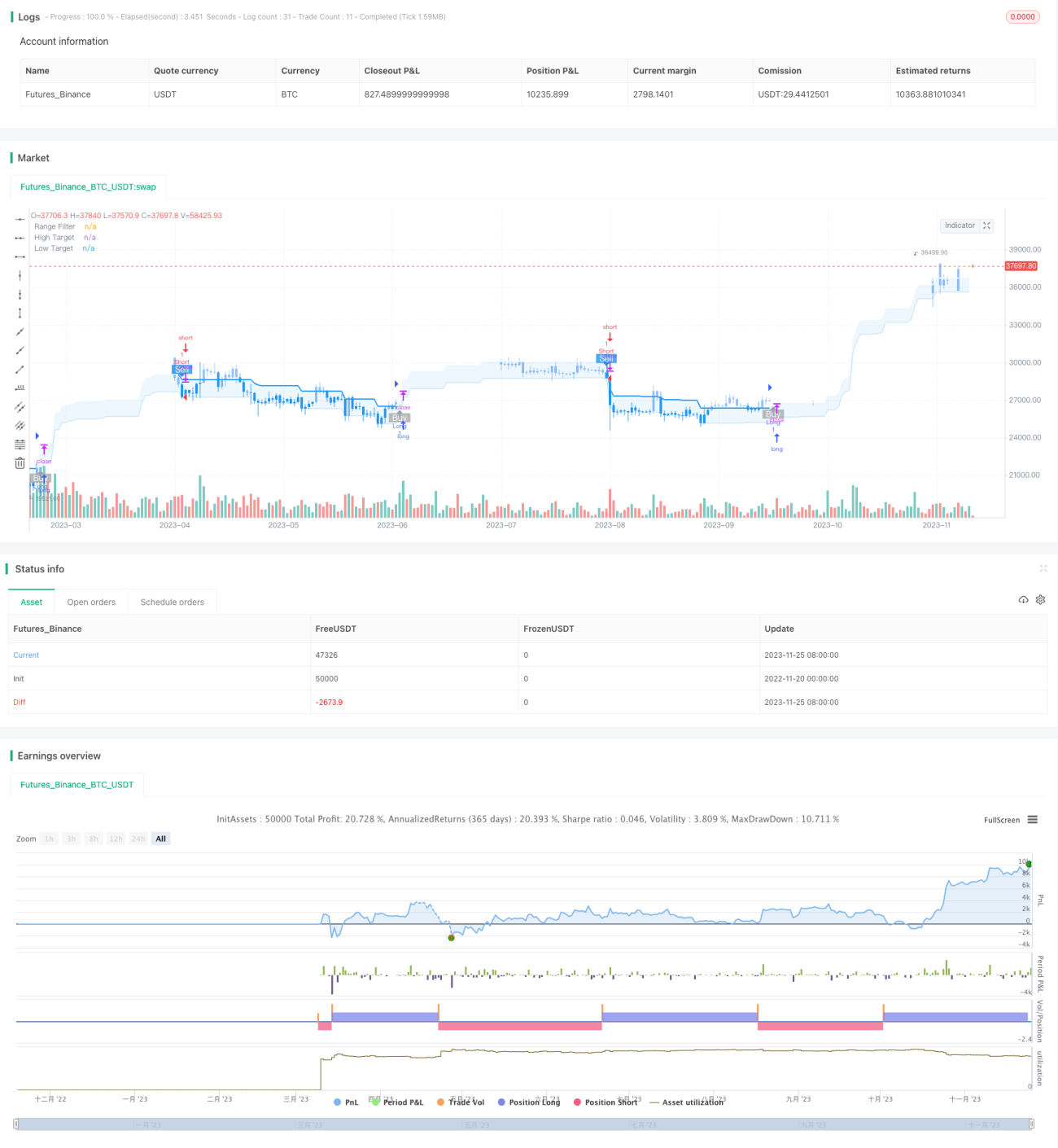
Chiến lược lọc trung bình động đôi đột phá xu hướng

Tổng quan

Đây là một chiến lược sử dụng đường đồng nhất và kênh Brin để đánh giá xu hướng và kết hợp các nguyên tắc lọc và dừng phá vỡ. Nó có thể bắt tín hiệu khi xu hướng thay đổi, giảm tín hiệu sai bằng cách lọc hai đường đồng nhất, thiết lập dừng để kiểm soát rủi ro.

Nguyên tắc chiến lược

Chiến lược này bao gồm:

  1. Xác định xu hướng: Sử dụng MACD để xác định xu hướng giá, phân biệt xu hướng nhiều đầu và không đầu.

  2. Bộ lọc phạm vi: Sử dụng kênh Brin để xác định phạm vi biến động giá và lọc các tín hiệu không vượt qua phạm vi.

  3. Xác nhận hai đường trung bình: hai đường trung bình bao gồm EMA nhanh và EMA chậm, được sử dụng để xác nhận tín hiệu xu hướng. Chỉ có tín hiệu mua được tạo ra khi EMA nhanh> EMA chậm.

  4. Cơ chế dừng lỗ: thiết lập điểm dừng lỗ, dừng lỗ khi giá phá vỡ điểm dừng lỗ theo hướng bất lợi.

Lập luận của tín hiệu nhập là:

  1. Chỉ số MACD cho thấy xu hướng tăng
  2. Giá cả vượt qua Brin
  3. EMA nhanh cao hơn EMA chậm

Một tín hiệu mua được tạo ra khi ba điều kiện trên được đáp ứng cùng một lúc.

Logic giao dịch bằng phẳng có hai loại, giao dịch bằng phẳng dừng và giao dịch bằng phẳng dừng. Điểm dừng được nhân với giá vào một tỷ lệ nhất định, điểm dừng được nhân với giá vào một tỷ lệ nhất định. Khi giá phá vỡ một trong những điểm đó, giao dịch bằng phẳng.

Phân tích lợi thế

Chiến lược này có những lợi thế sau:

  1. Có thể bắt kịp sự thay đổi của xu hướng, ít traceback hơn.
  2. Tăng chất lượng tín hiệu bằng cách lọc tín hiệu sai.
  3. Cơ chế ngăn chặn thiệt hại có hiệu quả trong việc kiểm soát tổn thất đơn lẻ.
  4. Các tham số có thể được tối ưu hóa và có thể được điều chỉnh thành trạng thái tối ưu.

Phân tích rủi ro

Chiến lược này cũng có một số rủi ro:

  1. Các tín hiệu sai trong cơn động đất có thể gây ra thiệt hại.
  2. Thiết lập điểm dừng không đúng có thể gây ra tổn thất không cần thiết.
  3. Các tham số không chính xác có thể gây ra tác dụng xấu của chiến lược.

Các rủi ro này có thể được tối ưu hóa và cải thiện bằng cách tối ưu hóa các tham số, điều chỉnh vị trí dừng lỗ.

Hướng tối ưu hóa

Chiến lược này có thể được tối ưu hóa theo các hướng sau:

  1. Điều chỉnh chiều dài của hai đường trung bình để tìm kiếm sự kết hợp tham số tốt nhất.
  2. Kiểm tra các phương pháp dừng lỗ khác nhau, chẳng hạn như dừng theo dõi, dừng rung, v.v.
  3. Kiểm tra tham số MACD để tìm tham số tối ưu.
  4. Sử dụng học máy để tự động tối ưu hóa các tham số.
  5. Thêm tín hiệu lọc điều kiện bổ sung.

Bằng cách thử nghiệm các thiết lập tham số khác nhau, đánh giá lợi nhuận và tỷ lệ Sharpe, bạn có thể tìm thấy trạng thái tối ưu của chiến lược này.

Tóm tắt

Đây là một chiến lược định lượng sử dụng suy nghĩ định hướng, lọc phạm vi, xác nhận hai đường cong và dừng lỗ. Nó có thể xác định hiệu quả hướng xu hướng, tìm sự cân bằng giữa tối đa hóa lợi nhuận và kiểm soát rủi ro.

Mã nguồn chiến lược
/*backtest
start: 2022-11-20 00:00:00
end: 2023-11-26 00:00:00
period: 1d
basePeriod: 1h
exchanges: [{"eid":"Futures_Binance","currency":"BTC_USDT"}]
*/

//@version=5
strategy(title="Range Filter Buy and Sell Strategies", shorttitle="Range Filter Strategies", overlay=true,pyramiding = 5)

// Original Script > @DonovanWall
// Adapted Version > @guikroth
// 
// Updated PineScript to version 5
// Republished by > @tvenn
// Strategizing by > @RonLeigh
//////////////////////////////////////////////////////////////////////////
// Settings for 5min chart, BTCUSDC. For Other coin, change the parameters
//////////////////////////////////////////////////////////////////////////


SS = input.bool(false,"Percentage Take Profit Stop Loss")


longProfitPerc = input.float(title='LongProfit(%)', minval=0.0, step=0.1, defval=1.5) * 0.01

shortProfitPerc = input.float(title='ShortProfit(%)', minval=0.0, step=0.1, defval=1.5) * 0.01


longLossPerc = input.float(title='LongStop(%)', minval=0.0, step=0.1, defval=1.5) * 0.01

shortLossPerc = input.float(title='ShortStop(%)', minval=0.0, step=0.1, defval=1.5) * 0.01


// Color variables
upColor   = color.white
midColor  = #90bff9
downColor = color.blue

// Source
src = input(defval=close, title="Source")

// Sampling Period
// Settings for 5min chart, BTCUSDC. For Other coin, change the paremeters
per = input.int(defval=100, minval=1, title="Sampling Period")

// Range Multiplier
mult = input.float(defval=3.0, minval=0.1, title="Range Multiplier")

// Smooth Average Range
smoothrng(x, t, m) =>
    wper = t * 2 - 1
    avrng = ta.ema(math.abs(x - x[1]), t)
    smoothrng = ta.ema(avrng, wper) * m
    smoothrng
smrng = smoothrng(src, per, mult)

// Range Filter
rngfilt(x, r) =>
    rngfilt = x
    rngfilt := x > nz(rngfilt[1]) ? x - r < nz(rngfilt[1]) ? nz(rngfilt[1]) : x - r : 
       x + r > nz(rngfilt[1]) ? nz(rngfilt[1]) : x + r
    rngfilt
filt = rngfilt(src, smrng)

// Filter Direction
upward = 0.0
upward := filt > filt[1] ? nz(upward[1]) + 1 : filt < filt[1] ? 0 : nz(upward[1])
downward = 0.0
downward := filt < filt[1] ? nz(downward[1]) + 1 : filt > filt[1] ? 0 : nz(downward[1])

// Target Bands
hband = filt + smrng
lband = filt - smrng

// Colors
filtcolor = upward > 0 ? upColor : downward > 0 ? downColor : midColor
barcolor = src > filt and src > src[1] and upward > 0 ? upColor :
   src > filt and src < src[1] and upward > 0 ? upColor : 
   src < filt and src < src[1] and downward > 0 ? downColor : 
   src < filt and src > src[1] and downward > 0 ? downColor : midColor

filtplot = plot(filt, color=filtcolor, linewidth=2, title="Range Filter")

// Target
hbandplot = plot(hband, color=color.new(upColor, 70), title="High Target")
lbandplot = plot(lband, color=color.new(downColor, 70), title="Low Target")

// Fills
fill(hbandplot, filtplot, color=color.new(upColor, 90), title="High Target Range")
fill(lbandplot, filtplot, color=color.new(downColor, 90), title="Low Target Range")

// Bar Color
barcolor(barcolor)

// Break Outs
longCond = bool(na)
shortCond = bool(na)
longCond := src > filt and src > src[1] and upward > 0 or 
   src > filt and src < src[1] and upward > 0
shortCond := src < filt and src < src[1] and downward > 0 or 
   src < filt and src > src[1] and downward > 0

CondIni = 0
CondIni := longCond ? 1 : shortCond ? -1 : CondIni[1]
longCondition = longCond and CondIni[1] == -1
shortCondition = shortCond and CondIni[1] == 1


// alertcondition(longCondition, title="Buy alert on Range Filter", message="Buy alert on Range Filter")
// alertcondition(shortCondition, title="Sell alert on Range Filter", message="Sell alert on Range Filter")
// alertcondition(longCondition or shortCondition, title="Buy and Sell alert on Range Filter", message="Buy and Sell alert on Range Filter")


////////////// 副

sensitivity = input(150, title='Sensitivity')
fastLength = input(20, title='FastEMA Length')
slowLength = input(40, title='SlowEMA Length')
channelLength = input(20, title='BB Channel Length')
multt = input(2.0, title='BB Stdev Multiplier')

DEAD_ZONE = nz(ta.rma(ta.tr(true), 100)) * 3.7

calc_macd(source, fastLength, slowLength) =>
    fastMA = ta.ema(source, fastLength)
    slowMA = ta.ema(source, slowLength)
    fastMA - slowMA

calc_BBUpper(source, length, multt) =>
    basis = ta.sma(source, length)
    dev = multt * ta.stdev(source, length)
    basis + dev

calc_BBLower(source, length, multt) =>
    basis = ta.sma(source, length)
    dev = multt * ta.stdev(source, length)
    basis - dev

t1 = (calc_macd(close, fastLength, slowLength) - calc_macd(close[1], fastLength, slowLength)) * sensitivity

e1 = calc_BBUpper(close, channelLength, multt) - calc_BBLower(close, channelLength, multt)

trendUp = t1 >= 0 ? t1 : 0
trendDown = t1 < 0 ? -1 * t1 : 0

duoad = trendUp > 0 and trendUp > e1

kongad = trendDown > 0 and trendDown > e1


duo =  longCondition and duoad

kong = shortCondition and kongad


//Alerts
plotshape(longCondition  and trendUp > e1 and  trendUp > 0 , title="Buy Signal", text="Buy", textcolor=color.white, style=shape.labelup, size=size.small, location=location.belowbar, color=color.new(#aaaaaa, 20))
plotshape(shortCondition  and trendDown > e1 and  trendDown > 0 , title="Sell Signal", text="Sell", textcolor=color.white, style=shape.labeldown, size=size.small, location=location.abovebar, color=color.new(downColor, 20))


if  longCondition and trendUp > e1 and  trendUp > 0 
    strategy.entry('Long',strategy.long, comment = "buy" )

if  shortCondition and trendDown > e1 and  trendDown > 0 
    strategy.entry('Short',strategy.short, comment = "sell" )


longlimtPrice  = strategy.position_avg_price * (1 + longProfitPerc)
shortlimtPrice = strategy.position_avg_price * (1 - shortProfitPerc)
   
longStopPrice  = strategy.position_avg_price * (1 - longLossPerc)
shortStopPrice = strategy.position_avg_price * (1 + shortLossPerc)


if (strategy.position_size > 0)  and SS == true
    
    strategy.exit(id="Long",comment_profit = "Profit",comment_loss = "StopLoss", stop=longStopPrice,limit = longlimtPrice)
    

if (strategy.position_size < 0)  and SS == true
    
    strategy.exit(id="Short",comment_profit = "Profit",comment_loss = "StopLoss", stop=shortStopPrice,limit = shortlimtPrice)