移動平均線プルバック戦略

概要
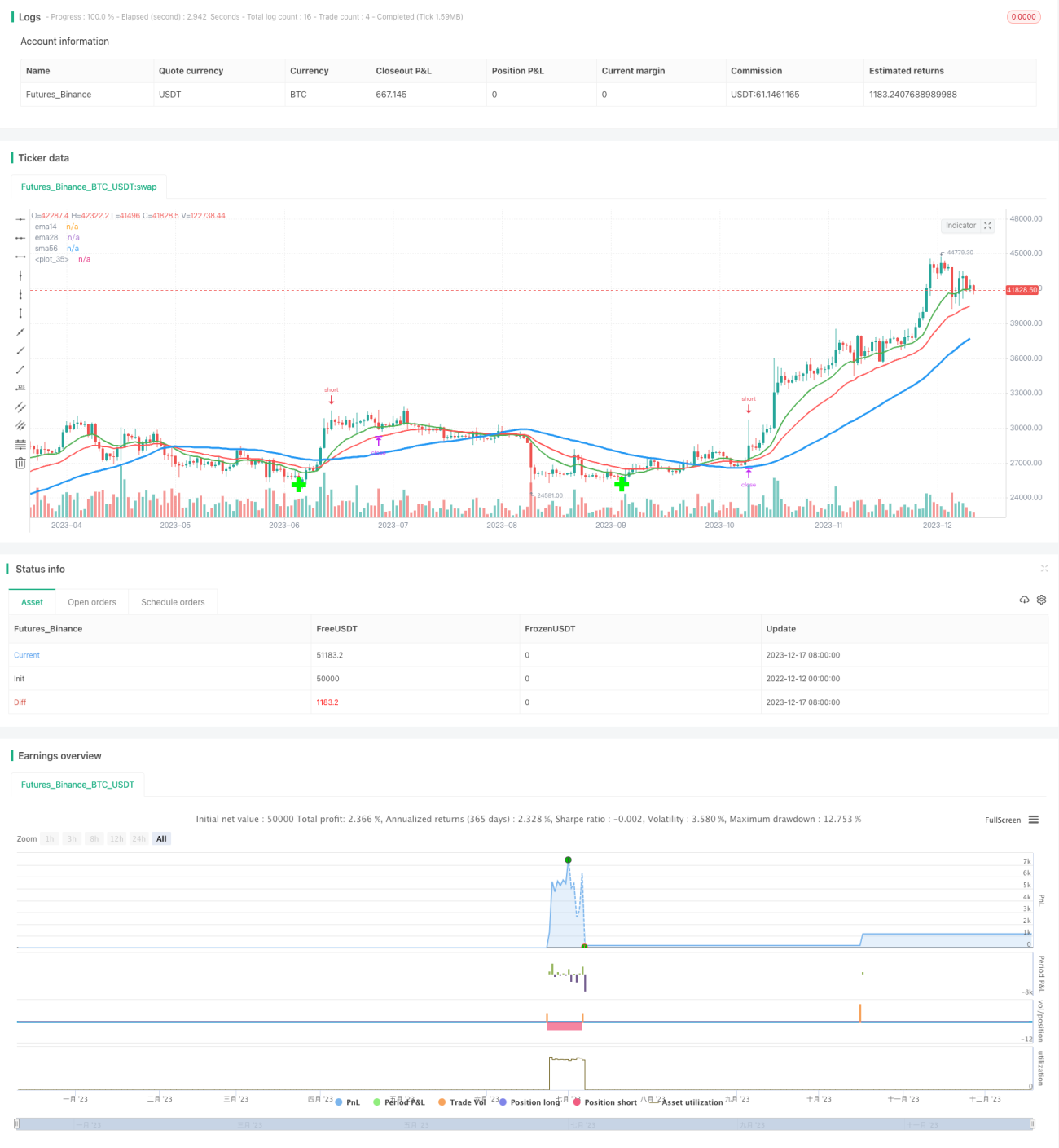
移動平均線プルバック戦略は、株価の移動平均線のクロス状況を追跡し、ゴールデンクロスが発生した際にプルバックの機会があるかどうかを判断し、あれば逆方向の取引を行う定量取引戦略です。この戦略はフィボナッチプルバックラインを活用し、エントリーポイントとストップロス・利益確定ポイントを設定することで、短期的な価格プルバックを捉えます。
戦略の原理
この戦略は主に2本の移動平均線、14日EMAと56日SMAに基づいています。14日EMAが下から56日SMAを上抜けたときに買いシグナルが発生します。その後、コードは20日間遡って安値を見つけ、それをサポートとし、クロスポイントのclose価格と組み合わせてフィボナッチプルバックラインを描画し、1.272倍のプルバックラインをエントリー、0.618倍のプルバックラインをイグジットとして設定します。これにより、ゴールデンクロス後にエントリーポイントを設定して空売りを行い、価格が実際に0.618プルバックラインまで戻った場合、利益確定で決済します。
戦略全体は主に以下のステップに分かれます:
- 14日EMA、56日SMAを計算
- EMAがSMAを上抜けるゴールデンクロスシグナルが発生したかどうかを判断
- 遡ってサポートとなる安値を見つける
- 安値とゴールデンクロスポイントの位置を使用してフィボナッチプルバックラインを描画
- 1.272プルバックラインに空売りのエントリーポイントを設定
- 0.618プルバックラインに利益確定ポイントを設定
以上が戦略の主な流れと動作原理です。価格が短期的に反転プルバックした場合、この戦略はその機会を捉えて利益を上げることができます。
戦略の優位性
この移動平均線プルバック戦略には主に以下のような利点があります:
- 戦略の考え方が明確でシンプルであり、理解と実装が容易
- フィボナッチ理論を活用してエントリーとストップロスポイントを設定するため、リスク管理が比較的良い
- 短期的な価格反転の機会を捉え、良好な1回あたりの利益を得ることができる
- 1本の移動平均線のゴールデンクロスシグナルのみで起動可能であり、条件が厳しくない
総じて、この戦略は短期の反転トレードに非常に適しており、相場が一定の調整を見せた際にその機会を捉えて鞘取りを行うことができます。戦略の実装も比較的シンプルで直接的なものです。
戦略のリスク
この移動平均線プルバック戦略には独自の利点がありますが、注意すべきリスクも存在します:
- 長期保有により大きな損失が発生する可能性があります。逆張りで空売りを行っているため、相場が上昇し続けると大きな損失を被ります。
- プルバックの幅が小さすぎて利益を得られない。価格のプルバック幅が小さすぎると、利益確定ラインに到達せず、利益を現金化できません。
- 設定リスクが高くなる可能性がある。プルバックラインの設定が高すぎると、到達できず鞘取りの機会が生まれません。合理的なプルバックレンジを計算する必要があります。
上記のリスクに対しては、短めのストップロス時間を設定し、1回あたりの損失を厳格に管理します。同時にプルバックラインのレンジを最適化し、合理的な目標利益を設定することで、一部のリスクを回避できます。
最適化の方向性
この移動平均線プルバック戦略にはまだ多くの最適化の余地があり、主に以下の側面から取り組むことができます:
- 異なるパラメータ設定のテスト(移動平均線の期間、遡る日数、プルバックライン倍率など)を行い、最適なパラメータを見つける
- ストップロス機構を追加する。複数ストップロスやトレーリングストップロスを採用し、リスクをより適切に管理する
- 他のインジケーターをフィルターとして組み合わせ、不適切な市場環境での取引を避ける
- 資金管理を最適化し、適切なポジションサイズとリスクエクスポージャーを設定する
テストとパラメータ最適化を通じて、この戦略はさらに改善され、より安定した取引パフォーマンスを得ることができます。
まとめ
移動平均線プルバック戦略は、非常に実用的な短期トレード戦略です。価格が短期間内に起こす反転の機会を捉え、事前に設定したエントリーポイントとストップロスポイントで取引を行います。戦略の考え方は明確でシンプルであり、理解と実装が容易です。一方で一定の取引リスクも存在するため、パラメータ最適化やリスク管理などの手段を通じてさらに改善する必要があります。総じて、この戦略は深く研究し応用する価値のある定量戦略です。
- 1